

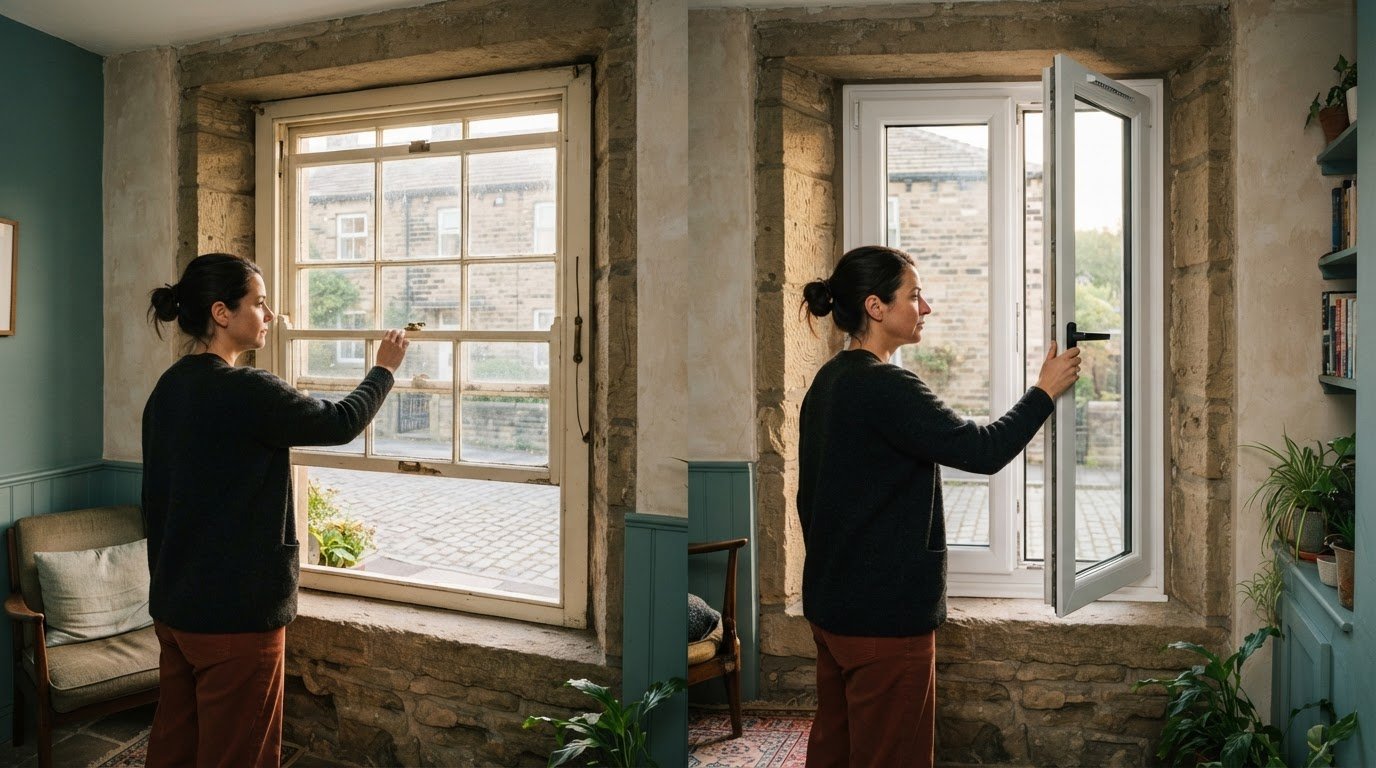
The most practical window for your home may not be the one that needs the least care. The pros and cons of timber vs uPVC windows go beyond maintenance: uPVC, or unplasticised polyvinyl chloride, is a low-maintenance synthetic frame material, while timber offers natural character and can be repaired and refinished.
It’s understandable to weigh convenience against appearance and long-term impact. uPVC generally needs only occasional cleaning, while timber needs protective maintenance. Responsibly sourced timber is renewable and can have a lower environmental impact than uPVC. Neither material suits every property, particularly when a home’s age, character or setting affects which windows feel at home.
This comparison covers how the materials differ in cost, care and sustainability, and what to consider for period homes, conservation areas and modern properties. You’ll get a clearer idea of which option suits your home and how you want to maintain it.
Key Takeaways
- Compare more than the initial outlay: ongoing care and how long the frames may serve your home also shape value over time.
- Consider timber’s renewable potential alongside responsible sourcing, maintenance and the window’s usable lifespan when weighing environmental impact.
- For a period property, the frame’s appearance and fit with the home’s character can matter as much as convenience.
- Match the material to your home’s setting and needs, then consider how window choices fit into wider energy-efficiency improvements.
Environmental Impact: Which Is More Sustainable?
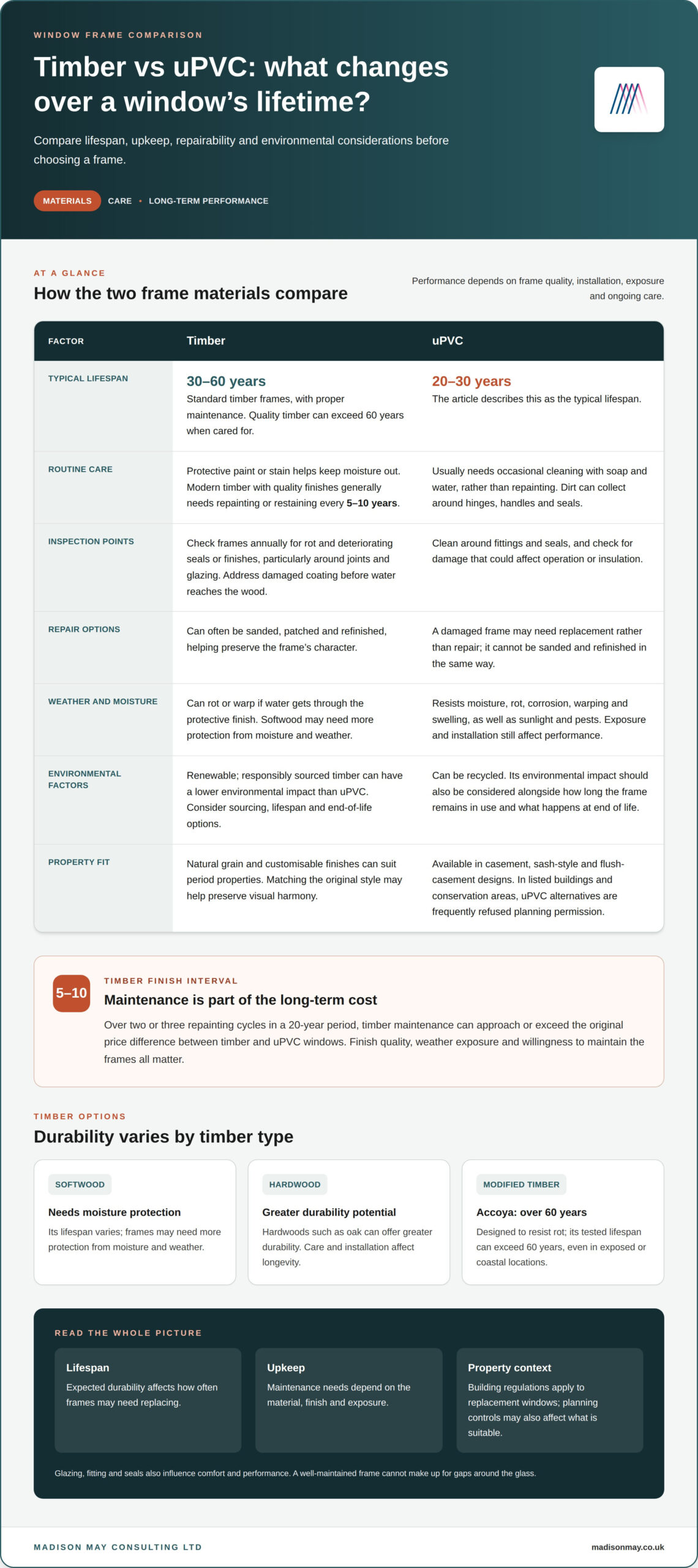
Window lifespan affects the environmental cost of replacement. Standard timber frames can last 30 to 60 years with proper maintenance, while uPVC windows typically last 20 to 30 years. Quality timber can exceed 60 years when cared for, making durability part of the long-term investment.
Timber type matters. Softwood frames may need more protection from moisture and weather, while hardwoods such as oak can offer greater durability. Modified timber, including Accoya, is designed to resist rot; its tested lifespan can exceed 60 years, even in exposed or coastal locations. Quality, installation and upkeep all influence performance.
uPVC resists moisture, rot, corrosion, warping and swelling, as well as sunlight and pests. These qualities can make it suitable for damp conditions, although exposure and installation still affect how frames perform over time. Timber can rot or warp if water gets through its protective finish, so regular maintenance helps preserve its structure and appearance.
Replacement windows in the UK must meet applicable building regulations, and planning controls may also apply. Listed buildings and homes in conservation areas may need replacement windows to match existing designs; uPVC alternatives are frequently refused planning permission in these settings. The rules depend on the property and its location.
Timber is renewable, and responsibly sourced wood can have a lower environmental impact than uPVC. A window’s environmental impact also depends on how long it remains in use and what happens to it at the end of its life. Compare expected durability, material sourcing and end-of-life options rather than judging sustainability by material alone.
| Frame option | Typical lifespan | Durability considerations | Environmental consideration |
|---|---|---|---|
| Softwood timber | Varies | Needs protection from moisture | Renewable if responsibly sourced |
| Hardwood timber | 30 to 60 years for standard timber with proper maintenance | Care and installation affect longevity | Renewable if responsibly sourced |
| Modified timber | Over 60 years for Accoya | Designed to resist rot | Timber-based material |
| uPVC | Typically 20 to 30 years | Resists moisture and pests | Can be recycled |
Weigh the frame’s expected lifespan, exposure to the elements, maintenance needs and the property’s planning context.
Maintenance: is timber really harder work?
Timber window frames need paint or stain to limit moisture reaching the wood. Modern timber with quality finishes generally needs repainting or restaining every 5 to 10 years. Driving rain and strong sunlight can wear finishes, so inspect exposed frames and joints regularly. A damaged coating should be addressed before water reaches the timber.
Maintenance also helps protect a window’s performance. Check timber frames annually for rot and deteriorating seals or finishes, particularly around joints and glazing. Small areas of worn finish may need only a touch-up, rather than repainting every frame. By comparison, uPVC usually needs occasional cleaning with soap and water, not repainting.
uPVC, or unplasticised polyvinyl chloride, is a plastic used for window frames. Its low-maintenance surface is convenient, but dirt can still collect around hinges, handles and seals. Clean these areas and look for damage that could affect operation or insulation. Glazing and seals matter too: a well-maintained frame cannot make up for gaps around the glass.
The materials differ in how they can be repaired. Timber can often be sanded, patched and refinished, helping preserve the frame’s character instead of replacing it. A damaged uPVC frame, by contrast, may need replacement rather than repair. The best approach depends on the damage, the frame’s condition and what’s needed to restore its function. This affects long-term maintenance as well as appearance.
Repainting is a recurring task, and timber maintenance over two or three repainting cycles in a 20-year period can approach or exceed the original price difference between timber and uPVC windows. That makes finish quality, exposure and willingness to maintain the frames important parts of the decision. If window condition forms part of a wider energy-efficiency plan, explore energy efficient home improvements.
What are UPVC windows?
uPVC, or unplasticised polyvinyl chloride, is a synthetic material used for window frames. Appearance can help distinguish uPVC from timber, but glazing and fitting also affect comfort and performance.
Timber appearance and customisation
Timber’s natural grain can sit comfortably in many period properties. Oak, pine and other hardwoods have different grain patterns and colours, while paint or stain lets you choose the finish. Sash and casement designs can complement a home’s existing proportions.
Unlike uPVC, timber can be sanded, patched and refinished, giving homeowners more scope to refresh its appearance. In a period property, matching the original style can preserve visual harmony and appeal. Well-maintained timber can also have a long lifespan, making its appearance an important part of a replacement decision.
Typical timber window warranties are 30 years. Their terms can vary, so the stated warranty should be considered alongside the frame’s finish and maintenance needs.
UPVC appearance and finishes
uPVC frames come in casement, sash-style and flush-casement designs to suit different property styles. Some finishes imitate wood grain, while plain colours create a simpler, more contemporary look. A wood-effect finish can suggest timber’s character, but it does not have the same natural grain.
Unlike timber, uPVC cannot be sanded and refinished in the same way if the surface is damaged. Its manufactured finish creates a consistent appearance across replacement frames, while the style and colour affect how well they suit a period façade.
Insulation, energy efficiency and noise reduction
Both timber and uPVC frames can help limit heat transfer, though performance varies with design and installation. With either material, performance depends on installation, glazing and seal condition. Double or triple glazing and weatherstripping can improve efficiency; noise reduction also depends on the glazing and how well the frame seals.
Typical uPVC warranties are 10 years. Compare the warranty with the glazing, frame and installation details, rather than treating material alone as a measure of energy or acoustic performance.
Timber and uPVC suitability for different homes
The right fit depends on the property’s character, exposure and maintenance needs. In period homes, heritage properties and conservation areas, timber often suits traditional proportions and existing details. Some listed buildings and homes in conservation areas require replacement windows to match the originals, and uPVC alternatives are frequently refused planning permission in these settings. Appearance can therefore be a practical constraint, not just a matter of taste.
For a modern home, uPVC can provide a clean, consistent finish with little routine maintenance. Its resistance to moisture can also make it practical in damp or humid conditions. Timber remains adaptable: it can be painted or refinished to suit a particular colour scheme or architectural style.
Energy efficiency isn’t determined by frame material alone. Both timber and uPVC window designs can help limit heat transfer, but insulation performance depends on the overall specification. With either option, installation, glazing and gaps around the frame affect performance. Double glazing, or triple glazing where appropriate, can improve insulation, but the complete window specification matters more than the material name.
Consider the home as a whole. A draughty older property may need attention to window fit and the surrounding building fabric as well as replacement frames. A period façade may call for timber to retain its established appearance, while a contemporary extension may suit uPVC’s uniform finish. The benefits depend on the building, its exposure and how much maintenance you’re prepared to do.
- Period or heritage property: prioritise matching the existing window style and relevant planning constraints.
- Damp or humid setting: weigh uPVC’s moisture resistance against the appearance and care needs of timber.
- Energy-efficiency improvement: assess the frame, glazing, seals and installation together.
For a clearer view of how window choices fit your home’s energy-efficiency needs, explore suitable home improvements.
Madison May Consulting: Windows and doors
Madison May Consulting Ltd can help homeowners consider windows and doors as part of wider energy-efficient home improvements. If you’re choosing between timber and uPVC, account for the property’s character, maintenance needs and surrounding building fabric. Conservatory upgrades can also be part of improving comfort and performance.
Where draughts, heat loss or damp affect the decision, ventilation assessments and damp remediation can help address the wider picture. Looking at the home as a whole helps place replacement windows in context, rather than treating the frame as the only factor in comfort and efficiency. To discuss your home and the improvements you’re considering, contact Madison May Consulting Ltd.
Choose windows that feel right for your home
Choosing a window material shapes more than maintenance: it affects how your home welcomes light, frames the view and looks from the street. Weighing the pros and cons of timber versus uPVC windows is a useful starting point, but the right option also depends on the wider home and the atmosphere you want to preserve or create.
If you’re planning changes, consider how windows relate to other improvements instead of treating them as an isolated detail. Madison May Consulting Ltd offers windows and doors, conservatory upgrades and energy-efficient home improvements to help connect practical choices with your property’s character and comfort.
Take the next step at your own pace: contact Madison May Consulting Ltd today to discuss the improvements you’re considering. A considered choice can bring lasting comfort while keeping your home true to you.
Frequently Asked Questions
Durability: Which Windows Last Longer?
Well-maintained timber can outlast uPVC, although frame quality and installation affect durability. Timber regularly protected from water can remain serviceable for decades, while neglected coatings may allow damage to develop. Consider exposure too: a sheltered window faces different demands from one exposed to driving rain. Compare the expected service life of the specific frame with the care it needs.
How are wood and PVC different?
Timber is a natural material; uPVC window frames are made from synthetic plastic. Timber has an individual grain and can be sanded or refinished, helping preserve an existing frame. uPVC has a manufactured finish and generally needs less surface maintenance. The difference also affects repair: timber can often be patched, while significant damage to a uPVC frame may require replacement.
Lifespan: how long do they actually last?
Standard timber windows can last 30 to 60 years with proper maintenance, while uPVC windows typically last 20 to 30 years. These are useful broad comparisons, not a lifespan guarantee for an individual window. For instance, poor installation, persistent moisture or neglected upkeep can shorten service life. Frame construction, exposure and the condition of seals also affect when replacement becomes the practical choice.
Or is timber the winner?
Timber isn’t automatically the better choice. It suits priorities such as natural appearance, repairability and traditional character. Someone restoring a period property may value the option to refinish timber to complement existing details. Those who want minimal routine maintenance may prefer another material. The right choice fits the building, planning context, exposure and the level of upkeep you’re willing to take on.
Should you choose uPVC?
Choose uPVC if its lower-maintenance finish and moisture resistance suit your home and priorities. It can be practical for a contemporary property or a damp setting, but suitability involves more than convenience. In a listed building or conservation area, replacement windows may need to match existing designs. Consider appearance, planning context, frame condition and glazing together before deciding.
What are the pros and cons of timber windows compared with uPVC windows?
The pros and cons of timber versus uPVC windows depend on what matters most in your home. Timber offers natural character, can be repaired and refinished, and is renewable when responsibly sourced, but it needs protective maintenance. uPVC resists moisture and usually needs less upkeep, but damaged frames can be harder to repair. With either material, assess the complete window, including its fit, seals and glazing.