

The insulation that keeps a home warm in winter can also slow heat escaping during a summer spell. That’s why summer overheating in insulated homes can feel puzzling: insulation isn’t necessarily the cause, but the way heat enters, builds up and leaves matters. If bedrooms stay stuffy after sunset, note when they warm up and consider whether sunlight, indoor activity or limited ventilation could be contributing before changing the insulation.
Comfort depends on several parts of the home working together. Sunlight through windows, heat from appliances and people, and limited opportunities to release warm air can all contribute. Simply sealing a home more tightly or leaving every window open won’t suit every building or every moment of the day. Ventilation, security, outdoor conditions and the home’s fabric all matter.
This guide explains how heat gains and insulation interact, then compares practical steps for reducing overheating, from managing sunlight to making better use of ventilation. You’ll also see when a whole-home assessment can help clarify the causes and the right sequence of improvements. Madison May Consulting Ltd’s retrofit assessments consider the building fabric, services and ventilation, while tailored EPC improvement plans set out potential measures in context.
Key Takeaways
- Insulation slows heat transfer, but sunlight and everyday activities can still warm rooms, so summer overheating in insulated homes can have several causes.
- Compare shading and solar-control measures by how they intercept sunlight, and consider when ventilation can help release heat.
- Keep a simple record of the room, time, weather, sunlight and comfort level to spot patterns before choosing changes.
- Trial suitable measures and review their effect rather than assuming one approach will work in every room or home.
- A whole-home retrofit assessment considers the building fabric, services and ventilation together, helping inform a tailored EPC improvement plan from Madison May Consulting Ltd.
Why can insulated homes overheat in summer?
A home may feel uncomfortably warm during a hot spell, particularly in bedrooms or rooms that receive strong afternoon sun. That discomfort is real, but it doesn’t by itself identify a building-performance issue. Summer overheating in insulated homes can have several interacting causes. It’s more useful to look at the pattern in the home than to assume insulation is at fault.
Insulation slows heat transfer through parts of the building. It helps reduce heat loss in cold weather and can limit heat entering through insulated elements when it’s warmer outside. It doesn’t block sunlight through a window, switch off heat from cooking or remove warmth already held in walls and furnishings. Depending on indoor and outdoor conditions, it can also slow heat escaping. Insulation alone doesn’t determine summer comfort; the result depends on how heat enters, how it leaves and how the home is used.
Orientation, glazing, shading, ventilation and occupancy all influence that balance. A sun-facing room with extensive glazing and little external shade may warm differently from a shaded room, even within the same home. Timing matters too: opening windows can help release heat when outdoor air is cooler, but may bring in more warmth during a hotter part of the day. These relationships are central to passive cooling strategies, which include managing sunlight and making use of natural airflow.
Does insulation itself make a home too hot?
Insulation isn’t a source of heat, and adding it doesn’t automatically make a home overheat. It slows heat moving in either direction. This can limit heat entering through insulated elements, while also slowing heat escaping once a room or the building fabric has warmed. Residents’ discomfort is still real; insulation is simply one part of the explanation, alongside the layout, openings, shading, ventilation and daily use of the home.
Where does summer heat enter a home?
Sunlight passing through windows and glazed doors can warm floors, furniture and other surfaces, especially where direct sun isn’t shaded. Cooking, appliances, lighting and people add heat indoors too. The effect may be more noticeable in a small room or one that’s occupied for long periods.
Warm outdoor air can raise indoor temperatures when it enters, while walls, roofs and other surfaces warmed by sunshine may transfer heat into adjoining rooms or continue to affect comfort later. This helps explain why simply opening a window isn’t always an immediate answer: the outcome depends on outdoor conditions, the room’s exposure and whether there’s a useful route for air to pass through. Note which rooms warm up, when sunlight reaches them and whether discomfort continues into the evening. These details can help distinguish strong solar gains from heat building up indoors before you choose measures.
How insulation, heat gains and ventilation interact
Summer comfort depends on a changing balance: heat enters the home, some is absorbed by its surfaces and contents, and some can be carried away by cooler air. Insulation affects how quickly heat passes through the building fabric, but it doesn’t control sunlight through glazing or determine whether warm air can escape. That’s why summer overheating in insulated homes is best understood by considering these processes together, rather than treating insulation as an isolated cause.
Comfort depends on limiting unwanted heat gains, understanding where warmth is stored and allowing heat to leave when conditions are suitable. The principles behind passive cooling techniques for homes bring these elements together, although the right approach depends on the home and its surroundings.
Solar gain, thermal mass and indoor temperatures
Sunlight passing through a window can warm the floor, walls and furniture it reaches. These surfaces may then release warmth into the room over time. Materials that absorb and store heat are described as having thermal mass. This can affect how quickly a room warms and cools, but it doesn’t guarantee a cooler home. The result depends on the amount of sunlight, how much mass is exposed and whether stored heat can be released later.
Orientation, glazing area and shading influence the strength and timing of solar gain. A room with large, unshaded glazing facing the afternoon sun may behave differently from one with smaller windows or effective shade. Observe where sunlight falls and at what time; this can help explain why rooms in the same home feel different.
Why ventilation matters in an insulated home
Ventilation is the planned movement of air; draughts are uncontrolled leakage through gaps and joints. Draughts can make a home less comfortable and contribute to heat loss in cold weather, but they don’t necessarily provide useful summer cooling. Deliberate ventilation, by contrast, can help remove warm indoor air when there’s a suitable route for air to move through the home.
Timing is key. If outdoor air is cooler than the air indoors, ventilation may help carry heat away. During hotter periods, opening windows may bring in warmer air instead. Cooler conditions at night can create an opportunity to release warmth accumulated during the day, provided ventilation is practical and appropriate for the household. Security, noise, the layout of openings and existing ventilation systems all affect what’s workable.
There isn’t one ventilation approach that suits every insulated home. The right balance depends on the building, how it’s occupied and how its existing systems operate. A whole-home view helps make sense of how the fabric, services and ventilation interact before changes are selected. Madison May Consulting Ltd’s retrofit assessments consider these elements together and inform tailored improvement plans for the property. Explore whole-home retrofit assessment support as part of considering the home’s comfort and energy improvements.
Comparing ways to reduce overheating in insulated homes
There’s no single measure that suits every home. The right starting point depends on where heat is entering, which rooms are affected and what can be changed without compromising ventilation, privacy or day-to-day use. For summer overheating in insulated homes, compare options by how they manage sunlight or move air, then consider how each fits the building as a whole.
Shading and glazing: reducing solar gains
External shading, such as shutters or an appropriately designed awning, intercepts sunlight before it passes through the glass. Internal blinds and curtains screen sunlight after it has entered, so some warmth may already have reached the glazing or room. Solar-control glazing or treatments are another option to consider, depending on the existing windows and the desired balance of light, view and solar gain; resources from specialists like Sun Guard Tint highlight how modern residential window films can help filter out solar heat while preserving daylight.
Orientation and exposure matter. A window that receives strong direct sun at a particular time may benefit from a different approach than one that’s mostly shaded. External measures may be constrained by the building, while internal coverings can be easier to operate but won’t prevent sunlight reaching the glass. Before choosing a change, consider the whole window: its size, direction, existing specification and how the room is used.
Ventilation and cooling: choosing proportionate measures
Natural ventilation uses openings such as windows to move air. It can be useful when outdoor conditions are cooler and there’s a practical route for air to pass through the home. Noise, security, weather and the need to keep windows closed at certain times can limit its usefulness. Mechanical ventilation uses fans or other installed systems to move air in a more controlled way, but its operation, controls and energy use depend on the system and how it’s designed.
Ventilation choices should account for moisture and indoor-air-quality needs, not just summer comfort. Don’t treat draughts as a substitute for planned ventilation. Changes to windows or the building fabric can also affect how air moves, so consider them in context rather than as automatic remedies. Where passive airflow and shading are not enough to manage peak summer temperatures, exploring active cooling via essexhomeairconditioning.co.uk can show how dedicated residential systems help maintain indoor comfort.
| Option | Purpose | May suit | Limitations and assessment needs |
|---|---|---|---|
| External shading | Intercepts sunlight before it reaches glazing. | Exposed windows with direct sun. | Check orientation, practical installation and how the shade can be used. |
| Internal blinds or curtains | Screen sunlight indoors. | Rooms where an internal, adjustable covering is practical. | Sunlight has already passed through the glass; consider glazing and use patterns. |
| Solar-control glazing or treatment | Limits solar transmission through the window. | Windows where persistent solar gain is identified. | Review existing glazing, daylight, views and the project’s wider aims. |
| Natural or mechanical ventilation | Moves air to support ventilation and, when conditions suit, remove heat. | Homes with workable openings or appropriate existing systems. | Consider timing, security, noise, controls, energy use, moisture and air quality. |
A whole-home assessment can help identify which gains and constraints matter most before measures are selected. This keeps decisions about shading, glazing, ventilation and the building fabric connected, rather than treating any one change as a guaranteed solution.
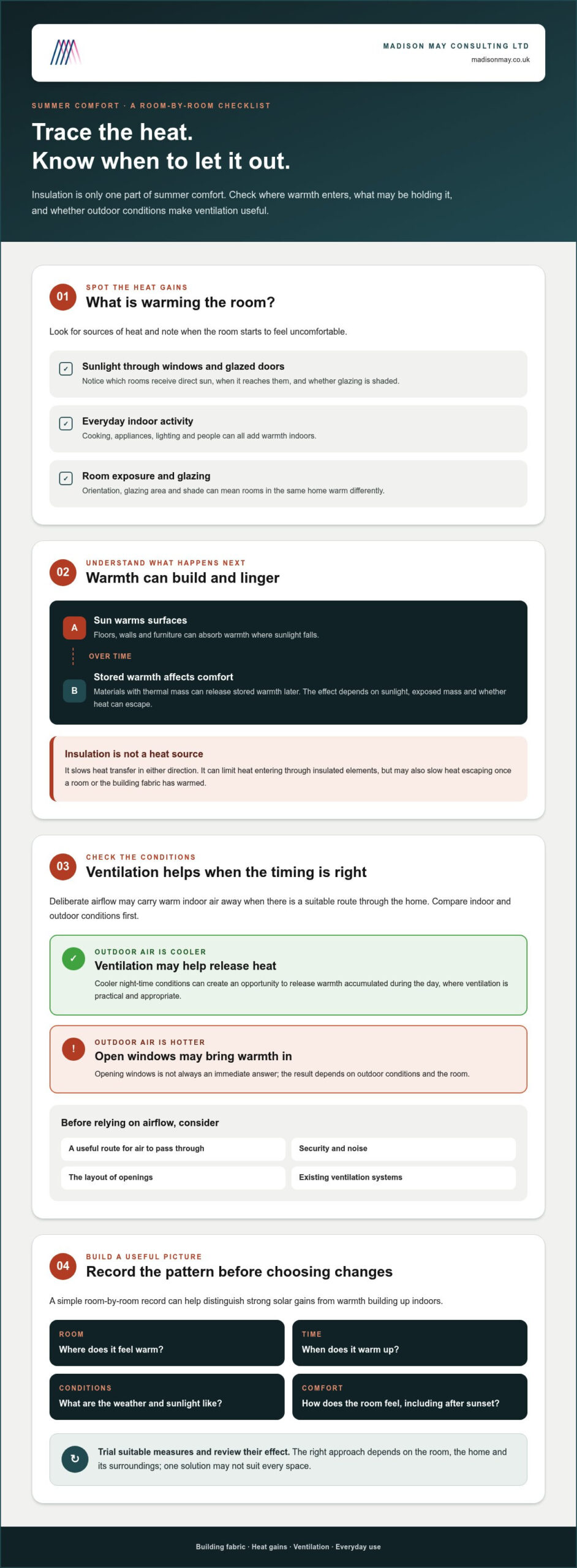
How to assess and tackle summer overheating at home
A clear record can turn a general sense that “the house gets too hot” into useful clues about which rooms are affected and when. This is a practical first step for understanding summer overheating in insulated homes before considering larger changes. Work through the process in order, giving each suitable measure time to show whether it helps.
- Observe. Notice which rooms feel uncomfortable, at what time of day, and whether the problem is confined to sunny periods or continues into the evening.
- Record. Note the room, time, weather, sunlight, household activity and how the space feels. Include whether discomfort remains after outdoor conditions change.
- Identify likely gains. Look for recurring patterns, such as a room warming after direct sun reaches its windows or becoming stuffy after cooking or prolonged use.
- Trial suitable measures. Try proportionate, reversible steps first, such as adjusting shading or window use in response to outdoor conditions and reducing avoidable indoor heat.
- Review. Compare your notes across similar conditions. If a change makes little difference, consider whether another cause or a wider building issue needs attention.
Record when and where rooms become uncomfortable
A brief daily note can reveal useful patterns. Record which room is affected, when discomfort starts, whether sunlight reaches the windows and what the household is doing, such as cooking or using appliances. Note the weather and whether the room remains uncomfortable later, even after outdoor conditions have changed. Repeated observations help separate a recurring issue from the effects of an isolated hot day.
Keep room-specific details together rather than relying on memory. A warm bedroom in the evening may have a different pattern from a living room that heats up in direct afternoon sun. If your observations point to a broader concern about the property’s condition, a comprehensive building survey guide can help put building investigation in context.
Prioritise low-disruption steps before major changes
Start with adjustments that are easy to review. Use suitable shading when sunlight is strongest, and consider opening windows when outdoor air is cooler, taking household security and practical needs into account. You could also reduce avoidable heat from cooking, lighting or appliances, or shift heat-producing activities to cooler parts of the day where practical. Change one thing at a time so you can judge its effect.
Alterations to glazing, insulation or ventilation can affect other parts of the home, so they need a wider view than a quick trial. A whole-home plan can place comfort alongside energy-efficiency priorities; the energy-efficient home improvements guide offers broader retrofit context. For tailored advice that considers building fabric, services and ventilation together, explore Madison May Consulting Ltd’s domestic retrofit assessment support.
How a whole-home retrofit assessment can guide lasting comfort
Once you’ve observed when rooms become uncomfortable, the next question is whether a small adjustment is enough or whether several parts of the home need to be considered together. For summer overheating in insulated homes, this wider view matters: insulation, windows, ventilation and building services can influence one another. Changing one element in isolation may not address the cause and could affect how the home performs in other seasons.
What a retrofit assessment can consider
Madison May Consulting’s domestic retrofit assessments are aligned with PAS 2035 and consider the building fabric, services and ventilation. A survey gathers information about the property alongside the occupants’ concerns, helping build a clearer picture of how the home works as a whole. The assessment can inform practical options; recommendations need to reflect the home and its circumstances, and cannot promise to eliminate overheating.
This perspective can help distinguish between different causes. A room that becomes uncomfortable after direct sun reaches its windows may call for different measures from one that remains stuffy when the weather changes. Existing ventilation, the condition of the fabric and the household’s use of the space all contribute to the picture. Considering these factors together helps avoid choosing a measure simply because it is familiar or readily visible.
Turning findings into a considered improvement plan
An EPC improvement plan can set out tailored energy-efficiency measures and an appropriate sequence for considering them. This helps keep comfort in view alongside energy performance, rather than treating each upgrade as a separate decision. Depending on the findings, the plan can show how fabric improvements, services and ventilation relate to one another.
Where glazing is a likely source of unwanted solar gain, window changes may form part of the discussion, but they aren’t an automatic remedy. Their suitability depends on the existing windows, exposure and the wider aims for the property. The bespoke windows and doors guide provides useful context when glazing is relevant to the home’s improvement considerations.
A considered plan helps organise next steps without assuming every measure should happen at once. Findings may point towards a modest operational change, further investigation or a sequence of building improvements. The aim is to understand the interactions before committing to substantial work, with comfort and energy efficiency considered as part of the same home.
If you’re weighing up larger changes, a whole-home assessment can provide a clearer basis for deciding what to explore. Explore Madison May’s retrofit assessment service to consider your home’s fabric, services and ventilation together before shaping a tailored improvement plan.
Make your next home improvement a considered one
An uncomfortable room doesn’t automatically mean your home needs a major renovation. Your notes can help you decide whether to continue with everyday adjustments or explore more lasting changes. As you consider next steps, think beyond the next warm spell: a home should feel comfortable through changing seasons, and improvements need to make sense for the way you live in it. That wider perspective can turn concerns about summer overheating in insulated homes into a clearer brief for future decisions.
If you’re considering a broader retrofit, Madison May Consulting’s PAS 2035-aligned assessment reports consider the building fabric, services and ventilation together. Tailored EPC improvement plans can then set out potential energy-efficiency measures and their sequence, offering a structured basis for weighing priorities without promising a particular result.
Explore a retrofit assessment for a more comfortable, energy-efficient home. With a clearer understanding of the property and your priorities, you can approach the next step thoughtfully and build towards a home that feels more comfortable to live in.
Frequently Asked Questions
Are insulated homes more likely to overheat in summer?
Not necessarily. Insulation doesn’t create heat, and a well-insulated home can stay comfortable if it has limited heat gains and suitable ways to release warmth. The risk depends on the home’s design, exposure, ventilation and how rooms are used. Two homes with similar insulation may feel quite different if one has more sun-exposed glazing or more heat-producing activity. Look for patterns in your own rooms rather than assuming insulation is the sole cause.
Can a home overheat even when its windows are shaded?
Yes. Shading windows can reduce one source of solar gain, but it won’t block every route by which a home warms. Sun may reach other glazed areas, including roof glazing, or warm external walls and the roof. Heat from cooking, appliances and people can add to the indoor load too. If a shaded room still feels uncomfortable, note which parts of the home receive sun and whether the warmth builds at a particular time.
Does loft insulation make a house hotter in summer?
Loft insulation doesn’t generate heat. It slows heat transfer through the ceiling, which can also limit warmth moving from a hot roof space into rooms below. The effect depends on the roof construction, insulation and ventilation arrangements, as well as heat entering through windows or other parts of the home. If rooms beneath the loft become persistently uncomfortable, consider the whole roof and room conditions rather than assuming the insulation itself is responsible.
Should I keep windows open during a UK heatwave?
Not all day by default. Opening windows may help when outdoor air is cooler than indoors, but can bring in more warmth during hotter periods. Consider the room’s temperature, sun exposure and whether you can ventilate safely and comfortably. For example, you might keep sun-facing windows closed during the hottest part of the day, then open suitable windows later if conditions outside have cooled. Household security and noise can also shape what’s practical.
Can a portable air conditioner solve summer overheating in an insulated home?
A portable air conditioner may make one room more comfortable while it’s operating, but it won’t necessarily address why the home overheats or improve conditions elsewhere. Its usefulness depends on the room, how the unit is set up and whether warm air can be discharged as intended. Consider it a local cooling measure, not a substitute for investigating repeated overheating, particularly if several rooms are affected or the problem persists.
How can I tell whether a hot bedroom needs a building assessment?
Consider an assessment if the same bedroom becomes uncomfortable repeatedly, stays warm after outdoor conditions cool, or the problem appears alongside changes to the home or concerns about ventilation. Keep a record of when it happens, sunlight, weather and how the room is being used; this gives an assessment a clearer starting point. A recurring pattern can help distinguish a one-off hot spell from an issue worth examining across the home.