

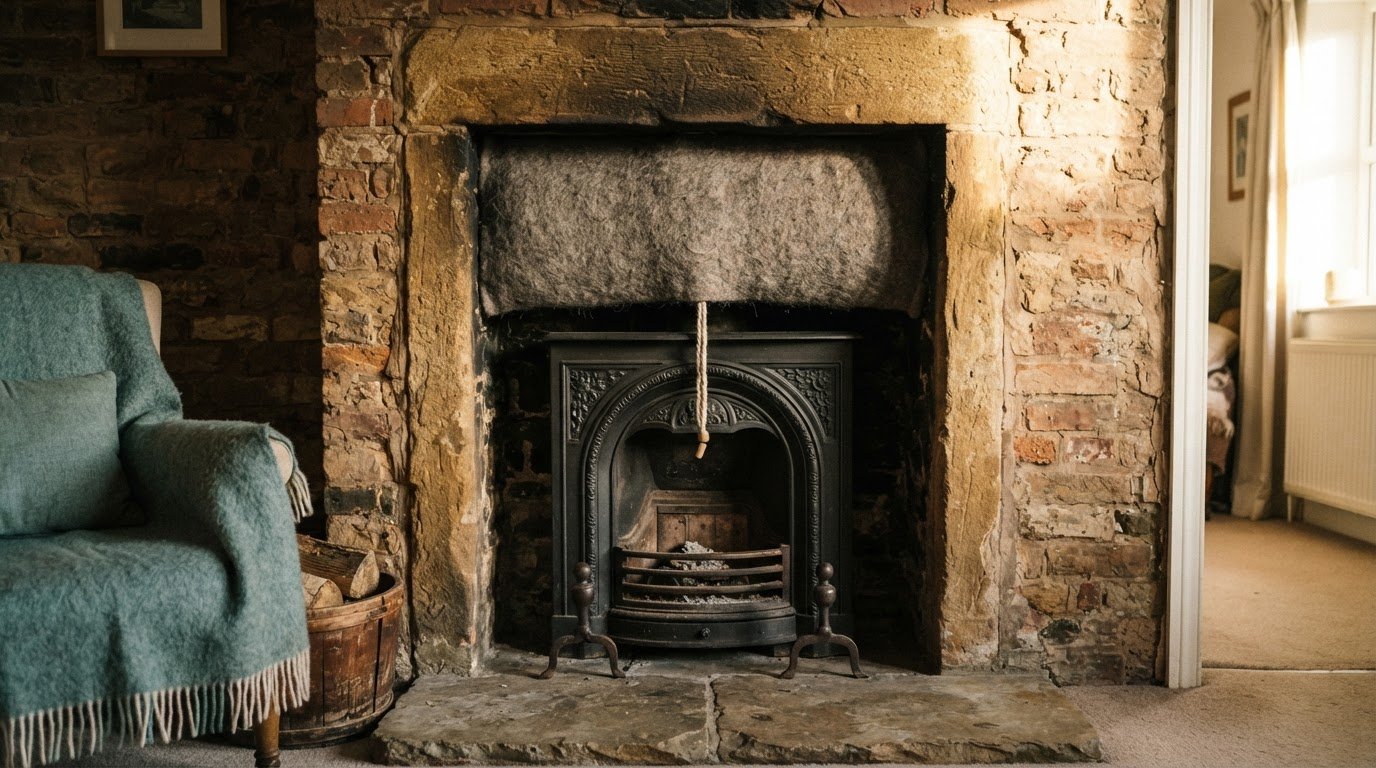
An unused open chimney can quietly carry warmth out of a room: with the central heating on and the fire unlit, up to 40 cubic metres of warm air can escape up the flue within an hour. A chimney draught excluder for heat loss helps limit that airflow when the fireplace isn’t in use, reducing the route for warmth to escape and cold air to enter. It shouldn’t fully block the chimney, so ventilation can remain.
If you feel a cold draught near the hearth, it’s natural to look for a simple way to make the room more comfortable. The right approach depends on how you use the fireplace and how the chimney needs to ventilate.
Here, you’ll learn how chimney draught excluders work, how they compare with balloons and cowls, and what to consider about ventilation. This will help you weigh up options for an unused fireplace and decide when to look at heat loss across the wider home.
Key Takeaways
- Compare removable excluders, chimney balloons and cowls by how the fireplace is used and how the flue needs to breathe.
- Keep ventilation in mind: blocking a draught should not mean sealing a chimney completely.
- A suitable excluder can help limit cold air, soot smells and dust around an unused fireplace.
- If cold draughts persist elsewhere, look beyond the chimney to understand how the home’s wider fabric and ventilation affect comfort.
Draught excluders compared with chimney balloons and cowls
The best option depends on whether you use the fireplace and whether you prefer an internal or external solution. Each choice affects access, ventilation and how the chimney is protected.
The Warm Homes Plan is set to invest close to £15 billion in improving UK homes to cut energy bills, according to the Department for Energy Security and Net Zero.
Types of chimney draught excluders
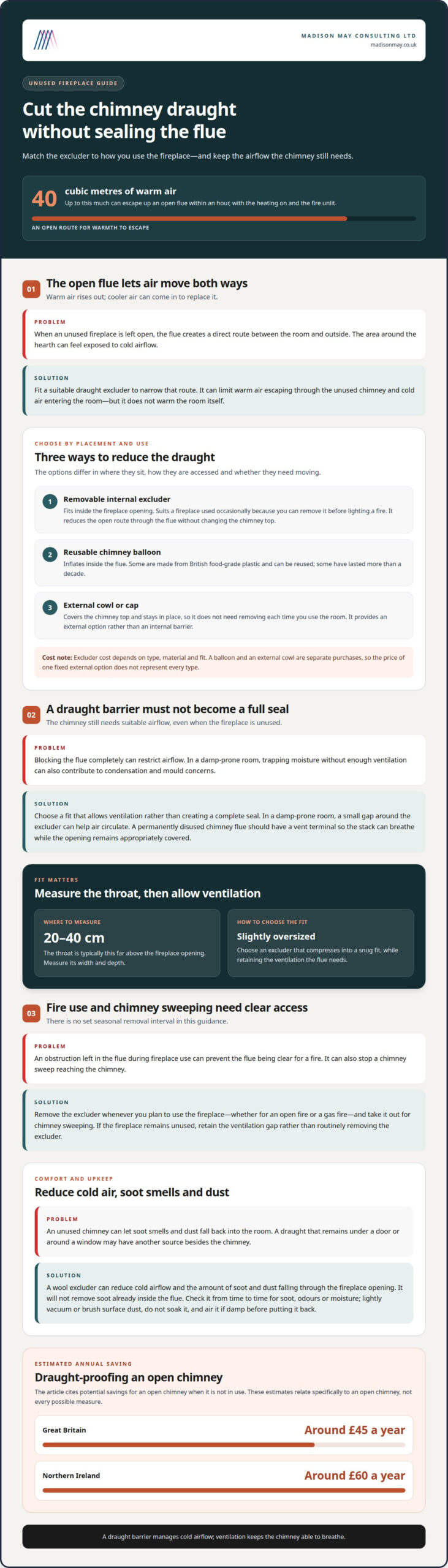
In the UK, options include removable internal excluders, reusable chimney balloons and external cowls or caps. A removable excluder suits a fireplace used occasionally because you can take it out before lighting a fire. Balloons fit inside the flue and are inflated, while cowls cover the chimney top. These options differ in placement and in how easily you can access the flue.
Comparing costs and alternatives
The cost of an excluder depends on its type, material and fit. A balloon and an external cowl are separate purchases, so a price for one fixed external option won’t represent every type of draught excluder. When comparing options, consider how often you use the fireplace as well as the initial outlay.
For an unused fireplace, an internal excluder can reduce the open route through the flue without changing the chimney top. An external cowl stays in place, so you don’t need to remove it each time you use the room. Some chimney balloons are made from British food-grade plastic and can be reused; some have lasted more than a decade.
Fit matters as much as type. Measure the throat’s width and depth just above the fireplace opening, then choose an excluder slightly oversized so it compresses into a snug seal. The throat is typically 20-40 cm above the opening. Before settling on a solution, weigh convenient removal against keeping the chimney protected from above, and retain the ventilation the flue needs.
Keeping ventilation while excluding chimney draughts
A chimney excluder should reduce unwanted draughts without sealing the flue completely. Even an unused fireplace needs suitable airflow.
Ventilation and chimney draughts
Ventilation allows air to move through a chimney, while an excluder limits the direct path for cold draughts. Blocking the flue entirely can restrict the airflow the chimney needs. For an unused fireplace, choose a fit that allows ventilation rather than creating a complete seal. In a damp-prone room, a small gap around the excluder can help air circulate and reduce condensation risk.
For safety, preserve ventilation and remove the excluder before lighting a fire. This applies whether the fireplace is used for an open fire or a gas fire: don’t leave an obstruction in the flue during use. A permanently disused chimney flue should have a vent terminal, which allows the chimney stack to breathe while keeping the opening appropriately covered.
Removal for ventilation and sweeping
There is no set seasonal removal interval in this guidance. Instead, remove a draught excluder whenever you plan to use the fireplace, and take it out to allow access for chimney sweeping. Professional specialists, such as the team at Home Safe Hearth & Chimney, recommend booking a thorough inspection and sweep before putting an unused hearth back into active use. This keeps the flue clear for a fire and lets the sweep reach the chimney. If the fireplace remains unused, retain the ventilation gap rather than routinely removing the excluder.
Condensation and mould can become concerns when moisture is trapped without enough airflow. In a damp-prone room, leave a small gap around the excluder; for a permanently disused flue, a vent terminal allows the stack to breathe. If you notice persistent damp, moisture or mould, both ventilation and the wider room conditions need attention. A draught barrier should manage cold airflow, not close off ventilation altogether.
Reducing cold draughts, soot smells and dust
A wool chimney draught excluder can limit warm air escaping through an unused chimney and cold air entering the room. The effect is most noticeable near an open fireplace, where the flue creates a direct route between the room and outside. Covering the opening can make the hearth feel less exposed to cold air and help the room feel more comfortable.
An unused chimney can also let soot smells and dust fall back into the room. A wool excluder can help reduce both, which may make a difference in a living room where the fireplace is no longer lit. It won’t remove soot already inside the flue, but it can reduce the amount falling through the fireplace opening. If an odour persists, check the excluder for soot, moisture or trapped smells.
Look at the area around the hearth as well as the fireplace itself. If a cold draught remains under a door or around a window, the chimney may not be the only route for outside air. Insulating a chimney can reduce draughts entering from those other areas, such as beneath doors and around windows. The feel of the room and the source of the airflow help distinguish a flue draught from other gaps.
Check the excluder from time to time for soot, odours or moisture, and air it if needed. Lightly vacuum or brush it to remove surface dust; don’t soak it. Air a damp excluder before putting it back in the fireplace, since trapped moisture can contribute to unpleasant smells. Keep it accessible: remove it before lighting a fire and when the chimney needs sweeping. These checks help it reduce cold air, soot and dust without treating it as a permanent seal.
How chimney draught excluders reduce heat loss
An open flue lets warm air rise out of a heated room, drawing cooler air in to replace it. When the fireplace is unused, a fitted excluder narrows that route, so less heated air can escape directly through the chimney. This addresses one pathway for heat loss rather than warming the room itself. A chimney draught excluder for heat loss can therefore make the space around an unused fireplace feel less affected by cold airflow.
The effect is relevant to household energy use. In Great Britain, draught-proofing an open chimney when it is not in use could save around £45 a year; in Northern Ireland, the figure is around £60 a year. Those estimates relate specifically to an open chimney, not every possible source of heat loss. The result depends on the fireplace being unused and the excluder fitting the flue well enough to restrict the airflow.
Think of the excluder as one part of a connected picture. If cold air still enters beneath a door or around a window, blocking the chimney alone won’t address those routes. Conversely, draught-proofing windows, floors and doors can complement chimney measures: the potential saving is around £55 a year in Great Britain and £80 a year in Northern Ireland. These figures describe separate improvements, so they shouldn’t be added together as a guaranteed household saving.
The practical takeaway is to match the measure to the source of discomfort. Notice whether the draught is strongest at the hearth or persists elsewhere in the room. Keep ventilation in mind and remove the excluder before using the fireplace. If cold draughts affect several parts of the home, look more broadly at heat loss instead of relying on one chimney measure. A well-fitted excluder can reduce airflow through an unused flue, but it cannot address every route through which warmth escapes.
Madison May Consulting: Energy efficient home improvements
Madison May Consulting Ltd helps homeowners and landlords look beyond one draught and consider how the wider home affects comfort and heat loss. If cold air persists around windows, doors or a conservatory, its energy efficient home improvements can help identify areas to address. Ventilation Assessments and damp remediation can also help assess airflow and moisture together.
For a broader view, Madison May Consulting Ltd provides PAS 2035 aligned retrofit assessments and detailed EPC improvement plans. These draw on information about the building fabric, services and ventilation to identify practical upgrades. This can help shape a joined-up approach rather than treating the chimney as the only source of heat loss.
Contact Madison May Consulting Ltd to discuss improvements that may suit your home.
Make your next home improvement count
Choosing a chimney draught excluder for heat loss can be a useful first step, but lasting comfort often comes from understanding how the whole home works together. Notice where cold air enters, which rooms feel uncomfortable and whether the issue changes when the fireplace is unused. These observations can help shape a considered plan rather than treating each draught as a separate problem.
Madison May Consulting Ltd offers energy efficient home improvements, including windows and doors and conservatory upgrades. These may be relevant if discomfort extends beyond the fireplace and other parts of the home need attention. Focus on the changes that suit your property and priorities.
Contact Madison May Consulting Ltd to discuss a thoughtful way forward for a warmer, more comfortable home.
Frequently Asked Questions
How do I stop a draught?
Start by identifying where cold air enters, such as an unused fireplace, beneath a door or around a window. If the fireplace stays unused, fit a suitable removable excluder while retaining ventilation. If the draught continues elsewhere, look for other openings rather than assuming the chimney is the only source. Remove the excluder before lighting a fire.
How else can I make my home warm?
Consider where warmth escapes beyond the fireplace. Draught-proofing windows and doors can address gaps, while insulation upgrades may improve the home’s building fabric. Heating upgrades may also form part of a wider plan. The right combination depends on the property’s condition, existing insulation and ventilation, so addressing one cold spot may not resolve discomfort in other rooms.
So, how do I fit one?
Measure the chimney throat’s width and depth just above the fireplace opening, then choose an excluder that compresses to fit snugly. For a chimney balloon, inflate it until it feels firm and secure, then check it again a couple of hours after installation, as the air inside may contract. Remove any excluder before using the fireplace or arranging chimney sweeping.
What is draught proofing?
Draught-proofing means reducing unwanted air movement through gaps in a home’s envelope, such as around doors, windows or an unused fireplace. It does not mean sealing a room completely: ventilation still matters. For example, a door seal may reduce a cold stream beneath the door, while a chimney excluder can limit airflow through an unused flue. Choose a measure that suits the location and its ventilation needs.
How much heat can a chimney draught excluder save in a UK home?
Potential savings depend on where the home is: draught-proofing an open chimney when unused could save around £45 a year in Great Britain, or around £60 a year in Northern Ireland. These are estimates for that measure, not a guaranteed saving for every household. The fireplace’s use and how well the excluder fits affect how much airflow it restricts.
How do chimney draught excluders reduce heat loss?
Choosing a chimney draught excluder for heat loss helps restrict heated indoor air rising through an unused flue, reducing one route by which warmth escapes. With less air leaving through the chimney, less cold replacement air is drawn into the room along that route. However, an excluder addresses the flue only; it won’t stop heat escaping through unrelated gaps or poorly insulated parts of the home.