

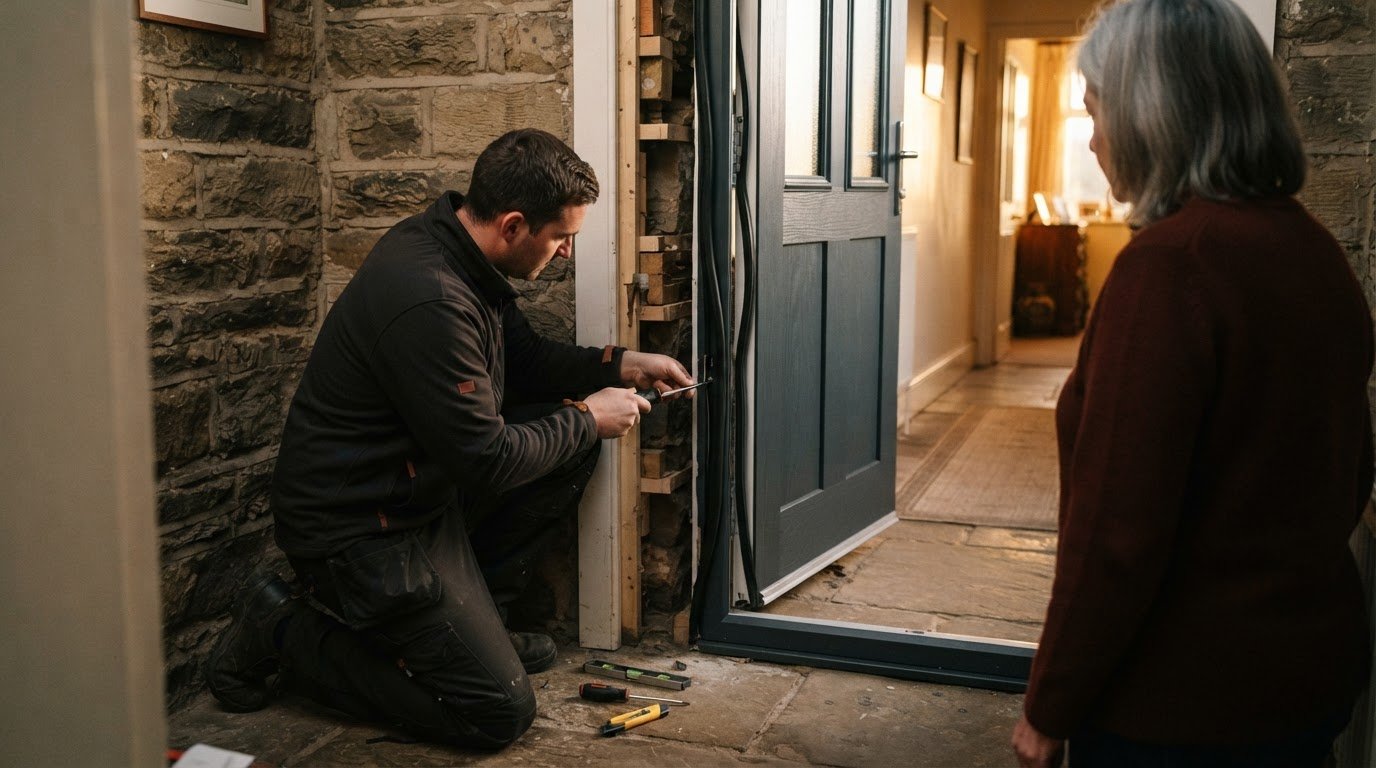
An insurance-backed guarantee can protect a retrofit customer if the installer stops trading and can no longer honour its written workmanship guarantee. Insurance backed guarantees for retrofit work sit behind that original guarantee; the policy wording sets out what is covered and for how long, often up to 10 years.
It’s reasonable to expect a guarantee to offer lasting reassurance, but an insurance-backed guarantee isn’t a promise to cover every problem or loss. It may cover remedial work for installation faults, while exclusions, claim limits and procedures depend on the policy.
This guide explains what an insurance-backed guarantee can cover, how it may help if an installer ceases trading, and why requirements differ across retrofit measures and schemes. It also outlines the details that shape a claim, helping you understand how this protection fits into your home improvement decisions.
Key Takeaways
- An insurance-backed guarantee sits behind the installer’s written guarantee; its policy wording defines the covered work, exclusions and limits.
- If the contractor ceases trading, the policy may fund remedial work for covered faults during the remaining guarantee period.
- Requirements differ across glazing, roofing, renewables and other domestic installations, so the applicable scheme and measure matter.
- Claim outcomes can depend on notifying the insurer before arranging repairs and following the policy’s process and terms.
What is an Insurance Backed Guarantee?
An insurance-backed guarantee (IBG) is a project-specific insurance policy that supports an installer’s written guarantee. For insurance backed guarantees for retrofit projects, the policy wording determines which defects and remedial work are covered.
Workmanship, Materials and Building Regulations
An IBG may insure against faulty workmanship or materials, with remedial work covered under its terms. It supports the installer’s own guarantee but doesn’t replace the installer’s responsibility for work quality. The Code for Construction Product Information defines IBGs as project-specific insurance policies. Building Regulations cover may also apply: the stated minimum is six years, unless the product has a shorter manufacturer’s guarantee.
Eligible Building and Retrofit Work
Cover can apply to retrofit installations and other building work, depending on the policy and guarantee issued for the project. Insured work might include materials, installation or workmanship; design faults aren’t automatically covered unless the policy says so. An IBG supports the specific guarantee, rather than protecting every part of a property or later alteration. When carrying out access improvements such as door replacements or lock upgrades, consulting professional residential security providers such as napleslocksmithcompany.com offers a helpful example of how specialist installation and workmanship standards protect property security.
Guarantee Costs and Duration
The cost depends on the project, work covered, policy terms and cover period; the price is given after a quote request. Insurance backed guarantees for retrofit work commonly mirror the installer’s guarantee term, subject to the policy’s maximum cover period. Cover often lasts 10 years, but terms vary by project and scheme. The written policy shows the start and end dates, alongside any limits on the amount payable.
Exclusions and Coverage Limits
Exclusions and limits define which claims a policy accepts and how much it may pay. For example, it may exclude defects linked to missed recommended maintenance or indirect losses, such as damage elsewhere in the building. Policies may also set a cover cap or excess and generally require insurer consent before remedial work starts. Structural changes affecting the insured work can invalidate cover, so read the policy wording carefully.
How insurance-backed guarantees protect customers if a contractor ceases trading
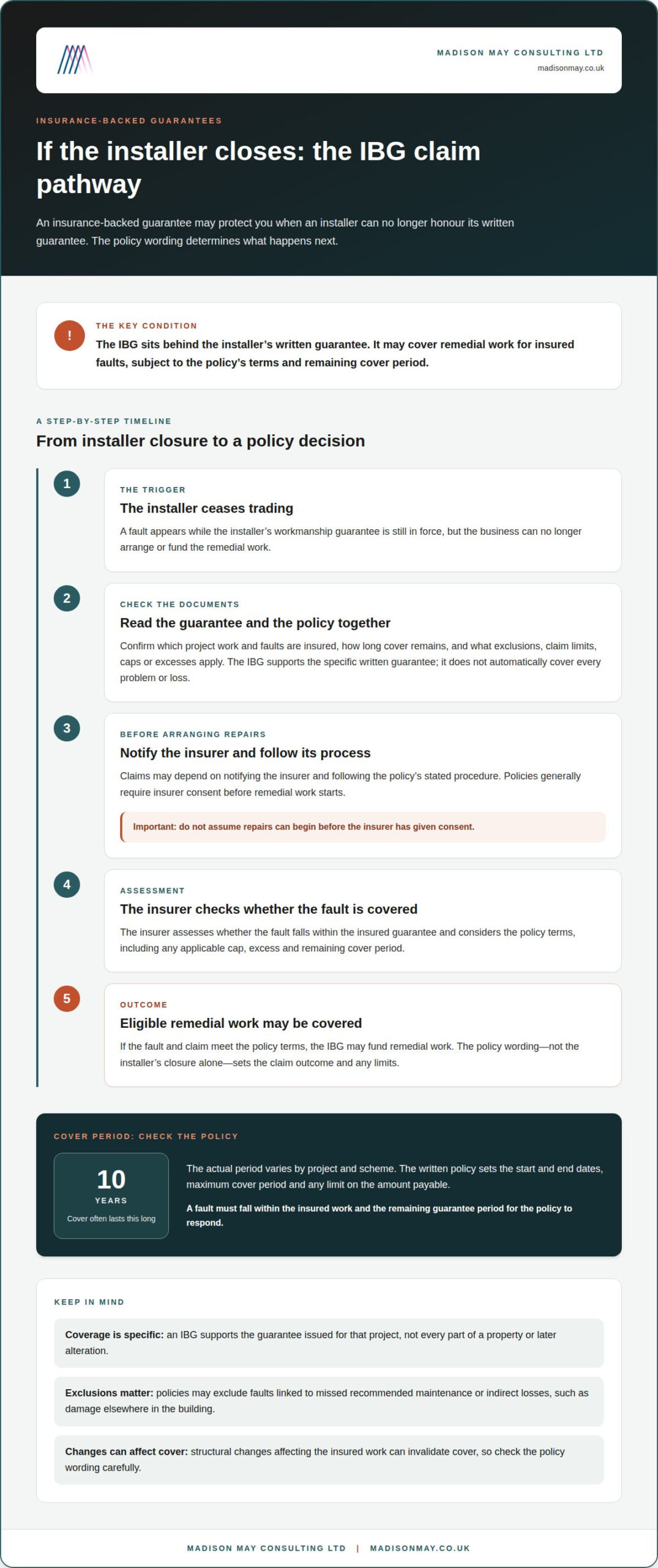
An insurance-backed guarantee can preserve protection when an installer can no longer honour its written guarantee. The policy then governs eligible claims and any remaining cover period.
Protection When an Installer Closes
If the installer ceases trading during its workmanship guarantee period, the IBG may provide cover for the remainder of that period. It backs the installer’s written guarantee for covered workmanship or material faults, subject to the policy terms. This matters because the original business can no longer arrange or fund the remedial work itself.
For example, if a fault appears after the installer has closed, the homeowner can claim under the policy. The insurer assesses whether the fault falls within the insured guarantee and follows the stated claims process. The policy determines the outcome, including any cap, excess or requirement to obtain consent before repairs begin.
Financial Protection Requirements
Financial protection arrangements can help homeowners if an installation contractor cannot honour its obligations. This gives customers a route to protection beyond the installer’s own business, within the applicable scheme arrangements.
MCS is transitioning to a redeveloped scheme through 2026. All MCS-certified installers must be on that redeveloped scheme by 31 March 2027. These changes make the scheme’s financial protection arrangements relevant to customers considering certified renewable installations. Certification and the contract determine which protection applies, so an IBG should not be assumed to be identical across every installation.
Guarantee Transfers When Selling
An IBG may transfer automatically to a new property owner, but the policy wording controls whether it does. The installer’s written guarantee may have separate transfer terms, so transfer of one document doesn’t establish transfer of the other.
For a UK home sale, an IBG may transfer to the buyer, subject to its terms; the original guarantee may have separate transfer conditions. This distinction matters to buyers reviewing work completed by a previous owner. Read the policy and guarantee together to understand whether the new owner can rely on the remaining cover and which claim conditions apply.
IBG requirements for glazing, roofing, renewables and domestic installations
Insurance-backed guarantee requirements vary by scheme, contract and the retrofit measures delivered. The sector-specific rules below explain why both the installer’s certification and the project type matter.
Backing an Installer Guarantee
An installer-issued guarantee describes the work promised, while an insurance policy can back that guarantee if the installer cannot honour it. This distinction matters because the policy, rather than a testimonial or certificate alone, sets the insured scope and conditions.
For specialist installers and trades, an IBG links a specific project to insurance cover for a set period. Its premium and terms relate to the policy, while the installer’s written guarantee states the original workmanship commitment. For example, roofing and glazing guarantees may have different periods and conditions, even when both are insurance-backed; similarly, for specialised architectural features such as insulated rolling shutters, industry guides from Sahara Doors & Metals LLC demonstrate how proper installation standards and manufacturer warranties go hand in hand.
IBGs and TrustMark Registration
TrustMark-registered businesses must provide a minimum 2-year IBG on domestic installations. For registration, installers need to evidence that they have an IBG provider and issue guarantees after installation when required during Simply’s surveillance audits. This gives customers a clear distinction between scheme registration and the protection attached to their own project.
Requirements differ across measures. Double-glazing CPS rules have required a minimum 6-year IBG since June 2014. NFRC CPS-registered roofers must provide a 10-year IBG for notified roof refurbishment work with a contract value up to £50,000. These examples apply to their stated schemes and work, not every roof or window project.
For solar PV and renewables, MCS requires a workmanship guarantee of at least 2 years, and 6 years under the redeveloped scheme. The MCS transition is rolling out through 2026, with all MCS-certified installers required to be on the redeveloped scheme by 31 March 2027. These figures describe workmanship guarantee requirements, not a universal IBG term.
Installer testimonials can describe a customer’s experience, but they don’t establish what a policy covers. The project’s written guarantee and insurance terms specify the cover, period and claim conditions.
Claims processes and provider governance
A claim depends on the policy wording, evidence of the fault and the steps taken before repairs. Follow the stated notification process so the insurer can assess whether the issue falls within the insured guarantee.
Report the fault to the insurer or claims administrator using the method set out in the policy. Include the guarantee, installation records, a clear description of the problem and relevant photographs. The insurer may arrange an inspection or request further evidence before deciding whether the claim is covered.
Wait for the insurer’s consent before arranging remedial work. IBG policies generally don’t cover repairs carried out without prior consent, even if the fault appears related to the installation. Some policies also charge a claim service fee for investigation, which may not be refunded if the claim is invalid. Check the policy for any fee and the evidence required.
Keep maintenance records with the written guarantee and warranty. A policy may exclude defects caused by missed recommended maintenance, so dated invoices or service notes can help show how the property was cared for. Records of specified upkeep may help distinguish an installation fault from damage linked to neglected maintenance.
Governance differs between the guarantee and the insurance product. Guarantees are enforceable as contracts, while companies providing regulated insurance services, such as taking premiums or giving suitability advice, must be registered and regulated. The Financial Conduct Authority regulates insurers’ behaviour; the Prudential Regulation Authority oversees their soundness as part of the Bank of England. The Insurance Act 2015 and FCA ICOBS rules govern the insurance product.
A competent claims assessment applies the policy terms to the evidence, including exclusions, limits and any excess. For a retrofit project, a retrofit assessment can help clarify the building work and measures involved, although it doesn’t replace the insurer’s claims process.
Madison May Consulting Ltd
Madison May Consulting Ltd helps homeowners and landlords understand which energy improvements may suit their property. If you’re planning retrofit work, its PAS 2035-aligned assessment considers the building fabric, services and ventilation, then sets out practical recommendations in a detailed EPC Improvement Plan.
A broader view can help clarify how proposed measures fit together, including windows and doors, insulation, heating, conservatory upgrades, or ventilation and damp remediation. A retrofit assessment supports informed planning; it is separate from an insurance-backed guarantee for retrofit, which is governed by its own policy and the installer’s guarantee.
To discuss your property and retrofit plans, contact Madison May Consulting Ltd.
Plan retrofit work with clarity
Treat the guarantee as one part of a considered retrofit decision, alongside the suitability of the proposed work for your home. An insurance-backed guarantee for retrofit work covers only what the policy defines; it doesn’t replace thoughtful planning of the improvements themselves.
Madison May Consulting Ltd can help you plan energy-efficient home improvements, including windows and doors or conservatory upgrades, in the context of your property. This brings practical needs and the character of your home into the same conversation while keeping insurance cover distinct from the retrofit plan.
If you’re weighing up improvements and want to discuss what may suit your property, contact Madison May Consulting Ltd for advice. A considered next step can help you shape a home that feels comfortable, works well and reflects the way you live.
Frequently Asked Questions
How many years does the warranty last?
There’s no single duration for every retrofit warranty. An installer’s guarantee and its supporting insurance policy may have different terms, although an IBG may mirror the installer’s period up to the policy’s maximum. Some schemes offer cover periods of up to ten years. The relevant documents state the start date, end date and work covered.
What is a guarantee, and what are the different types of guarantees?
A guarantee is a contractual promise about specified work or a product. Its terms explain the remedy if something goes wrong. For home improvements, this may be an installer’s workmanship guarantee or a manufacturer’s product warranty. An insurance-backed guarantee is different: it supports the installer’s promise if the installer can’t honour it, subject to the policy terms.
What is an IBG, and how can it be identified?
An IBG is a project-specific insurance policy that supports an installer’s written guarantee. To identify one, look for the policy or certificate associated with the installation, then check that it describes the insured work, cover period and claim conditions. The installer’s guarantee alone isn’t the insurance policy. The documents are connected but serve distinct purposes.
What is the requirement to keep maintenance records, and can contractors reject a claim without them?
There’s no universal record-keeping rule for every IBG; the policy’s maintenance conditions determine what evidence matters. Keep dated records, such as service notes or invoices, for recommended upkeep. Missing records don’t automatically settle a claim, but an insurer may refuse cover if the policy excludes damage caused by missed maintenance and the evidence supports that exclusion.
What is an insurance-backed guarantee for a home retrofit in the UK?
An IBG is project-specific insurance supporting a retrofit installer’s written guarantee. It may provide a route to remedial work if the installer can’t honour that promise. The policy applies to its defined work and conditions, not every defect or loss in the home. It backs the guarantee but doesn’t replace the installer’s responsibility for the installation.
Which UK retrofit measures and installers can be covered by an insurance-backed guarantee?
Glazing, notified roof refurbishment, solar PV and other domestic installations appear in UK schemes with measure-specific requirements. Whether a retrofit project is insured depends on its scheme, contract and work delivered. For example, rules for a TrustMark-registered domestic installation differ from those for NFRC CPS-registered roofing. The installer’s certification and project policy determine the relevant terms.