


Picture a crisp November evening in a stone-built terrace overlooking the Calder Valley, where the wind whistles through the original sash windows and the warmth of your hearth seems to vanish into the night air before it can truly settle. You likely believe that your home should be a serene sanctuary of comfort; however, the persistent chill of an exposed West Yorkshire winter often disrupts this sense of calm. Many homeowners in Halifax find that even with the heating on, meticulous draught proofing remains the missing element in their quest for a truly curated and comfortable living environment.
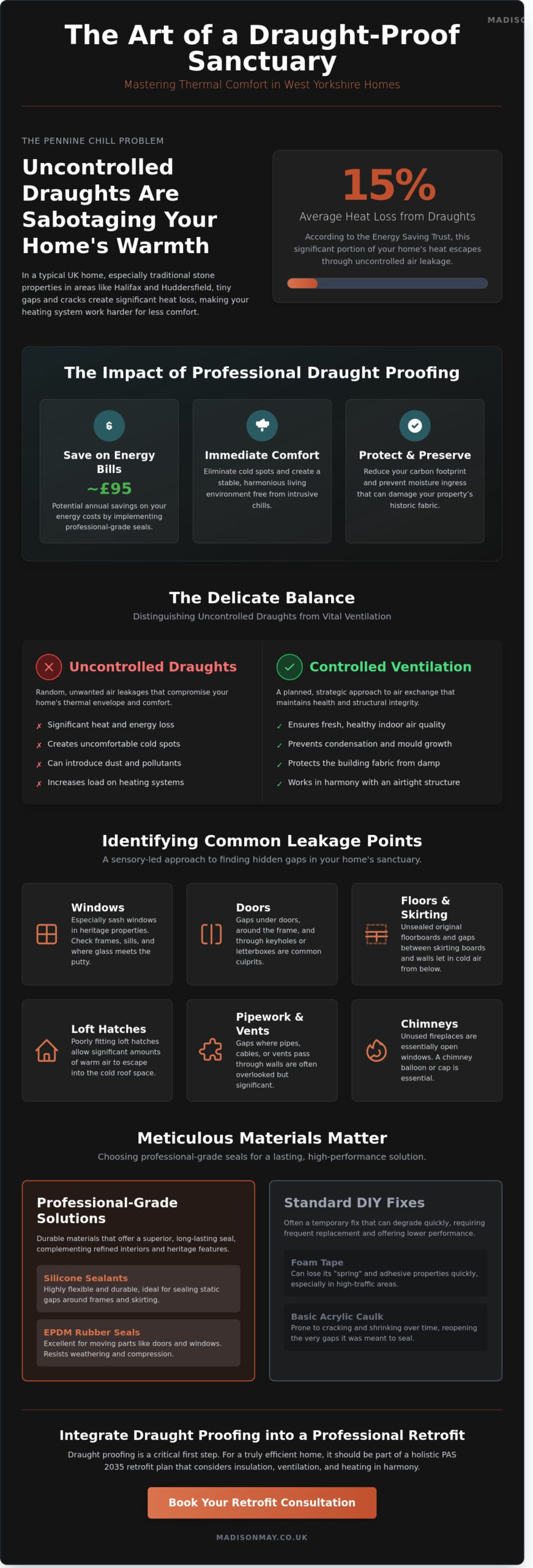
This guide explores how professional-grade sealing and sophisticated retrofit strategies can transform your residence into a thermal sanctuary, ensuring every room retains its soul and its warmth. By addressing the 15% of heat loss that the Energy Saving Trust attributes to air leakage in typical UK homes, you can achieve a quiet, energy-efficient environment without sacrificing air quality. We’ll examine the delicate balance between sealing gaps and maintaining essential ventilation; this ensures your property remains protected from mould while you enjoy a seamless integration of heritage charm and modern thermal performance.
Key Takeaways
- Understand how the biting Pennine winds of West Yorkshire impact your home’s thermal integrity and why a bespoke approach is required for Halifax and Huddersfield properties.
- Learn to navigate the delicate balance between sealing intrusive air leakages and maintaining the vital ventilation necessary to preserve your home’s breathability and air quality.
- Discover why selecting professional-grade materials like EPDM rubber or silicone is essential for creating a lasting seal that complements the heritage of a refined interior.
- Master a sensory-led approach to draught proofing that allows you to identify and meticulously address hidden apertures in every room of your sanctuary.
- Explore how integrating these meticulous sealing measures into a professional PAS 2035 retrofit plan ensures your home achieves a seamless harmony of comfort and performance.
The Pennine Chill: Why Draught Proofing is Essential for West Yorkshire Properties
In the rugged landscapes of Halifax and Huddersfield, the Pennine winds possess a persistent, searching quality that tests the integrity of every home. Draught proofing represents the meticulous sealing of these uncontrolled air leakages within a building’s fabric, ensuring that the warmth we carefully cultivate remains within our walls. It’s a process of refinement, moving beyond simple repairs to address the invisible gaps where the external elements intrude upon our internal peace. For homeowners seeking energy efficient home improvements in Halifax, this foundational step is indispensable. It quietens the house and stabilizes the atmosphere of the living space, transforming a mere structure into a true sanctuary.
The Impact of West Yorkshire Architecture on Heat Loss
Traditional stone properties, while possessing an undeniable soul and heritage, often suffer from what architects term uncontrolled air infiltration. The porous nature of gritstone and the natural settling of Victorian or Edwardian terraces create hidden pathways for the chill to enter. Common leakage points often reside in the subtle gaps around sash windows, the spaces beneath original floorboards, or the areas where masonry meets timber. Beyond the reduction in energy bills, the sensory experience of a home free from draughts is profound. It creates a space where the air feels still, intentional, and consistently welcoming, allowing the home’s narrative to unfold without the distraction of a cold breeze.
The Financial and Environmental Narrative
The quantifiable impact of these hidden gaps is significant, with industry data for 2026 indicating that unsealed homes in the UK lose between 11% and 15% of their heat through air leakage alone. While more invasive measures like solid wall insulation require substantial disruption, the immediate return on investment for draught proofing is exceptionally high. By integrating a high-quality draught excluder or professional grade seals, you can save approximately £95 annually on energy costs. This small, thoughtful intervention elevates the home’s performance, aligning environmental responsibility with the pursuit of a refined, comfortable lifestyle. Reducing your carbon footprint becomes a seamless part of enhancing your home’s internal sanctuary.
- Immediate Comfort: Eliminating cold spots creates a more harmonious living environment.
- Cost Effectiveness: One of the most affordable ways to lower heating bills in stone-built Yorkshire homes.
- Preservation: Preventing moisture ingress through gaps helps protect the building’s historical fabric.
- Sustainability: A crucial step in meeting UK net-zero targets by 2050.
Choosing to address these air leakages is an act of stewardship for your property. It reflects a commitment to quality and a desire to live in a space that is as functional as it is beautiful. In the context of the West Yorkshire climate, where the weather can change with the turn of a tide, creating a sealed, secure envelope for your home is the first step toward a more sustainable and elegant future.
The Delicate Balance: Distinguishing Uncontrolled Draughts from Vital Ventilation
A home should feel like a sanctuary, a curated space where the atmosphere is as intentional as the architecture itself. While draught proofing is essential for warmth, we must respect the Ventilation Gap, the subtle space between an airtight envelope and a stagnant one. When a property is sealed too tightly without a professional strategy, moisture becomes trapped, often necessitating damp remediation in West Yorkshire to correct the resulting condensation. Madison May Consulting Ltd approaches this challenge by viewing the building as a living organism that requires a rhythmic exchange of air to remain healthy and vibrant.
The Science of Building Breathability
Modern retrofit consultancy follows the golden rule of “tighten then ventilate,” ensuring that as we block the unwanted chill, we maintain the property’s soul through controlled air exchange. Trickle vents, air bricks, and mechanical extractors are not flaws in the design; they are the lungs of the building. It’s particularly vital to identify when a perceived draught is actually a legal safety requirement for a combustion appliance, such as an open fire or a gas boiler. Consulting an Energy Saving Trust guide can help you identify these critical air paths before you begin any work on your Halifax property.
Avoiding the Pitfalls of Over-Sealing
Without a meticulous assessment, DIY sealing risks transforming a breathable home into a damp environment where mould thrives in the shadows. A PAS 2035 assessment provides the data needed to understand the specific air-change requirements of your unique property, preventing the 25% increase in humidity often seen in poorly ventilated retrofits. Uncontrolled infiltration refers to the accidental entry of cold air through gaps in the building fabric, whereas purposeful ventilation is the intentional and managed exchange of air required to maintain health and structural integrity.
Madison May Consulting Ltd’s whole-house approach ensures that every intervention is bespoke, respecting the heritage of West Yorkshire stone while embracing modern efficiency. We believe that draught proofing should never come at the cost of air quality. By integrating high-quality materials with a deep understanding of building physics, we create environments that feel both secure and refreshingly light. This meticulous balance preserves the fabric of your home and the health of those within it, ensuring your living space remains a true reflection of comfort and grace.
If you’re ready to refine your home’s performance while maintaining its breathable essence, speak with our team to begin your journey toward a more efficient, elegant environment.
Selecting Meticulous Materials: From Bespoke Seals to Heritage Window Solutions
To protect the sanctuary of a Halifax home, one must look beyond the utilitarian aisles of a standard hardware store. The choice of material is a silent dialogue between preservation and comfort, requiring a selection that respects the architectural narrative of West Yorkshire. While mass-produced plastic solutions might offer a fleeting reprieve, they often compromise the tactile elegance of a period property. True draught proofing is an art of subtlety, where the materials chosen are as enduring as the stone walls they inhabit.
Selecting professional-grade EPDM rubber or silicone seals over temporary foam strips is a decision rooted in longevity. Foam tends to degrade within two years when exposed to the persistent moisture of the Pennine landscape. In contrast, high-quality silicone remains supple for over a decade, maintaining its profile against the frame to ensure a consistent thermal barrier. This meticulous attention to detail ensures that the functionality of your home remains hidden, allowing the beauty of the design to take centre stage.
Curating Your Draught Proofing Toolkit
A refined toolkit for a timber-framed home requires more than a one-size-fits-all approach. Every aperture possesses its own character and demands a specific response. For the grand entrance doors common in Skircoat Green, professional-grade perimeter seals provide a robust defence against the elements. You must choose between compression seals, which excel on doors that close firmly against a stop, and brush strips, which are indispensable for the moving parts of a sliding mechanism. This Energy Saving Trust’s guide to draught proofing confirms that professional installation can significantly reduce heat loss, often saving a typical UK household approximately £45 annually on energy bills. Durability is the hallmark of quality here; we select materials designed to withstand the biting winds that sweep across the Calder Valley without losing their seal or aesthetic appeal.
Heritage and Aesthetic Considerations
In the historic districts of Halifax, such as the Victorian terraces of Savile Park or the workers’ cottages in Akroydon, the sash window is a defining feature that requires a bespoke touch. Draught proofing in these conservation areas must be invisible to the naked eye. It’s vital that energy efficiency measures do not detract from the soul of a period property. We focus on discreet solutions, such as parting beads with integrated brushes that sit deep within the window’s channel.
The final layer of this process is the harmony of colour. Rather than accepting a standard white or brown finish, we curate seal colours to match your specific interior palette. Whether your frames are finished in a traditional linseed oil paint or a contemporary charcoal, the seal should blend into the shadow line of the frame. This commitment to seamless integration ensures that your home feels like a sanctuary, where the only thing you notice is the profound sense of calm and the absence of the cold.
A Meticulous Guide to Draught Proofing Your Property Room-by-Room
Creating a draught-free environment begins with a quiet, sensory survey of your living spaces. By slowly tracing the perimeter of each room with a lit candle or a delicate incense stick, you can identify the subtle air currents that disrupt the stillness of your sanctuary. This initial observation allows you to prioritise the most intrusive leaks, ensuring your approach to draught proofing is both intentional and effective. Once these pathways are identified, the restoration of comfort can truly begin through a series of measured, artisanal improvements.
Windows and Doors: The Primary Thresholds
The apertures that connect us to the outside world are often the most significant sources of heat loss. Applying bespoke perimeter seals to casement and sash windows requires a refined hand to ensure the seals compress perfectly without impeding the window’s movement. Small details, such as installing internal covers for keyholes and letterbox brushes, provide a finishing touch that significantly reduces whistling gusts. For the characterful, uneven stone floors found in many traditional Yorkshire cottages, a high-quality door brush or a heavy, weighted draught excluder offers a practical yet elegant solution that respects the heritage of the architecture.
Floors, Skirtings, and Lofts
Beyond the obvious openings, air often escapes through the very fabric of the building. Floorboards and skirting boards in older properties possess a natural rhythm of expansion and contraction. Using flexible, translucent fillers allows the timber to breathe while sealing the gaps that draw cold air from the void below. Effective draught proofing also extends to the often-ignored gaps between floorboards. Perhaps the most overlooked ‘chimney’ in a home is the loft hatch. By meticulously insulating the back of the hatch and applying a compression seal around its edge, you prevent the stack effect from pulling warmth into the rafters. Don’t forget the discreet areas where utility pipes enter the property; these small penetrations can be easily sealed with expanding foam or silicone to maintain the home’s thermal integrity.
The hearth requires a specialised approach to balance warmth with safety. An open chimney can be a significant drain on energy, but it’s essential to use a breathable chimney balloon or a dedicated wool ‘chimney sheep’ that allows for minimal ventilation to prevent damp. To confirm the success of these interventions, you might opt for a professional air pressure test. This technical verification ensures your home meets the high standards of modern efficiency while preserving its unique soul. If you’re ready to transform your living space into a refined, temperate retreat, explore our bespoke interior design services to see how we integrate comfort with timeless aesthetics.
Beyond the Quick Fix: Incorporating Draught Proofing into Your Professional Retrofit Journey
While sealing a window or adding a brush to a door provides immediate relief, true thermal excellence requires a more holistic perspective. We view draught proofing not as an isolated task, but as a foundational element within a bespoke PAS 2035 in West Yorkshire plan. This gold standard ensures that every intervention, from insulation to ventilation, is carefully balanced to protect the structural integrity and the soul of your home. A Retrofit Coordinator acts as the conductor of this process. They ensure that airtightness doesn’t compromise air quality, creating a sanctuary that breathes as naturally as it retains warmth. This professional oversight prevents the common pitfalls of DIY measures, such as trapped moisture or poor indoor air quality, which can arise when a house is sealed too tightly without a coordinated ventilation strategy.
The Value of a Professional Assessment
Effective restoration begins with clarity rather than guesswork. A professional assessment moves beyond the obvious, using advanced thermal imaging to reveal heat loss patterns that remain invisible to the naked eye. These surveys identify why a room feels cold despite the heating being on, often pointing to structural bypasses or hidden cavities behind skirting boards. By grounding your home’s evolution in data, we can create an EPC improvement plan that targets a specific rating. For example, moving a traditional stone property from a Band E to a Band C requires a strategic sequence of measures, and understanding the available grants for cavity wall insulation in West Yorkshire can make this journey significantly more accessible. This meticulous survey is the vital first step in any whole-house transformation, allowing us to identify deeper issues that simple draught proofing cannot solve on its own.
Your Journey to a Refined, Efficient Home
Aligning your property with the Future Homes Standard is about more than just meeting government targets; it’s about future-proofing your lifestyle and heritage. This journey requires a delicate touch to ensure that modern efficiency standards don’t strip away the character of a Halifax residence. With professional project management, the technical complexities of ventilation and thermal bridging are handled with quiet precision. You gain the peace of mind that comes from knowing every detail is technically compliant and aesthetically considered.
Madison May invites you to begin this transformative process. We curate each step to ensure your home becomes a masterpiece of comfort and technical excellence. Our approach integrates the functional necessity of energy efficiency with the emotional need for a beautiful, tranquil living space where every material is chosen with care.
Request a consultation today to explore how we can elevate your living space into a warm, elegant sanctuary.
Transforming Your Halifax Heritage Home into a Lasting Sanctuary
True comfort in a West Yorkshire home relies on the delicate balance between breathability and thermal efficiency. By addressing uncontrolled air leaks through high-quality draught proofing, you move beyond temporary fixes to create a space that feels as refined as it looks. This process is most effective when guided by the PAS 2035 framework; a government-backed standard that ensures every architectural detail is preserved while your property’s energy performance is elevated. Our approach focuses on bespoke seals and detailed EPC improvement plans that respect the unique soul of your heritage building.
The journey toward a more sustainable and serene living environment requires a professional touch that understands both the history and the future of your property. As specialists in West Yorkshire heritage properties, we provide the meticulous craftsmanship needed to integrate modern efficiency into timeless design. Begin your journey to a warmer home-book a professional Retrofit Assessment today. Your home deserves a narrative of warmth and quiet confidence that lasts for generations to come.
Frequently Asked Questions
Is draught proofing really worth the investment for an older house?
Draught proofing is one of the most rewarding investments for a period property, offering a return that transcends mere financial gain by preserving the home’s historic integrity. According to the Energy Saving Trust’s 2023 data, a typical semi-detached home in the UK can save approximately £45 to £125 annually on heating bills. Beyond the numbers, this meticulous process transforms a chilly Victorian or Georgian residence into a true sanctuary, ensuring that the essence of your home remains warm and inviting throughout the harsh West Yorkshire winters.
Can I draught proof my home myself, or do I need a professional?
While simple tasks like applying adhesive foam strips are manageable for a weekend project, engaging a professional ensures a bespoke finish that respects the architectural narrative of your home. Specialist installers provide a level of meticulous craftsmanship that DIY solutions often lack, particularly for complex timber frames or external doors. Entrusting your sanctuary to an expert guarantees that every seal is integrated seamlessly, providing a durable result that maintains the aesthetic harmony of your living spaces while meeting modern performance standards.
Will draught proofing my home cause damp or mould issues?
Draught proofing does not cause dampness when implemented with a thoughtful understanding of a building’s natural breathability and ventilation requirements. It’s essential to maintain the delicate balance between sealing unwanted gaps and ensuring controlled airflow, as outlined in Part F of the UK Building Regulations. By integrating trickle vents or air bricks alongside your draught proofing efforts, you create a healthy, curated environment that prevents moisture buildup while still retaining the precious warmth within your walls.
How do I identify where the draughts are coming from in my property?
Identifying the subtle ingress of cold air requires a sensory approach, often starting with the simple movement of a candle flame or an incense stick held near window frames and skirting boards. For a more scientific exploration, a thermal imaging survey can reveal precise heat loss patterns, often showing temperature differences of 5 degrees or more in neglected corners. This diagnostic journey allows us to map the invisible currents within your home, ensuring that every intervention is intentional and addresses the true source of discomfort.
What are the best draught proofing solutions for traditional sash windows?
The most elegant solutions for traditional sash windows involve a bespoke draught-stripping system that is routed directly into the timber staff and parting beads. This meticulous method allows the windows to glide effortlessly while virtually eliminating rattles and cold air infiltration. By choosing high-quality brush piles and silicone seals, you preserve the timeless beauty of your Halifax heritage property while achieving a thermal performance that rivals contemporary glazing, creating a seamless integration of history and comfort.
Does draught proofing help with noise reduction as well as heat loss?
Draught proofing significantly enhances the acoustic soul of a home, as the same gaps that permit cold air also allow the intrusion of external noise. Professional sealing can reduce the transmission of street sounds by up to 10 decibels, fostering a sense of calm and seclusion within your private sanctuary. This dual benefit ensures that your living environment is not only thermally efficient but also a quiet retreat from the bustling world outside, reflecting a commitment to both functionality and peace.
Are there any grants available for draught proofing in West Yorkshire?
Residents in West Yorkshire may find support through the ECO4 scheme or the Home Upgrade Grant (HUG2), which Calderdale Council facilitates for eligible households. These initiatives often target homes with an EPC rating of D or lower, providing vital funding for energy efficiency measures that include draught proofing and insulation. Navigating these options is a key step in the journey toward a more sustainable home, allowing you to access resources that elevate your property’s performance while respecting your financial considerations. For a comprehensive overview of available funding, our guide to grants for cavity wall insulation in West Yorkshire provides detailed insight into the schemes that can support your wider retrofit ambitions.
How does draught proofing fit into a PAS 2035 retrofit assessment?
Within the framework of a PAS 2035 retrofit assessment, draught proofing is viewed as a fundamental component of a holistic, whole-house energy strategy. This professional standard, introduced in 2019, ensures that every improvement is curated to work in harmony with the building’s unique structure and its occupants’ needs. By including draught proofing in this comprehensive narrative, you ensure that your home’s journey toward efficiency is managed with the highest level of oversight, resulting in a space that is both beautiful and exceptionally high-performing.