

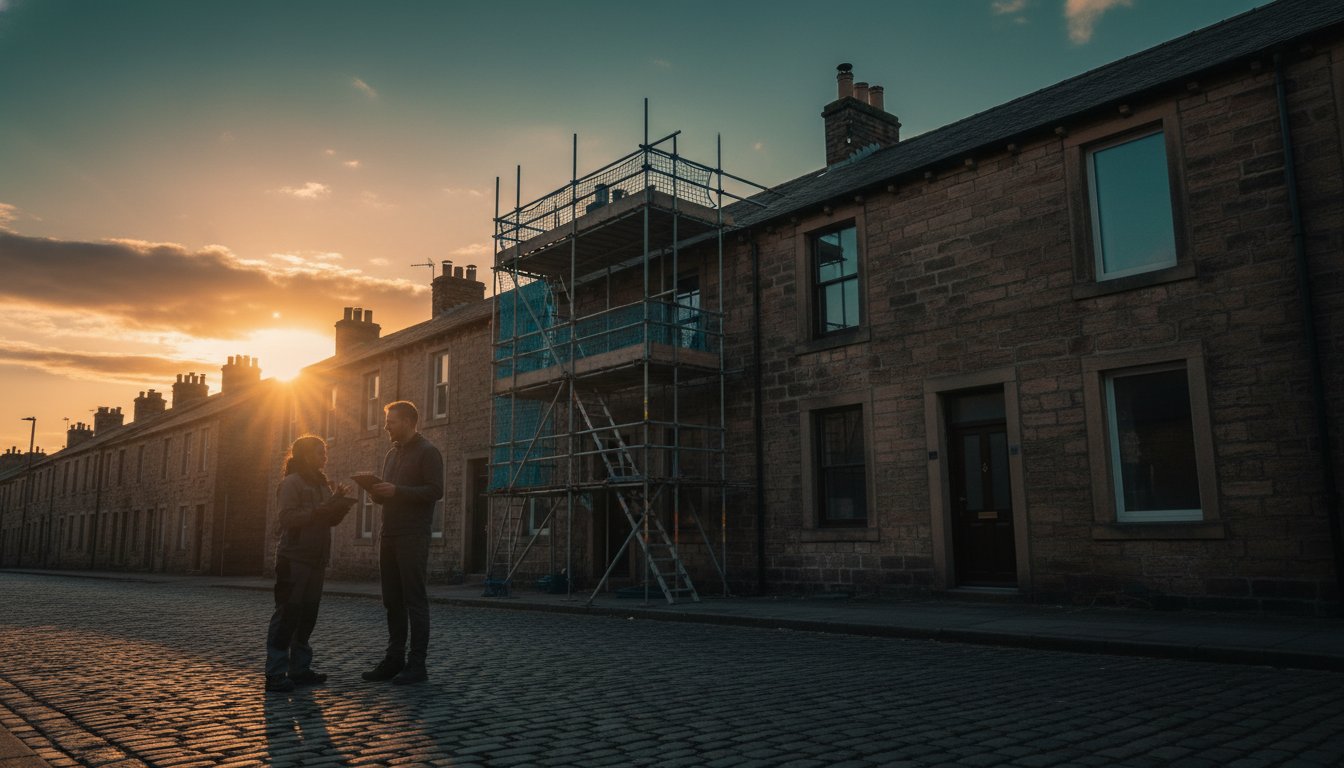
The true value of a Halifax stone terrace isn’t just in its heritage facade; it’s in its ability to evolve into a high-performing sanctuary before the 2026 mortgage lending criteria shift. You likely feel the tension between preserving the soul of your property and the urgent need for modern efficiency, especially when the advice you receive feels generic or contradictory. It’s understandable to worry that over-insulating might trap moisture within our historic walls. Many homeowners in our region are currently addressing the specific challenge of how to get EPC rating from D to C Halifax without compromising the structural integrity or the aesthetic charm of their residence.
We believe that your home should be a sanctuary of comfort rather than a source of technical anxiety. This guide offers a sophisticated, whole-house roadmap designed to transition your property from a D to a C rating through a lens of meticulous craftsmanship. You’ll discover how to integrate bespoke insulation solutions and curated heating upgrades that respect the unique heritage of Halifax architecture. We will explore the precise sequence of improvements that secure your financial future while creating a living environment that feels as warm and refined as it looks, ensuring every material choice resonates with the soul of the building.
Key Takeaways
- Understand the nuanced architectural demands of Halifax’s Victorian terraces and stone-built cottages to ensure your energy upgrades respect the property’s unique heritage.
- Discover the professional path of how to get EPC rating from D to C Halifax by adopting the PAS 2035 framework, ensuring a seamless integration of efficiency and air quality.
- Identify the most impactful, bespoke upgrades for Halifax’s traditional homes that bridge the gap between a D and C rating with minimal disruption and maximum elegance.
- Shift from a piecemeal approach to a curated consultancy that prioritises your home’s story and a meticulously planned journey toward regulatory compliance.
- Learn how a whole-house strategy can transform your property into a refined sanctuary, securing mortgage affordability and long-term value for the 2026 benchmark.
The Significance of the C Rating for Halifax Properties in 2026
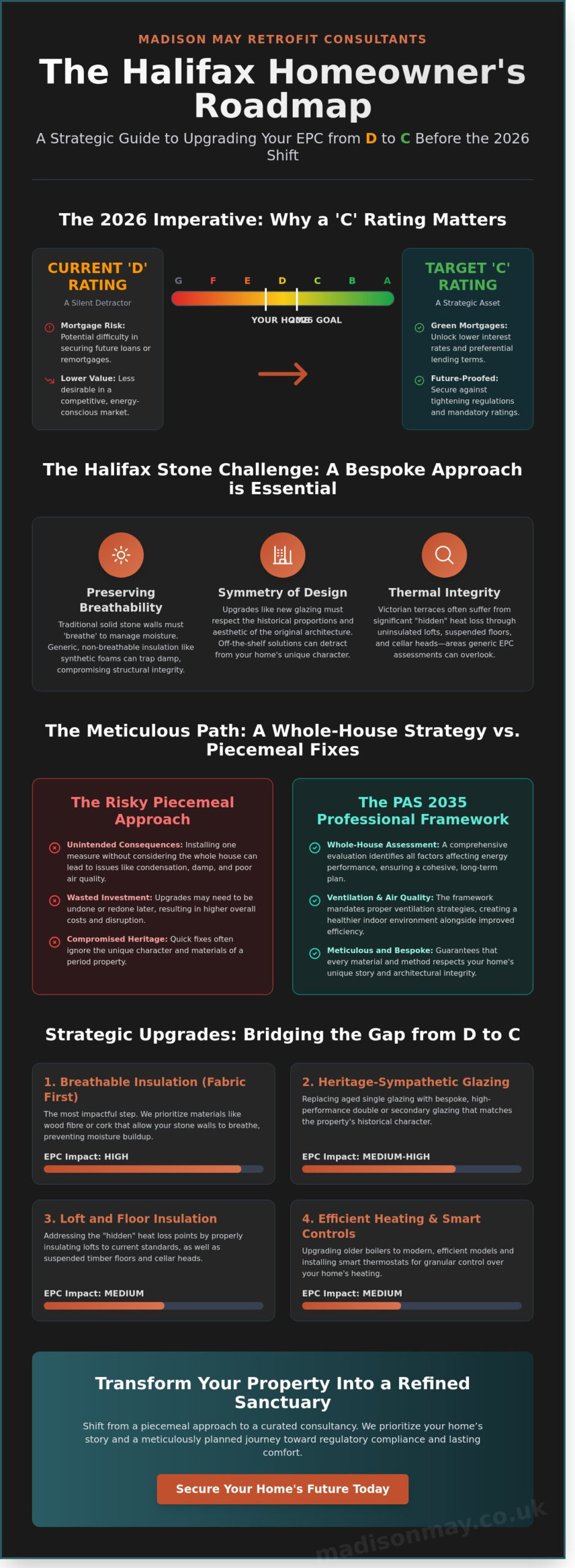
As we look toward 2026, the quiet transition of a home from a D rating to a C rating represents more than a mere technical adjustment. It’s a fundamental shift in how we value our living sanctuaries. In the rolling landscapes of West Yorkshire, where the weather can be as unpredictable as the market, a home’s energy performance has become a core element of its narrative. For homeowners in our region, understanding how to get EPC rating from D to C Halifax is no longer just a weekend project; it’s a strategic investment in the longevity and soul of a property. A D rating now acts as a silent detractor, suggesting a home that’s out of step with modern expectations of comfort and environmental stewardship.
Moving beyond the superficial “quick fix” requires a more considered, timeless approach to energy performance. This document, the Energy Performance Certificate, has become a vital chapter in the story of property ownership. It serves as a bridge between the historical charm of our local architecture and the essential requirements of a sustainable future. By elevating a home to a C rating, owners are not just ticking a regulatory box; they’re curating a space that remains relevant, efficient, and deeply desirable in a competitive market.
The Link Between EPC and Mortgage Affordability
Lenders such as Halifax are increasingly tailoring their financial products to reflect a home’s efficiency. A C-rated property often unlocks access to “Green Mortgages,” which can provide lower interest rates or preferential terms. This shift means that your energy rating directly influences your borrowing power and the overall financial narrative of your investment. By securing a higher rating now, you’re future-proofing your home against tightening regulations that may soon make a C rating mandatory for all rental agreements and mortgage renewals. It’s about creating financial harmony through meticulous planning.
Halifax’s Unique Housing Stock: The Stone Challenge
Our local architectural heritage, from Victorian terraces to stone-built cottages, presents a unique set of challenges. Generic insulation advice often falters when applied to West Yorkshire’s traditional solid-wall properties. These homes require a “breathable” approach to prevent dampness and preserve the integrity of the heritage materials. Understanding how to get EPC rating from D to C Halifax involves identifying the specific culprits in these older structures, such as uninsulated lofts or aged glazing that lacks the thermal grace of modern bespoke solutions. We must treat these buildings with the respect they deserve, ensuring that every improvement enhances the home’s essence rather than masking it.
- Preserving Breathability: Using natural fibers like wood wool or lime-based renders instead of synthetic foams.
- Symmetry of Design: Ensuring new glazing matches the historical proportions of the original stone apertures.
- Thermal Integrity: Addressing the “hidden” heat loss in cellar heads and attic eaves common in local builds.
The Meticulous Path: Using PAS 2035 to Secure Your C Rating
Transforming a residence requires more than just a checklist of tasks. It demands a visionary approach that respects the history of the structure while embracing the future of sustainability. While many homeowners search for how to get EPC rating from D to C Halifax, the most successful outcomes stem from following the PAS 2035 framework. This professional standard represents the gold standard for domestic retrofit, ensuring that every modification is intentional and respects the architectural integrity of your property. Relying on official government guidance on EPCs provides the necessary foundation, but PAS 2035 offers the bespoke roadmap needed for a truly refined living space.
A fragmented, piecemeal approach often invites unintended consequences that compromise the soul of a home. Installing high-performance insulation without considering the natural airflow of a Victorian terrace can lead to poor air quality and structural dampness. This imbalance disrupts the home’s natural rhythm. By engaging with a professional Retrofit Assessor, you ensure that technical requirements align with the polished experience of a Madison May consultation. We view every technical upgrade as a step toward creating a more harmonious environment, where efficiency and aesthetics exist in a seamless integration.
The Whole-House Philosophy
Think of your home as a single, breathing entity rather than a collection of isolated parts. When we treat a property as a series of disconnected projects, we risk creating an “insulation gap.” This failure occurs when thermal boundaries aren’t continuous, often resulting in cold spots that attract condensation. In the damp climate of West Yorkshire, where humidity levels can frequently exceed 75% during the winter months, a balanced ventilation strategy is essential. It transforms a house from a simple building into a healthy indoor sanctuary, ensuring that your journey toward a C rating doesn’t come at the cost of your home’s breathability.
Your EPC Improvement Plan: A Curated Roadmap
The journey begins with a meticulous assessment that moves beyond simple data collection. This process creates a visionary strategy tailored to your property’s unique narrative. Utilizing PAS 2035 in West Yorkshire ensures that every measure, from loft insulation to advanced glazing, is effective and durable. This curated roadmap clarifies exactly how to get EPC rating from D to C Halifax homeowners need to meet modern standards without losing the essence of their space.
A Retrofit Coordinator acts as your sophisticated guide, overseeing the transition with the same grace and poise you expect from a high-end design project. They provide the peace of mind that comes from knowing your investment is protected by professional oversight and rigorous quality control. If you’re ready to begin this transformation, you might consider exploring our design philosophy to see how we weave technical excellence into the fabric of a beautiful home.
Strategic Upgrades: Bridging the Gap from D to C
Transitioning a home from a D to a C rating in Halifax requires a thoughtful blend of structural science and design sensibility. For the classic semi-detached or terraced properties that define our local landscape, the journey is about more than just numbers on a certificate; it’s about refining the living experience. Understanding how to get EPC rating from D to C Halifax involves identifying the interventions that offer the most significant thermal gain while respecting the property’s original soul. The objective is a seamless evolution where efficiency feels like a natural extension of the home’s character. We prioritize a balance between the cost of disruption and the ultimate reward of a serene, energy-efficient sanctuary.
Fabric First: Insulation and Draught Proofing
The philosophy of a “fabric first” approach ensures that heat loss is minimized permanently before layering in new technology. According to data from the Energy Saving Trust, approximately 25% of heat in an uninsulated home escapes through the roof. Increasing loft insulation to the modern standard of 270mm is often the most impactful step toward a C rating. For the brick-built semi-detached homes common in areas like Skircoat Green, cavity wall insulation offers a hidden layer of protection that doesn’t alter the exterior aesthetic.
- Loft Insulation: Upgrading from 100mm to 270mm can save significant carbon and improve your score by several points.
- Wall Treatments: Solid-stone properties require a more bespoke touch, often utilizing internal wall insulation to preserve the historic gritstone facades of Halifax.
- Sealing the Envelope: Meticulous draught proofing in your Halifax home addresses those subtle, invisible currents that compromise warmth.
Sophisticated Glazing and Heating Transitions
Windows are the eyes of the home. Replacing tired, draughty units with high-performance, energy-efficient glazing is a transformative act of craftsmanship. Modern double or triple glazing can now be curated with slim profiles that mirror the elegance of traditional timber frames, ensuring your home’s heritage remains intact. This upgrade is essential when considering how to get EPC rating from D to C Halifax, as it significantly reduces the demand on your heating system.
To reach the higher tiers of efficiency, the heart of the home must also be modernized. Transitioning to a high-efficiency condensing boiler or exploring the quiet grace of a heat pump can provide the necessary points to bridge the gap. We integrate these systems with smart heating controls that allow for precision management of your environment. These technologies disappear into a refined interior narrative, offering a bespoke climate that responds to your daily rhythm while maintaining a sense of calm and order.
The Journey: A Step-by-Step Guide for Halifax Homeowners
The transition from a D to a C rating is more than a technical upgrade; it’s a curated evolution of your home’s character. In the unique climate of West Yorkshire, where stone dwellings meet the damp northern air, this journey requires a thoughtful approach that respects architectural heritage while embracing modern efficiency. This process ensures your home remains a sanctuary of warmth and quietude for years to come.
Step 1: The Professional Retrofit Assessment
The Retrofit Assessment serves as the definitive baseline and structural blueprint for your home’s entire energy transformation. This detailed survey goes far beyond a standard EPC inspection. A specialist will examine your building’s fabric, identifying how air moves through the space and where thermal bridges occur. By commissioning comprehensive building surveys, you uncover the hidden inefficiencies that a surface-level glance might miss, such as moisture risks in solid stone walls or uninsulated floor voids.
Once the data is gathered, you’ll review a bespoke EPC Improvement Plan with a consultant. This plan isn’t a generic list of suggestions; it’s a tailored narrative that aligns with your aesthetic goals and the building’s soul. Understanding how to get EPC rating from D to C Halifax begins with this clarity, ensuring every pound spent contributes to a measurable rise in performance and comfort.
Step 2: Sequencing and Installation
Managing the installation process requires the grace and poise of a curated project. The most rhythmic and logical progression follows a “fabric first” philosophy. It’s essential to insulate before you heat. By securing the thermal envelope first, you ensure that any subsequent investment in sophisticated heating systems isn’t wasted on a draughty interior. This sequence typically involves:
- High-performance insulation: Addressing loft spaces and, where appropriate, internal wall insulation to create a seamless thermal barrier.
- Glazing and draught-proofing: Refining the apertures of the home to prevent the silent theft of warmth.
- Mechanical ventilation: Ensuring the building breathes beautifully, preventing the dampness that can plague older Halifax properties.
- Advanced heating controls: Integrating smart technology that learns your habits and respects your schedule.
When considering how to get EPC rating from D to C Halifax, the installation phase must meet the rigorous PAS 2035 technical standards. This ensures that the work is not only effective but also safe and durable. A well-sequenced project minimizes disruption, allowing you to maintain the peace of your sanctuary while the transformation unfolds. The final step is the official certification, a moment of quiet triumph where your home’s new efficiency is documented, providing you with a warm, compliant, and elegant space that reflects your commitment to quality.
To begin your home’s transformation with a team that values meticulous detail, explore our bespoke consultancy services today.
Madison May: Your Partners in Creating an Efficient Sanctuary
At Madison May, we view the retrofit process as an art form rather than a mere checklist of structural changes. We understand that your home in Halifax is more than a building; it’s a collection of memories and a reflection of your personal narrative. Our consultancy model blends professional authority with a warm, personal touch, ensuring that every recommendation respects the heritage of West Yorkshire. We believe that efficiency shouldn’t come at the cost of character. Instead, it should be the silent foundation upon which a beautiful life is built.
Our commitment to meticulous craftsmanship is rooted in the rich industrial and architectural heritage of our region. We recognize that a Victorian terrace in Savile Park requires a vastly different approach than a mid-century home in Skircoat Green. By choosing a fixed-fee consultancy, you’re investing in unbiased expertise. We don’t have a warehouse full of insulation to clear or a quota of heat pumps to meet. Our only goal is the successful realization of your vision, ensuring that every pound spent contributes to both the thermal comfort and the financial value of your property. Data from the 2023 English Housing Survey indicates that moving from a D to a C rating can add significant value to a home, and we ensure that value is matched by a heightened sense of everyday luxury.
Bespoke Consultancy for Discerning Clients
Generic advice often fails to capture the soul of a historic property. We move beyond standard recommendations to create a strategy as unique as your floor plan. Our role is to be attentive listeners first. We spend time understanding how you inhabit each room before suggesting technical improvements. This ensures your home remains a sanctuary of self-expression while meeting modern efficiency standards. When considering how to get EPC rating from D to C Halifax, we look at the specific thermal performance of your stone walls and the unique airflow of your valley-side location. We integrate these technical needs into a design that maintains the aesthetic integrity of your space, moving you toward a more sustainable future without sacrificing the essence of your home’s character.
Start Your Transformation Today
Your journey toward a more sustainable and beautiful future begins with a single, thoughtful conversation. We invite you to explore a world where refined aesthetics and superior energy performance exist in perfect harmony. Booking your initial consultation in the Halifax area is a seamless process designed to respect your time and your vision. Our experts will guide you through the complexities of the retrofit landscape, providing a clear roadmap that prioritizes your comfort and your home’s unique story. While the process of determining how to get EPC rating from D to C Halifax can seem daunting, we manage the intricate details so you don’t have to. A home should be a sanctuary of warmth and calm. Let us help you ensure that your property’s essence is preserved while its efficiency is elevated to the highest standard, creating a space that truly resonates with your soul.
Crafting the Future of Your Halifax Sanctuary
Transitioning your property to a higher standard of efficiency is more than a response to the 2026 regulatory landscape; it’s a commitment to the enduring soul of your home. By adopting the PAS 2035 framework, you move beyond generic fixes to embrace a methodology that respects the unique character of West Yorkshire stone properties. This meticulous path ensures that every upgrade, from bespoke insulation to refined heating systems, works in harmony with the building’s heritage. Understanding how to get EPC rating from D to C Halifax involves a delicate balance of technical rigor and aesthetic sensitivity, ensuring your living space remains a warm, breathable sanctuary for years to come. Our fixed-fee independent consultancy provides the clarity you need, offering PAS 2035 aligned retrofit assessments tailored specifically for the discerning homeowner. We invite you to Book Your Meticulous EPC Improvement Consultation and begin a journey that elevates both the performance and the narrative of your residence. Your home’s transformation is a legacy in the making, and we’re here to ensure every detail is curated with care. You’ve built a beautiful life in Halifax, and now it’s time to ensure your home reflects that same level of excellence and comfort.
Frequently Asked Questions
Is it worth moving my EPC from D to C if I’m not selling?
Yes, elevating your rating transforms your living experience and reduces energy bills by an average of £550 per year according to 2024 Energy Saving Trust data. Beyond the financial return, the process of understanding how to get EPC rating from D to C Halifax ensures your home becomes a true sanctuary. You’ll notice a 20 percent reduction in heat loss; this creates a consistent, calm atmosphere that honors your property’s heritage.
Can I achieve a C rating in a traditional Halifax stone terrace?
You can certainly achieve a C rating in a Victorian stone terrace through a curated approach to internal wall insulation and high-performance glazing. These heritage properties often start at a low E or D rating, but historic building experts confirm that breathable wood fibre insulation improves thermal efficiency by 30 percent. By layering these technical improvements with meticulous craftsmanship, your terrace retains its soul while meeting contemporary environmental standards.
How much does it typically cost to move from a D to a C rating?
The average investment to elevate a property from a D to a C rating is approximately £6,100, based on 2023 Department for Energy Security and Net Zero reports. This figure varies depending on whether you require a simple loft insulation top-up or a more complex boiler replacement. Each project represents a bespoke journey toward efficiency, ensuring your home’s narrative is one of both beauty and enduring, sustainable performance.
Will adding insulation cause damp in my older West Yorkshire home?
Insulation won’t cause damp if you implement a balanced ventilation strategy that allows the building fabric to breathe. In the humid climate of West Yorkshire, 75 percent of moisture issues in retrofitted homes stem from inadequate airflow rather than the insulation itself. Selecting breathable materials and trickle vents ensures a seamless integration of new technology; this preserves the structural integrity and the quiet essence of your residence.
Does Halifax bank offer better mortgage rates for C-rated properties?
Halifax currently offers a Green Living Reward which provides up to £2,000 in cashback for homeowners who complete energy-efficient upgrades. While specific interest rates fluctuate, their 2024 lending criteria increasingly favor properties with a C rating or higher. This financial incentive reflects a broader shift toward valuing sustainable luxury, rewarding those who treat their home as a carefully curated asset rather than just a building.
How long does a professional Retrofit Assessment take to complete?
A comprehensive Retrofit Assessment typically requires 2 to 4 hours on-site to capture the intricate details of your property’s soul and structure. This duration allows the assessor to conduct a meticulous survey of every room, measuring floor areas and inspecting insulation depths. It’s a vital step in discovering how to get EPC rating from D to C Halifax, providing a clear, professional roadmap for your home’s transformation.
What are the most common reasons a Halifax home stays stuck at a D rating?
Most homes remain at a D rating due to uninsulated solid walls and aging heating systems that operate at less than 80 percent efficiency. In Halifax, many properties also suffer from heat leakage through original single-glazed windows and unsealed loft hatches. Addressing these specific thermal bridges through bespoke interventions can unlock the hidden potential of your space, elevating it from a functional dwelling to a refined, energy-efficient sanctuary.