


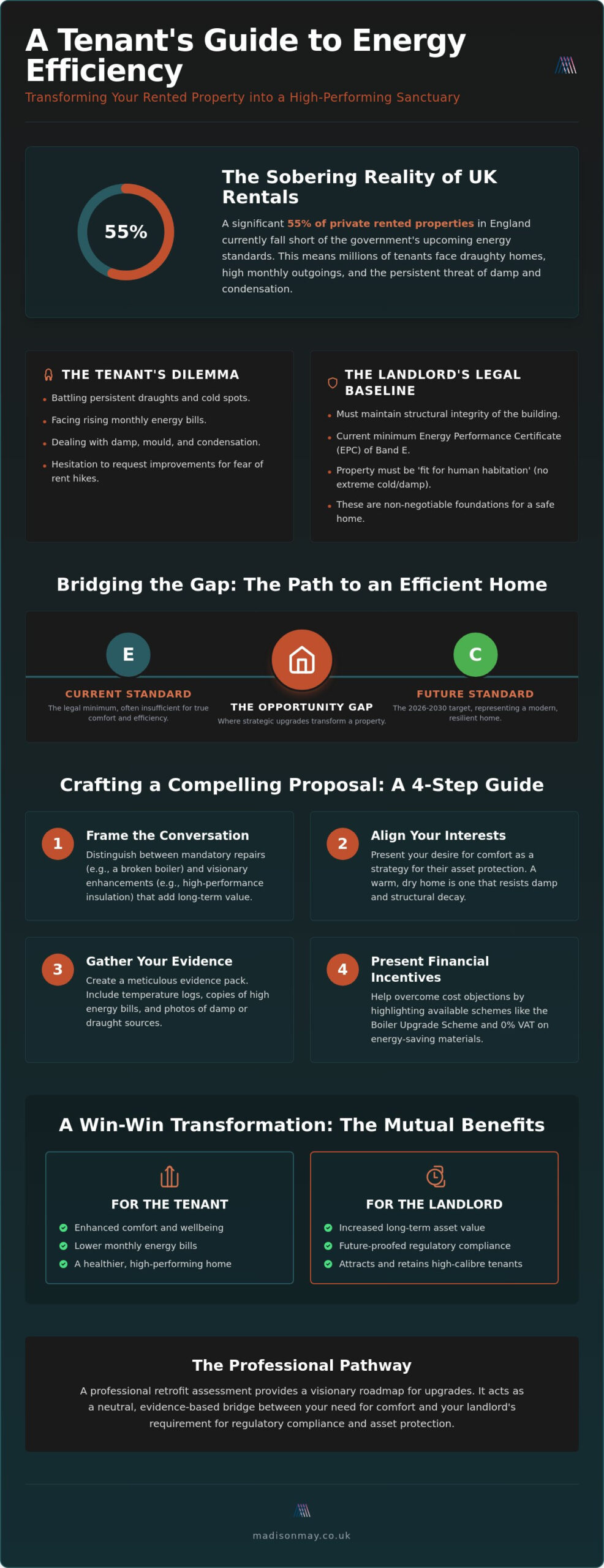
Did you know that 55% of private rented properties in England currently fall short of the government’s upcoming energy standards? It is a sobering thought for anyone living in a home that feels more like a draughty passage than a personal refuge. You likely feel the weight of rising monthly outgoings whilst battling the quiet invasion of damp or condensation, perhaps hesitating to speak up for fear of disrupting the delicate balance of your tenancy or facing an unexpected rent hike.
Understanding landlord responsibilities for energy efficiency UK is not merely about legal compliance; it is about reclaiming the comfort and elegance your home should provide. You deserve a space that is as warm as it is beautiful, and the path to achieving this lies in a professional, evidence-based dialogue. By framing improvements as a strategic investment in the property’s long-term value and heritage, you can secure a more efficient lifestyle and a more collaborative relationship with your landlord.
In this guide, you’ll learn how to present a compelling case for upgrades that benefit both your wellbeing and the landlord’s asset. We will explore the shift toward mandatory EPC band C ratings and the new Home Energy Model, giving you the clarity needed to transform your rental into a high-performing sanctuary of calm and efficiency.
Key Takeaways
- Distinguish between mandatory repairs and discretionary enhancements to navigate your conversations with the poise and clarity of a well-informed tenant.
- Discover how to leverage landlord responsibilities for energy efficiency UK by aligning your desire for a warm sanctuary with their need for long-term asset protection.
- Learn to curate a meticulous evidence pack, using temperature logs and energy bills, to transform a simple request into a compelling investment proposal.
- Identify specific financial incentives, such as the Boiler Upgrade Scheme and 0% VAT on materials, to help your landlord overcome initial cost objections.
- Understand how a professional retrofit assessment provides a visionary roadmap, acting as a neutral bridge between your comfort and their regulatory compliance.
Distinguishing Between Essential Repairs and Strategic Property Enhancements
To truly understand your home, you must first perceive the subtle line between a building that merely functions and a space that breathes. For many, a rental property is often viewed as a transient dwelling, yet there is a growing movement amongst discerning residents to transform these spaces into curated sanctuaries. This shift in perspective is essential when discussing landlord responsibilities for energy efficiency UK; it moves the conversation from a list of basic repairs to a visionary roadmap for property enhancement. Whilst a landlord is legally bound to ensure the property is fit for human habitation, the journey toward a truly energy-efficient home often begins where the law ends.
The Legal Baseline: What Your Landlord Must Do
The Opportunity Gap: Where Improvements Begin
Beyond these legal mandates lies the opportunity gap, where strategic enhancements such as bespoke draught proofing or high-performance windows and doors can dramatically alter the atmosphere of a room. Navigating landlord responsibilities for energy efficiency UK requires a nuanced understanding that whilst a boiler repair is an essential fix, a full retrofit is a strategic investment in the property’s future. These are often discretionary upgrades, meaning they remain at the landlord’s discretion unless they’re necessary to meet the upcoming 2030 shift to EPC Band C. However, 2026 has emerged as the year of the Retrofit Revolution. With 55% of private rented properties currently falling below the desired Band C, the pressure to modernise is mounting.
Discerning tenants now prioritise energy efficiency as a top-tier requirement, seeking out homes that offer thermal stability and lower monthly outgoings. Whilst redecoration or structural changes require written consent, presenting these upgrades as a way to preserve the building’s heritage and future-proof the asset can be incredibly persuasive. By focusing on the intersection of functionality and beauty, you can encourage a transition from a draughty house to a refined, resilient home that resonates on a personal level.
Aligning Your Comfort with the Landlord’s Financial and Regulatory Interests
The most successful property owners view their investments not as static structures, but as evolving assets that require a visionary approach to maintenance. When you discuss energy upgrades, you are offering a partnership that transcends the typical tenant-landlord dynamic. By framing your request as a strategy for asset protection, you transform a perceived cost into a roadmap for long-term value. A home that retains heat effectively is a home that resists the slow, silent decay of structural fabric, ensuring the property remains a refined sanctuary for years to come.
Central to this dialogue is the concept of asset resilience. Professional damp remediation and improved ventilation are not merely about aesthetics; they are essential interventions that prevent moisture from compromising the building’s heritage. Landlords are increasingly aware that a property with a high energy performance rating is more attractive to high-calibre tenants, significantly reducing the risk of costly void periods and ensuring a steady, reliable return on their investment.
Future-Proofing the Investment
A property’s Energy Performance Certificate (EPC) rating has become a critical metric for mortgageability and resale value. Lenders are now offering “green” mortgages with preferential rates for homes achieving a Band C or higher, creating a direct financial incentive for landlords to act. By addressing insulation and draught-proofing now, a landlord avoids the frantic, expensive emergency repairs that often follow years of neglect. This proactive stance preserves the integrity of the building, ensuring that every detail, from the loft to the windows, contributes to a sense of enduring quality and calm.
The Compliance Carrot and Stick
The regulatory landscape is shifting with a quiet but firm deliberation. According to the official government guidance for landlords, the requirements for Minimum Energy Efficiency Standards (MEES) are becoming significantly more stringent. By 1 October 2030, all rental properties must achieve an EPC Band C. For a landlord, acting today is a sophisticated way to avoid the looming threat of increased penalties, which are set to rise to £30,000 per property for non-compliance.
Beyond the “stick” of enforcement, there are compelling financial “carrots” available. Landlords can currently benefit from a 0% VAT rate on energy-saving materials until March 2027, and the Boiler Upgrade Scheme provides grants of £7,500 towards heat pump installations. Presenting these facts helps clarify landlord responsibilities for energy efficiency UK, showing that the path to compliance is paved with financial support. To begin this journey with professional clarity, suggesting a bespoke EPC Improvement Plan can provide the evidence-based vision your landlord needs to invest with confidence.
Crafting a Compelling Proposal: Evidence-Based Negotiation Tactics
Negotiation is rarely about winning an argument; it’s about revealing a shared vision. To move beyond the limitations of a casual verbal request, you must adopt a meticulous approach that mirrors the professionalism of a high-end consultation. When you present a structured, written proposal, you signal that you’re an invested steward of the property rather than just a temporary occupant. This clarity helps your landlord view their responsibilities for energy efficiency UK not as a burdensome chore, but as a collaborative journey toward enhancing a valuable asset.
Your proposal should serve as a narrative of the home’s current performance and its future potential. By gathering concrete evidence, you make the invisible visible. Photos of persistent condensation, logs of fluctuating room temperatures, and a comparison of energy bills provide a sensory and data-driven story that is difficult to ignore. This level of detail transforms a subjective complaint about “feeling cold” into an objective case for strategic improvement, inviting your landlord to step into a world of refined, efficient living.
Building Your Evidence File
A compelling file starts with precision. Documenting specific draughts or heat loss through thermal imaging notes can provide the scientific weight your proposal needs. You might also consider how professional building surveys can reveal hidden inefficiencies within the property’s fabric, such as inadequate loft insulation or failing window seals. To add a final layer of professional authority, include a detailed EPC improvement plan. This roadmap provides the exact steps needed to elevate the property, removing the guesswork for the landlord and presenting a clear path toward compliance and comfort.
The Art of the Soft Ask
Timing and tone are the silent architects of a successful negotiation. Approaching your landlord during a lease renewal or following a routine inspection is often the most effective strategy, as these are natural moments for reflection on the property’s condition. Your language should remain rhythmic and respectful, framing the request as a mutual benefit. Instead of demanding a fix, try suggesting: “I’ve been looking at ways we might enhance the thermal performance of the home to protect its structure and improve its efficiency.”
Referencing practical advice for landlords can also help soften the conversation, as it shows you’ve considered the financial and risk management aspects from their perspective. By maintaining this visionary tone, you ensure the dialogue remains focused on the intersection of functionality and beauty, reinforcing the idea that landlord responsibilities for energy efficiency UK are a gateway to a more resilient, high-quality home for everyone involved.
Addressing Common Landlord Objections with Visionary Solutions
Resistance is often merely a pause in the conversation, a moment where a property owner seeks reassurance before committing to significant change. When a landlord hesitates, they’re usually balancing the weight of landlord responsibilities for energy efficiency UK against the perceived burden of capital expenditure and logistical upheaval. You can dissolve this tension by presenting solutions that are as financially sound as they are aesthetically pleasing, moving the dialogue from a list of problems to a visionary roadmap for success.
The most persuasive argument for any property owner is the promise of stability. A home that functions as a personal refuge, free from the intrusion of cold or damp, naturally fosters a longer and more harmonious tenancy. By addressing objections with poise and evidence, you demonstrate that an energy-efficient upgrade is not a disruption, but a sophisticated enhancement of the property’s heritage and value.
Navigating Financial Concerns
Cost is frequently the primary hurdle, yet it is often based on a misunderstanding of available support. You can counter this by highlighting that whilst the government has capped mandatory spending at £10,000 per property, many transformative improvements require a much smaller investment. Crucially, the £7,500 Boiler Upgrade Scheme grant for heat pumps does not count toward this cap, providing a significant financial cushion. For high-end, bespoke upgrades that go beyond the legal minimum, a modest and fair rent adjustment might be proposed, reflecting the refined comfort and lower outgoings of a modernised home. Adopting a whole-house approach ensures that every pound spent is an investment in the building’s long-term resilience rather than a temporary, piecemeal fix.
Managing the Logistics of Improvement
To ensure your property meets the highest standards of craftsmanship and efficiency, you may wish to suggest a professional Retrofit Assessment to provide the clarity and confidence your landlord needs to move forward.
How Professional Retrofit Assessments Facilitate Meaningful Property Transformations
The journey from a draughty, cold house to a refined sanctuary requires more than just a shared desire for change; it demands a definitive, professional roadmap. Whilst a tenant’s lived experience provides the spark for improvement, a neutral, third-party assessment acts as the ultimate bridge between personal comfort and commercial viability. This professional intervention removes the emotional weight from the conversation, allowing both parties to view landlord responsibilities for energy efficiency UK through the lens of objective data and expert guidance.
An expert assessment transforms a series of subjective requests into a structured investment plan. It provides the clarity a landlord needs to move forward with confidence, ensuring that every modification is intentional and every material is chosen with care. By framing the transformation as a technical necessity rather than a mere preference, you invite your landlord into a world of meticulous property standards where quality and heritage are preserved for the long term.
The Value of a PAS 2035 Assessment
A professional survey conducted under the PAS 2035 framework carries a weight that a tenant’s opinion alone cannot match. It creates a data-driven document that a landlord can use for their own financial planning, offering a clear view of the property’s potential. This process is essential for ensuring that insulation and ventilation are perfectly balanced; a critical step in preventing the damp and mould that can compromise a building’s integrity. By presenting a professional report, you provide a visionary solution that addresses the property’s needs with the calm deliberation of a high-end consultation.
Partnering with Madison May Consulting Ltd
At Madison May Consulting Ltd, we are committed to an understated elegance that prioritises the client’s personal story and the enduring quality of their home. We understand that a rental property is not just an asset, but a deeply personal refuge that should reflect the identity of those who dwell within it. Our role is to bridge the gap between tenant aspirations and landlord compliance, facilitating a seamless experience that elevates the home improvement process into a transformative artistic journey.
We support both landlords and tenants in achieving energy efficient home improvements that resonate on a personal level. Our assessments provide the clarity needed to navigate the complexities of modern regulations whilst ensuring the property remains a sanctuary of warmth and calm. If you are ready to begin this collaborative journey, we invite you to Enquire about a professional Retrofit Assessment today and take the first step toward a more efficient, beautiful future.
Refining the Future of Your Rental Sanctuary
Transforming a house into a personal refuge is a journey of collaboration and visionary thinking. By shifting the conversation from simple repairs to strategic property enhancements, you’ve learned how to align your daily comfort with the long-term resilience of the building. We’ve explored how a meticulous evidence file and a professional tone can clarify landlord responsibilities for energy efficiency UK, turning a perceived cost into a compelling roadmap for asset protection. Whether you’re addressing persistent damp or seeking thermal stability, the path forward is paved with data and expert insight.
At Madison May Consulting Ltd, we specialise in bridging the gap between tenant aspirations and landlord compliance. Our PAS 2035 aligned assessments and expert retrofit coordination provide the authoritative voice needed to facilitate meaningful change. As specialists in damp and ventilation remediation, we ensure every intervention is as beautiful as it is functional. You don’t have to settle for a draughty environment when a more elegant, efficient future is within reach. Book a Professional Retrofit Assessment to Build Your Case today and rediscover the quiet confidence of a home that truly breathes.
Frequently Asked Questions
Can my landlord evict me for asking for energy-efficient improvements?
No, you’re protected against retaliatory eviction if you follow the correct procedure for reporting property issues in writing. Under the Deregulation Act 2015, a landlord’s ability to serve a Section 21 notice is restricted if the local authority has issued an improvement notice. Maintaining a professional and collaborative dialogue ensures your home remains a stable sanctuary whilst you seek necessary enhancements.
What should I do if my landlord ignores my request for energy-saving measures?
If initial requests go unanswered, you should formalise your communication by sending a structured, evidence-based proposal. Should the property fail to meet the current EPC Band E minimum, you can contact your local authority’s environmental health department. They have the power to inspect the property and issue notices to ensure landlord responsibilities for energy efficiency UK are met.
Is there a legal limit to how much a landlord can increase rent after making improvements?
Rent increases must remain fair and realistic, typically aligned with market rates for similar high-quality properties in your area. Whilst there isn’t a specific percentage cap for improvements, you can challenge an excessive increase at a First-tier Tribunal. Strategic upgrades often justify a modest adjustment if they significantly lower your monthly outgoings and enhance your daily living experience.
Who pays for a professional Retrofit Assessment in a rental property?
The landlord typically covers the cost of a Retrofit Assessment as part of their long-term property management and compliance strategy. However, some tenants choose to commission an independent survey themselves to provide a data-driven foundation for their proposal. This professional document serves as a neutral bridge, clarifying the path toward a more efficient and evocative home for both parties.
Can I carry out energy improvements myself if the landlord agrees but won’t pay?
You can carry out improvements yourself provided you obtain written consent from your landlord before any work begins. It’s essential to agree on whether the property must be returned to its original state at the end of your tenancy. For high-end modifications like draught proofing, ensuring the work meets professional standards preserves the property’s refined aesthetics and structural integrity.
What are the Minimum Energy Efficiency Standards (MEES) requirements for 2026?
In 2026, the legal minimum remains an EPC Band E, though the shift toward Band C by 2030 is already influencing market standards. Landlords are currently encouraged to act early to take advantage of the 0% VAT rate on energy-saving materials which expires in March 2027. Proactive upgrades now help avoid the rush and potential cost increases of future mandatory compliance deadlines.
How do I know if my rental property qualifies for a government energy grant?
Eligibility for government grants, such as those under the Warm Homes Plan, often depends on the property’s current EPC rating and your household’s income or benefits status. You can check official government portals or contact your local authority to see which schemes are active in your region. These grants are a vital tool for fulfilling landlord responsibilities for energy efficiency UK without excessive capital outlay.
Does a new boiler count as a repair or a property improvement?
A new boiler is classified as a repair if the existing system has failed and the landlord is restoring the essential supply of heating and hot water. If a functioning but inefficient boiler is replaced with a high-performance heat pump, it’s viewed as a strategic property improvement. Such upgrades often qualify for the £7,500 Boiler Upgrade Scheme grant, enhancing the property’s long-term value and heritage.