
With many households across the UK now facing fuel poverty and average annual energy bills continuing to rise, the quest for a more efficient home has never felt more urgent. You likely feel the weight of every rising cost and the frustration of navigating conflicting advice about green technology. It is a delicate balance to strike, especially when you fear that hasty insulation choices might invite damp into your cherished living spaces. When seeking sustainable home improvements, homeowners across the country often find themselves caught between the desire for change and the need for professional certainty.
This guide provides a professional, whole-house roadmap to reducing your carbon footprint whilst elevating your property into a warm, healthy, and future-proof retreat. We will explore the meticulous, fabric-first philosophy that ensures your home remains a masterpiece of comfort and efficiency, even as energy regulations like the Future Homes Standard evolve. By the end of this article, you’ll understand how to harmonise modern technology with the unique character of your home, creating a sanctuary that is as kind to the environment as it is to your wellbeing.
Key Takeaways
- Understand why a fabric-first approach, prioritising your home’s envelope before heating upgrades, is the essential foundation for any successful retrofit.
- Discover how sustainable home improvements Yorkshire homeowners invest in can significantly lower energy bills whilst contributing to the UK’s ambitious Net Zero targets.
- Learn the importance of the PAS 2035 standard and why a coordinated whole-house strategy prevents common issues like damp and inadequate ventilation.
- Explore how a bespoke EPC Improvement Plan provides a clear, data-driven roadmap to transform your property into a high-performing, low-carbon sanctuary.
- See how expert retrofit consultancy turns complex building surveys and technical assessments into a seamless journey toward lasting comfort and value.
Defining the Journey: What Sustainable Home Improvements in Yorkshire Really Entail
To truly understand the impact of our living spaces, we must first define the domestic carbon footprint. This is the total sum of greenhouse gas emissions generated by the energy used to heat and power a dwelling. Within the UK, residential properties are responsible for a significant portion of total emissions, making domestic energy use a central pillar of the Net Zero 2050 target. For those seeking sustainable home improvements Yorkshire offers a unique architectural landscape that requires a bespoke approach. Our region is famous for its characterful solid-wall terraces and grand period properties, yet these structures often present significant thermal challenges that modern builds do not face.
When we look at the sustainability of a property, we must distinguish between operational carbon and embodied carbon. Operational carbon refers to the energy consumed during the daily life of the home, such as heating a draughty living room or powering appliances. Embodied carbon, however, involves the emissions produced during the extraction, manufacture, and transport of building materials. Achieving a truly eco-friendly home involves balancing these two factors, though the most immediate relief for homeowners usually comes from addressing the energy escaping through the building’s aged fabric. Understanding the history of Energy efficiency in British housing helps us appreciate why older Yorkshire homes require such meticulous, specialised care to meet modern standards.
The Emotional and Financial Benefits of a Greener Home
Moving Beyond Simple Behavioural Changes
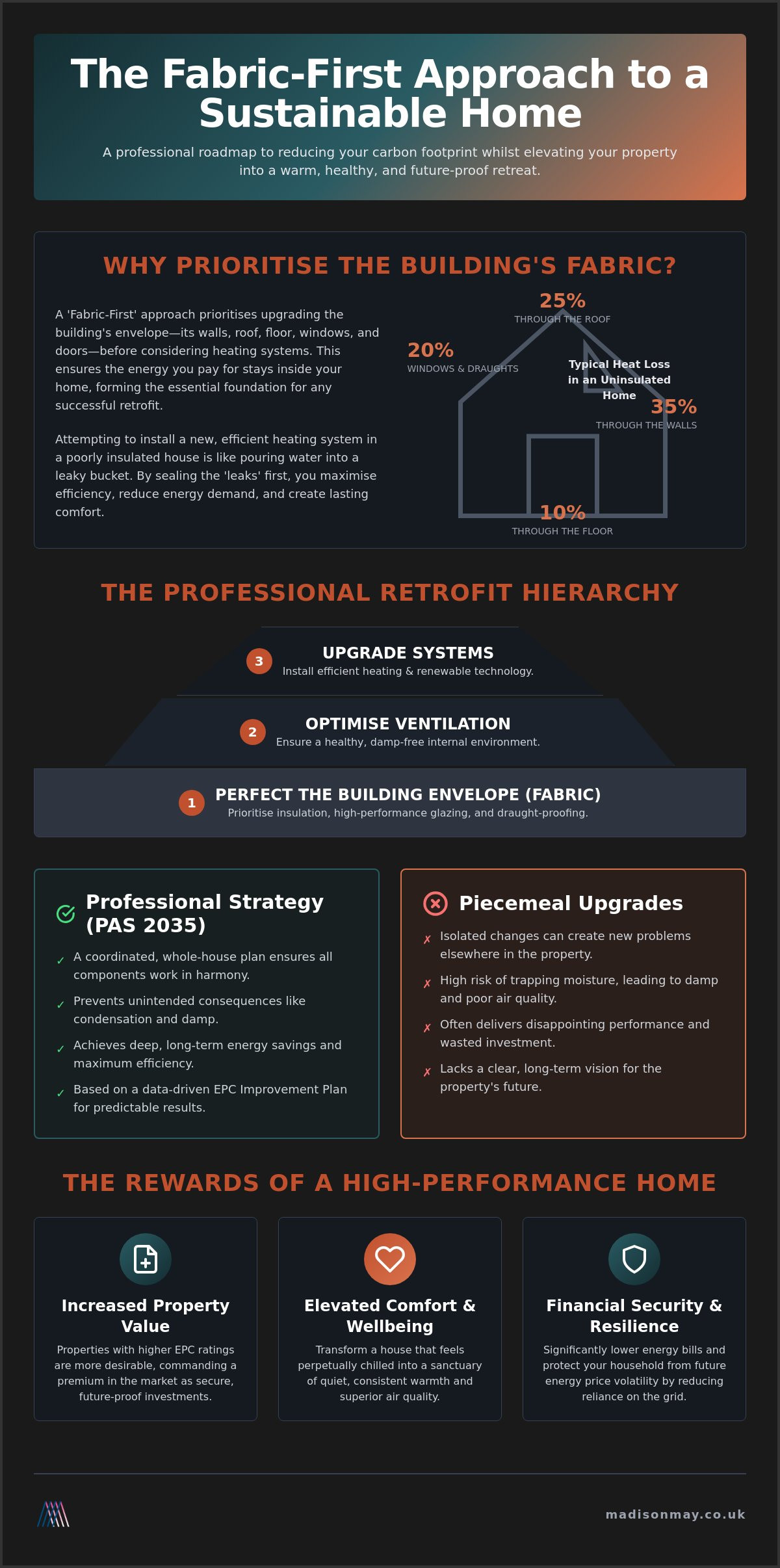
Whilst small habits like lowering the thermostat are commendable, they cannot replace the transformative power of structural deep retrofit measures. A fabric-first approach is the industry standard for any serious carbon reduction plan. It prioritises the building’s envelope, ensuring that insulation, windows, and doors are perfected before you even consider upgrading heating systems. This method ensures that the energy you pay for stays exactly where it belongs: inside your home. Professional building surveys are a vital first step in this journey, as they use advanced techniques to identify hidden heat loss and cold spots that the naked eye simply cannot detect, allowing for a tailored strategy that respects the unique story of your property.
The Fabric-First Philosophy: Why Insulation is the Foundation of a Low-Carbon Home
At the heart of a truly sustainable home lies the fabric-first philosophy. This approach prioritises the building envelope, ensuring that the walls, roof, and floor are optimised before any consideration is given to new heating systems. It’s a method that respects the structure’s integrity and ensures long-term efficiency. For those pursuing sustainable home improvements Yorkshire houses, particularly our region’s iconic stone terraces and period properties, require this level of meticulous attention. Statistics show that up to a third of a home’s heat can be lost through uninsulated walls, whilst a significant portion escapes through neglected lofts and poorly fitted apertures. Ensuring these elements are handled by specialists is key; for example, powersolsolutions.com illustrates how dedicated roofing, siding, and window services can significantly enhance a home’s exterior performance.
High-performance glazing plays a dual role in this strategy, acting as a sophisticated thermal barrier whilst preserving the elegant lines of your property’s facade. For heritage homes, draught-proofing remains one of the most immediate and cost-effective ways to cut carbon. It’s about closing the subtle gaps that collectively lead to a cold, restless environment. You can find more practical guidance through the Energy Saving Trust home energy advice hub, which underscores the importance of a well-sealed home as the starting point for any green transition. Understanding the unique thermal behaviour of your property is the first step toward a more refined lifestyle; a professional Retrofit Assessment can reveal the precise path your home needs to take.
The Critical Link Between Insulation and Ventilation
A common pitfall in the quest for efficiency is the “Ventilation Gap”. If you seal a house too tightly without accounting for planned airflow, you risk creating a stagnant environment where damp and mould can flourish. This is why professional damp remediation is often a necessary prerequisite for any insulation project. Compliance with Part F building regulations ensures your sanctuary remains healthy and breathable. A professional ventilation assessment is non-negotiable to maintain that delicate balance between airtightness and the fresh, clean air your home requires.
Choosing Bespoke and Efficient Materials
Selecting the right materials requires a discerning eye for both performance and heritage. We look closely at U-values, which measure the rate of heat transfer through a material. The lower the U-value, the better the insulation. When choosing bespoke windows and doors, it’s possible to achieve modern thermal efficiency without sacrificing the timeless aesthetic of a Yorkshire residence. Whether it’s high-spec mineral wool or natural wood-fibre boards, the choice of material should reflect a commitment to quality that lasts for generations, ensuring your home is as sustainable as it is beautiful.
Navigating the Retrofit Landscape: Professional Standards versus Piecemeal Upgrades
A home is more than a collection of rooms; it’s a living, breathing system where every structural change ripples through the entire building. When planning sustainable home improvements Yorkshire residents often face the temptation to tackle projects in isolation, perhaps replacing a window one year and adding loft insulation the next. This piecemeal approach, whilst well-intentioned, can inadvertently disrupt the delicate thermal harmony of an older property. To avoid these unintended consequences, the PAS 2035 standard has emerged as the meticulous gold standard for domestic retrofit. It mandates a whole-house philosophy that ensures every upgrade is compatible with the next, protecting both the building’s heritage and your investment.
The journey begins with a Retrofit Assessor, a specialist who creates a rigorous, data-driven baseline of your property’s current performance. They look far beyond the surface, examining the building’s orientation, occupancy patterns, and structural quirks. Once this foundation is laid, professional Retrofit Coordination becomes essential. This role acts as the bridge between visionary design and technical reality, providing the project management and technical compliance needed to ensure that complex installations meet the highest possible standards. It’s a process defined by quiet confidence and a commitment to getting the details right from the very start.
The Risks of Uncoordinated Home Improvements
Without a coordinated plan, even the most expensive upgrades can lead to significant failures. Interstitial condensation, where moisture becomes trapped within the layers of a wall, and thermal bridging, which creates localized cold spots, are common risks in unmanaged retrofits. These issues don’t just compromise energy efficiency; they can lead to structural decay and poor indoor air quality. A professional assessment identifies these hidden risks before work begins, offering the peace of mind that comes from knowing your home’s transformation is being managed by a certified expert who understands the unique physics of Yorkshire housing.
The Value of Independent Consultancy
Choosing an independent consultant over a direct installer ensures that the advice you receive is entirely unbiased and tailored to your specific needs. Whilst a standard EPC provides a cursory glance at efficiency, a deep-dive building survey offers a much richer narrative of your property’s health and potential. An independent expert serves as a sophisticated guide, helping you navigate the complexities of modern green technology with poise. They prioritise your personal story and the long-term sanctuary of your home, ensuring that every material chosen and every system installed resonates with your vision of a refined, sustainable lifestyle.
Creating Your Personal EPC Improvement Plan: A Step-by-Step Roadmap
A house reveals its true potential through a structured, visionary strategy. Rather than reacting to rising costs with isolated fixes, an EPC Improvement Plan serves as a long-term roadmap for carbon reduction, tailored specifically to the nuances of your property. This document is more than a mere certificate; it’s a narrative that guides you through the most effective sustainable home improvements Yorkshire has to offer. By sequencing measures correctly, you ensure that every pound invested delivers maximum comfort and environmental benefit. This logical progression allows you to identify the most cost-effective measures that respect your budget and the unique heritage of your home.
Step 1: The Professional Retrofit Assessment
The process begins with a meticulous building fabric analysis, where every thermal bridge and ventilation path is documented. During a fixed-fee assessment, a specialist conducts a deep-dive survey of your loft, walls, floors, and existing heating systems. We often employ thermal imaging technology to uncover hidden heat loss and cold spots that remain invisible to the naked eye, providing a vivid picture of where your home’s energy is escaping. A PAS 2035 assessment serves as the essential first step for any regulated retrofit project, ensuring technical rigour from the outset. This data-driven baseline ensures that your journey toward a low-carbon lifestyle is grounded in reality rather than guesswork.
Step 2: Prioritising Fabric and Ventilation
Before introducing new technologies, we focus on “no-regrets” measures that provide immediate relief. This includes perfecting loft insulation, meticulous draught-proofing, and high-performance glazing upgrades. It’s vital to integrate ventilation improvements at this stage to maintain a healthy indoor environment, preventing the stagnation that leads to damp. Even underused spaces can be transformed; for instance, conservatory upgrades can turn a thermally inefficient room into a year-round sanctuary of light and warmth. This fabric-first approach ensures that your property is prepared for the next stage of its evolution.
Step 3: Decarbonising the Heating System
Once your home’s fabric is efficient and airtight, we can evaluate low-carbon heating options like air source heat pumps. These systems perform best in well-insulated environments where they can maintain a steady, gentle warmth. Smart heating controls and zoning allow you to refine your energy use further, reducing operational carbon by heating only the spaces you currently enjoy. To achieve true self-sufficiency, solar PV and battery storage can complement your fabric-first home, capturing the sun’s energy to power your sanctuary. If you’re ready to define your property’s future, you can request your bespoke EPC Improvement Plan to begin the transformation.
Securing Your Property’s Future: The Role of Expert Retrofit Consultancy
Professional guidance transforms the intricate web of retrofitting into a seamless, graceful evolution of your living space. As we’ve explored, the path to a truly low-carbon home involves more than the simple installation of technology; it requires a profound understanding of the building’s unique character and thermal behaviour. For those seeking sustainable home improvements Yorkshire properties offer a rich canvas for transformation, yet they demand a level of care that respects both architectural heritage and future performance. By aligning with an expert consultant, you ensure that every decision is intentional and every material is chosen with the meticulous attention your home deserves.
This journey is also one of practical foresight and strategic planning. For landlords, the Minimum Energy Efficiency Standards (MEES) represent a critical regulatory landscape that requires a proactive approach to maintain property viability and compliance. Beyond the necessity of meeting legal requirements, elevating your property’s efficiency is a strategic investment in future-proofing its market value. A home that meets the highest environmental standards is not just a dwelling; it’s a high-performing asset that offers lasting resilience against evolving energy regulations and shifting market expectations. It’s about creating a legacy of quality that lasts for generations.
A Trusted Partner in Sustainable Design
We view each project as a collaborative storytelling process, where your personal property journey takes centre stage. A professional retrofit consultant acts as a sophisticated guide, listening to your aspirations whilst providing the technical authority needed to bring a visionary energy strategy to life. This calm, measured approach ensures that the complexities of design and installation never feel rushed or aggressive, allowing you to enjoy the creative process. We believe that the perfect union of functionality, aesthetic beauty, and environmental performance is where true sanctuary is found, creating environments that resonate on a deeply personal level.
Taking the First Step Toward a Low-Carbon Sanctuary
It’s time to move beyond generic advice and embrace a strategy that is as unique as your property’s history. Investing in a property-specific energy efficient home improvements plan provides the clarity and direction needed to transform your vision into reality. With professional coordination, you gain the enduring peace of mind that comes from knowing every stage of the process is managed with poise and expertise. Discover how our Retrofit Assessment services can help you reduce your carbon footprint and take the first step toward crafting a warmer, healthier, and more sustainable future for your Yorkshire home.
Crafting Your Legacy of Efficiency and Comfort
The journey toward a low-carbon home is a transformative process that marries meticulous craftsmanship with a visionary commitment to the environment. By embracing a fabric-first strategy and adhering to the rigorous PAS 2035 standards, you ensure that every upgrade is a meaningful step toward lasting thermal harmony. When choosing sustainable home improvements Yorkshire homeowners can move beyond the confusion of conflicting advice, instead relying on expert building surveys that identify hidden heat loss and damp risks before they compromise your sanctuary.
It’s a journey that requires a data-driven roadmap, provided by expertly tailored EPC Improvement Plans that navigate the complexities of modern retrofitting with quiet confidence. This professional coordination guarantees that your property remains a refuge of calm and quality for years to come. Begin your journey to a low-carbon sanctuary with a professional Retrofit Assessment and discover how a bespoke energy strategy can elevate your home’s performance whilst honouring its unique heritage. Your home’s story is one of identity and refuge; let its next chapter be defined by enduring sustainability and effortless warmth.
Frequently Asked Questions
How can I reduce my carbon footprint at home without spending a fortune?
You can achieve immediate reductions by draught-proofing your home and refining your daily energy habits. Sealing gaps around windows, doors, and floorboards prevents the escape of warm air, creating a more settled atmosphere. These modest structural adjustments, combined with the use of smart meters to monitor consumption, offer a gentle entry into sustainable living without the need for significant initial investment.
What is the most effective way to insulate an old house in the UK?
The most effective method for older UK properties involves a fabric-first approach using breathable, natural insulation materials. Since 38% of Yorkshire properties have solid walls, external or internal solid wall insulation is often necessary to prevent significant heat loss. When planning sustainable home improvements Yorkshire residences require this level of technical rigour to ensure the building’s character remains intact whilst providing modern thermal protection.
Do I really need a professional retrofit assessment before installing insulation?
A professional retrofit assessment is essential to ensure that any new measures are compatible with your property’s existing physics. This data-driven survey identifies hidden risks like thermal bridging and ensures compliance with the PAS 2035 standard. Without this meticulous baseline, you risk causing unintended structural issues, such as interstitial condensation, that could compromise the sanctuary and health of your home.
How does an EPC improvement plan differ from a standard EPC certificate?
An EPC improvement plan provides a bespoke, long-term roadmap for your property, whereas a standard EPC is merely a cursory snapshot of current performance. The improvement plan uses detailed building fabric analysis to sequence measures logically, ensuring that sustainable home improvements Yorkshire residents invest in are both cost-effective and technically sound. It serves as a sophisticated guide for navigating the complexities of deep retrofit with confidence.
Can adding too much insulation cause damp and mould in my home?
Insulation itself doesn’t cause damp, but sealing a home too tightly without planned ventilation can lead to moisture buildup. This “ventilation gap” is why professional assessments are so vital. By integrating mechanical or passive airflow systems alongside insulation, you maintain a fresh, healthy environment that protects both the building fabric and your personal wellbeing, ensuring your home remains a breathable sanctuary.
What are the current UK regulations for landlord energy efficiency (MEES) in 2026?
Current regulations require a minimum EPC rating of E for all private rented properties, though the legislative landscape continues to evolve toward higher standards. Landlords should view 2026 as a vital year for upgrades, as the Warm Homes Plan is scheduled to launch in the middle of the year to provide funding for insulation and heat pumps. Staying proactive ensures your property remains a compliant, high-quality asset.
How much can I actually save on my energy bills by reducing my carbon footprint?
Homeowners can see substantial reductions in their annual costs, particularly as the average Yorkshire energy bill currently stands at £2,020. Upgrading from a G-rated property to a more efficient sanctuary can save hundreds of pounds each year. These savings are a natural byproduct of a well-insulated home that requires less energy to maintain a sense of calm, comfort, and refined warmth.
Is it better to replace my windows or my boiler first to cut emissions?
You should always prioritise the building fabric, such as windows and doors, before upgrading your boiler or heating system. A fabric-first approach ensures that your home is efficient enough to support a smaller, more sustainable heating unit, such as an air source heat pump. By perfecting the envelope first, you prevent the energy from your new system from simply escaping through old, inefficient apertures.