

What if the pursuit of a warmer home wasn’t merely a struggle against rising energy costs, but a curated transition toward a more refined and intentional way of living? When exploring heating upgrades West Yorkshire homeowners often find themselves balanced between the desire for a serene sanctuary and the complex technicalities of modern energy standards. You’ve likely felt the weight of confusing regulations like PAS 2035 or the worry that poorly planned improvements might lead to issues with damp; it’s a hesitation that many discerning property owners share as they look to protect their investment.
Discover how professional retrofit consultancy and a meticulous, fabric-first strategy can transform your domestic heating into a bespoke experience of efficiency and grace. We’ll show you how to navigate the latest incentives, such as the £7,500 Boiler Upgrade Scheme grant, whilst ensuring every modification works in harmony with your home’s unique character. This article outlines a clear, professional roadmap to achieving higher EPC ratings and a healthier living environment. By following a logical sequence of improvements, you can move beyond the confusion of compliance and focus on the quiet confidence that comes from a perfectly balanced, energy-efficient home.
Key Takeaways
- Learn how to transition from traditional utility to a sophisticated thermal sanctuary by embracing modern heating systems that offer rhythmic efficiency and precision control.
- Discover why a whole-house strategy aligned with the PAS 2035 standard is the hallmark of a successful retrofit, protecting your home from the unintended consequences of isolated measures.
- Evaluate high-performance technologies, including the quiet confidence of air source heat pumps, as part of the bespoke heating upgrades West Yorkshire residents are using to future-proof their properties.
- Understand the vital necessity of balancing insulation with meticulous ventilation assessments to ensure a healthy living environment and prevent the onset of damp.
- Gain a clear, professional roadmap for your investment through a bespoke EPC Improvement Plan that sequences upgrades to avoid wasting capital or locking in inefficiencies.
Redefining Warmth: The Evolution of Modern Heating Upgrades
The traditional perception of domestic warmth has long been rooted in the purely functional, a simple binary of being either cold or adequately heated. However, the modern perspective has shifted significantly, viewing the home not merely as a structure to be warmed but as a curated sanctuary where comfort is a deliberate design choice. When considering heating upgrades West Yorkshire residents are increasingly looking for systems that offer more than just a higher temperature. They seek a seamless integration of technology and aesthetics that resonates with the character of their property. This transition marks a departure from the historical evolution of modern heating, moving away from a reliance on the singular, often noisy boiler towards a more sophisticated, holistic approach to climate management.
Modern heating is defined by precision control and a rhythmic efficiency that mirrors the natural flow of daily life. It’s no longer enough for a system to simply function; it must perform with a quiet confidence that enhances the living experience without ever intruding upon it. This evolution requires moving beyond a boiler-centric mindset to consider how every element of a building’s fabric contributes to its thermal identity. When a home is efficiently heated, the emotional resonance of the space is transformed, creating a sense of calm and permanence that is essential for a true refuge.
The Interplay of Comfort and Technology
True thermal comfort is a sensory experience, involving the absence of draughts and the presence of a steady, radiant glow. Smart controls allow homeowners to orchestrate their environment with precision, learning household rhythms to ensure every room reflects a specific mood. Thermal efficiency is the harmony between heat generation and heat retention. By focusing on this balance, we move beyond the mechanical and into the atmospheric, where warmth becomes an extension of a home’s identity.
Regulatory Horizons and Property Value
Investing in high-performance heating is a commitment to a property’s heritage. As national standards move toward low-carbon technologies, a home’s value is becoming inextricably linked to its energy performance. A superior EPC rating is a mark of exclusivity and foresight. Properties embracing these advancements stand out, offering security to owners who value sustainability and refined living. This ensures heating upgrades West Yorkshire homes receive today provide lasting comfort and market appeal for generations to come.
The PAS 2035 Framework: Why a Whole-House Strategy is Essential
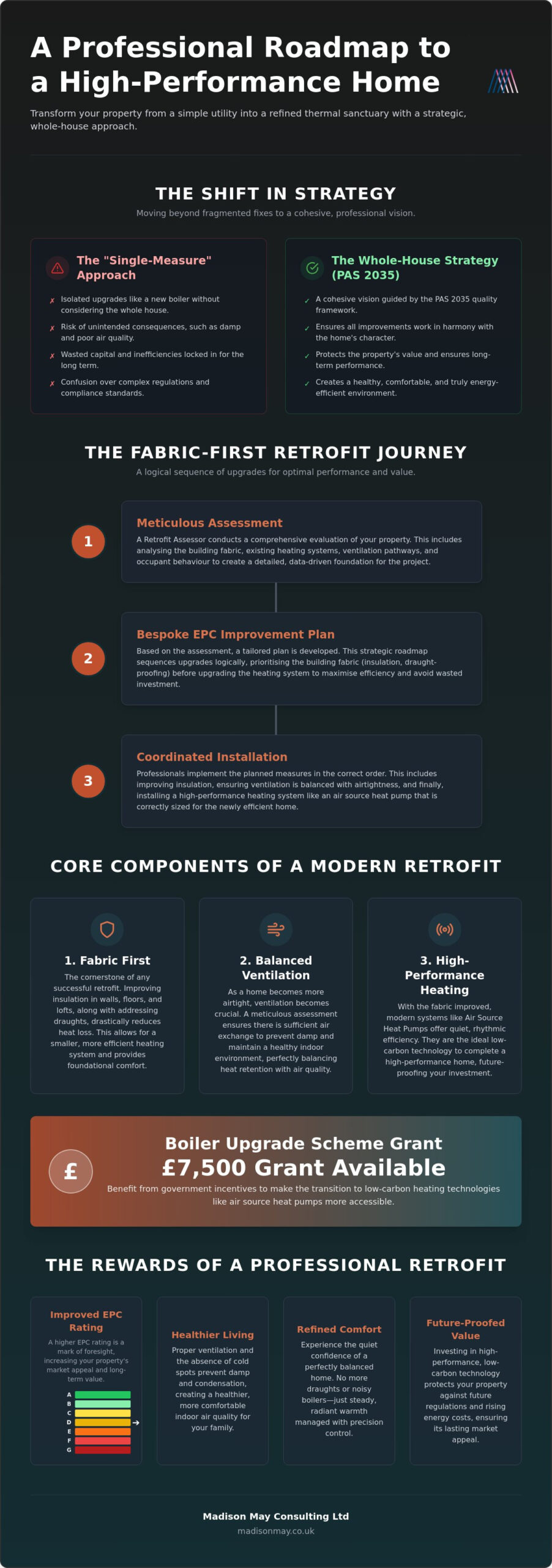
The transition to a more efficient home is often viewed through the lens of individual tasks, yet the most enduring transformations are those guided by a cohesive vision. In the pursuit of heating upgrades West Yorkshire residents should look beyond the immediate warmth of a new radiator and consider the building as a living organism. The PAS 2035 framework emerged as a response to the failures of fragmented improvements, establishing itself as the hallmark of quality in domestic retrofit. It mandates a move away from the “single-measure” approach, where installing a new boiler or adding loft insulation in isolation can inadvertently lead to structural issues or poor air quality. Without a holistic strategy, the delicate balance of a property’s environment is easily disturbed.
A Retrofit Assessor acts as an attentive listener to your home’s unique story. They don’t just see walls and pipes; they identify the specific needs of the building fabric and how it interacts with its occupants. This level of professional coordination is not merely a regulatory requirement; it’s a necessity to ensure technical compliance and long-term comfort. By understanding the interplay between heat generation and the building’s envelope, we can ensure that every investment contributes to a harmonious and high-performance sanctuary.
The Meticulous Assessment Process
Every successful project begins with the collection of detailed data, covering everything from building services to current ventilation pathways. Meticulous building surveys are essential during this phase, as they uncover hidden inefficiencies whilst preserving the architectural character that makes your property unique. This process ensures that heating upgrades West Yorkshire homes undergo are tailored to their specific constraints, preventing the “locking in” of carbon or moisture risks. It’s a thoughtful expert’s way of ensuring the roadmap for your property is both practical and aspirational.
Risk Management and Quality Assurance
The Retrofit Coordinator serves as a dedicated project guardian, overseeing the design and installation to protect the building’s integrity. They ensure that new technologies, often supported by the Boiler Upgrade Scheme, are integrated seamlessly into the existing structure. This professional oversight is the ultimate luxury, offering you the serenity of knowing that your home is in capable, patient hands. As you begin this journey, a professional retrofit assessment provides the essential clarity needed to invest with confidence, turning a complex technical challenge into a graceful evolution of your living space.
Beyond the Boiler: Evaluating High-Performance Heating Technologies
Selecting the right technology is an exercise in discerning quality, moving beyond the mechanical to find a solution that complements your lifestyle and your property’s architectural heritage. Air Source Heat Pumps (ASHPs) bring a quiet confidence to the modern home, operating with a gentle efficiency that maintains a constant, comfortable temperature rather than the aggressive heat cycles of the past. When planning heating upgrades West Yorkshire homeowners must consider how new emitters, such as oversized radiators or underfloor heating, will interact with this low-flow technology. Adhering to The PAS 2035 Framework ensures that these technical selections are not made in isolation but are part of a quality-assured journey that prioritises the building’s long-term health.
For properties where a heat pump might not yet be the ideal fit, perhaps due to the constraints of a historic building fabric, high-efficiency condensing systems offer a refined alternative. These systems provide a significant step forward in efficiency whilst remaining compatible with existing high-temperature infrastructure. To truly transform your property into a personal refuge, integrating renewable energy sources like solar PV can provide the power needed for your heating systems with 0% VAT on installation until 2027. This holistic approach ensures that your home remains resilient, sustainable, and effortlessly warm.
The Grace of Low-Carbon Solutions
Heat pumps provide a steady, measured warmth that feels more natural and less aggressive than traditional systems. By utilizing underfloor heating, you can achieve a seamless, aesthetic interior free from the visual clutter of radiators, allowing your design choices to take centre stage. These systems align perfectly with wider energy efficient home improvements, creating a cohesive strategy for property enhancement that values both form and function.
Smart Integration and Responsive Design
A truly responsive home is one where warmth is personalised. Sophisticated zoning allows you to orchestrate different temperatures in every room, ensuring energy is only used where it’s most valued. Thermal storage also plays a vital role, capturing excess energy to optimise use during peak times without compromising your comfort. Smart thermostats learn the unique rhythm of a household, adjusting temperatures with a subtle intuition that anticipates your needs before you even sense a chill. This desire for a curated, high-quality environment often extends to the garden, where MIMO Living provides premium furniture that blends modern design with natural serenity.
The Ventilation Gap: Balancing Insulation with Air Quality
The pursuit of thermal efficiency often leads to a focus on sealing every gap, yet a home must breathe to remain a healthy sanctuary. When planning heating upgrades West Yorkshire, the intersection of heat retention and air exchange becomes a critical design consideration. As we wrap our properties in high-performance insulation and draught-proofing to protect the warmth generated by new systems, we risk creating an airtight environment where moisture has no escape. Without a meticulous ventilation strategy, the very measures intended to create comfort can inadvertently lead to the quiet accumulation of damp and mould. Achieving a “breathable” home is about finding the delicate equilibrium where precious heat is retained whilst stale, moisture-laden air is effectively expelled.
Part F of the Building Regulations serves as a vital standard for health, ensuring that every domestic retrofit maintains adequate air quality. It’s a technical safeguard that prevents the unintended consequences of modern energy efficient improvements. By viewing ventilation not as an afterthought but as a partner to heating and insulation, we create a living space that is both resilient and restorative. This holistic approach ensures that your property investment remains a safe, dry refuge for years to come.
Solving the Condensation Narrative
The transition from the draughty, unpredictable houses of the past to controlled, healthy environments requires a shift in our understanding of air movement. Traditional draughts were accidental and inefficient; modern ventilation is intentional and precise. Professional retrofit strategies include damp remediation that addresses the root causes of condensation rather than merely masking the symptoms. There is a profound psychological benefit to living in a home that feels fresh and clear, where the air is as meticulously curated as the interior design itself. To ensure your home remains a healthy environment, consider a professional ventilation assessment as a foundational step in your property journey.
Mechanical Ventilation and Heat Recovery (MVHR)
For those seeking the ultimate in climate control, Mechanical Ventilation and Heat Recovery (MVHR) systems offer the luxury of constant fresh air without the loss of warmth. These systems work with a quiet, invisible service, extracting heat from outgoing air to pre-warm the fresh air entering the sanctuary. It’s a sophisticated solution that maintains a steady, comfortable temperature whilst ensuring the environment never feels stifling. To validate the performance of such systems, air pressure testing is essential, providing the data-driven assurance that your home’s fabric is performing exactly as intended. This level of technical rigour is what separates a simple renovation from a visionary retrofit.
The journey toward a more efficient home often begins with a spark of inspiration, yet it requires a steady, professional hand to guide that vision to fruition. When navigating the complexities of heating upgrades West Yorkshire residents frequently encounter a fragmented landscape of advice and regulations. A professional EPC improvement plan serves as a bespoke roadmap, distilling technical data into a clear and graceful strategy for property investment. It’s more than a mere certificate; it’s a curated narrative that identifies the most effective pathway to achieving a high-performance sanctuary without the risk of wasting capital on poorly timed measures. Professional consultancy provides clarity amongst the complexity of retrofit, ensuring that you don’t feel rushed whilst making significant decisions about your property’s future.
One of the most significant risks in any retrofit project is the “locking in” of inefficiencies through an incorrect sequence of works. For instance, installing a sophisticated heating system before addressing the building’s thermal envelope can lead to oversized, underperforming equipment. By adopting a professional consultancy approach, you ensure that every modification is intentional and perfectly timed. This clarity allows you to move forward with the quiet confidence that your investment is protected and your home’s heritage is preserved.
A Strategic Investment for Landlords
For property investors and landlords, the roadmap is an essential tool for navigating the evolving landscape of Minimum Energy Efficiency Standards (MEES). With current requirements for 2026 demanding a move toward higher efficiency, having a logical, cost-effective sequence for improvements is a matter of regulatory survival. A meticulous plan provides the peace of mind that comes from a long-term strategy, ensuring that your portfolio remains exclusive and compliant. The EPC becomes a testament to a property’s evolution, telling a story of quality and foresight that resonates with discerning tenants.
Your Journey with Madison May
At Madison May, we act as an attentive listener and a thoughtful expert, prioritising your personal story throughout the design process. Our role as a “Project Guardian” means we oversee the complexities of the retrofit journey, moving from initial inspiration to a verified, high-performance home. We believe that every detail matters and every material should be chosen with care to reflect your individual identity. This measured, steady approach ensures you’re in capable, patient hands from the first survey to the final detail. Begin your journey toward a more efficient sanctuary today.
Refining Your Vision for a Sustainable Sanctuary
Crafting a home that balances modern efficiency with architectural heritage is a journey of meticulous choices and visionary planning. By embracing a whole-house strategy aligned with the PAS 2035 standard, you ensure that the heating upgrades West Yorkshire residents invest in today provide a foundation for long-term health and comfort. We’ve explored how the integration of high-performance technologies, such as air source heat pumps and sophisticated ventilation systems, can transform a property into a truly restorative refuge. This evolution requires more than just mechanical changes; it demands a professional roadmap that sequences every improvement to protect your capital and enhance your property’s enduring story.
Madison May provides the quiet confidence of a project guardian through PAS 2035 aligned assessments and expert retrofit coordination. Our bespoke EPC roadmaps offer the clarity needed to navigate complex regulations whilst ensuring every detail of your home’s fabric performs in perfect harmony. Begin your property transformation with a professional EPC Improvement Plan from Madison May and move beyond the functional to experience a home designed for serenity. Your journey toward a more refined, energy-efficient lifestyle is ready to unfold with grace and precision.
Frequently Asked Questions
What is the most effective heating upgrade for a traditional property?
The most effective approach for a traditional home is a transition to a low-carbon system, such as an air source heat pump, preceded by a fabric-first strategy. By prioritising insulation and draught-proofing before the heating installation, you ensure the property retains its architectural character whilst achieving a level of thermal comfort that rivals modern builds. This sequencing is essential for creating a stable, energy-efficient sanctuary that remains resilient against rising costs.
How does PAS 2035 impact my heating upgrade project?
PAS 2035 acts as the hallmark of quality for domestic retrofits, mandating a whole-house approach rather than installing isolated measures. It requires the involvement of a Retrofit Coordinator to oversee the design and installation, ensuring that your heating upgrades West Yorkshire project is technically compliant and protected from moisture risks. This framework provides the professional oversight needed to turn a complex renovation into a seamless, high-quality property evolution.
Can I install a heat pump without upgrading my insulation first?
As of April 2026, the government has removed the specific requirement for a property to have certain insulation measures in place before accessing the Boiler Upgrade Scheme grant. Whilst it’s technically possible, we don’t recommend it as a primary strategy. Without adequate insulation, a heat pump must work harder to maintain warmth, which can lead to higher running costs and a less serene living environment.
How much can a heating upgrade improve my EPC rating?
A comprehensive heating upgrade can often lift a property by one or even two full EPC bands, depending on the starting point and the technology chosen. Transitioning from an old G-rated boiler to a high-performance heat pump, when combined with an EPC Improvement Plan, provides a clear roadmap for meeting the proposed 2026 MEES requirements for landlords. This transformation significantly increases the market appeal and exclusivity of the property.
What is a ventilation assessment and why is it necessary for heating?
A ventilation assessment is a meticulous evaluation of how air moves through your home, ensuring there is adequate exchange to prevent damp and mould. As heating upgrades West Yorkshire homes often include making the building more airtight through insulation and windows, intentional ventilation becomes vital. It ensures that whilst you retain precious heat, stale air and moisture are effectively expelled to maintain a healthy and fresh internal atmosphere.
Are there specific grants for heating upgrades in West Yorkshire for 2026?
Homeowners in West Yorkshire can currently access the £7,500 Boiler Upgrade Scheme grant, which increases to £9,000 for those moving from oil or LPG for installations completed by March 2027. The Home Energy West Yorkshire Loans also offer up to £25,000 in low-interest funding for energy-saving improvements. The new Warm Homes Plan, launched in mid-2026, provides a significant investment pool for technologies like solar panels and heat pumps.
How long does a full retrofit assessment take for a domestic property?
An on-site retrofit assessment typically requires between two and four hours to complete, depending on the size and complexity of the property. During this time, the assessor meticulously records details of the building fabric, existing services, and ventilation pathways. This data-driven approach allows for the creation of a bespoke roadmap that ensures your property investment is both strategic and effective.
What is the difference between a retrofit assessor and a traditional surveyor?
A traditional surveyor focuses primarily on the structural integrity and general condition of a building, whereas a retrofit assessor specialises in energy performance and occupancy patterns. The retrofit assessor evaluates how a home generates and retains heat, providing the technical data required for a PAS 2035 compliant project. They act as a sophisticated guide, focusing on the intersection of functionality and beauty to achieve a high-performance living space.