


What if the very improvements designed to keep your home warm are actually the silent architects of those damp, weeping window panes you face every morning? It’s a common frustration. Despite modern glazing, the struggle with moisture often persists. Understanding how to stop condensation on windows requires a shift in perspective, moving away from treating symptoms and towards a holistic mastery of your home’s unique equilibrium.
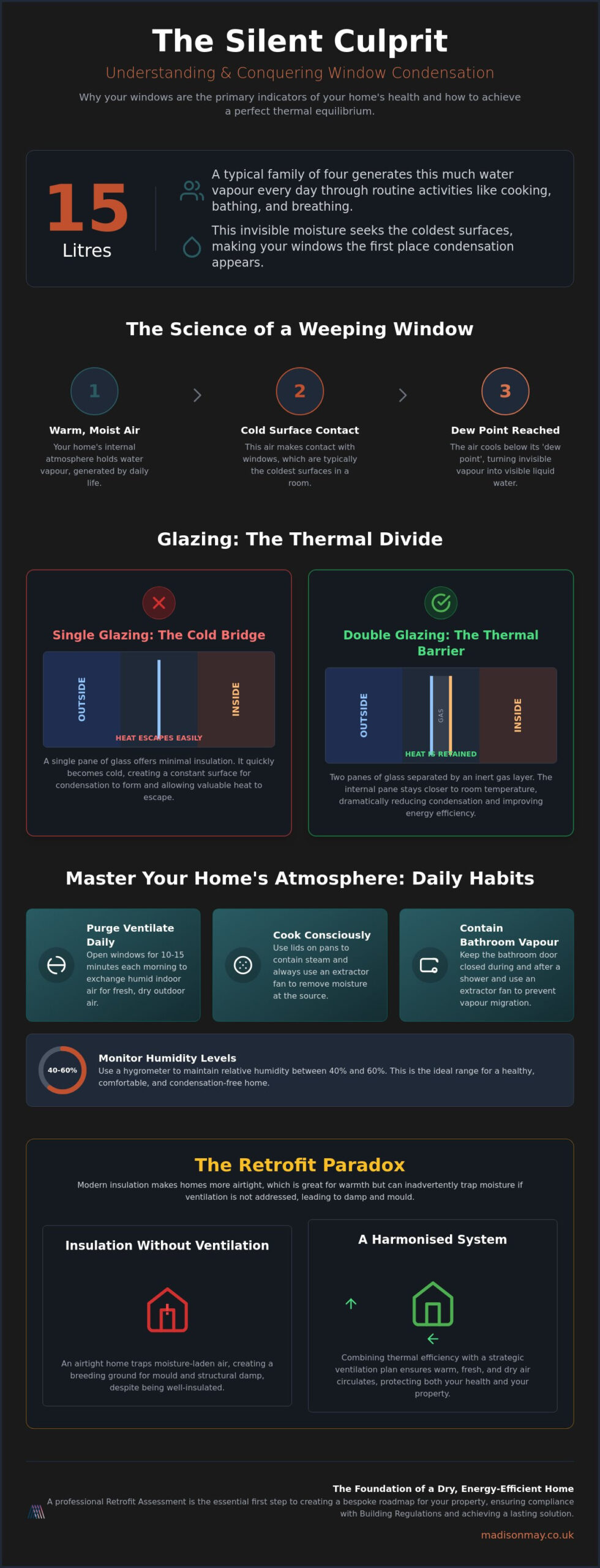
You’ve likely felt the quiet anxiety that comes with discovering a musty scent in a bedroom or seeing dark mould blooming on a window frame. When a typical family of four generates 15 litres of water vapour every day, your home’s internal atmosphere can quickly become imbalanced. We believe your residence should be a refined sanctuary, not a source of worry or escalating heating costs. In this guide, we’ll show you how to transform your living space into a dry, energy-efficient haven through expert ventilation and strategic retrofit choices. We’ll explore the essential role of Building Regulations Part F 2022 and explain why a professional Retrofit Assessment is the cornerstone of a healthy, enduring property.
Key Takeaways
- Understand why moisture settles on your glazing and why your windows act as the primary indicators of your home’s internal health.
- Master the daily habits and ventilation rituals that provide a practical answer to how to stop condensation on windows whilst maintaining a comfortable temperature.
- Discover why modern insulation can inadvertently trap dampness and how to harmonise thermal efficiency with essential airflow.
- Learn how Building Regulations Part F and professional ventilation assessments protect your property from long-term structural damage and mould.
- Explore why a professional Retrofit Assessment is the essential first step in creating a bespoke roadmap for a dry, energy-efficient sanctuary.
The Physics of Moisture: Why Condensation Forms on Your Windows
The morning light often reveals a quiet transformation within the home. As you pull back the curtains, you might encounter a heavy, humid weight in the air, contrasted sharply by the cold, slick touch of the glass. This moisture isn’t a failing of the window itself, but rather a visible sign that your home’s internal atmosphere has reached a tipping point. Windows act as the primary canaries in the coal mine for property moisture because they’re typically the coldest surfaces in any room. When warm, moisture-laden air meets these chilled boundaries, the invisible water vapour transitions into a physical liquid. Understanding this atmospheric shift is the first step in learning how to stop condensation on windows and reclaiming the clarity of your view.
Maintaining a sense of thermal equilibrium is about more than just comfort; it’s about preserving the integrity of your sanctuary. In a finely crafted environment, every element works in harmony to balance temperature and humidity. Learning how to stop condensation on windows is essentially a lesson in managing this delicate thermal dance. When this balance falters, the resulting dampness can begin to mar the very aesthetics we strive to protect, from the delicate grain of timber frames to the pristine finish of interior walls. Selecting the right window dressings is a key part of this aesthetic preservation; Universal Blinds UK offers made-to-measure blinds and shutters that help maintain a sophisticated look while you work to balance your home’s humidity.
The Dew Point and Your Internal Sanctuary
Relative humidity is a measure of how much water the air is currently holding compared to its maximum capacity at that specific temperature. On crisp winter mornings, the disparity between the biting outdoor cold and your indoor heating is at its most extreme, making it the peak time for moisture to manifest. In the context of a British home, the dew point is the precise temperature at which the air can no longer hold its cargo of water vapour, forcing it to settle as liquid upon any surface that falls below that threshold.
Single vs. Double Glazing: The Thermal Barrier
While older properties often possess a timeless charm, their single-glazed windows frequently act as a cold bridge, allowing heat to escape whilst inviting the external chill to penetrate deep into the frame. This creates a permanent site for condensation to thrive. High-performance double glazing, by contrast, introduces a rhythmic barrier of inert gas between two panes of glass. This intentional layer of insulation ensures the internal pane remains much closer to the room’s ambient temperature, significantly reducing the likelihood of the dew point being reached. Moving from a cold bridge to a bespoke, energy-efficient window system is a transformative step in protecting your home’s heritage and health; to explore premium installation options, check out Ashe Windows.
Daily Rituals: How to Manage Household Humidity
Living in a home is a dynamic experience. Every action, from a long, restorative soak in the bath to preparing an evening meal for guests, contributes to the delicate composition of your internal atmosphere. A typical family of four releases approximately 15 litres of water vapour daily through these routine activities. This invisible moisture naturally seeks out the coolest surfaces in your rooms, which is why the secret of how to stop condensation on windows often begins with simple, elegant daily rituals that respect the home’s equilibrium.
Think of ventilation not as a mundane chore, but as a breath of fresh air for your property. Opening windows for a brief, intentional period each morning allows stale, humid air to escape and crisp, dry air to enter. This exchange helps maintain a healthy balance without sacrificing the warmth you’ve carefully curated. To truly master your environment, consider the use of a hygrometer. These discreet devices monitor relative humidity, providing the clarity needed to keep levels between 40% and 60%. It’s a sophisticated way to listen to your home’s needs and respond before moisture becomes a visible problem.
Moisture Management in the Kitchen and Bathroom
The kitchen and bathroom are the primary sources of moisture production. Using lids on pans whilst cooking preserves energy and keeps steam contained within the vessel. When bathing, ensure the door remains closed to prevent “vapour migration” into cooler areas of the house where it can settle on window frames. High-quality extractor fans are essential in these spaces, and modern designs allow these to be integrated seamlessly into your interior aesthetic. For those seeking a deeper understanding of their home’s performance, a professional ventilation assessment can identify where these daily rituals need additional structural support.
The Dehumidifier: A Temporary Ally
Sometimes, despite our best efforts, the internal balance shifts. A dehumidifier can act as a temporary ally, particularly when drying laundry indoors during the damp winter months. It’s wise to choose a unit with a quiet decibel rating and a minimalist design to ensure it doesn’t disrupt the serenity of your living space. However, remember that these devices are symptomatic treatments. While they help in the short term, they don’t address the underlying architectural need for a permanent, structural strategy for how to stop condensation on windows.
The Retrofit Paradox: Why New Insulation Can Lead to Mould
It’s a perplexing reality for many who have invested in the longevity of their property. You’ve replaced the draughty windows and layered the loft with thick insulation, yet the damp seems more persistent than ever. This is the retrofit paradox. By creating a more airtight environment to conserve heat, we inadvertently dismantle the natural infiltration that older homes relied upon to breathe. Without a balanced approach, your home transforms into a sealed box where moisture and pollutants are trapped, unable to find an exit.
Understanding the unintended consequences of these energy-efficient improvements is essential for any discerning homeowner. Before embarking on significant changes, commissioning professional building surveys is a vital step. These assessments identify hidden risks where the building’s fabric might struggle to cope with its new, airtight state. Discovering how to stop condensation on windows becomes even more vital after these upgrades, as the moisture that once escaped through gaps now gathers on the remaining cold surfaces.
The Ventilation-Insulation Balance
Adding insulation is only half of the story. To maintain a healthy indoor climate, every increase in thermal performance must be matched by a sophisticated ventilation strategy. This is the core philosophy of the PAS 2035 standard, which advocates for a whole-house approach to retrofitting rather than a series of isolated projects. Patchy or poorly coordinated insulation can create mouldy corners where heat is unable to reach, often at the junction between walls and ceilings. A professional coordinator ensures that your home’s thermal envelope is consistent, preventing these cold pockets from becoming sites for damp to flourish.
Thermal Bridging: The Hidden Cold Spots
Structural imperfections, known as thermal bridges, are the silent enemies of home equilibrium. These occur where a material with higher thermal conductivity creates a path for heat to bypass your insulation, resulting in localised cold spots. Even in a room that feels warm, these invisible bridges can drop below the dew point, inviting moisture to settle. Professional thermal imaging is the only way to see these invisible threats, allowing for a meticulous plan that ensures every corner of your sanctuary remains dry and protected. Mastering how to stop condensation on windows in a modernised home requires this level of visionary detail, ensuring beauty and functionality exist in perfect union.
Structural Solutions and Part F Regulations
While daily rituals provide a foundational layer of care, a permanent resolution to damp issues often requires a more profound engagement with your home’s architectural anatomy. Transitioning from temporary fixes to structural remediation is about honouring the building’s need for a consistent, rhythmic exchange of air. This is where professional expertise becomes invaluable, moving beyond the surface to address the root causes of moisture imbalance. When considering how to stop condensation on windows for the long term, we must look towards solutions that are woven into the very fabric of the property, ensuring that every room remains a dry, healthy sanctuary.
The 2022 revision of Approved Document F represents a significant regulatory shift in how we approach home health, mandating the installation of trickle vents in most replacement windows to ensure adequate ventilation. This legislation acknowledges that as our homes become more airtight to conserve energy, we must be intentional about air quality. Far from being a mere compliance exercise, choosing bespoke windows and doors allows for these essential ventilation features to be integrated with a refined aesthetic. These high-performance systems provide the necessary airflow whilst maintaining the sophisticated profile and thermal integrity of your living space.
Trickle Vents and Passive Airflow
Modern trickle vents are designed to offer a silent, background exchange of air that works tirelessly even when you’re at rest. It’s a common mistake to block these vents during the depths of winter in an attempt to preserve heat, yet doing so invites the very moisture we seek to avoid. When integrated into high-end window designs, these vents are discreet and colour-matched, ensuring that the visual harmony of your interior remains undisturbed. They provide a gentle, constant breath for the building, preventing the stagnant conditions where water vapour settles and mould begins to flourish.
Positive Input Ventilation (PIV) Systems
For a more comprehensive transformation of air quality, Positive Input Ventilation (PIV) systems are often the preferred choice for those seeking a whole-property solution. These whisper-quiet units are typically installed in a loft space, gently introducing filtered, fresh air into the home to create a slight positive pressure that displaces humid air. This system is particularly favoured by landlords aiming for MEES compliance, as it offers a reliable, low-energy method for how to stop condensation on windows across an entire property. For homes requiring the ultimate in climate control, Mechanical Ventilation with Heat Recovery (MVHR) remains the gold standard, salvaging warmth from outgoing air to ensure your sanctuary remains both fresh and exceptionally efficient. To discover which structural path best suits your property’s unique story, a professional ventilation assessment provides the clarity needed to move forward with confidence.
The Road to a Dry Home: Your Professional Retrofit Strategy
The journey towards a consistently dry home is rarely solved by a single product or an isolated change. Instead, it requires a vision that encompasses the entire property. Whilst we’ve explored the physics of moisture and the necessity of daily habits, the ultimate answer to how to stop condensation on windows lies in a meticulous EPC improvement plan. This isn’t a mere tick-box exercise like a standard Energy Performance Certificate; it’s a bespoke roadmap designed to harmonise your home’s thermal performance with its essential ventilation needs.
Viewing energy efficient home improvements as an investment in your lifestyle is a transformative mindset. A PAS 2035 aligned strategy provides the peace of mind that every change, from new insulation to heating upgrades, is professionally coordinated. This rigour ensures you avoid the unintended consequences of trapped moisture, protecting both the building’s heritage and your own well-being. It’s about moving beyond temporary fixes to create a sanctuary that remains a place of clarity and comfort, regardless of the weather outside.
The PAS 2035 Retrofit Assessment
A professional assessment is a deep dive into the soul of your building. It goes far beyond a cursory glance, examining everything from the building fabric to the existing ventilation pathways and how they interact. This data-driven approach allows for a tailored roadmap that respects the unique structure of your property. Within this process, the Retrofit Coordinator acts as the guardian of your project, ensuring that every specialist involved works towards the same goal of home equilibrium. It’s a sophisticated way to find the most effective path for how to stop condensation on windows whilst future-proofing your investment.
Future-Proofing Your Sanctuary
Aligning your home with the Future Homes Standard is about more than meeting modern efficiency expectations; it’s about preparing your property for the decades ahead. There is a profound emotional reward in living in a home that is consistently warm, dry, and healthy. By taking this professional path, you ensure that your living space remains a deeply personal refuge that resonates on every level. Your home is a story of your identity and your journey. With a visionary strategy in place, you ensure that story is always one of lasting comfort and crystalline clarity.
Reclaiming Your Home’s Natural Clarity
Restoring balance to your living space is a journey that moves from understanding the simple physics of moisture to implementing a visionary, whole-house strategy. We’ve seen that the secret of how to stop condensation on windows isn’t found in a single product, but in the harmonious union of thermal efficiency and sophisticated ventilation. By addressing the retrofit paradox and respecting modern building regulations, you can transform a damp-prone environment into a dry, energy-efficient sanctuary that preserves both your property’s heritage and your own well-being.
The path to a healthier home begins with expert guidance. Whether you’re navigating the complexities of damp remediation or planning significant energy efficient home improvements, professional coordination ensures every detail is intentional. We invite you to book your professional Retrofit Assessment with Madison May Consulting Ltd. Our PAS 2035 aligned assessments and expert EPC improvement roadmaps provide the meticulous clarity needed to future-proof your residence. Let’s work together to ensure your home remains a serene refuge, where every morning begins with clear windows and a renewed sense of calm.
Frequently Asked Questions
Why do I have condensation on the outside of my new windows?
External condensation is often a sign that your high-performance windows are working exactly as intended. Because the heat from your home is no longer escaping through the glass, the outer pane remains cold enough to fall below the external dew point. This typically occurs on crisp, clear mornings and clears naturally as the sun rises, confirming that your thermal envelope is remarkably efficient.
Is condensation on windows a sign of a failed double-glazing unit?
Condensation on the room-side surface of the glass is rarely a sign of a failed unit; instead, it indicates high internal humidity. However, if you notice misting or droplets between the two panes of glass, the hermetic seal has likely failed. In such cases, the inert gas has escaped, and the unit no longer provides the rhythmic thermal barrier necessary to protect your home’s equilibrium.
Can I stop condensation without keeping my windows open all day?
You don’t need to sacrifice your comfort by keeping windows open all day to manage moisture. Structural solutions like modern trickle vents or Positive Input Ventilation (PIV) systems provide a silent, constant exchange of air whilst you keep your home warm. These systems ensure you know how to stop condensation on windows through a permanent, engineered approach rather than relying on manual intervention that disrupts the serenity of your space.
Does painting over mould stop it from coming back if the condensation remains?
Painting over mould is merely a cosmetic mask that fails to address the underlying atmospheric imbalance. Mould is a symptom of persistent dampness, and without resolving the high humidity or cold surfaces, the spores will inevitably return and mar your décor. It’s essential to treat the root cause through professional ventilation assessments before refreshing the aesthetic finish of your room.
Will a dehumidifier permanently solve my condensation problem?
While a dehumidifier is a helpful temporary ally, it’s rarely a permanent solution for a property’s moisture issues. These devices consume energy and require regular maintenance whilst only treating the symptoms of poor airflow. For a long-term resolution, moving towards structural ventilation ensures your home breathes naturally, providing a more elegant and sustainable answer to the question of how to stop condensation on windows.
How does an EPC improvement plan help with damp and mould?
An EPC improvement plan serves as a sophisticated roadmap that identifies the intersection of heat loss and moisture risk. Unlike a generic survey, a professional plan aligned with PAS 2035 standards ensures that any new insulation is perfectly balanced with a ventilation strategy. This holistic approach prevents the unintended consequences of a sealed box environment, ensuring your home remains both energy-efficient and beautifully dry.
What are the risks of ignoring condensation on window sills?
Ignoring moisture on your window sills can lead to significant structural damage and the degradation of your home’s aesthetic. Over time, standing water can rot timber frames, peel delicate paintwork, and encourage the growth of black mould that compromises indoor air quality. Addressing these signs early protects the heritage of your property and avoids the far more costly remediation required once damp has penetrated the building fabric.
Is it better to keep the heating on low all day or use it in bursts to stop condensation?
Maintaining a steady, low temperature is generally more effective at preventing condensation than using the heating in short, intense bursts. Keeping your home at a consistent warmth ensures that the internal surfaces of your walls and windows don’t drop below the dew point. This steady thermal state, combined with adequate ventilation, creates a stable environment where moisture is less likely to settle on your glazing.