

What if the secret to a truly serene and efficient home isn’t found in a single piece of insulation, but in a meticulous understanding of your building’s unique heritage and future potential? It’s natural to feel a sense of hesitation when faced with conflicting energy advice, especially when the fear of damp or mould following a rushed installation lingers in the back of your mind. You deserve a space that feels like a refined refuge, not a series of compromised solutions. By choosing a professional pas 2035 retrofit assessment leeds, you’re investing in more than just a survey; you’re securing a bespoke roadmap that transforms your property into a high-performance sanctuary whilst ensuring full compliance with the latest 2023 standards.
This guide explores how a whole-house approach protects your property’s integrity and indoor air quality. We’ll examine the path to achieving a warmer, more efficient environment that meets the upcoming 2030 regulatory deadlines with poise and precision, ensuring your home remains a source of comfort for years to come.
Key Takeaways
- Understand how a professional pas 2035 retrofit assessment leeds provides a comprehensive foundation for your home’s energy transformation, moving beyond isolated fixes to a harmonious, whole-house strategy.
- Learn the importance of a meticulous fabric-first evaluation to pinpoint heat loss and ensure every improvement respects the unique architectural heritage of your property.
- Discover why addressing the “ventilation gap” is essential for maintaining indoor air quality and preventing damp, ensuring your sanctuary remains both healthy and efficient.
- Gain clarity on navigating complex MEES regulations and the path to achieving an EPC rating of C by 2030 through a tailored, staged improvement plan.
- Explore the benefits of a curated retrofit process, from fixed-fee assessments to expert coordination, designed to provide peace of mind throughout your home’s evolution.
The Essence of PAS 2035: Why Professional Standards Matter
PAS 2035 isn’t merely a technical specification; it’s a philosophy of care for the British home. For too long, energy improvements were treated as isolated tasks, often resulting in unintended consequences like damp or poor air quality. The introduction of the PAS 2035:2023 standard marks a definitive shift toward a coordinated, professional methodology that treats your property as a living, breathing entity. This meticulous framework is essential for those seeking a pas 2035 retrofit assessment leeds, as it ensures that every intervention respects the structural integrity and architectural heritage of the building. While a standard EPC offers a useful snapshot, it lacks the depth required to plan complex home improvements. True energy efficiency in UK homes requires a more profound understanding of how various elements interact over time to create a lasting sanctuary.
The Whole-House Approach Explained
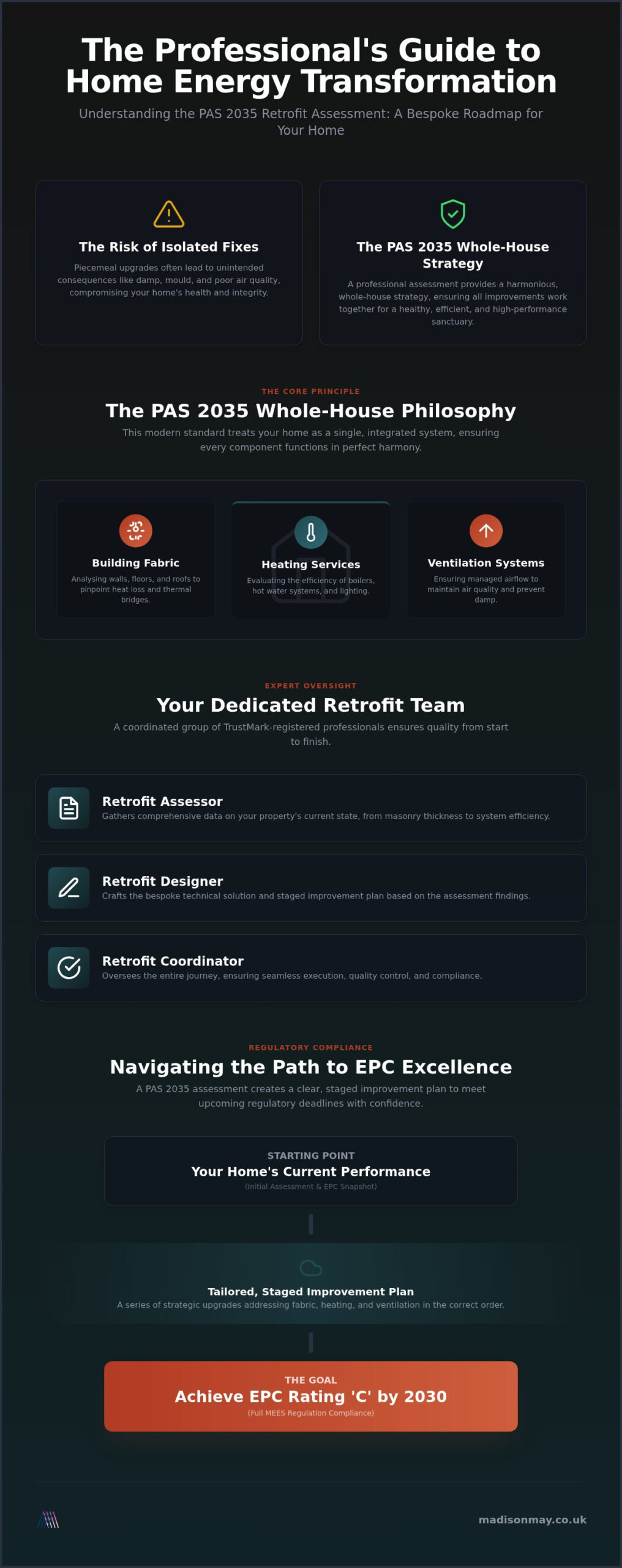
The whole-house approach is the cornerstone of this modern standard. It recognises that the building fabric, heating services, and ventilation systems must function in perfect harmony. When you insulate a wall without considering managed airflow, you risk creating stagnant environments that compromise indoor air quality. By viewing the home as a single, integrated system, we can account for occupancy patterns and local climate variations specific to West Yorkshire. This holistic vision prevents the pitfalls of piecemeal upgrades, ensuring that your property remains dry, warm, and exceptionally refined. It’s about creating a balance where functionality and beauty coexist without compromise.
The Role of the Retrofit Professional
Achieving this level of performance requires a dedicated team of experts. A Retrofit Assessor gathers the initial data, whilst a Retrofit Designer crafts the technical solution, and a Retrofit Coordinator oversees the entire journey to ensure seamless execution. This professional oversight is more than just a regulatory hurdle; it’s a guarantee of quality for any pas 2035 retrofit assessment leeds project. Working with TrustMark-registered professionals provides the quiet confidence that every measure is installed correctly and every material is chosen with intention. It transforms a complex construction project into a curated experience, where the focus remains on the enduring quality of your living space and your personal story within it.
The Meticulous Scope of a Retrofit Assessment
A site visit for a pas 2035 retrofit assessment leeds is a quiet, deliberate examination of your property’s physical narrative. It goes far beyond the superficial checks of a standard survey. Our assessors spend significant time documenting every nuance, from the thickness of the masonry to the specific efficiency of the heating systems tucked away in the utility room. This rigour ensures that any proposed changes are grounded in the reality of your building’s current state. The methodology follows the rigorous framework established by the Each Home Counts review, which highlighted the necessity for higher standards and better consumer protection in home energy work. By capturing the exact performance of heating, hot water, and lighting, we create a baseline for a transformation that feels both inevitable and bespoke.
Building Fabric and Thermal Performance
The journey begins with the envelope of the home. Analysing walls, floors, and roofs allows us to determine their current U-values, measuring how effectively these surfaces resist heat flow. We pay special attention to identifying thermal bridges, those often overlooked junctions where heat bypasses insulation entirely. Thermal bridging is the silent thief of home warmth. By pinpointing these vulnerabilities, we can design interventions that wrap your property in a continuous, protective embrace. This level of detail is why a professional building survey is the first step toward crafting a truly high-performance sanctuary.
Assessing Services and Occupancy Patterns
A home’s performance isn’t just about its physical structure; it’s about how you live within it. We consider your unique occupancy patterns and lifestyle requirements to ensure that energy measures don’t just work on paper, but in your daily life. Modern living demands sophisticated solutions, such as smart controls that allow you to manage your environment with grace and ease. We also evaluate the potential for renewable energy integration, ensuring these additions align with the aesthetic and functional needs of your property. This ensures your home remains a place of calm, even as it becomes more efficient.
Finally, we document the existing ventilation strategy with care. It’s a critical step that many overlook, yet it remains central to the health of the building. Without managed airflow, a well-insulated home can become a trap for moisture and pollutants. We identify potential risks early, ensuring that your path to energy efficiency never compromises the quality of the air you breathe or the longevity of your property’s heritage.
Addressing the Ventilation Gap: A Whole-House Philosophy
The pursuit of an energy-efficient sanctuary often leads homeowners toward increasing airtightness. Whilst sealing draughts is vital for heat retention, it creates a delicate challenge known as the ‘Ventilation Gap’. This occurs when the natural, albeit inefficient, airflow of an older property is restricted without a managed replacement. A professional pas 2035 retrofit assessment leeds is designed to bridge this gap, ensuring that your home’s evolution into a high-performance space doesn’t come at the cost of its breathability. Adhering to Part F of the Building Regulations is not merely a legal checkbox; it’s a fundamental safeguard for your property’s health and your family’s comfort. By treating ventilation as a primary design element, we preserve the refined atmosphere of your living spaces.
The Critical Intersection of Insulation and Airflow
Installing insulation upgrades without a corresponding ventilation plan is a risk that often leads to interstitial condensation. This hidden moisture settles within the fabric of your walls, potentially causing structural damage over time. A meticulous assessment balances heat retention with fresh air exchange, creating a stable internal environment. This approach aligns with the quality standards championed by TrustMark and Each Home Counts, ensuring building longevity remains at the heart of every project.
Damp Remediation through Intelligent Design
Before any physical works begin, we must address the existing behaviour of moisture within the home. Building surveys play a pivotal role here, uncovering hidden issues that might be exacerbated by new energy measures. When we conduct a pas 2035 retrofit assessment leeds, we examine the moisture profile of every room with meticulous care. A dry home is the only foundation for a warm home. This thoughtful oversight ensures that functional upgrades never detract from the evocative, personal nature of your refined sanctuary.
Positioning ventilation as an essential component of indoor air quality and comfort elevates a retrofit from a simple construction task to a transformative artistic journey. It’s about more than just avoiding mould; it’s about creating a space where the air feels light and the atmosphere remains consistently serene. By choosing a coordinated, whole-house philosophy, you ensure that every detail of your property’s performance is intentional and every material is chosen with care. This meticulous approach allows you to enjoy lower energy bills without compromising the refined aesthetics or the heritage of your property. If you’re ready to begin this journey, our team is here to provide the professional guidance your home deserves.
Navigating the Path to EPC Excellence and Compliance
Achieving an EPC rating of C by 2030 is a regulatory requirement, but doing so whilst maintaining the aesthetic soul of your home is a delicate art. A professional pas 2035 retrofit assessment leeds serves as the essential first step in crafting a meticulous EPC improvement plan. This process isn’t about ticking boxes; it’s about a long-term strategy that values architectural heritage as much as thermal performance. For landlords, navigating the Minimum Energy Efficiency Standards (MEES) requires a clear, staged roadmap to reach compliance by the October 1, 2030 deadline. With a cost cap of £10,000 per property, every intervention must be intentional and perfectly sequenced to ensure your investment remains both legal and refined.
Preparing for Your Professional Assessment
Facilitating an accurate survey is a collaborative effort that begins before the assessor arrives. Gathering historical data, such as energy bills from the past year and documentation of previous property renovations, provides a rich context for the building’s current performance. It’s also helpful to organise access to every corner of your property, from the deepest basements to the highest loft spaces. This transparency allows for a truly comprehensive data set, ensuring the final report reflects the reality of your home’s unique structure. By preparing your space with care, you allow the professional to focus on the nuanced details that define your property’s potential.
Interpreting Your Bespoke Improvement Roadmap
The resulting roadmap is a carefully curated sequence of measures designed for maximum efficiency. We always advocate for a fabric-first approach, prioritising high-performance insulation and draught proofing before upgrading heating systems. This ensures the building envelope is secure, preventing you from installing an oversized boiler that works harder than necessary. Your Retrofit Coordinator acts as a sophisticated guide during this phase, overseeing the implementation with the calm deliberation of a high-end consultation. They ensure that every measure, from heating upgrades to window replacements, is integrated seamlessly into your home’s existing aesthetic. If you’re ready to secure your property’s future, you can book your professional retrofit assessment today.
Madison May Consulting Ltd: Curating Your Home’s Energy Transformation
At Madison May Consulting Ltd, we view the home not just as a structure, but as a deeply personal refuge and a story told through physical space. Our sophisticated approach to consultancy ensures that every pas 2035 retrofit assessment leeds is conducted with the quiet confidence of a trusted expert who prioritises your property’s unique narrative. We understand that our clients value clarity and quality above all else. This is why we provide a fixed-fee assessment model, offering the transparency and ease that a discerning homeowner expects from a high-end service. By removing the ambiguity of costs, we allow you to focus on the transformative journey of your property’s evolution into a more efficient and comfortable sanctuary.
The Madison May Consulting Ltd Difference
What sets our methodology apart is a relentless focus on meticulous craftsmanship and the emotional resonance of your living environment. We don’t simply provide a list of energy measures; we craft a visionary roadmap that respects the architectural heritage of your property. There is a natural and effortless synergy between our building surveys and energy performance evaluations. By understanding the structural nuances of your home first, we ensure that every insulation upgrade or heating improvement is intentional and effective. This intersection of beauty and functionality is where Madison May Consulting Ltd excels, positioning us as a thoughtful curator of your home’s enduring quality.
Your Journey to a High-Performance Sanctuary
Beginning your consultation with our expert retrofit team is the first step toward a more refined lifestyle. Our design process is intentionally rhythmic and measured, unfolding with the calm deliberation of a high-end consultation. We take the time to be attentive listeners, ensuring that the final improvement plan reflects your identity whilst meeting the highest professional standards. We guide you through the complexities of the retrofit journey with poise, from the initial site visit to the expert coordination of works. It’s a seamless experience where every material is chosen with care to enhance your sense of wellbeing.
Your home should remain a sanctuary of calm and efficiency for years to come. With the professional oversight of Madison May Consulting Ltd, you can enjoy the peace of mind that comes from knowing every detail has been handled with visionary creativity and technical precision. We invite you to experience a more thoughtful way of enhancing your property’s performance, where your personal comfort and the building’s structural integrity are held in perfect, sustainable balance. This is the essence of our transformation; a home that feels warmer, breathes better, and resonates on a deeper level.
Crafting Your High-Performance Sanctuary
The journey to a truly efficient home is a delicate balance between technical precision and architectural respect. By embracing a professional pas 2035 retrofit assessment leeds, you ensure that every upgrade is grounded in the meticulous whole-house philosophy explored throughout this guide. This process doesn’t just satisfy regulatory demands; it protects your property from the risks of damp whilst enhancing the quality of the air you breathe. You’re curating a space that reflects your identity and values enduring quality.
At Madison May Consulting Ltd, we provide the quiet confidence of TrustMark-aligned expertise and specialists in damp remediation and ventilation to guide you. Our commitment to fixed-fee transparency allows you to plan your property’s evolution with poise and clarity. Every detail is intentional, ensuring your home remains a source of calm and refined comfort for years to come. It’s time to transform your living environment into a masterpiece of performance and beauty.
Book your meticulous PAS 2035 assessment with Madison May Consulting Ltd and begin the artistic journey of refining your property’s performance. Your home’s next chapter starts with a vision of excellence.
Frequently Asked Questions
Is a PAS 2035 retrofit assessment mandatory for all home improvements?
A professional assessment is mandatory for projects receiving government funding, such as the ECO4 scheme or the Great British Insulation Scheme, but it remains the gold standard for any high-quality renovation. Even if you aren’t seeking a grant, following this framework ensures your property receives a coordinated, risk-managed transformation that protects its structural integrity and long-term value. It’s the most reliable way to avoid the unintended consequences often associated with piecemeal energy upgrades.
How long does a professional retrofit assessment typically take to complete?
A thorough on-site survey usually lasts between two and four hours, though this timeframe can vary depending on the architectural complexity and size of your home. During this visit, our assessor meticulously documents everything from insulation levels and heating systems to ventilation pathways. This measured approach ensures the resulting data provides a complete and accurate picture of your property’s current performance, allowing for a truly bespoke improvement roadmap.
What is the difference between a Retrofit Assessor and a Retrofit Coordinator?
An assessor focuses on the gathering of physical data and occupancy patterns during their site visit. In contrast, a Retrofit Coordinator acts as a sophisticated guide, overseeing the entire project from design to final completion. The coordinator ensures every measure is installed correctly and meets the high standards required for a pas 2035 retrofit assessment leeds, providing you with a single point of professional authority and peace of mind.
Can I still get a retrofit assessment if my property is a listed building?
Yes, and a professional assessment is particularly vital for protected or traditional buildings that require a more sensitive touch. The PAS 2035 framework includes specific pathways for heritage properties, ensuring that energy improvements don’t compromise the historic character or the natural breathability of traditional masonry. It allows us to curate a high-performance environment whilst honouring the unique story and craftsmanship of your home.
How much does a fixed-fee PAS 2035 assessment cost for a domestic property?
Costs for a pas 2035 retrofit assessment leeds are typically determined by the size and structural complexity of the building. Madison May provides a fixed-fee model to offer our clients complete transparency and ease, allowing you to understand the investment required for your bespoke roadmap before any works begin. We recommend a brief consultation to discuss your property’s specific needs and provide an accurate, transparent quote for our services.
What happens if the assessment identifies significant damp or mould issues?
Any moisture issues identified during the survey will be documented as a priority for remediation before further energy measures are considered. A dry home is the only foundation for a warm home, so your improvement plan will include specific ventilation strategies or damp remediation to restore the health of your property’s fabric. This thoughtful oversight ensures that new insulation never exacerbates existing problems, preserving the serene atmosphere of your sanctuary.
Will the assessment help me qualify for government energy efficiency grants?
Yes, a valid PAS 2035 assessment is a core requirement for accessing funding through current government schemes like ECO4. It provides the technical assurance that any funded works are being planned as part of a high-quality, whole-house strategy. By following this professional path, you ensure your property meets the necessary standards for compliance whilst benefiting from a significant investment in your home’s future performance.
How often should a property undergo a new retrofit assessment?
A new assessment is generally only required if you plan significant further improvements or if the building’s usage and occupancy patterns change drastically. It serves as a long-term improvement roadmap that can be implemented in stages as your journey unfolds. Many homeowners choose to update their records after major works are completed to reflect their property’s new, high-performance status and to ensure their EPC rating remains an accurate reflection of their home’s efficiency.