


Could the very insulation designed to keep your home warm be silently compromising the air your children breathe? It’s a question that often lingers in the minds of those who value both a temperate environment and the wellbeing of their loved ones. You may find yourself asking, “How do I protect my family’s health – air quality?” particularly when the pursuit of a draught-proof home seems to invite the risk of dampness or hidden mould. We understand the desire for a living space that feels both secure and revitalising, free from the uncertainty of volatile organic compounds or inadequate ventilation.
We believe your home should be more than just a shelter; it ought to be a curated sanctuary where every breath brings a sense of calm and vitality. This guide will help you transform your home into a refined sanctuary of health by mastering the balance between energy efficiency and pure, breathable air. You’ll gain a clear understanding of the silent pollutants that may be present in your living spaces and discover a professional roadmap for improving your environment through a sophisticated retrofit approach. By the end, you’ll have the confidence to ensure your environment is as safe as it is elegant.
Key Takeaways
- Recognise how the delicate purity of your home’s atmosphere directly influences the restorative sleep and cognitive resilience of those you cherish most.
- Discover the specific steps required to address the essential question, “How do I protect my family’s health – air quality?” by identifying hidden pollutants and biological threats within your private sanctuary.
- Master the “Build Tight, Ventilate Right” philosophy to ensure that your pursuit of energy efficiency and warmth is always harmonised with a high-performance ventilation strategy.
- Develop a clear roadmap for improving your environment, ranging from intentional lifestyle shifts to the sophisticated security of a PAS 2035-aligned Retrofit Assessment.
The Invisible Influence: Why Indoor Air Quality is Central to Family Health
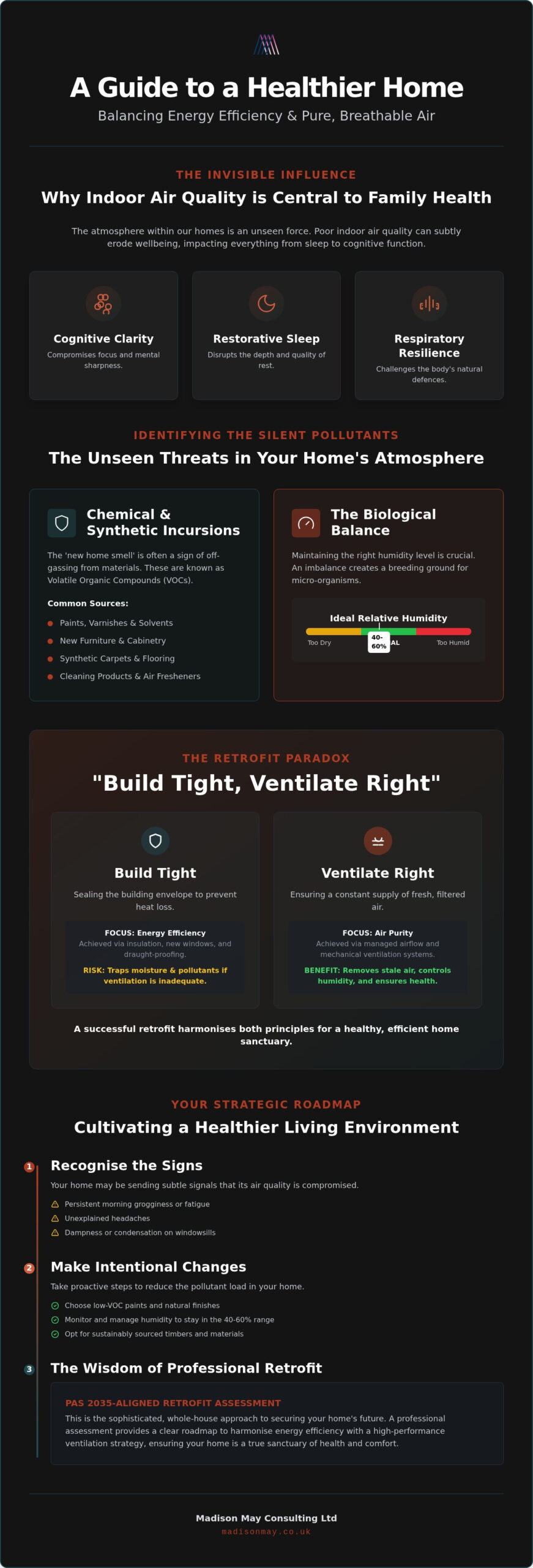
The air within our homes is often an overlooked element of interior design, yet it’s perhaps the most vital. We often focus on the visual harmony of a room, the texture of a fabric, or the warmth of the lighting, but the invisible atmosphere we breathe dictates the true quality of our lives. When you ask, “How do I protect my family’s health – air quality”, you’re looking for a foundation of wellbeing that supports every other aspect of your domestic sanctuary. Poor indoor air doesn’t just cause physical discomfort; it subtly erodes our cognitive clarity, disrupts the restorative depth of our sleep, and challenges our respiratory resilience over time. By shifting our perspective and viewing air as a curated, high-performance element of home design, we can reclaim the vitality of our indoor environments.
The Home as a Biological Sanctuary
A home should serve as a biological refuge, a space where the external pressures of the world are filtered away. Environmental purity is deeply linked to an emotional sense of calm; when the air feels light and fresh, the mind follows suit. Indoor Air Quality is the delicate, intentional balance of oxygen, humidity, and filtered particulate matter within a living space. Modern living habits, whilst efficient, have often led us to seal our homes so tightly that we trap stagnant air and pollutants inside. This stagnation is a byproduct of modern insulation practices that haven’t always prioritised the movement of fresh air, turning our retreats into places of environmental stress. To truly protect those within, we must treat the air with the same meticulous care we give to the structural integrity of the building itself.
Vulnerable Groups and the Need for Vigilance
Whilst everyone benefits from pure air, children and the elderly require a more meticulously managed atmosphere due to their developing or more sensitive respiratory systems. For these groups, the home is not just a place to live, but a space for growth and healing. Investing in air purity early in a family’s journey provides long-term health dividends, fostering a space where every breath is clean and revitalising. For many parents, the question “How do I protect my family’s health – air quality” is the catalyst for a much-needed home transformation. You might notice subtle signs that your home’s air is compromised, such as persistent morning grogginess, unexplained headaches, or a slight dampness lingering on windowsills. These aren’t just minor inconveniences; they’re signals that the balance of your sanctuary needs professional attention. Identifying these markers early allows you to act before health issues become ingrained, ensuring your home remains a safe, enduring legacy for every generation.
Identifying the Silent Pollutants Within Your Home’s Atmosphere
The atmosphere within a home is a delicate tapestry, woven from both intention and unintended consequence. Whilst we meticulously choose the colours of our walls and the texture of our linens, we often overlook the invisible chemical and biological guests that share our space. To address the fundamental question, “How do I protect my family’s health – air quality”, one must look beyond what is visible to the naked eye. The very items that define our personal style, from sophisticated furnishings to modern paints, can contribute to a complex landscape of silent pollutants that impact our daily vitality.
Chemical and Synthetic Incursions
Many homeowners recognise that distinctive ‘new home smell’, yet few realise it’s actually a signal of off-gassing materials. Volatile Organic Compounds, or VOCs, are hidden chemicals found in everything from high-end cabinetry to synthetic carpets. These compounds linger in the air long after the initial installation, subtly compromising the purity of your sanctuary. Choosing natural finishes, such as low-VOC paints and sustainably sourced timbers, helps reduce this chemical load significantly. Beyond internal choices, the building fabric itself plays a vital role. A high-quality, well-maintained exterior acts as a sophisticated filter, mitigating the ingress of external pollutants like urban smog or industrial particulates that seek to invade your private atmosphere.
The Biological Balance: Humidity and Micro-Organisms
Maintaining a relative humidity between 40% and 60% is the golden thread of domestic health. When moisture levels drift outside this range, the home becomes a breeding ground for biological threats. High humidity fosters the growth of mould spores and dust mites, both of which are potent triggers for respiratory distress. This risk is often heightened by ‘cold spots’ or thermal bridging, where poor insulation allows specific areas of a wall to remain chilled, causing moisture to condense. Understanding the movement of moisture is the first step in damp remediation, often requiring a specialist ventilation assessment to pinpoint the source of the imbalance and restore harmony to the living environment.
In our quest for energy efficiency, rooms can become so airtight that carbon dioxide levels rise unnoticed, leading to a sense of lethargy and diminished cognitive clarity. This accumulation, paired with particulate matter (PM2.5) from cooking or wood-burning stoves, creates a stagnant environment that challenges the body’s natural resilience. True protection for your family lies in identifying these silent incursions and implementing a strategy that allows the home to breathe as naturally and effortlessly as you do. By unmasking these pollutants, you can begin the journey of transforming your home into a truly restorative refuge.
The Retrofit Paradox: Harmonising Energy Efficiency with Ventilation
The pursuit of a warm, energy-efficient home often leads to a technical tension that we call the retrofit paradox. Whilst sealing draughts and adding thick layers of insulation are essential for both comfort and sustainability, these actions can inadvertently turn a home into a sealed environment where stale air is trapped. The philosophy of ‘Build Tight, Ventilate Right’ is the modern answer to this challenge, ensuring that energy conservation never comes at the cost of the atmosphere you breathe. When you ask, “How do I protect my family’s health – air quality”, the answer lies in a whole-house approach that treats insulation and ventilation as two sides of the same coin. Adhering to PAS 2035 standards is vital here, as it provides a framework for professional coordination that protects the structural integrity of your sanctuary whilst enhancing its internal purity.
The Risks of Uncoordinated Insulation
Adding insulation without a professional ventilation strategy often creates a ‘sealed box’ effect, leading to a rise in condensation and dampness in unexpected corners. When warm, moist air from daily living has no intentional path to escape, it settles on cold surfaces, fostering the very mould we seek to avoid. Draught-proofing must always be balanced with planned air exchange paths to maintain a healthy equilibrium. For those planning a transformation, viewing these upgrades through the lens of Energy Efficient Home Improvements provides a strategic roadmap that harmonises warmth with wellbeing.
Advanced Ventilation Solutions for the Discerning Homeowner
Strategic Improvements to Cultivate a Healthier Living Environment
Cultivating a healthy home is an ongoing journey of refinement that requires a shift from reactive fixes to proactive management. It begins with a thoughtful audit of your home’s air and moisture patterns, noticing where condensation lingers or where the atmosphere feels heavy after a night’s rest. When homeowners ask, “How do I protect my family’s health – air quality”, the answer often lies in making the invisible visible through high-quality sensors. These devices provide real-time data on CO2 levels and particulate matter, allowing you to act with precision rather than guesswork. Immediate lifestyle shifts, such as ensuring lids are used whilst cooking or choosing natural cleaning agents, significantly reduce the pollutant load within your sanctuary. This transition to proactive management ensures that your living environment isn’t just surviving, but thriving.
The Daily Rituals of Air Management
Effective cross-ventilation remains one of the simplest yet most effective rituals; opening windows at opposite ends of the home for just ten minutes can refresh the atmosphere without sacrificing thermal comfort. Conscious cleaning choices, such as avoiding aerosol sprays and synthetic fragrances, further protect the delicate balance of your home’s atmosphere. Whilst air-purifying technologies with HEPA filters offer a sophisticated layer of protection against allergens, they’re most effective when they complement a robust ventilation strategy rather than replacing it. Managing the ‘wet rooms’ of your house, such as the kitchen and bathrooms, with high-performance extraction systems is essential to prevent moisture from migrating into your living and sleeping areas.
Structural Enhancements for Lasting Purity
For a more enduring solution, upgrading to bespoke windows and doors with integrated trickle vents ensures a gentle, constant exchange of air even when the home is secured. A professional ventilation assessment is often the most revealing step, identifying hidden damp or structural deficits that DIY measures simply cannot reach. Replacing an aged conservatory roof with a modern, high-performance alternative is also a vital step in preventing the seasonal mould growth that often compromises these bright retreats. By integrating these strategic improvements, you’ll no longer wonder how do I protect my family’s health – air quality, but instead enjoy the peace of mind that comes with a high-performance home. If you’re ready to secure your home’s future, a professional building survey can provide the clarity you need to proceed with confidence and grace.
The Wisdom of Professional Retrofit: Securing Your Home’s Future
A professional retrofit is far more than a sequence of disjointed building works; it’s a profound commitment to the endurance of your family’s health and the longevity of your property. Whilst individual improvements like loft insulation or new windows are valuable, their true potential is only realised when they are orchestrated within a cohesive, whole-house strategy. Madison May Consulting Ltd guides you through the intricate complexities of building performance, ensuring that technical upgrades never compromise the purity of your living environment. By adopting this sophisticated approach, you transform your property into a high-performance sanctuary that remains a healthy refuge for generations to come.
The Meticulous Assessment Process
During a professional survey, we look far beyond the surface to understand the unique character of your home’s fabric and services. We use sophisticated tools, including thermal imaging and air pressure testing, to reveal the home’s hidden story, pinpointing exactly where heat escapes and where air stagnation occurs. This data-driven clarity is the foundation of a PAS 2035-compliant strategy, moving away from fragmented fixes toward a visionary plan for your home. For those seeking a definitive guide for their journey, the EPC Improvement Plan serves as a meticulous roadmap, detailing every necessary step to achieve both energy efficiency and environmental purity.
Crafting Your Personalised Health Roadmap
Central to this transformation is the role of a Retrofit Coordinator, a dedicated expert who oversees the harmony of your home upgrades. Their presence ensures that every insulation measure or heating upgrade serves the dual goal of thermal comfort and a breathable environment. You no longer have to wonder, “how do I protect my family’s health – air quality”, because every technical decision is made with your family’s wellbeing as the primary objective. This professional oversight prevents the unintended consequences of uncoordinated works, such as trapped moisture or poor ventilation logic. By balancing high-performance materials with intentional air exchange, we help you create a refuge that is as resilient as it is refined. To begin your family’s health-first home transformation, we invite you to enquire about a professional Retrofit Assessment and discover the peace of mind that comes with expert guidance.
Crafting Your Enduring Sanctuary of Wellbeing
Your home is a living, breathing expression of your family’s story, and its atmosphere should be as refined as its design. We’ve explored how identifying silent pollutants and harmonising energy efficiency with high-performance ventilation creates a truly restorative refuge. When you consider the fundamental question, “How do I protect my family’s health – air quality”, the solution lies in a holistic, whole-house approach that prioritises environmental purity alongside thermal comfort. By treating your home as a singular, integrated system, you ensure that every breath taken within its walls supports the long-term vitality of those you cherish most.
Securing this future requires the meticulous guidance of experts who understand the delicate intersection of building fabric and respiratory health. Through PAS 2035 Aligned Professional Assessments and bespoke EPC Improvement Plans, we provide a roadmap that ensures compliance with Part F Building Regulations whilst elevating your home’s performance. You’re invited to begin your journey to a healthier home with a professional Retrofit Assessment. Together, we can transform your property into a sanctuary of enduring vitality, where beauty and health exist in perfect, effortless harmony.
Frequently Asked Questions
Can adding loft insulation actually make my family’s health worse?
Adding loft insulation can inadvertently harm health if it’s installed without a balanced ventilation strategy. By sealing the upper thermal envelope, you may trap moisture that previously escaped through the roof fabric. This often leads to condensation and mould growth in upstairs rooms. To address the concern, “how do I protect my family’s health – air quality”, ensure your insulation project includes a professional assessment of existing airflow paths to prevent stagnant environments.
What are the most common signs of poor indoor air quality in a UK home?
Recognising the subtle signals of a compromised atmosphere is the first step toward restoration. Common signs include persistent condensation on bedroom windows, a lingering musty scent in wardrobes, or feeling unusually lethargic upon waking. You might also notice that cooking aromas or cleaning scents remain trapped in the home for hours. These indicators suggest your living space isn’t breathing effectively, necessitating a more sophisticated approach to air exchange and moisture management.
Is an air purifier enough to protect my family from indoor pollutants?
Whilst an air purifier is a valuable addition for filtering particulates and allergens, it isn’t a substitute for intentional ventilation. Purifiers recirculate existing air rather than introducing fresh oxygen or removing the carbon dioxide and excess moisture that accumulate in airtight rooms. For those asking, “how do I protect my family’s health – air quality”, a high-performance ventilation system is essential to ensure a continuous supply of clean, revitalising air throughout the entire property.
How do Part F Building Regulations affect my home renovation plans?
Part F Building Regulations serve as a vital safeguard, ensuring that any energy-efficient home improvements don’t compromise the internal atmosphere. When you replace windows or add significant insulation, the regulations require that you maintain or improve the existing ventilation levels. This often means installing trickle vents or mechanical extract fans. Adhering to these standards is a legal necessity that also protects your home’s structural integrity and the wellbeing of everyone inside.
Will improving my home’s ventilation make it feel colder and more expensive to heat?
Modern ventilation solutions are designed to maintain fresh air without sacrificing the warmth of your sanctuary. Systems like Mechanical Ventilation with Heat Recovery (MVHR) actually capture the warmth from outgoing air and transfer it to the incoming fresh stream. This process prevents the “draughty” feeling associated with old-fashioned vents. Far from being expensive, high-performance ventilation protects your fabric from damp, potentially saving significant costs on future remedial works and heating inefficiencies.
What is a PAS 2035 Retrofit Assessment and why does my home need one?
A PAS 2035 Retrofit Assessment is a meticulous, whole-house survey that ensures all energy-saving measures work in perfect harmony. It’s the gold standard for UK home improvements, moving away from fragmented fixes toward a curated long-term plan. Your home needs one to ensure that additions like insulation don’t cause unintended damp or air quality issues. This professional oversight provides a sophisticated roadmap, giving you absolute confidence in the safety and efficiency of your environment.
How can I tell the difference between rising damp and condensation issues?
Distinguishing between these two issues requires an observant eye for detail. Rising damp typically manifests as a distinct “tide mark” or salt staining on the lower parts of ground-floor walls, originating from the earth. In contrast, condensation is a surface-level phenomenon, often appearing as black mould spots in corners, behind furniture, or around window frames where air is stagnant. A professional ventilation assessment can provide the clarity needed to identify and treat the correct source effectively.
What are VOCs and why should I be concerned about them in my home?
Volatile Organic Compounds, or VOCs, are invisible gases emitted by many modern building materials, sophisticated furnishings, and household cleaning products. You should be concerned because prolonged exposure to these synthetic incursions can lead to respiratory irritation, headaches, and a diminished sense of vitality. Managing the chemical load in your home involves choosing natural finishes and ensuring a steady flow of fresh air to dilute and remove these silent pollutants from your private sanctuary.