

Imagine waking to the soft morning light, only to find your view obscured by a thick veil of condensation and the faint, unmistakable scent of mildew lingering in a beautifully designed room. It’s a disheartening sight that many homeowners face, where the pursuit of a warm, energy-efficient space inadvertently leads to trapped moisture and persistent black mould. You’re likely searching for how to improve home ventilation to prevent damp without compromising the sanctuary you’ve carefully created. We understand that a home should be a place of restoration, not a source of concern for your health or the building’s integrity.
This guide offers a sophisticated strategy to balance thermal efficiency with refined air quality, transforming your property into a dry, fresh-smelling haven. We’ll explore how to protect your home’s fabric through modern ventilation assessments and the latest UK standards, such as the 2026 expansion of Awaab’s Law. From understanding the nuances of condensation to implementing energy-efficient airflow, you’ll discover a clear path to preserving your home’s story and its value for years to come.
Key Takeaways
- Understand the vital distinction between controlled ventilation and heat-sapping draughts to ensure your sanctuary remains both warm and breathable.
- Discover how to improve home ventilation to prevent damp by addressing the insulation gap that often occurs when properties are modernised for efficiency.
- Evaluate the merits of passive and mechanical systems to select a sophisticated solution that respects your property’s unique character.
- Implement simple daily habits and thoughtful furniture positioning to eliminate the stagnant air zones where moisture typically gathers.
- Learn why a PAS 2035 compliant Retrofit Assessment serves as the definitive first step in creating a healthy, energy-efficient home.
Understanding the Science of Home Ventilation and Air Quality
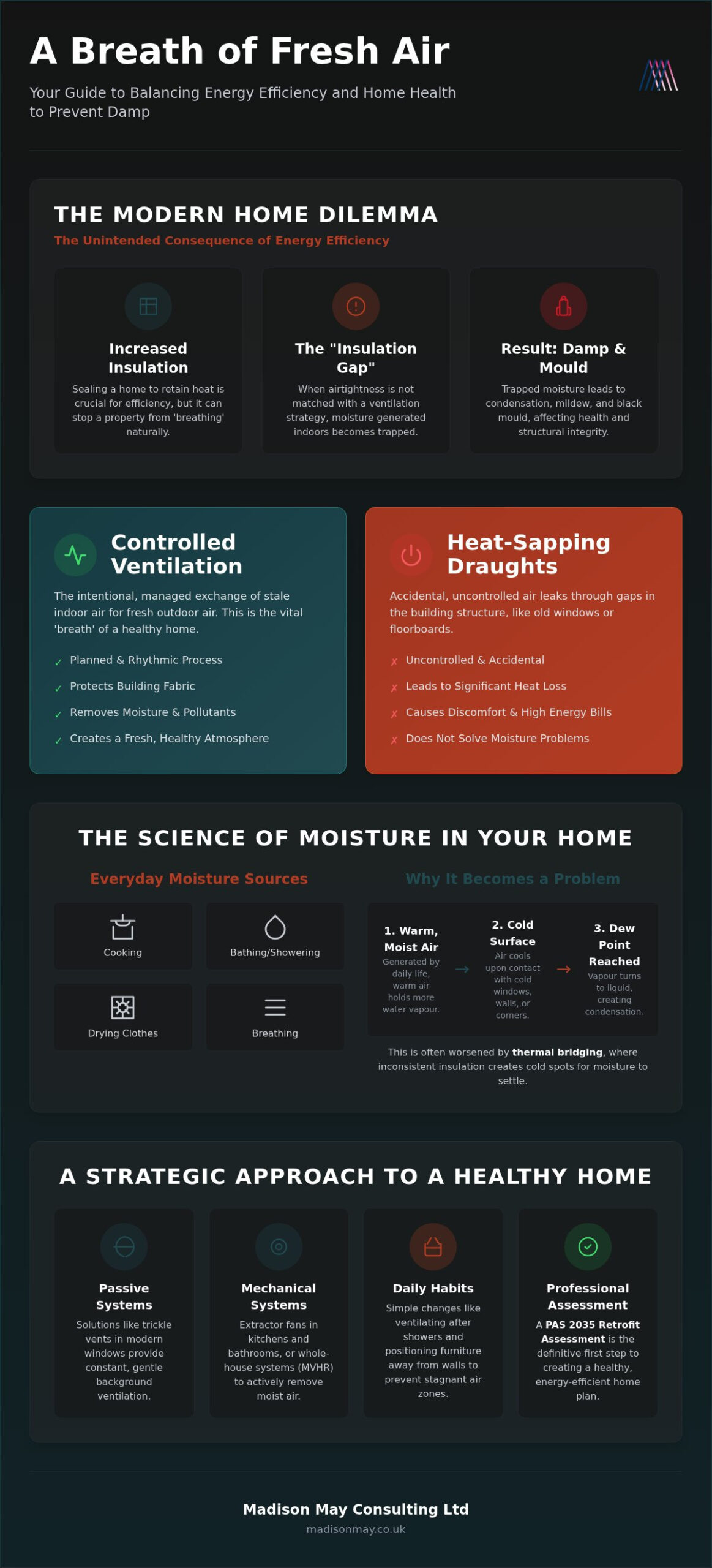
A home is more than a structure of brick and mortar; it is a delicate ecosystem that requires a steady, rhythmic pulse of fresh air to remain healthy. When we consider how to improve home ventilation to prevent damp, we must first view our properties as “breathing buildings.” This philosophy suggests that for a home to endure, it must allow moisture to move through it without becoming trapped. True ventilation is the controlled, intentional exchange of indoor air for fresh outdoor air, creating a healthy equilibrium that protects both the inhabitants and the very fabric of the architecture. It is the vital breath that prevents a sanctuary from becoming a cellar.
The Vital Distinction Between Airflow and Draughts
It’s a common misconception that any air movement is beneficial. Draughts are accidental, uncontrolled leaks through gaps in floorboards or ill-fitting windows that lead to significant heat loss and a persistent sense of discomfort. In contrast, effective ventilation is a planned, rhythmic process. Sealing every gap in a quest for thermal efficiency without a robust ventilation strategy can be counterproductive, leading to a stagnant, heavy atmosphere. A home that breathes correctly feels light and fresh, whilst one that is hermetically sealed often feels oppressive, as if the walls themselves are holding their breath. Striking this balance is the hallmark of a well-maintained property.
How Moisture Behaves Within Your Property
Moisture is an inevitable companion to domestic life. Simple daily activities, such as cooking, bathing, and even the act of breathing, contribute to the internal moisture load. To manage this effectively, one must understand the science of ventilation and the subtle role of relative humidity. Warm air is generous; it carries significantly more water vapour than cold air. However, when this warm, moisture-heavy air meets a cold surface, it reaches its “dew point” and transforms into liquid droplets. This is why we often see steamy windows or damp patches in corners on winter mornings.
This phenomenon is often exacerbated by thermal bridging, where insulation is inconsistent and moisture settles on the coldest points of a structure. This is precisely why learning how to improve home ventilation to prevent damp is so vital for property preservation. By maintaining a constant, gentle flow of air, we ensure that moisture is carried away before it has the chance to settle and cause damage to your decor or health. It’s about creating a flow that is as intentional as the design of the rooms themselves.
The Relationship Between Energy Efficiency and Damp
In our collective journey toward more sustainable living, we often focus on sealing our homes against the elements to retain every precious degree of warmth. This pursuit of airtightness, whilst essential for reducing energy bills, frequently creates what professionals call the “Insulation Gap.” This creates an unintended consequence where the natural, albeit draughty, breathability of an older property is replaced by a hermetic seal. Without a meticulous ventilation strategy to accompany external wall insulation, the moisture generated indoors has nowhere to escape. It becomes trapped within the building fabric, potentially leading to interstitial condensation. This invisible threat occurs when water vapour penetrates deep into walls, risking structural integrity and the very story of the home you’ve worked so hard to preserve. A “whole-house approach” ensures that these necessary upgrades don’t inadvertently cause new, more complex problems.
Why New Windows Can Sometimes Lead to Mould
Upgrading to high-performance windows and doors is a transformative moment for any property, offering both aesthetic beauty and thermal comfort. However, this transition can occasionally yield surprising results. Old, cold, single-glazed panes often acted as unintended dehumidifiers, drawing moisture out of the air to condense on the glass. When these are replaced with thermally efficient units, that moisture remains in the air, seeking the next coldest surface, often a hidden corner or a north-facing wall. This is why modern installations must include trickle vents to provide a constant, gentle exchange of air. To maintain a healthy environment, airtightness must always be balanced with calculated extract rates. Understanding this delicate balance is central to learning how to improve home ventilation to prevent damp effectively.
The Role of Thermal Imaging in Identifying Risks
Identifying where moisture might settle requires more than just a keen eye; it requires sophisticated insight. Professional thermal imaging allows us to see beyond the surface, revealing hidden cold spots and thermal bridges that are invisible to the naked eye. These cold patches are the primary breeding grounds for mould, often caused by subtle gaps in insulation or structural anomalies. By conducting a thorough building survey, we can predict where mould might flourish before it ever impacts your decorative finishes or interior design. This proactive approach ensures that any energy-efficient upgrades enhance your comfort rather than compromising your sanctuary. A specialist Ventilation Assessment can provide the clarity needed to proceed with your home improvements with complete confidence.
Strategic Methods to Enhance Airflow and Prevent Damp
Achieving a damp-free sanctuary requires a shift from accidental airflow to a curated ventilation strategy. When considering how to improve home ventilation to prevent damp, we must categorise our options into passive, mechanical, or hybrid systems. Traditional methods, whilst charming in their simplicity, often struggle to meet the demands of a modern, energy-efficient retrofit. Conversely, modern technological interventions offer a level of control and elegance that ensures your home remains fresh without the intrusion of cold draughts or industrial noise. The goal is to move beyond mere functionality, selecting a system that complements the aesthetic and rhythmic life of your property.
Passive Ventilation: Working with the Building’s Natural Flow
Passive ventilation relies on the building’s own geometry and the natural laws of physics. Trickle vents and air bricks encourage a gentle, constant exchange of air, utilising the “stack effect” where warm air rises and escapes through higher openings, drawing fresh air in from below. This creates a natural rhythm in multi-storey properties, allowing the building to breathe without mechanical aid. However, in extremely airtight modern retrofits where the “insulation gap” has been closed, these systems often lack the necessary pressure to clear the moisture burden effectively. For a truly healthy equilibrium, passive elements must be carefully calculated rather than left to chance.
Mechanical Solutions: From Extractors to MVHR
Mechanical Ventilation with Heat Recovery (MVHR) represents the pinnacle of modern property care, especially as we move towards the stricter 2027 Future Homes Standards. It extracts stale, humid air from wet rooms whilst simultaneously drawing in fresh air, using a heat exchanger to transfer warmth from the outgoing air to the incoming stream. For those seeking a more localised solution, dMEV (decentralised Mechanical Extract Ventilation) provides a sophisticated, quiet alternative for bathrooms and kitchens, operating at a continuous, low-level whisper to ensure moisture never lingers. These systems are designed to be felt through improved air quality, rather than heard.
| System Type | Extract Rate | Noise Level | Heat Retention |
|---|---|---|---|
| Passive (Trickle Vents) | Variable/Low | Silent | None |
| dMEV (Decentralised) | Continuous Low | Negligible | None |
| MVHR (Whole House) | High/Balanced | Whisper Quiet | Up to 95% |
In a beautifully designed room, the mechanics of ventilation should be felt but never seen. Modern grilles and discreet ducting allow these systems to integrate seamlessly into luxury interiors, preserving the visual harmony of your space. Regular maintenance is the quiet guardian of this experience; ensuring filters are clean and fans are balanced keeps the system silent and effective. This diligent care maintains the serene atmosphere of your home, mirroring the precision climate control provided by industrial leaders such as Schwank Ltd, and ensuring your strategy on how to improve home ventilation to prevent damp remains both a functional success and an invisible luxury.
Practical Steps for a Healthier Indoor Atmosphere
Transforming your property into a healthy sanctuary involves more than just installing hardware; it requires a mindful integration of daily habits that respect the building’s natural rhythm. When considering how to improve home ventilation to prevent damp, the way we occupy our spaces is just as paramount as the systems we install. By adopting a rhythmic approach to moisture management, you can ensure that your beautifully designed rooms remain as fresh as they are elegant. It’s about finding a balance where the preservation of the building’s fabric becomes a natural part of your lifestyle.
One of the most effective yet overlooked strategies is the thoughtful placement of furniture. In many heritage or high-end properties, the temptation is to place large wardrobes or velvet sofas flush against external walls. This creates “dead air” zones where circulation ceases and moisture settles. By leaving a modest gap of just two to three centimetres, you allow air to flow behind these pieces, preventing the silent accumulation of mould. Similarly, maintaining a steady, consistent background heat ensures that internal surfaces stay above the dew point, discouraging condensation from forming on cold spots. To monitor this with precision, a discreet hygrometer can become a valued tool, allowing you to observe your environment with the same care you’d give to a fine wine cellar.
Refining Daily Routines to Manage Humidity
Cooking and bathing are the primary contributors to your home’s moisture burden. To maintain a calm, steam-free kitchen, always use lids on pans and ensure your extractor is active before the steam begins to rise. In wet rooms, the simple act of keeping the door closed during and after use prevents humid air from migrating into cooler bedrooms or hallways. During the winter months, rather than leaving windows ajar for long periods, consider a “purge” approach. Opening windows at opposite ends of the house for just five minutes allows for a complete exchange of air without significantly cooling the thermal mass of your walls. This ensures a fresh atmosphere whilst protecting your home’s warmth.
Maintaining Your Ventilation Infrastructure
Even the most sophisticated systems require a gentle touch of maintenance to remain effective. Blocking trickle vents or air bricks might seem tempting during a cold snap, but it’s a significant risk to your property’s health that can lead to rapid mould growth. To keep your home breathing correctly, follow this simple seasonal checklist:
- Vacuum trickle vents twice a year to remove dust and debris.
- Inspect and replace MVHR filters every six to twelve months to maintain airflow.
- Ensure external air bricks are clear of garden soil or fallen leaves.
- Wipe down extractor fan grilles to prevent grease build-up from reducing extract rates.
The optimal relative humidity for a British home lies between 40% and 60%, a range that ensures comfort whilst discouraging the growth of allergens. If you find your home consistently sits outside this bracket, a professional Ventilation Assessment can identify the specific deficits in your property’s airflow strategy. Taking this step ensures your home remains a dry, healthy, and enduring refuge for years to come.
The Role of Professional Retrofit Assessments in Damp Prevention
Embarking on the modernisation of a cherished property requires more than just enthusiasm; it demands a clear, professional vision that respects the building’s heritage whilst embracing modern efficiency. Understanding how to improve home ventilation to prevent damp is not a matter of guesswork but a result of rigorous, scientific analysis. The PAS 2035 framework has emerged as the definitive gold standard for domestic retrofits in the United Kingdom, ensuring that every improvement is considered as part of a holistic, “whole-house” strategy. By positioning a professional assessment at the very beginning of your journey, you avoid the common pitfalls of piecemeal work that often lead to unintended moisture issues. A Fixed-Fee Retrofit Assessment serves as this essential first step, identifying specific ventilation deficits and providing a clear diagnostic of how your home breathes.
Bespoke EPC Improvement Plans for Discerning Owners
For the property owner who values precision, a meticulous EPC improvement plan is more than just a certificate; it’s a roadmap for transformation. This bespoke strategy sequences upgrades with care, ensuring that airtightness measures like new windows or insulation are always perfectly balanced with enhanced extract rates. This careful orchestration prevents the creation of moisture traps where water vapour becomes trapped within the building fabric. Beyond the immediate comfort of a dry, fresh environment, these certified improvements add tangible, long-term value to your property, documenting its evolution into a high-performing, sustainable sanctuary. It’s a process that treats your home’s story with the same respect as its structural integrity.
Partnering with a Retrofit Coordinator
A Retrofit Coordinator acts as the dedicated guardian of your project’s technical standards and your personal peace of mind. They ensure that every physical intervention complies with the latest Part F building regulations, which are becoming increasingly stringent as we move toward the 2027 standards. This professional oversight guarantees that the delicate harmony between heat retention and air quality is never compromised. By choosing a guided path, you’re not just fixing a damp problem; you’re investing in the enduring health and elegance of your home. For professional and commercial clients, OMNIA Building Consultants Ltd provides the specialist building condition and damp surveys required to maintain structural integrity throughout the renovation process. We invite you to begin this journey today, transforming your property into the refined, breathable refuge it was always meant to be. This collaborative approach ensures that the transition to an energy-efficient future is as seamless as the design of your favourite room.
Creating a Breathable Sanctuary for the Future
The journey toward a dry, healthy home is one of balance and meticulous care. It’s about bridging the insulation gap and embracing a whole-house approach to ensure your property remains a refuge of comfort rather than a trap for moisture. We’ve explored the science of airflow and the sophisticated systems that allow your home to breathe without sacrificing its warmth or aesthetic harmony. Understanding how to improve home ventilation to prevent damp is truly about preserving the story and the fabric of your building for years to come.
A professional roadmap is the most reliable way to navigate these complexities. Through PAS 2035 aligned assessments and expert EPC improvement roadmaps, you can identify specific deficits and implement specialist damp remediation with precision. This proactive care protects your decorative finishes and your family’s health, ensuring every detail of your sanctuary is intentional and enduring.
Take the first step toward a more refined indoor environment today. Book a Professional Retrofit Assessment to Secure Your Home’s Future and enjoy the peace of mind that comes from a home in perfect equilibrium. Your property deserves to be as fresh as it is beautiful.
Frequently Asked Questions
Is it better to open windows or use an extractor fan to prevent damp?
Extractor fans are generally superior for targeted moisture removal in wet rooms like kitchens and bathrooms. Whilst opening windows provides a quick air exchange, it often leads to significant heat loss and can be unreliable in varying weather conditions. Using a fan ensures a consistent extract rate that clears water vapour at the source before it has the chance to migrate to cooler areas of your property.
Can I improve ventilation in my home without losing heat during winter?
Implementing Mechanical Ventilation with Heat Recovery (MVHR) is the most effective way to maintain air quality without sacrificing warmth. This system captures a significant portion of the heat from outgoing stale air and transfers it to the fresh incoming stream. It’s a sophisticated solution for those seeking how to improve home ventilation to prevent damp whilst keeping energy bills manageable during the colder British months.
What are the most common signs that my home needs better ventilation?
Persistent condensation on windows every morning and the appearance of black mould in room corners are the most immediate warnings. You might also notice a heavy, musty scent in rooms that should feel fresh or damp patches behind large pieces of furniture. These signs suggest that the internal moisture burden has exceeded the building’s natural ability to breathe, requiring a more intentional airflow strategy.
Does adding loft insulation cause damp and mould in the rooms below?
Loft insulation itself doesn’t cause damp, but it can trigger issues if it obstructs the eaves’ ventilation or creates significant temperature voids. This difference can lead to condensation on cold ceiling joists or at the wall-to-ceiling junction. Ensuring that insulation is installed with clear paths for roof-level airflow is essential to protect the structural integrity and decorative finishes of the rooms below.
What is a PAS 2035 retrofit assessment, and do I really need one?
A PAS 2035 assessment is a professional building survey that provides a holistic roadmap for energy-efficient upgrades. It’s essential if you want to ensure that improvements like insulation don’t inadvertently cause damp by sealing the building too tightly. This assessment identifies the specific ventilation needs of your property, ensuring that every intervention is technically sound and respects the building’s unique heritage and requirements.
How much humidity is considered normal for a UK home in 2026?
The ideal relative humidity for a British property remains between 40% and 60%. Maintaining this range ensures a comfortable environment whilst preventing the growth of mould and dust mites. If your levels consistently rise above 60%, it’s a clear indication that your current ventilation strategy isn’t clearing the moisture produced by daily activities like cooking, bathing, and drying clothes indoors.
Will a dehumidifier solve my damp problems permanently?
A dehumidifier acts as a temporary remedy rather than a permanent solution to underlying ventilation deficits. Whilst it effectively extracts moisture from the air, it doesn’t address the lack of fresh air exchange or the root cause of the damp. To achieve a truly healthy sanctuary, you must focus on how to improve home ventilation to prevent damp through more permanent structural airflow improvements and professional retrofit strategies.
What are trickle vents, and can they be retrofitted to existing windows?
Trickle vents are small, adjustable openings integrated into window frames that allow for a constant, gentle flow of air. They can often be retrofitted to existing uPVC or timber windows, though the process requires precision to ensure the frame’s integrity isn’t compromised. These vents are a vital component of a passive ventilation strategy, helping to clear water vapour without the security risks of leaving windows ajar.