


Could a single letter on an Energy Performance Certificate truly be the difference between a flourishing investment and a dormant, un-lettable liability? As we move through 2026, the weight of the Minimum Energy Efficiency Standards (MEES) is becoming more pronounced, leaving many to wonder how the cost of epc improvements for landlords will balance against the looming threat of a £30,000 fine. It is natural to feel a degree of trepidation when faced with shifting deadlines and the significant financial commitment required to reach an EPC C rating by 2028. You likely view your properties as more than just assets; they are intended to be sanctuaries of warmth and efficiency that reflect a commitment to quality and enduring care.
This guide promises to provide the clarity you need to master these complexities, ensuring your portfolio remains both legally sound and commercially viable. We will chart a clear roadmap through the upcoming 2030 mandates, explore the essential exemptions available to you, and identify the most cost-effective upgrades that honour the unique character of your building. By adopting a thoughtful, fabric-first approach, you can transform these regulatory hurdles into a strategic investment in the lasting value and comfort of your home or rental property.
Key Takeaways
- Understand the evolving legal landscape of 2026, including the transition toward an EPC C mandate, to protect your property from substantial non-compliance fines.
- Balance the cost of epc improvements for landlords against long-term commercial viability, viewing meticulous upgrades as a means to enhance both value and tenant comfort.
- Implement a fabric-first strategy that prioritises insulation and ventilation, ensuring your property remains a healthy, efficient sanctuary whilst avoiding common damp issues.
- Learn why a professional retrofit assessment offers a more sophisticated roadmap than a standard EPC, providing a clear path toward meeting rigorous SAP methodology standards.
- Position your portfolio for the future by engaging with a Project Guardian who can coordinate complex improvements with the calm deliberation of a high-end consultation.
Understanding MEES: The Legal Framework for UK Property in 2026
The Minimum Energy Efficiency Standards, or MEES, act as the primary regulatory pulse for the private rented sector, ensuring that every home meets a baseline of thermal performance. As of 2026, the legal threshold requires all domestic properties to hold an Energy Performance Certificate (EPC) rating of E or above before they can be lawfully let to tenants. This standard is not merely a bureaucratic hurdle; it is a fundamental shift in how we value the fabric of our buildings. For those managing a portfolio, understanding the cost of epc improvements for landlords is no longer optional. It’s a vital component of maintaining a commercially viable asset. Properties that fail to meet these evolving benchmarks risk becoming stranded, losing their market appeal and, eventually, their legal right to generate income.
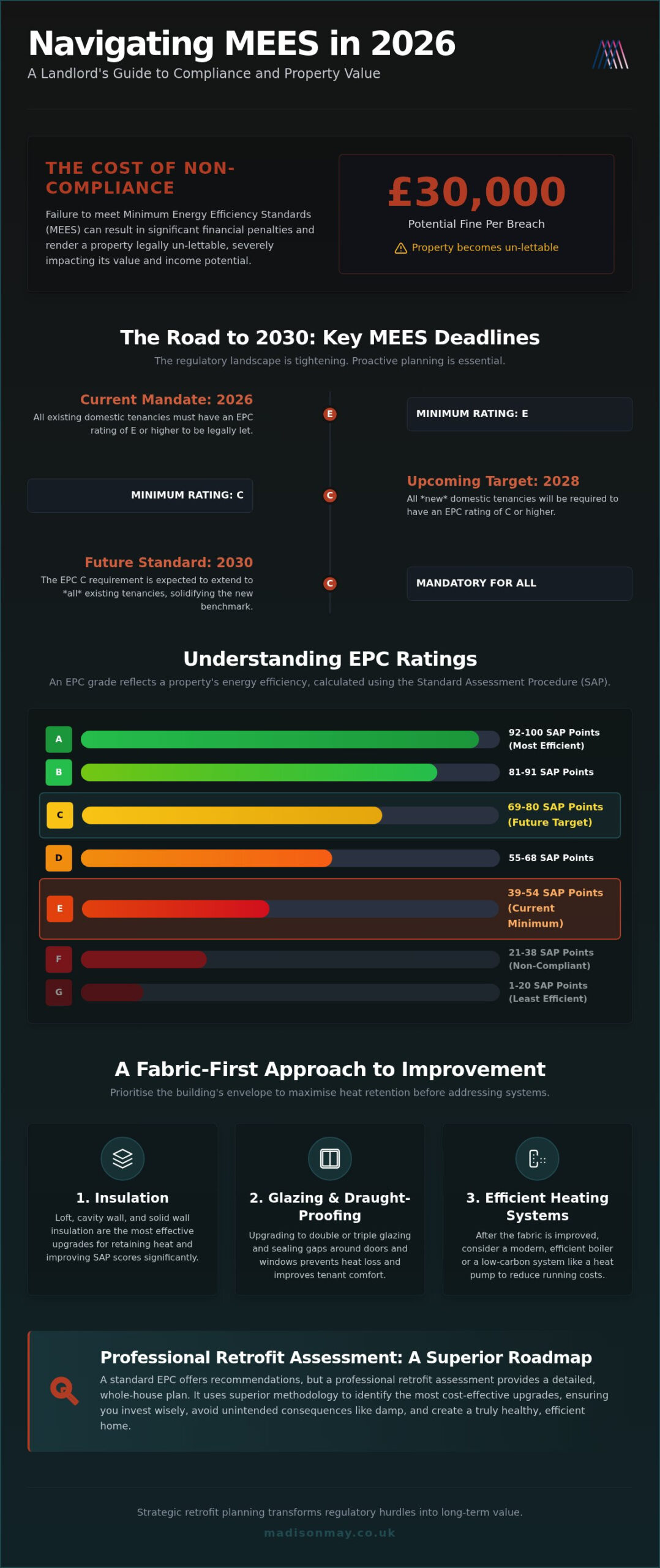
The trajectory of UK legislation is moving with deliberate intent toward a minimum of EPC Band C by 2030 for all domestic tenancies. This transition represents a significant elevation in expectations, moving beyond basic draught-proofing to a more holistic, whole-house approach to energy health. By 2028, new tenancies will likely need to meet this higher standard, making the mid-2020s a critical period for strategic planning. When a property falls below the required grade, it is classified as un-lettable, a status that can sharply diminish its capital value and complicate refinancing efforts.
The Scope of MEES Regulations
The reach of these rules extends across both the domestic and non-domestic sectors, capturing almost every property that requires an EPC. Under the Energy Efficiency (Private Rented Property) Regulations 2015, the legal basis for these standards was established to drive a long-term improvement in our housing stock. An EPC typically remains valid for ten years, yet an expired certificate or a change in tenancy often triggers a fresh assessment. This cycle ensures that the history of UK energy efficiency standards continues to evolve, pushing older, less efficient buildings toward modern levels of craftsmanship and warmth.
The 2026 Regulatory Landscape
In the current climate, a Grade E rating is increasingly viewed as a temporary safe harbour rather than a final destination. Recent government consultations have solidified the path toward the 2030 targets, signalling that the window for minor, incremental changes is closing. Landlords must now weigh the immediate cost of epc improvements for landlords against the long-term benefits of a property that is future-proofed against rising energy costs. MEES is a tool for reducing the UK’s carbon footprint whilst protecting tenants from fuel poverty. By viewing these regulations through the lens of meticulous retrofit planning, you can ensure your property remains a cherished, high-quality residence for years to come.
EPC Ratings and the Criteria for Compliance
The A-G rating system is more than just a colourful graphic on a page; it is a calculated reflection of a property’s thermal integrity using the Standard Assessment Procedure (SAP). Whilst many landlords are familiar with the visual scale, the underlying methodology considers everything from the thickness of the walls to the efficiency of the light bulbs. A professional retrofit assessment offers a level of precision that a standard EPC simply cannot match, identifying the specific reasons why older UK properties often languish in the F and G categories. For those concerned about the cost of epc improvements for landlords, this deeper insight is essential for avoiding wasted expenditure on ineffective measures.
The building fabric, the very bones of the property, determines its energy destiny. Solid stone walls and uninsulated lofts are common culprits for poor performance in heritage buildings. Without a “fabric-first” approach, heat is lost as quickly as it is generated, making it nearly impossible to climb the rating ladder. Understanding how your building breathes and retains warmth is the first step toward a more sustainable and commercially viable asset. It’s about moving beyond surface-level fixes to embrace a philosophy of enduring quality and craftsmanship.
Valid Exemptions and the PRS Register
Compliance is not always a straightforward journey. The “High Cost” exemption provides a safety net if the cheapest recommended measures exceed the £3,500 VAT-inclusive cap. This ensures that the cost of epc improvements for landlords remains within a reasonable limit whilst still encouraging significant progress. Other valid exemptions include the “All Improvements Made” status, which remains valid for five years, and specific wall insulation exemptions for properties where such measures would damage the building’s character or structural health. Full details on these nuances can be found in the Official government MEES guidance.
Temporary and Third-Party Exemptions
There are moments when immediate compliance is practically impossible. A six-month grace period is often available for those who have recently become landlords or are managing complex inheritance cases. Additionally, if a tenant refuses to grant access for energy upgrades, a “Tenant Consent” exemption can be registered on the national PRS Exemptions Register. Navigating these administrative layers requires a steady hand and a clear vision for the future of your property. If you’re seeking a tailored roadmap to navigate these hurdles, an EPC Improvement Plan can provide the clarity needed to move forward with confidence.
The Financial Implications: Penalties vs Strategic Retrofit
Ignoring the energy efficiency of a property is no longer just a missed opportunity for environmental stewardship; it’s a direct threat to your balance sheet. Financial penalties for domestic breaches can reach up to £5,000, whilst commercial properties face significantly steeper costs. Beyond the immediate fine, the “Publication Penalty” carries a weight that is harder to quantify. Being named on a public register for non-compliance can tarnish a landlord’s reputation, potentially alienating discerning tenants who value ethical management. When you weigh these risks, the cost of epc improvements for landlords begins to look like a prudent safeguard rather than an unwelcome expense.
Local councils in 2026 are using sophisticated data-matching techniques to identify non-compliant properties with surgical precision. If your property is flagged, you’ll likely receive a Compliance Notice requiring a swift and detailed response. Failing to act doesn’t just invite fines; it can also void your insurance policies. Many providers won’t cover a property that is being let illegally, leaving you exposed to catastrophic risk if an incident occurs. It’s a high-stakes gamble that few can afford to take, especially when a clear path to compliance exists.
Investment for Future-Proofing
Choosing to reach an EPC C rating now, rather than waiting for the 2030 deadline, is an act of quiet confidence. It avoids the inevitable rush and price inflation of materials and labour that will occur as the deadline nears. A more efficient home is also a more resilient one. By prioritising the building’s fabric, you reduce the likelihood of damp and mould, which are often the primary drivers of high maintenance costs and tenant turnover. Ultimately, the cost of epc improvements for landlords translates into higher resale values and the peace of mind that comes from owning a truly superior asset that stands the test of time.
A Landlord’s Checklist for Reaching MEES Compliance
Transforming a property into a model of energy efficiency requires more than a series of disconnected upgrades; it demands a curated roadmap that respects the building’s unique story. To move beyond the uncertainty of shifting regulations, a landlord should adopt a methodical approach aligned with the PAS 2035 framework. This ensures that every pound spent is an investment in the property’s longevity. The following steps provide a sophisticated path toward a higher EPC rating:
- Step 1: Commission a professional building survey to establish a precise baseline of current performance.
- Step 2: Prioritise fabric-first measures, such as high-quality loft and cavity wall insulation, to secure the building’s thermal envelope.
- Step 3: Upgrade windows and doors to modern U-value standards, ensuring aesthetics and functionality remain in perfect harmony.
- Step 4: Assess the heating system, replacing outdated boilers with high-efficiency alternatives or low-carbon technologies.
- Step 5: Introduce intelligent ventilation solutions to balance the newly airtight environment and protect the structural health of the home.
The Fabric-First Approach
Sequence is the secret to a successful retrofit. Before considering a new heating system, one must ensure the property can actually retain the warmth it generates. When calculating the cost of epc improvements for landlords, starting with the building’s fabric is almost always the most cost-effective strategy. This includes identifying “low-hanging fruit” like professional draught-proofing and the installation of LED lighting throughout. By focusing on U-values during the selection of materials, you ensure that every component contributes to a seamless experience of comfort and efficiency.
Ventilation: The Often-Forgotten Requirement
As we make our homes more airtight to save energy, we must also ensure they can breathe. Adding significant insulation without a proper ventilation assessment is a common pitfall that can lead to unintended damp and mould growth. Adhering to Part F of the Building Regulations is essential for maintaining a healthy indoor climate. A qualified Retrofit Assessor plays a vital role here, identifying potential moisture risks before they manifest as costly liabilities. This balanced approach ensures that the cost of epc improvements for landlords results in a space that is as healthy as it is warm. To begin your journey with a trusted expert, consider a professional Retrofit Assessment to define your property’s future.
Madison May: Navigating MEES Through Meticulous Retrofit Planning
Madison May Consulting Ltd acts as a Project Guardian for landlords, providing a steady hand through the labyrinth of evolving energy regulations. We understand that a property is more than a set of coordinates on a map; it’s a sanctuary that requires a bespoke approach to remain both legally compliant and aesthetically refined. By offering PAS 2035 aligned retrofit assessments, we move beyond the superficiality of standard certificates to deliver a roadmap grounded in technical excellence. When considering the cost of epc improvements for landlords, the most significant saving is often found in the avoidance of redundant works. Our fixed-fee service model for domestic properties ensures that your investment is directed toward the most practical and impactful upgrades from the very start.
Every building has its own rhythm and structural heritage, which is why a one-size-fits-all solution often fails to deliver lasting results. We prioritise a philosophy of quiet confidence, acting as a thoughtful expert who listens to the unique story of your portfolio. By ensuring all improvements are PAS 2035 compliant, we protect your long-term commercial interests whilst fostering an environment of warmth and calm. This meticulous oversight allows you to navigate the complexities of the 2026 and 2030 mandates with poise, knowing that your assets are being curated by those who value quality and craftsmanship as much as you do.
The Whole-House Strategy
A property functions as a single, living entity where the interaction between insulation, heating, and ventilation must be perfectly balanced. Our consultancy ensures that every detail is intentional and every material is chosen with care. Unlike the generic recommendations found on a standard EPC, a tailored EPC Improvement Plan considers the physical reality of the building fabric to prevent unintended issues like damp or poor air quality. By viewing the cost of epc improvements for landlords through this holistic lens, we ensure that your path to a C rating enhances the home’s identity rather than compromising it.
Your Next Steps to Compliance
Whether you manage a single cherished residence or a national property portfolio, the journey toward compliance should feel like a seamless experience. Engaging with a professional Retrofit Coordinator provides the peace of mind that comes from expert oversight, from the initial building survey to the final ventilation assessment. We invite you to begin this transformative journey with a consultation that prioritises your personal goals and the enduring health of your properties. Ensure your property is MEES compliant with a Madison May Retrofit Assessment.
Elevating Your Portfolio for a Sustainable Future
Navigating the transition toward more rigorous energy standards requires a blend of regulatory foresight and a commitment to meticulous craftsmanship. By prioritising the building’s fabric and ensuring that every upgrade is balanced with intelligent ventilation, you transform a legal obligation into a meaningful enhancement of your property’s identity. Whilst the initial cost of epc improvements for landlords represents a commitment of resources, it is ultimately a strategic investment in the enduring health, comfort, and marketability of your home.
As your Project Guardian, Madison May Consulting Ltd provides the sophisticated guidance needed to navigate these complexities with grace. Our fixed-fee consultancy model ensures transparency, whilst our expert Retrofit Coordinators deliver PAS 2035 compliant reports that safeguard your long-term interests and property value. You don’t have to face these transitions alone; instead, you can embrace them as a transformative journey toward creating a more resilient sanctuary. Secure your property’s future with a professional Retrofit Assessment. With a clear, expert roadmap in hand, you can move forward with quiet confidence, knowing your investment is in capable and patient hands.
Frequently Asked Questions
Is it illegal to rent a property with an EPC rating of F or G in 2026?
It is indeed unlawful to let a property with an EPC rating of F or G in 2026 unless you’ve successfully registered a valid exemption on the PRS register. This regulation has applied to all existing tenancies since April 2020, meaning any property currently housing tenants must meet the minimum E standard. Local authorities actively monitor these ratings; failing to comply could result in financial penalties of up to £5,000 per domestic property.
Can I still get an exemption if the cost of energy upgrades is too high?
You can register a “High Cost” exemption if the cheapest recommended energy efficiency measures exceed the government’s current spend cap of £3,500 including VAT. Before this applies, you’re expected to carry out improvements up to that financial limit. This ensures that the cost of epc improvements for landlords remains manageable whilst still driving progress. You’ll need to provide three separate quotes from qualified installers as evidence to support your application on the national register.
How much does it cost to improve an EPC rating from F to E?
The financial commitment required to move from an F to an E rating typically falls within the £3,500 cost cap set by the government. Many properties reach this threshold through relatively simple measures like professional loft insulation, draught-proofing, or the installation of modern thermostatic radiator valves. Whilst the cost of epc improvements for landlords varies based on the building’s fabric, a targeted approach often yields the required results without necessitating a complete structural overhaul or excessive expenditure.
Does MEES apply to listed buildings or properties in conservation areas?
Listed buildings and those in conservation areas aren’t automatically exempt from MEES regulations. They only require an EPC if the energy efficiency works wouldn’t unacceptably alter their character or appearance. If a certificate is legally required for the property, then the Minimum Energy Efficiency Standards apply in full. In these delicate cases, it’s essential to seek expert guidance to balance modern thermal requirements with the preservation of the building’s unique heritage and aesthetic.
What happens if my tenant refuses to allow energy efficiency works?
If a tenant refuses to grant access for necessary upgrades, you can apply for a “Tenant Consent” exemption. This legal provision protects landlords who’ve made reasonable attempts to improve their property but were blocked by the resident. You must document your communications and provide evidence of the refusal to the PRS Exemptions Register. This specific exemption lasts for five years, or until the current tenant’s lease naturally concludes, whichever occurs sooner in your timeline.
How long do MEES exemptions last on the PRS register?
Most standard MEES exemptions, such as those for high costs or wall insulation constraints, remain valid for exactly five years from the date of registration. It’s important to remember that these exemptions are linked to the landlord, not the property; they don’t transfer to a new owner upon sale. Temporary exemptions, like the six-month grace period granted when you’ve recently become a landlord, are much shorter and intended to provide a brief window for compliance.
What is the difference between an EPC and a Retrofit Assessment?
Whilst an EPC provides a broad snapshot of energy performance using a cost-based rating, a Retrofit Assessment is a sophisticated, technical evaluation aligned with PAS 2035 standards. It involves a deep dive into the building’s structural health, focusing on the vital intersection of insulation and ventilation to prevent damp. This whole-house approach offers a more reliable roadmap for landlords who wish to move beyond simple compliance toward creating a truly efficient and healthy sanctuary.
Will I be fined if my property is empty and has a low EPC rating?
You won’t face a fine simply because an empty property has a low EPC rating. The MEES regulations are specifically triggered by the act of letting a property or continuing an existing tenancy. However, you cannot legally market the home for rent or sign a new tenancy agreement until the rating is improved to at least an E. It’s often wiser to undertake these improvements whilst the property is vacant to avoid future disruption for tenants.