


Is your property portfolio a collection of cherished assets or a silent countdown of regulatory risk? As the 2030 deadline for a minimum EPC rating of C draws closer, many property owners feel a growing sense of uncertainty, especially when attempting to master the intricacies of PAS 2035 for landlords. The transition from basic maintenance to a sophisticated, whole-house retrofit strategy is no longer a mere suggestion; it’s a vital step for those who wish to protect their investments from becoming stranded assets that can no longer be legally let.
It’s natural to feel concerned about the impending Home Energy Model implementation in October 2029 and the significant investment required to meet new standards. You likely pride yourself on providing quality homes, yet the confusion surrounding shifting government methodologies can make the path forward feel obscured. This article provides a clear, sequenced roadmap to navigate these evolving energy regulations with quiet confidence. We’ll explore how a professional EPC improvement plan serves as a technical building performance strategy, ensuring your properties remain compliant, efficient, and deeply resonant with the needs of modern tenants.
Key Takeaways
- Understand how a bespoke EPC improvement plan serves as a sophisticated roadmap to navigate the 2030 compliance deadline whilst safeguarding your property’s long-term value.
- Discover the technical depth of a professional assessment and how mastering pas 2035 for landlords yorkshire ensures your upgrades are coordinated, compliant, and enduring.
- Learn why a “fabric first” philosophy, which balances high-quality insulation with advanced ventilation, is the most effective way to maintain building health and tenant satisfaction.
- Gain a clear, sequenced path for transitioning from a simple certificate to a successfully completed energy project through rigorous oversight and quality control.
- Recognise the value of an independent retrofit consultant as a dedicated project guardian who protects your investment from ineffective, sales-led technical choices.
The Evolving EPC Landscape: Why Landlords Need a Strategic Plan
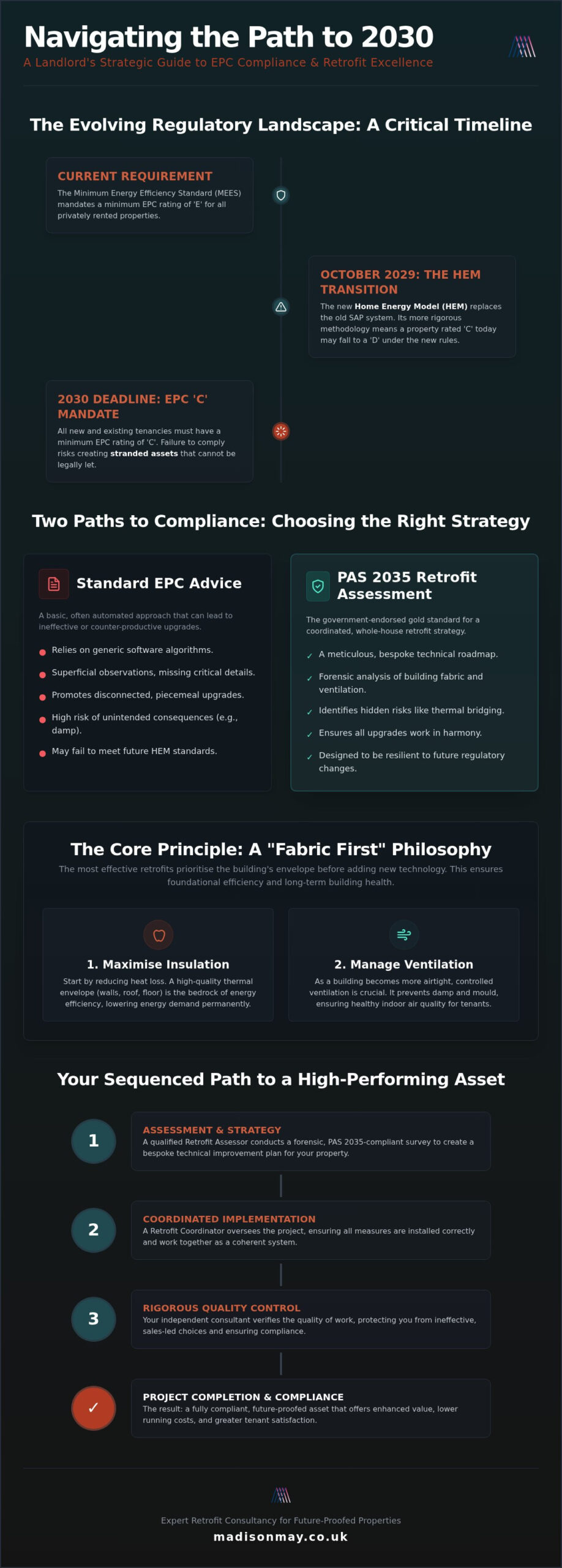
An EPC improvement plan is far more than a simple list of recommendations generated by a software algorithm; it’s a meticulously crafted technical roadmap designed to safeguard the longevity and value of your property. By treating the data within Energy Performance Certificates (EPCs) as a baseline for investment rather than a mere regulatory hurdle, you can transform your portfolio into a collection of high-performing, resilient assets. For those exploring the nuances of pas 2035 for landlords yorkshire, this strategic approach ensures that every intervention is tailored to the specific building fabric, preventing the unintended consequences of poorly executed, piecemeal upgrades.
The 2030 EPC C Deadline and MEES Compliance
The current Minimum Energy Efficiency Standard (MEES) requires a rating of E, but the horizon is shifting rapidly. The government’s mandate for all private tenancies to achieve a C rating by 2030 creates a significant pressure point for property owners who haven’t yet begun their retrofit journey. Failing to meet these requirements doesn’t just invite potential penalties; it fundamentally alters the financial viability of an asset. Lenders are increasingly scrutinising energy performance during refinancing, and properties that lag behind risk a sharp decline in market value. By acting now, you avoid the inevitable retrofit rush as 2030 approaches, which will likely see contractor costs inflate as demand outstrips supply across the region.
Understanding the 2029 Home Energy Model Transition
A critical, often overlooked element of this journey is the transition from the Standard Assessment Procedure (SAP) to the Home Energy Model (HEM) in October 2029. This isn’t a minor update; it’s a complete reimagining of how building performance is measured. The HEM methodology is significantly more rigorous, meaning a property that currently sits comfortably at a C rating might find itself demoted under the new system. When we conduct professional building surveys, we look beyond the current certificate. We design upgrades that meet the performance standards of the future, ensuring you don’t face the frustration and expense of double-handling works when the rules change in late 2029.
Adopting a wait-and-see attitude is a high-risk gamble. It risks creating stranded assets that become unlettable, draining your capital whilst the market moves forward. A strategic plan, aligned with the standards of pas 2035 for landlords yorkshire, offers a path of quiet confidence, ensuring your properties remain sanctuary-like spaces for tenants and secure investments for your future.
Anatomy of a Professional PAS 2035 Retrofit Assessment
A high-quality retrofit assessment is a forensic endeavour, moving far beyond the superficial observations found in a standard EPC recommendation list. Whilst a basic certificate might suggest a new boiler or loft insulation based on generic data, a professional building surveys approach involves an intricate analysis of the building fabric, its existing services, and its ventilation health. This precision ensures that any proposed energy efficient home improvements are grounded in the unique reality of the property, rather than theoretical models. Precise data collection is the cornerstone of an accurate performance model, allowing for a truly bespoke technical roadmap.
The PAS 2035 Standard: A Gold Standard for Landlords
PAS 2035 serves as the definitive framework for domestic energy efficiency, specifically engineered to mitigate the risks associated with retrofitting. It requires a qualified Retrofit Assessor to identify nuances like thermal bridging, where heat escapes through structural junctions that a standard survey would miss. Following the latest government guidance on energy efficiency, this standard mandates a whole-house perspective. For those implementing pas 2035 for landlords yorkshire, this level of professional coordination acts as a project guardian, ensuring technical standards are met whilst protecting the building’s structural integrity from issues like interstitial condensation.
Cost-Effective Sequencing and Portfolio Roadmapping
The order in which you improve a property is just as critical as the improvements themselves. Installing a heat pump before addressing wall insulation is a significant technical mistake; the system will be oversized, inefficient, and expensive for the tenant to run. A professional plan identifies the lowest hanging fruit first, such as draught proofing or loft insulation, which offer immediate rating boosts with minimal disruption. By establishing a structured 5-year improvement roadmap, you can manage capital expenditure (CapEx) more effectively.
This measured approach allows for the steady evolution of your portfolio, turning regulatory compliance into a manageable investment cycle. If you’re ready to define your property’s future, commissioning a bespoke EPC Improvement Plan can provide the clarity you need. By focusing on sequencing, you ensure that every pound spent contributes to a meaningful reduction in heat loss and a tangible increase in asset value.
Fabric First: The Superior Approach to EPC Upgrades
The building fabric acts as the fundamental boundary between the sanctuary of a home and the elements. Whilst many landlords are tempted by the simplicity of LED lighting or smart thermostats, these measures are secondary to the performance of the walls, roof, and floors. A “fabric first” approach prioritises the structural envelope to ensure that heat loss is minimised at the source. This philosophy is central to the framework of pas 2035 for landlords yorkshire, which demands that we look at the house as a complete system. By focusing on the building’s core, you create a sustainable foundation for energy efficiency that doesn’t rely on the lifespan of electronic gadgets.
High-Impact Insulation and Glazing Strategies
Traditional British properties, particularly those built with solid stone or brick, require a nuanced touch during the insulation process. Internal wall insulation can preserve the external aesthetic of a heritage property, whilst external wall insulation offers a seamless thermal wrap that eliminates cold spots. High-performance loft and floor insulation work in tandem to trap heat that would otherwise escape through the building’s extremities. This thermal integrity is further enhanced by the installation of high-quality windows and doors. These elements do more than provide light and access; they are critical components of the building’s U-value, acting as sophisticated barriers that contribute significantly to the property’s overall EPC rating.
Ventilation: The Essential Partner of Insulation
The most common misconception in retrofitting is that insulation alone is the solution. Sealing a property without addressing the “ventilation gap” is a recipe for technical failure. When you insulate, you change the way a building breathes. Without a professional ventilation assessment, moisture becomes trapped, leading to interstitial condensation and damp issues that can harm both the building and tenant health. Adhering to Part F of the building regulations is not just a compliance box; it’s a vital part of maintaining a healthy rental environment.
Mechanical extract ventilation (MEV) systems provide a steady, quiet exchange of air, ensuring that moisture is removed before it can settle. When working with TrustMark-registered installers, you gain the assurance that these systems are integrated correctly. This synergy between insulation and air quality is what distinguishes a professional retrofit from a piecemeal upgrade. By addressing the fabric and ventilation simultaneously, you ensure that your investment in pas 2035 for landlords yorkshire results in a property that is as healthy as it is efficient.
Step-by-Step: Implementing Your Property’s Energy Roadmap
Moving from a static certificate to a successfully completed energy project requires a shift in perspective. It’s about moving away from reactive repairs and embracing a proactive, technical journey that respects the building’s unique character. Your EPC improvement plan acts as the master document for this transformation, ensuring that every pound invested contributes to a more efficient, refined home. Professional project management is the thread that binds these stages together, providing the oversight necessary to maintain quality control and regulatory compliance throughout the process.
Phase 1: Professional Assessment and Modelling
The first step is establishing a technical baseline through a comprehensive retrofit assessment. This process provides the precise data required to model your property’s performance accurately. When considering pas 2035 for landlords yorkshire, this phase is where you balance the recommended technical measures against your specific budget and portfolio goals. It’s also the essential moment to address legalities; if your property is leasehold or a listed building, securing the necessary permissions early prevents costly delays. This stage turns abstract goals into a tangible, costed strategy that respects the building’s heritage whilst enhancing its future.
Phase 2: Procurement and Installation Management
Once the roadmap is defined, the focus shifts to the delicate task of procurement. Selecting contractors who truly understand the whole-house principles of PAS 2035 is vital. They must be more than installers; they should be partners in your property’s evolution. Managing the installation involves ensuring that measures are introduced in the correct sequence, avoiding the technical conflicts that arise from a disjointed approach. Every upgrade must be supported by the required technical guarantees and certifications, creating a robust paper trail for compliance. This meticulous attention to detail ensures the building remains a healthy, high-performing sanctuary for your tenants.
The journey doesn’t end when the contractors leave. Post-installation monitoring is the final, essential step to verify that the energy performance matches the initial models. This data-driven verification provides the quiet confidence that your investment has achieved its intended outcome. If you’re ready to move beyond the certificate and begin your property’s transformation, you can book a professional Retrofit Assessment today to secure your roadmap to 2030.
Beyond the Certificate: The Value of Professional Retrofit Consultancy
There is a profound distinction between a sales-led installer and an independent retrofit consultant. Whilst an installer’s primary focus is often the placement of a specific product, a consultant prioritises the long-term health and performance of the building itself. This independent perspective is essential for those navigating the complexities of pas 2035 for landlords yorkshire, as it ensures technical decisions are driven by forensic data rather than commission targets. By acting as a project guardian, a consultant shields you from the significant financial risks of incompatible materials or poorly sequenced upgrades, providing a layer of protection that a standard contractor simply cannot offer.
This sophisticated approach blends technical rigour with a warm, personal touch, acknowledging that a property is both a financial asset and a home. The peace of mind that comes from unbiased guidance allows you to invest with quiet confidence, knowing that your capital is being deployed effectively. You aren’t just buying a service; you’re commissioning a bespoke strategy that respects the heritage of your property whilst preparing it for a sustainable future.
The Role of the Retrofit Coordinator
Retrofit Coordination is the vital heartbeat of any successful energy project. This role provides a single, authoritative point of contact for technical compliance and quality assurance, managing the inherent risks that arise when multiple energy-saving measures are introduced to a single building. A coordinator ensures that the delicate balance between insulation and ventilation is never compromised, protecting the structure from interstitial condensation. The long-term benefits of this oversight are tangible: a property that is genuinely warm, efficient, and entirely mould-free, which significantly reduces ongoing maintenance issues and enhances tenant satisfaction.
Future-Proofing Your UK Property Portfolio
Energy efficiency has evolved into a core component of modern property asset management. It’s no longer a peripheral concern but a primary driver of an asset’s marketability and resilience. A professional EPC improvement plan serves as a powerful tool for increasing both the resale and rental value of your portfolio, positioning your properties as premium choices in an increasingly discerning market. As we look toward the implementation of the Home Energy Model in October 2029, those who have already optimised their assets will find themselves at a distinct advantage. If you’re ready to secure your investment and provide a higher standard of living for your tenants, contact Madison May Consulting Ltd to begin your property’s transformation and navigate the path to 2030 compliance with ease.
Securing the Future of Your Property Portfolio
The journey toward 2030 compliance represents a transformative opportunity to elevate your property portfolio from a series of regulatory obligations into a collection of high-performing, resilient assets. By embracing a “fabric first” philosophy and a whole-house approach, you don’t just meet the Minimum Energy Efficiency Standards; you craft a sanctuary that prioritises tenant health and long-term building integrity. Navigating the complexities of pas 2035 for landlords yorkshire requires a technical rigour that only independent, professional guidance can provide, ensuring every intervention is sequenced with precision and care.
As the October 2029 transition to the Home Energy Model approaches, the value of a bespoke roadmap becomes increasingly clear. This is an invitation to move beyond the limitations of a standard certificate and toward a future of quiet confidence and enduring quality. Begin your journey to a compliant, energy-efficient property with Madison May and benefit from our specialist retrofit consultancy and PAS 2035 aligned assessments. Your properties are more than just investments; they are the physical expression of a commitment to craftsmanship and a sustainable future for the rental sector.
Frequently Asked Questions
What exactly is an EPC improvement plan for landlords?
An EPC improvement plan is a bespoke technical roadmap that outlines a clear, sequenced strategy for enhancing a property’s energy performance. It goes beyond the generic automated suggestions of a standard certificate by considering the building’s unique fabric, ventilation, and heating systems. This document serves as a vital tool for those implementing pas 2035 for landlords yorkshire, providing the clarity needed to protect investments and ensure long-term regulatory compliance without unnecessary or conflicting works.
How much does it cost to move a property from EPC E to C?
The cost varies significantly based on the property’s age and construction type, though government estimates suggest an average investment between £6,100 and £6,800. For older, traditional buildings with solid walls, these costs may be higher. It’s important to recognise the proposed cost cap of £10,000 for future C rating requirements. Investing in a professional assessment helps identify the most efficient route, ensuring your budget is spent on measures that provide the greatest thermal impact.
Can I carry out EPC improvements whilst a tenant is in situ?
Yes, many energy efficiency upgrades can be completed whilst a tenant remains in the property, provided the works are managed with care and clear communication. Measures such as loft insulation, draught proofing, or heating system upgrades aren’t usually invasive. However, more significant fabric interventions like internal wall insulation may require a temporary vacancy or careful room-by-room phasing. A coordinated approach ensures the property remains a sanctuary for the tenant throughout the process.
What happens if my property is exempt from reaching EPC C?
If your property cannot reach an EPC C rating despite all technically feasible improvements, you may be eligible for a formal exemption. These are usually granted if the cost of improvements exceeds the government cost cap, or if specific heritage constraints prevent certain works. Exemptions must be registered on the PRS Exemptions Register and typically last for five years. Even with an exemption, maintaining high standards of building health and ventilation remains essential for preserving the asset’s value.
Is a standard EPC the same as a professional retrofit assessment?
No, a standard EPC is a high-level summary of energy performance based on limited data, whereas a professional retrofit assessment is a forensic, whole-house survey. Conducted under the PAS 2035 framework, a retrofit assessment includes an in-depth building fabric survey, a detailed ventilation assessment, and technical modelling. This rigorous process is essential for pas 2035 for landlords yorkshire to identify hidden risks like thermal bridging or moisture issues that a basic certificate would simply overlook.
How does the 2029 Home Energy Model affect my current EPC rating?
The Home Energy Model, scheduled for implementation in October 2029, introduces a more rigorous methodology for calculating building performance. Because it prioritises real-world efficiency and actual heat loss more accurately than current SAP calculations, some properties may see their ratings drop. Landlords don’t have to wait for the transition to act; they should future-proof their portfolios now by aiming for high performance standards that ensure their assets remain compliant as the measurement standards tighten.
What are the most cost-effective ways to improve an EPC rating quickly?
The most cost-effective quick wins often involve addressing the building’s basic thermal integrity and lighting. Upgrading to high-efficiency LED lighting throughout and insulating a loft to the current recommended depth of 270mm provide immediate improvements for a relatively modest outlay. Draught proofing windows and doors and installing thermostatic radiator valves also offer performance gains. Whilst these measures are effective, they aren’t a substitute for a broader, well-sequenced strategy that ensures long-term building health.