

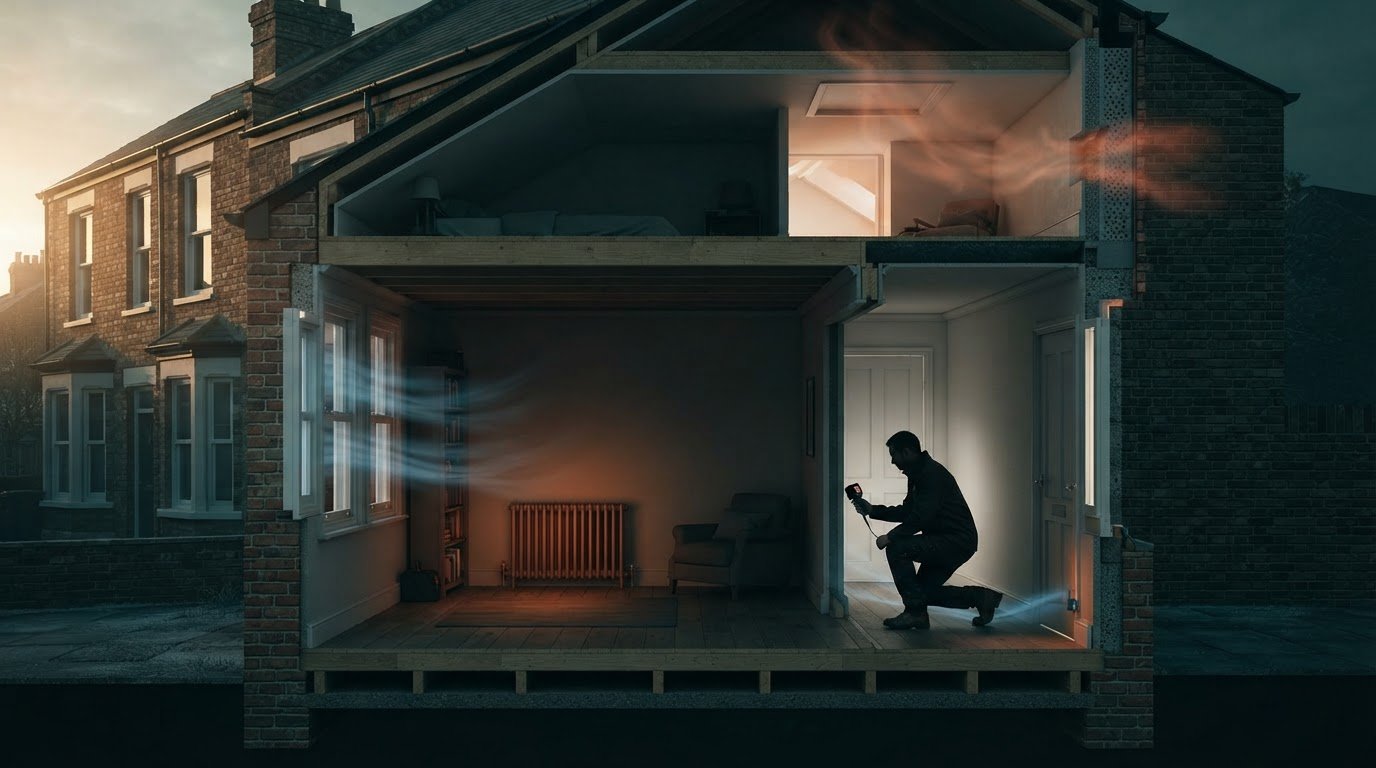
A running heating system doesn’t guarantee a warm home. If you’re wondering why your house is cold even with the heating on, heat may be escaping through draughty doors, inadequate insulation or windows. Radiators, controls or the heating system itself may also be distributing warmth unevenly. Double glazing can reduce heat loss, but gaps around windows and doors can still let cold air in.
It’s frustrating to turn up the heating and still find certain rooms chilly. The cause may be less obvious than the boiler: a cold floor, poorly insulated loft or radiator that doesn’t heat evenly can all affect how comfortable a room feels.
Here, you’ll learn how to spot common sources of heat loss, deal with draughts and cold windows, and decide when insulation or a heating upgrade may be worth considering. You’ll also see how a whole-home assessment can help prioritise improvements for a warmer, more comfortable home.
Key Takeaways
- Look for draughts around doors and windows, and consider whether gaps or worn seals are letting warmth escape.
- If heating feels uneven, check how well the system is working before deciding whether an upgrade may help.
- Review loft and wall insulation alongside window performance, as several sources of heat loss can combine to leave rooms cold.
- A whole-home assessment can help identify practical improvements and prioritise the changes most relevant to your property.
1. Draughts around doors and windows
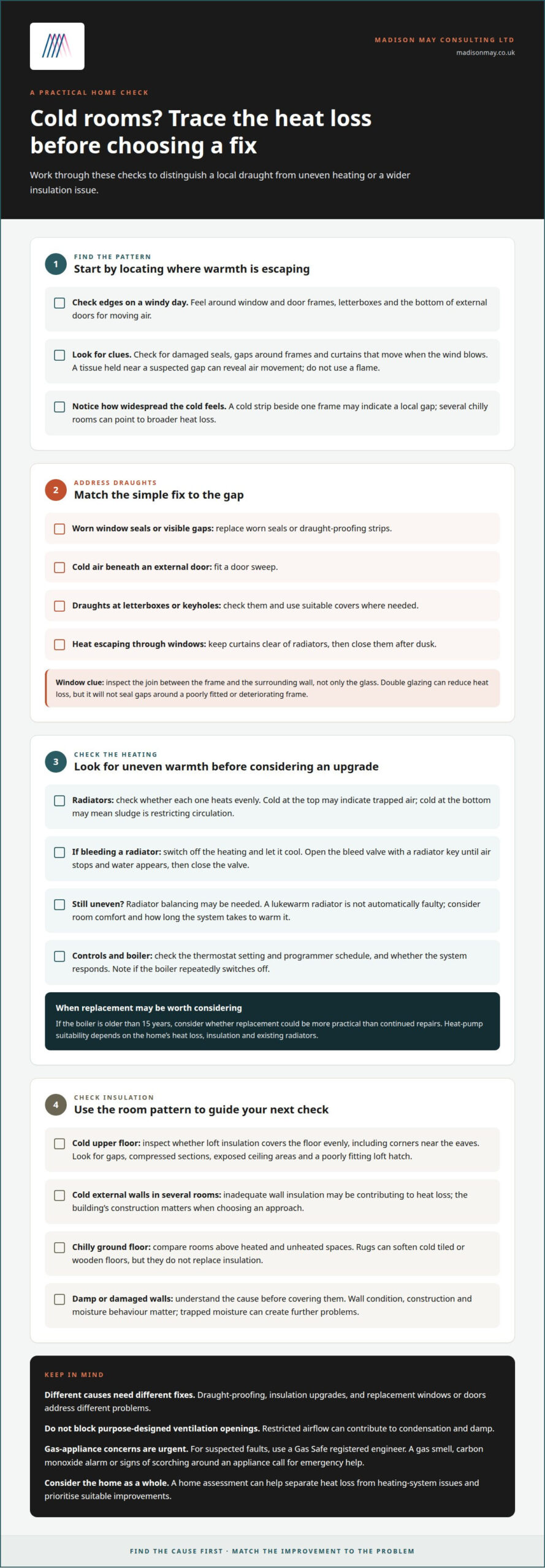
To find draughts and poor insulation in a UK home, inspect window and door edges, then check the loft and walls. On a windy day, feel for moving air around frames, letterboxes and the bottom of external doors. A cold strip beside a frame may indicate a gap, while an entire chilly room can point to broader heat loss.
Start with simple checks. Close each window and door firmly, look for damaged seals, and note whether curtains move when the wind blows. Hold a tissue near a suspected gap to reveal air movement without using a flame. Check the loft hatch and visible loft insulation too, as warmth can escape through an inadequately insulated roof.
- Replace worn window seals or draught-proofing strips where gaps are visible.
- Fit a door sweep to reduce cold air entering beneath an external door.
- Check letterboxes and keyholes for draughts, and use suitable covers where needed.
- Keep curtains clear of radiators, then close them after dusk to limit heat loss through windows.
For windows, inspect the join between the frame and surrounding wall, not just the glass. A draught at that edge may need sealing; condensation or a persistently cold room can point to a different issue. Double glazing can reduce heat loss, but it won’t seal gaps around a poorly fitted or deteriorating frame.
Distinguish a local draught from poor insulation before choosing a fix. If air moves near one frame, focus on that seal; if several rooms feel cold, check the loft and wall insulation too. Draught-proofing, insulation upgrades, or replacement windows and doors address different causes. Don’t block purpose-designed ventilation openings, as restricted airflow can contribute to condensation and damp.
Air leaks around windows and doors can contribute to a cold home, so check these edges when looking for draughts. Finding a leak helps identify where to focus instead of assuming every cold area has the same cause. A door sweep may help prevent draughts beneath a door. These measures address possible air leaks, but may not resolve other causes of a cold home.
2. Heat pumps and heating-system upgrades
A heating system can run yet leave rooms cold if it cannot distribute enough warmth. Check whether every radiator heats evenly, whether the thermostat responds, and whether the boiler repeatedly switches off. If the boiler is older than 15 years, consider whether replacement could be more practical than continued repairs.
A radiator that’s cold at the top may contain trapped air; one that’s cold at the bottom may have sludge restricting circulation. To bleed it, switch off the heating and let the radiator cool. Open the bleed valve with a radiator key until the air stops and water appears, then close the valve. If temperatures remain uneven, arrange radiator balancing.
A faulty thermostat or programmer can prevent the system from reaching its set temperature or running at the intended times. Check the setting and schedule, and see whether the heating responds when you adjust it. If the display or heating doesn’t respond, the control or its connection may need attention.
Heat pumps work differently from conventional boilers, so their suitability depends on the home’s heat loss, insulation and existing radiators. Consider these factors together when planning a heating upgrade, rather than replacing equipment in isolation. A radiator that feels lukewarm isn’t automatically faulty; assess room comfort and how long the system takes to warm it.
UK and local-authority schemes may help eligible households fund insulation or heating improvements. Covered measures and eligibility depend on the scheme and property, so check current programme details before planning work.
For suspected gas-appliance faults, use a Gas Safe registered engineer. Treat a gas smell, a carbon monoxide alarm or signs of scorching around an appliance as urgent, and seek emergency help. To distinguish heat loss from a boiler fault, compare rooms: widespread cold may point to fabric or system performance, while one persistently cold room may indicate radiator sizing or circulation. A home assessment can help separate these causes and inform heating upgrades.
3. Inadequate insulation in attics and walls
Heat rises, so a poorly insulated loft can let warmth escape through the roof. Check whether insulation covers the loft floor evenly, including corners near the eaves. Gaps, compressed sections or exposed ceiling areas can leave rooms below feeling cold. Also inspect the loft hatch, which can be a weak point if it doesn’t fit snugly.
Wall insulation matters too. Inadequate insulation in walls and floors contributes to heat loss, so a cold external wall or chilly ground floor may indicate a wider issue with the building fabric. Compare rooms in different positions: a room above an unheated space may feel colder underfoot than one above a heated room. Rugs can soften the feel of tiled or wooden floors, but they don’t replace insulation.
For a first check, note which rooms stay cold and whether their walls, ceilings or floors feel especially chilly. Look for visible gaps in the loft insulation and compare the pattern with the home’s layout. A consistently cold upper floor may point to loft insulation; cold external walls in several rooms may warrant closer assessment. Insulation needs to suit the building and its construction.
SprayCork is a cork-based wall coating that may be considered as part of a wall treatment. It isn’t a universal fix: the wall’s condition, construction and moisture behaviour matter when choosing an approach. Don’t cover damp or damaged surfaces without understanding the cause, as trapped moisture can create further problems.
Prioritise improvements by identifying where heat escapes, rather than treating one cold room in isolation. A whole-home review can consider loft, cavity-wall and floor insulation alongside ventilation and signs of damp. This helps distinguish a missing or uneven layer from a broader issue and guides suitable insulation upgrades for the property.
Checking the loft and walls can help show where heat may be escaping. Review both areas and note where insulation appears consistent and where it may need closer attention. Keeping these observations together makes it easier to consider the home as a whole and decide what warrants further investigation, without assuming one visible issue explains every cold room.
4. Double glazing and energy-efficient windows
Cold glass can make a room uncomfortable, even when the radiator works. Double glazing uses two panes with a sealed space between them, helping limit heat transfer through the glass. However, the whole window matters: frame condition, seals, opening mechanisms and installation all affect performance. Replacing the glass alone won’t solve a draughty frame.
Check each window in daylight. Look for cracked panes, condensation between panes, damaged seals and frames that don’t close evenly. Condensation trapped between panes can indicate a failed sealed unit. Moisture on the room-facing surface has different possible causes, so consider ventilation and indoor moisture too.
- Compare a cold window with nearby walls to see whether discomfort centres on the glazing.
- Open and close the sash, checking for loose hinges, poor alignment or gaps around the frame.
- Inspect seals and frame joints for cracks, wear or signs of water entry.
These checks help distinguish glazing problems from frame or fitting issues. If the glass feels cold but the frame seals well, improved glazing may be relevant. If air moves around the edges, repairing or replacing the frame may matter more. Older single-glazed windows can lose heat readily, but any upgrade should suit the home’s condition, appearance and ventilation needs.
Don’t judge a window by pane count alone. A well-maintained double-glazed unit can still underperform if its seals have failed or the frame no longer shuts properly. Likewise, replacing sound windows may not help if an uninsulated wall or floor is making the room cold. Consider the whole window and the room around it before deciding on work.
For persistent cold beside a window, record which rooms are affected and note visible defects before planning improvements. A considered review of your windows and doors can help identify whether glazing, frames or another source of heat loss deserves attention first.
Madison May Consulting: Energy efficient home improvements
Madison May Consulting Ltd can help homeowners connect persistent cold spots with practical energy efficient home improvements. If draughts, glazing or a conservatory appear to be contributing to heat loss, its windows and doors, conservatory upgrades, and ventilation assessments or damp remediation may be relevant. The right focus depends on what’s affecting the property: replacing windows won’t address inadequate insulation elsewhere, and improving insulation alone may not resolve damp.
Consider turning to Madison May Consulting Ltd when the cause isn’t clear, several rooms feel cold, or you’re weighing up different improvements. A considered assessment of the home can help bring the options into focus and support a more comfortable, efficient space.
Contact Madison May Consulting Ltd or visit madisonmay.co.uk to discuss your home.
Make your next home improvement a considered one
If you’re still asking why your house is cold even with the heating on, start by tracking how comfort changes from room to room. Note which rooms feel cold, when the problem appears, and whether it changes with the weather or heating schedule. These observations can help distinguish a persistent issue from one that occurs under particular conditions.
Before committing to work, consider how each improvement may affect the home as a whole. A change to one part of the building can influence comfort elsewhere, so the order of work matters as much as each individual measure. A considered plan helps you weigh priorities against how you use each room.
Madison May Consulting can help you explore practical next steps for your property. Contact Madison May Consulting today to discuss your home and move towards a warmer, more comfortable space.
Frequently Asked Questions
Why is my house cold even when the heating is on?
A room can feel cold because its surfaces stay chilly, even after the air begins to warm. For a clearer picture, place a room thermometer away from a radiator, direct sunlight and draughts, then compare readings between rooms during the same heating period. Note whether discomfort is concentrated beside an outside wall, under a window or throughout the property; the pattern helps narrow down the likely cause.