


Heating can be part of damp control, not just a comfort choice. Indoor air quality describes the condition of the air inside your home, shaped by dust, moisture, ventilation and everyday pollutants. Improving indoor air quality at home in the UK starts with managing those sources: in colder months, heating a home to at least 18°C can help prevent condensation, damp and mould.
Dust, laundry moisture and poor airflow can all affect a room’s comfort. Everyday habits, combined with suitable flooring and heating, can help manage dust and damp without compromising the feel of your home.
This guide explains what indoor air quality means and how to improve it through cleaning, flooring choices, drying laundry and managing heat. It also covers when ventilation and home improvements may help with persistent moisture, so your home feels fresher, warmer and more comfortable.
Key Takeaways
- Reduce condensation by managing moisture from cooking, bathing and laundry, and keeping rooms adequately ventilated.
- Make dust easier to control with regular vacuuming and flooring choices suited to each room’s use.
- Steady heating can help limit cold surfaces where moisture settles, supporting a more comfortable, drier home.
- Identify everyday sources of indoor pollution, then consider ventilation or damp remediation if the underlying problem persists.
1. What is indoor air quality?
Indoor air quality describes the air you breathe inside your home, including particles, gases, moisture, ventilation and mould. Condensation forms when moist air meets cold surfaces. Wipe water from windows and ventilate bathrooms after showers.
Trickle vents provide background airflow when windows are closed. Extractor fans remove moisture from kitchens and bathrooms, while mechanical ventilation moves air through ducts and vents. Clean extractor fans regularly and keep vents unobstructed.
For PM2.5, carbon monoxide, radon and humidity, use pollutant-specific monitors or tests. Recommended readings depend on the pollutant and measurement period. Follow device instructions and relevant UK guidance to interpret results, rather than treating one reading as a universal limit.
UK guidance covers ventilation, indoor air quality, damp and mould. Building standards and landlord responsibilities also relate to these issues. Renters who are concerned that their home is affecting their health can ask their GP about writing a letter to their landlord.
Use suitable monitors to test indoor air, alongside a carbon monoxide alarm and a radon test. Humidity requires a separate measuring device. Costs vary by test type and supplier, including whether radon testing involves laboratory analysis. Choose a test method that matches your concern.
Improve airflow without leaving windows open for long periods: open them briefly during the day, use extractor fans and keep trickle vents open. In colder months, heating a home to at least 18°C can help prevent condensation, damp and mould.
Check air purifier and ventilation filters regularly. Clean or replace them according to the manufacturer’s instructions. Dust levels, usage and filter design all affect maintenance, so follow the guidance for your appliance rather than assuming one schedule suits every system.
Tell your landlord promptly about recurring condensation, leaks, mould or ineffective ventilation, and record where the problem occurs. If damp persists or spreads, seek a professional assessment. Renters concerned about health can also ask their GP about a letter to their landlord.
2. Vacuuming, flooring and dust control
Vacuum regularly to remove dust before it settles deeply into carpets. Clean rugs and upholstered furniture too, including sofa seams and beneath cushions, or consider professional care from Darcy Bespoke Cleaning for deeper allergen removal. When improving indoor air quality at home in the UK, remember overlooked edges: use an attachment along skirting boards, beneath beds and around radiators. Dust shelves from high to low with a damp cloth to trap particles rather than scatter them. Empty or change the vacuum’s dust container according to its instructions.
Flooring affects how dust collects. Timber or vinyl can be swept or vacuumed, then damp-mopped. Carpets and rugs need thorough vacuuming because their fibres can hold dust, pollen and pet hair. A washable mat by the entrance catches grit before it spreads indoors. Use cleaning methods suited to the flooring material and dry wet-cleaned surfaces promptly. Avoid vigorous dry sweeping, which can lift settled dust into the air.
Dust and allergens can irritate the airways. Children and people with asthma may notice symptoms around dust, mould or smoke. Keep bedroom floors and children’s play areas clean, and wash dusty bedding or throws. If symptoms worsen in a particular room or during an activity, note the possible trigger and speak with a GP or nurse about persistent concerns.
Reduce what comes inside by leaving outdoor shoes near the door and containing loose pet hair during grooming. Clean one room at a time, moving furniture to reach hidden edges. Improving indoor air quality at home in the UK also means addressing persistent damp or poor airflow, not relying on cleaning alone. If these issues make dust control difficult, a ventilation assessment and damp remediation may help identify an underlying building problem.
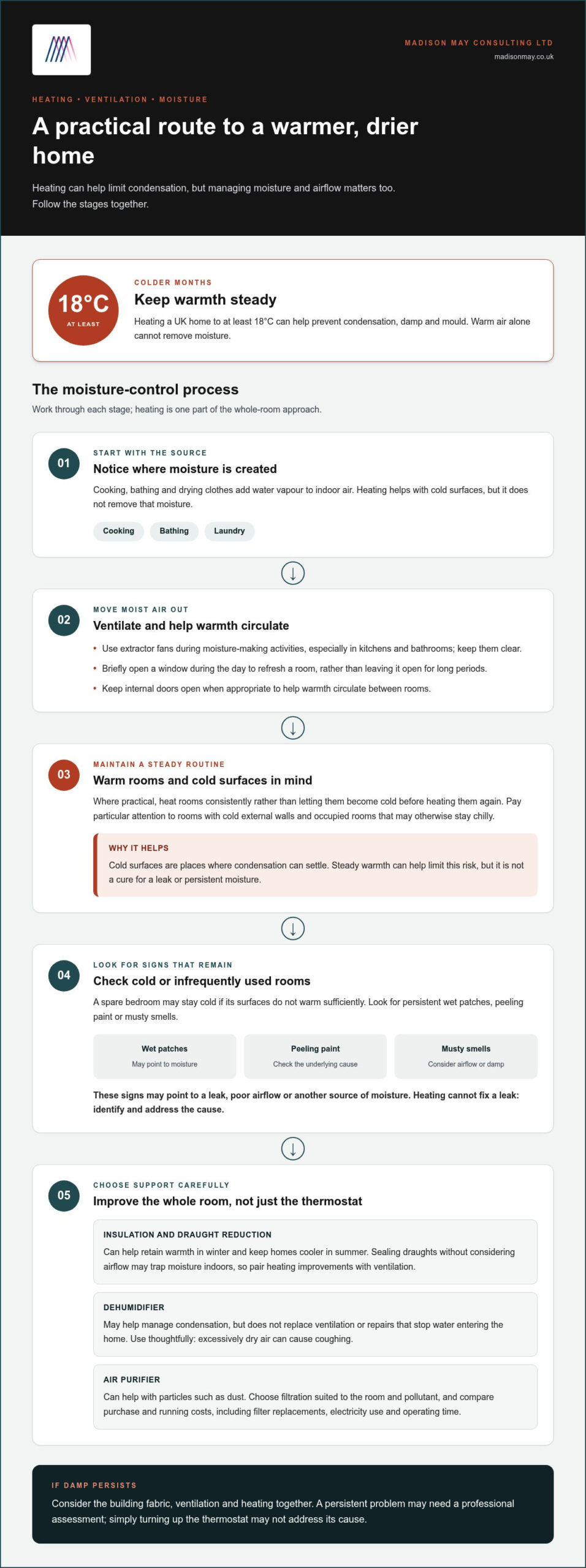
4. Heating homes to prevent damp
In colder months, heat a UK home to at least 18°C. This can help prevent condensation, damp and mould. Warm air alone cannot remove moisture, though. Cooking, bathing and drying clothes still introduce water vapour. Use a steady heating routine where practical, rather than letting rooms become cold before heating them again. Pay particular attention to rooms with cold external walls, where condensation can settle.
Uneven warmth can leave some rooms more vulnerable to damp. Keep internal doors open when appropriate to help warmth circulate. A spare bedroom used infrequently may stay cold because its surfaces do not warm sufficiently. Heat occupied rooms consistently and look for persistent wet patches, peeling paint or musty smells. These signs may point to a leak, poor airflow or another source of moisture. Heating cannot fix a leak, so identify and address the cause.
Air purifiers can help with particles such as dust. Choose a model with filtration suited to the room and the pollutant. Before buying, compare the purchase and running costs, including filter replacements, electricity use and operating time.
Insulation and draught reduction can help retain warmth in winter and keep homes cooler in summer. However, sealing draughts without considering airflow may trap moisture indoors. Pair heating improvements with ventilation, particularly in kitchens and bathrooms. Keep extractor fans clear and use them during activities that create moisture. Briefly opening a window can also refresh a room without leaving it open for long.
A dehumidifier may help manage condensation, but it does not replace ventilation or repairs to stop water entering the home. Excessively dry air can cause coughing, so use one thoughtfully. Check whether condensation returns after changing heating, cooking and bathing routines. If damp persists, consider the building fabric, ventilation and heating together. This whole-room approach is more useful than simply turning up the thermostat, especially when cold surfaces and moisture sources occur together.
4. What are the main sources of indoor air pollution in UK homes?
Combustion is a significant indoor pollution source. Open fireplaces and wood stoves can triple indoor PM2.5 levels. PM2.5 refers to fine particles that can be inhaled deep into the lungs. An open fireplace emits 4,000 times more PM2.5 pollution than a gas boiler. Even the most efficient wood stoves produce hundreds of times more pollution than gas boilers. These comparisons make the choice of heating appliance important for indoor air.
Cooking creates particles and gases, particularly when food burns or oil smokes. Built-up grease and food residue inside appliances can repeatedly smoke when heated, which is why periodic deep cleaning from specialists such as premiumovencleaner.co.uk can help eliminate a recurring source of fumes. Use an extractor fan while cooking and keep it clean so it works effectively. Ventilate the kitchen during and after cooking. If you use a fireplace, ventilate the room while it is in use. These steps help remove pollutants such as carbon monoxide and nitrogen dioxide instead of letting them linger indoors.
Everyday products can also affect indoor air. Candles and incense release smoke and particles, so avoid burning them indoors where possible. Cleaning sprays, aerosols and some fragranced products can release volatile compounds. Use sprays near an open window or in a well-aired space. A pump spray may reduce exposure to volatile organic compounds compared with an aerosol.
Look for patterns, not just one source. Notice whether smoke, cooking or a particular product coincides with stale air or irritation. Keep kitchen and bathroom extractor fans clean, and ventilate during moisture-producing activities. If you use a fireplace, make ventilation part of its routine. Reducing combustion indoors can make a marked difference to particle sources, while airflow helps clear pollutants produced by daily tasks. For support identifying airflow concerns, discuss your home’s ventilation needs.
UK Government says air pollution is thought to cause up to 36,000 early deaths each year in the United Kingdom, showing why reducing exposure matters beyond comfort at home. Greater London Authority cites an analysis by Imperial College London’s Environmental Research Group showing that air pollution related deaths in London decreased by around 40 per cent between 2019 and 2024, from around 6,400-8,000 to 3,800-5,100 premature deaths a year.
If you are sensitive to outdoor air pollution or pollen, check pollution and pollen levels before opening windows. Ventilating while cooking or using a fireplace helps remove pollutants such as carbon monoxide and nitrogen dioxide. If indoor air pollution affects you, take prescribed medicines to help manage your lung condition.
Madison May Consulting: Energy efficient home improvements
Madison May Consulting Ltd can help when everyday changes aren’t resolving persistent damp or ventilation concerns. Its ventilation assessments and damp remediation help identify building-related issues, while energy efficient home improvements can address how a home retains warmth. Windows, doors and conservatory upgrades may also form part of a considered improvement plan.
If cold rooms, recurring condensation or poor airflow persist, a wider assessment can help connect these signs with the home’s building fabric and ventilation. The right next step depends on the cause, rather than treating each symptom in isolation.
For support with your home’s ventilation or damp concerns, contact Madison May Consulting Ltd.
Plan a home that feels healthier to live in
Lasting improvement starts with understanding how each room works as part of the whole home. If you’re improving indoor air quality at home in the UK, consider how ventilation, warmth and the building fabric interact instead of treating each concern in isolation. A clear plan can help prioritise practical changes and support comfort through changing seasons.
Madison May Consulting Ltd helps homeowners plan energy-efficient home improvements, including windows and doors or conservatory upgrades, as part of a wider approach to the property. The right direction depends on the home’s needs and the changes you want to make.
Explore the next step for your home by contacting Madison May Consulting Ltd. A thoughtful plan can bring greater comfort and care to the spaces you live in every day.
Frequently Asked Questions
What is indoor air quality?
Indoor air quality describes the condition of the air inside a building, including the balance between airborne pollutants and fresh air. It can vary between rooms and throughout the day: cooking, cleaning or having several people in one room can change what is in the air. Notice when a room feels stuffy or smells unusual, and consider what was happening beforehand.
How can I reduce cooking fumes, mould and condensation indoors?
Use a cooker hood or kitchen extractor while cooking, and choose back burners where practical so fumes move towards the fan. Keep lids on pans to limit steam. After cooking, wipe wet surfaces and leave the extractor running long enough to clear lingering moisture. If mould keeps returning, look for an ongoing source of moisture, such as a leak, rather than treating only the visible patch.
What UK rules and guidance cover ventilation, indoor air quality, mould and landlords’ responsibilities?
UK guidance covers ventilation, indoor air quality, damp and mould. Building standards and landlord responsibilities also relate to these issues. Renters concerned about their health can report recurring problems to their landlord and ask their GP about writing a letter.