

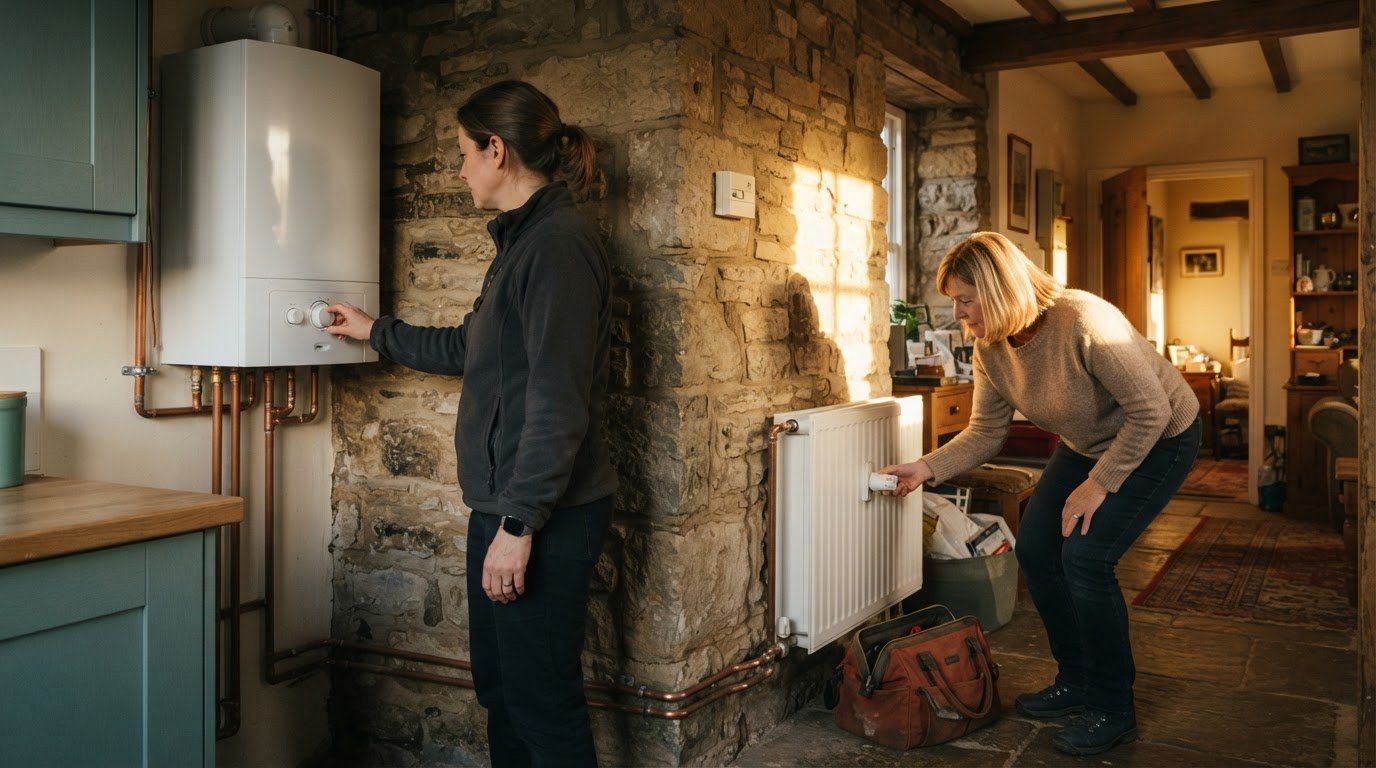
A warmer home doesn’t have to mean a boiler running at full temperature all day. The best energy-saving heating controls in the UK work together: for a combi boiler with radiators, try a flow temperature of 60°C, set the room thermostat to the lowest comfortable level, and use schedules and radiator valves to heat rooms when you need them.
It’s easy to assume that turning every radiator off or leaving the heating on low will save energy, but the right approach depends on your boiler, rooms and routine. Small adjustments can make heating more responsive without sacrificing comfort.
This guide explains how boiler flow temperatures affect efficiency, when to turn radiators down, and how smart thermostats, controls and schedules can help avoid heating empty rooms. You’ll also learn why homes with hot-water cylinders need different flow-temperature settings, so you can make practical changes with confidence.
Key Takeaways
- Match boiler flow-temperature adjustments to your heating system, especially if it heats a hot-water cylinder.
- Use radiator valves to reduce heat in rooms you rarely use, while avoiding unnecessarily cold, unused spaces.
- Set smart controls around your comfort and routine so heating responds to when and where it is needed.
- Programme heating to fit your day, making small timing adjustments when your routine or the weather changes.
1. Boiler flow temperature settings
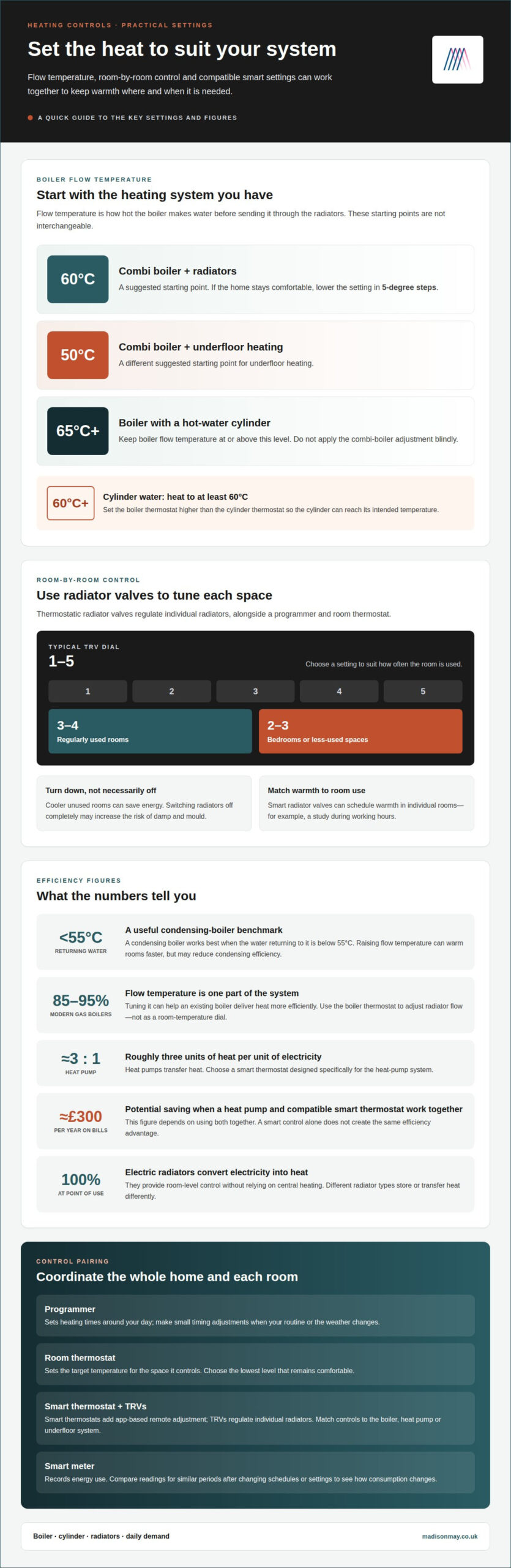
The flow temperature controls how hot water becomes before the boiler sends it through radiators. For a combi boiler with radiators, try 60°C, then lower it in 5-degree steps until the home remains comfortable. A lower setting can help a condensing boiler run efficiently, because it works best when returning water is below 55°C.
Underfloor heating needs a different starting point: try 50°C with a combi boiler. If you have a separate hot water cylinder, don’t apply that same adjustment blindly. Keep the boiler flow temperature at or above 65°C, and heat the cylinder’s water to at least 60°C. Set the boiler thermostat higher than the cylinder thermostat so the cylinder can reach its intended temperature.
For a new or replacement heating system, choose controls that let you manage heating temperatures and timings to suit your household. Consider the controls alongside the boiler, including whether a programmer, room thermostat and thermostatic radiator valves provide the level of control your home needs.
Boiler type matters more than a simple rule based on household size. A combi heats water on demand, while a regular or system boiler works with a separate cylinder. This affects hot-water needs and suitable settings. A larger household may use more hot water, while a smaller home may have different heating demands, but neither factor alone determines the right boiler.
Use the boiler thermostat to adjust radiator flow, not as a room-temperature dial. Raising it sends hotter water through radiators and can warm rooms faster, but may reduce condensing efficiency. Modern gas boilers are described as 85–95% efficient, so tuning the flow temperature can help an existing boiler deliver heat more efficiently. If you’re comparing the best energy-saving heating controls in the UK, consider the boiler, cylinder, radiators and daily demand as one system.
2. Does turning your radiators off save gas?
Turning down the heat in unused rooms can save energy, but switching radiators off completely may increase the risk of damp and mould. Use thermostatic radiator valves (TRVs) to keep little-used rooms cooler rather than leaving them unheated through winter.
TRVs regulate individual radiators, giving room-by-room control alongside a programmer and room thermostat. A typical dial runs from 1 to 5: try settings 3 to 4 in regularly used rooms, and 2 to 3 in bedrooms or spaces used less. Smart radiator valves add individual room control, allowing you to schedule warmth for the rooms you occupy. A home-working example is heating your study during working hours, rather than every room.
Which controls save the most energy in UK homes?
Electric radiators give room-level control without relying on central heating; they convert 100% of their electricity into heat at the point of use. Infrared systems warm surfaces, such as walls and furniture, rather than heating air directly. Heat pumps transfer heat, providing roughly 3 units of heat per unit of electricity. These options suit different homes and heating arrangements, so compare how each delivers warmth before changing systems.
Dry thermal, oil-filled and ceramic electric radiators store or transfer heat in different ways, affecting how they respond to thermostat changes. Column radiators can deliver heat at lower flow temperatures, making them compatible with condensing boilers and heat pumps. Whatever the radiator type, insulation and room use affect how quickly warmth escapes.
Are there UK grants or schemes for smart controls? The Great British Insulation Scheme was due to end on 31 March 2026; it is an insulation scheme, not a dedicated grant for smart thermostats or radiator valves. For a wider view of energy-efficient home improvements, consider how heating controls fit alongside the building’s fabric.
3. Smart heating controls
A smart thermostat lets you adjust your heating remotely using a smartphone or tablet. Unlike a basic programmable room thermostat, it offers app-based control, while thermostatic radiator valves (TRVs) manage individual rooms. Used together, these controls can coordinate whole-home temperatures with room-by-room demand.
For a heat pump, choose a smart thermostat designed specifically for that heating system. Pairing an efficient heat pump with a compatible smart thermostat could save around £300 a year on heating bills. That figure depends on using both together; a smart control alone doesn’t create the same efficiency advantage. Gas boilers and underfloor heating also need controls suited to their operation, so match the thermostat to the installed system before upgrading.
Smart meters serve a different purpose: they record energy use, helping you see how heating schedules and settings affect consumption. Energy suppliers install smart meters in UK homes at no extra cost. Compare readings for similar periods to spot changes, rather than assuming every increase is caused by heating or thermostat settings.
How do smart thermostats compare with programmable room thermostats and TRVs? Programmable thermostats follow set times and temperatures; smart thermostats add remote adjustment, while TRVs regulate heat at individual radiators. Their benefit is greater control over when and where heat is delivered, not a guarantee of lower energy bills.
Installation costs depend on the control you choose, its compatibility with your existing heating system, and the installation requirements. Weigh these factors together: a more capable thermostat may need compatible equipment or professional fitting.
To set up a control, first check that it suits your boiler, heat pump or underfloor heating. Connect it as instructed, programme the times when rooms are occupied, and set a comfortable target temperature. Review smart-meter readings after making changes to understand their effect.
Compatibility can limit which features work with particular boilers, heat pumps or wiring. App-connected controls also involve sharing account and home-use data, so review the privacy settings and secure your account. A stable internet connection supports remote functions, but programmed schedules remain useful when you’re not using the app.
4. Heating programmers and schedules
A heating programmer sets when your central heating switches on and off, matching warmth to your daily routine. For a boiler, schedule heating to start around half an hour before you get up and switch off around half an hour before bed. This makes use of stored warmth without running the system for unnecessary hours.
If you leave home for work, schedule the boiler to warm the house shortly before you return instead of keeping it on all day. Gas heating costs the same regardless of the time of day, so base your schedule on when you need the rooms, not on an assumed cheaper period. Leaving the heating on low all day usually uses more energy than switching it on when needed.
Use your first week’s routine as a starting point: set morning and evening periods, then adjust each setting to suit actual comfort. The heating can come on about 30 minutes before a room is needed and switch off 30 minutes before it is no longer needed. During a cold snap, move the start time earlier if the home takes longer to warm.
Hot water follows a separate schedule in homes with a cylinder. Heating stored water will probably need to start 1 or 2 hours before you need it, so align the programme with bathing or washing routines. Avoid running the cylinder’s heating for long periods when nobody needs hot water; set a defined period that fits household demand.
A programmer works best when its settings reflect your actual routine. Review them if your working hours, school terms or time spent outside the home change. If your schedule varies, a smart control makes adjustments easier; a simple timer remains useful for a steady routine. Revisit the programme as the weather changes, making small adjustments rather than extending every heating period.
If your heating schedule exposes wider comfort or heat-loss issues, explore heating upgrade support for a more considered approach to your home’s heating.
Madison May Consulting: Energy efficient home improvements
Madison May Consulting Ltd can help when heating schedules and controls aren’t enough to address poor comfort or heat loss. Its retrofit assessments consider the building fabric, heating services and ventilation, then provide a PAS 2035 compliant report and a detailed EPC improvement plan outlining practical upgrades.
Looking at the home as a whole can help you understand how heating controls fit alongside improvements such as insulation, windows and doors, conservatory upgrades, or ventilation assessments and damp remediation. Improving the property itself may be more useful than repeatedly adjusting controls, particularly if some rooms remain difficult to heat.
For a considered view of potential improvements to your home, contact Madison May Consulting Ltd or visit madisonmay.co.uk.
Make your next improvement work with your home
Once your controls suit your routine, notice which rooms remain difficult to keep comfortable. This may point to a wider opportunity: the best energy-saving heating controls in the UK manage when warmth is delivered, while the home’s fabric affects how well it is retained. Consider comfort across the whole home rather than responding to every cold room with another schedule change.
Choose a next step based on what you’ve observed. You might refine the settings or consider whether your property needs broader energy-efficiency improvements. Madison May Consulting Ltd can help you assess the wider picture, including how windows, doors and conservatory upgrades may fit your home’s priorities.
Explore your home improvement options with Madison May Consulting Ltd, and take the next step towards a home that feels considered and comfortable.
Frequently Asked Questions
How can I make my home more energy efficient?
Reduce heat loss as well as refining your heating settings. Heating and hot water account for over half of a typical home’s energy use, so consider the building fabric alongside your controls. For example, draughts around an external door can make a hallway feel cold even when the thermostat is set comfortably. Note which rooms lose warmth first, then prioritise practical fabric improvements and ventilation.
Does turning your radiators off save gas?
Turning off a radiator reduces the heat delivered to that room, but it doesn’t automatically make the whole heating system more economical. If an adjacent space becomes cold, the thermostat may keep calling for heat. Keep unused rooms at a lower setting rather than letting them become persistently cold. If you’re concerned about condensation, consider moisture and ventilation as well as radiator settings.
So which should you choose?
Choose controls to suit your routine and heating system. A household with predictable mornings and evenings can use a programmer, room thermostat and thermostatic radiator valves. If schedules change, a smart thermostat makes remote adjustments easier. Heat pumps need compatible controls designed for the system, while homes with cylinders benefit from separate hot-water scheduling. Start with compatibility, then add room-level functions where they’re useful.
What are the best smart thermostats and heating controls available in the UK?
There isn’t one best choice for every UK home. Prioritise compatibility and useful functions over brand features. Look for clear scheduling, straightforward temperature adjustments and controls suited to your boiler, heat pump or underfloor heating. Smart thermostats can add phone or tablet access, while thermostatic radiator valves regulate individual rooms. Choose controls that fit your existing equipment and how you prefer to manage heating.
How much can heating controls reduce UK energy bills, and what are typical savings?
Turning a room thermostat down by 1°C can save up to 10% on an energy bill. The actual saving depends on previous temperature settings, how long the heating runs and household routines. To understand the effect in your home, note energy use before making a change, keep other habits steady, then compare readings over similar periods.
How can I choose the right heating controls for my home and household routine?
Start by noting when people are home and which rooms they use, then match the controls to those patterns. A regular weekday routine suits fixed heating periods; changing shifts or frequent trips call for easier adjustments. Check whether your system uses a boiler, heat pump or underfloor heating, and whether it includes a hot-water cylinder. Choose only the features that address your household’s needs.