

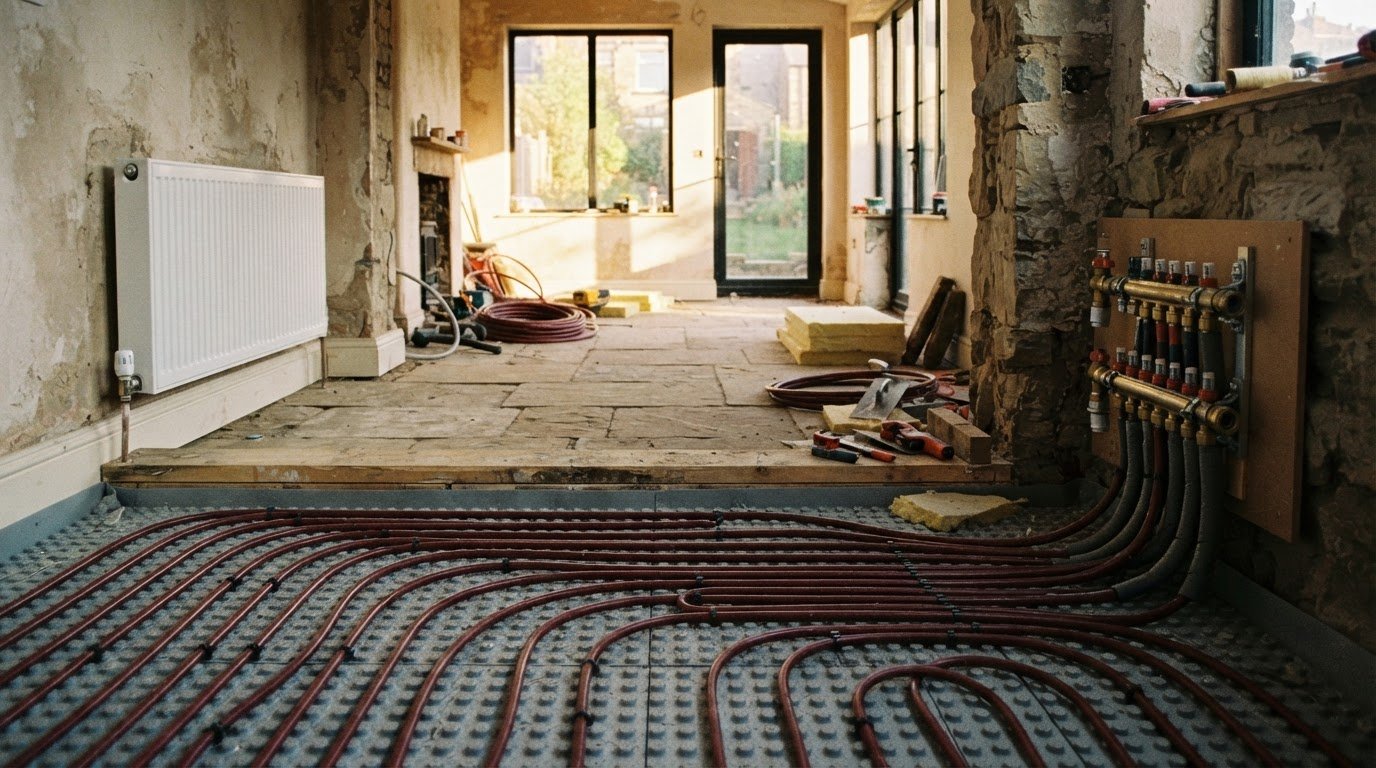
Underfloor heating can cost less to run than radiators, but that does not automatically make it the cheaper option. Comparing underfloor heating vs radiators running costs in the UK means considering the system, the home and how each is used.
It is understandable to focus on energy bills, especially when choosing between familiar radiators and warmth that rises from the floor. But running costs are only part of the decision: comfort, heat-up time and insulation all affect how a system feels and performs.
This guide explains how underfloor heating works, how its comfort and response compare with radiators, and what can affect annual bills. It also covers the differences between electric and water-based systems, and what to consider in a new build or renovation.
Key Takeaways
- Compare water-based and electric underfloor heating separately: their energy sources can make a real difference to running costs.
- Factor in insulation, floor coverings and heating controls when judging how efficiently a system may warm your home.
- For a renovation, weigh the work involved in changing the floor against the simpler option of updating radiators.
- Consider how quickly you want rooms to warm and whether steady, even heat or responsive warmth better suits your routine.
What is underfloor heating?
Underfloor heating warms a room through pipes carrying water or electric elements beneath the floor. Wet and electric systems differ in energy use, heat distribution and how quickly they respond to controls.
Wet Underfloor Heating Efficiency
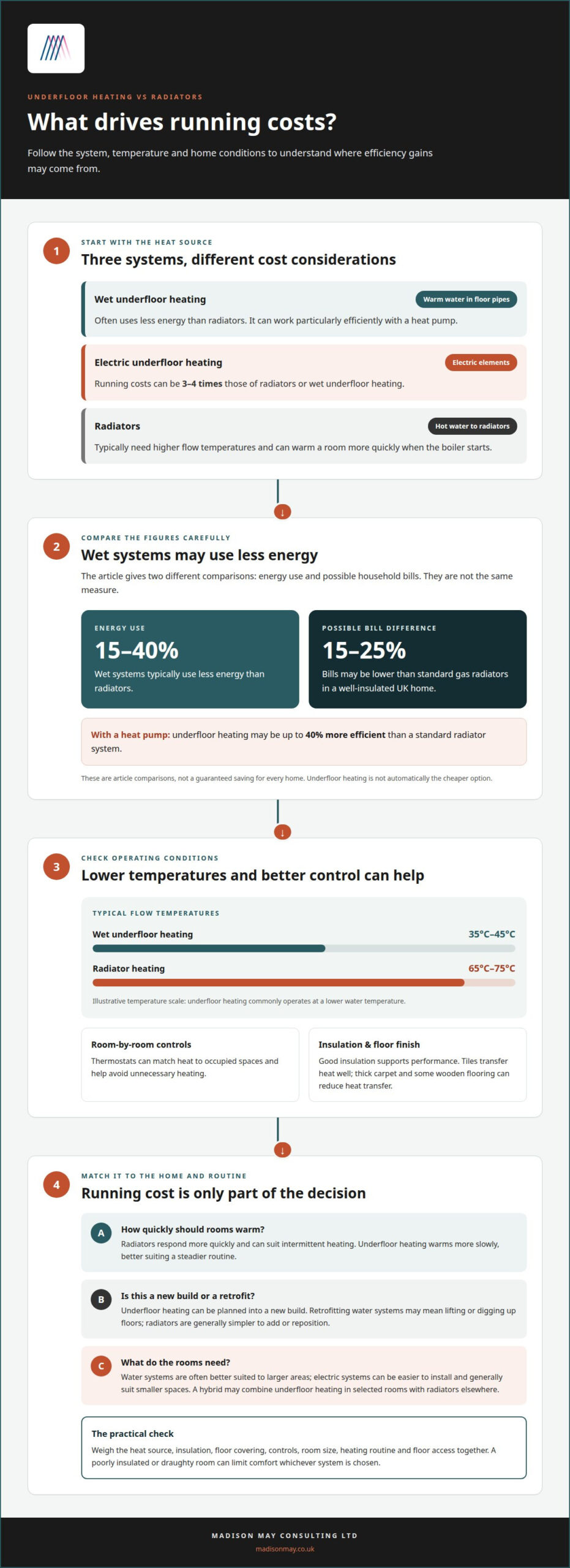
Wet underfloor heating circulates warm water through pipes beneath the floor. It often uses less energy than radiators: water systems typically use 15-40% less, and bills in a well-insulated UK home can be 15-25% lower than with standard gas radiators. So, are wet systems cheaper to run? Often, yes, particularly in a well-insulated home. With a heat pump, underfloor heating may be up to 40% more efficient than a standard radiator system.
Heat Distribution and Heat-up Times
Underfloor heating distributes warmth across the floor, helping heat the room rather than concentrating heat around radiators. This can reduce cold spots, while thermostatic controls help maintain a steady temperature. The response can be slower because the floor needs time to warm. Tiles transfer heat well; thick carpet and some wooden flooring can insulate the floor and reduce heat transfer.
Flow Temperatures and Heating Controls
Wet underfloor systems commonly use water at 35°C to 45°C, compared with the 65°C to 75°C typically needed by radiator heating. Lower flow temperatures can support efficient operation, especially with a heat pump. How do heat pumps affect running costs? Underfloor heating can work particularly efficiently with one, as the system operates at lower temperatures. Room-by-room thermostatic controls help match heat to occupied spaces and avoid unnecessary heating.
How do flow temperature and controls affect efficiency? Lower water temperatures and room-by-room controls can reduce wasted heat, provided the system still keeps each space comfortable. Electric underfloor heating works differently, using electric elements rather than circulating water.
| Option | Heat source | Efficiency consideration |
|---|---|---|
| Wet underfloor heating | Warm water in floor pipes | Lower water temperatures; particularly effective with a heat pump |
| Electric underfloor heating | Electric elements beneath flooring | Running costs can be three to four times those of radiators or wet underfloor heating |
| Radiators | Hot water distributed to radiators | Typically require higher flow temperatures |
Compare the heat source, floor covering and controls with the rooms you need to heat.
Choosing a system for new builds or renovations
In a new build, underfloor heating can be planned alongside floor construction, insulation and room layouts, avoiding the need to adapt finished floors later. Radiators are generally simpler to add or reposition, making them a familiar option where central heating is already installed.
For a retrofit, disruption is an important consideration. Water underfloor heating may require lifting or digging up the floor, followed by replacing the flooring or covering. Electric systems can be easier to install and generally suit smaller spaces; water systems are often better suited to larger areas. Dry hydronic systems can be used where concrete screed is unsuitable, including on wooden floors and upper storeys.
In a UK retrofit, underfloor heating installation costs compared with radiators depend on the system, floor access, coverage and any replacement flooring. Water underfloor heating typically costs more to retrofit than a full radiator system, especially if the floors need substantial alteration. Electric underfloor heating can involve less installation disruption, although its running costs are often higher.
A hybrid system may suit a renovation where insulation is insufficient: underfloor heating can serve selected rooms, while radiators provide additional warmth elsewhere. This avoids assuming every room has the same heat demand. The building’s insulation and room-by-room heat loss help determine whether this approach makes sense.
Consider upkeep and lifespan too. Radiators may need bleeding, and typically last 15 to 25 years, depending on material. Correctly installed hydronic pipes can last 40 to 50 years; electric systems can last 25 to 30 years. Underfloor heating generally needs less routine maintenance, but repairs beneath flooring can involve disturbing the finish. When managing ongoing servicing or unexpected repairs, property maintenance specialists such as Polkadot can help keep systems operating reliably.
Before choosing, weigh floor access, insulation, room size, flooring plans and the existing heating system. A whole-home retrofit plan can help organise heating decisions alongside the building’s wider improvement needs.
Heating speed and comfort
Radiators usually change a room’s temperature more quickly once the boiler starts, which can suit homes where rooms are heated intermittently. Underfloor heating responds more slowly because the floor must warm before it heats the room. That slower response suits a steadier routine better than switching the system on shortly before a room is used.
Consider how each space is used. A bathroom heated at set times may benefit from responsive warmth, while a living room used for longer periods may suit a consistent setting. The layout of heating elements or pipes can affect how evenly warmth is distributed. Comfort is personal: some people enjoy warm floors, while others prefer the immediate warmth of a radiator.
Radiators take up wall space, which can limit furniture placement in a small bedroom or a renovation with little room to spare. Underfloor heating leaves walls clear, offering more flexibility when arranging furniture. However, replacing radiators with underfloor heating is not automatically cheaper or less disruptive: floor access and replacement coverings affect the work involved. A costly change may add little comfort if the room remains poorly insulated.
Comfort depends on the building as well as the heating system. In older, draughty homes, hotter radiators may feel more comfortable than underfloor heating. Draughts can make a room feel chilly even when the heating is on, so consider where cold air enters and how consistently each room is used. Boiler output alone cannot resolve uneven comfort caused by heat loss.
Heating choice and air quality relate to the wider home, but they are not the same thing. Underfloor heating does not ventilate a room or remove damp. Persistent condensation in a bedroom, for example, calls for attention to ventilation and sources of moisture as well as heating choices. Before replacing radiators, compare how quickly each room needs warmth, the available wall and floor space, and draughts in the home.
Annual running costs for underfloor heating and radiators
Annual bills depend on the area heated, insulation, energy tariff and hours of use. Compare the same rooms and heating schedule to make the figures meaningful.
Hourly Underfloor Heating Costs
These examples use different energy sources, so the lower hourly figure does not tell the whole story. Annual costs also depend on how long each system runs and how evenly the home retains heat.
Electricity and Gas Price Inputs
For a UK comparison using 2025 average prices, use 24.5p per kWh for electricity and 6.04p per kWh for gas. The electricity rate answers the electric underfloor heating cost per kWh question: it is the unit price, not the system’s full running cost. Usage depends on the system’s power, heated area and operating time.
These ranges show why the system type and room size matter.
To estimate your annual use, compare the area heated, daily operating hours, insulation and tariff. A small bathroom used briefly is not comparable with a living room heated throughout winter. Better insulation can reduce heat loss, while longer heating schedules increase energy use.
Keep installation cost separate from energy bills: an efficient system may still involve a larger upfront project. For a tailored view of your home’s heating needs, plan energy-efficient heating upgrades around its insulation and layout.
Madison May Consulting Ltd: Energy efficient home improvements
Madison May helps homeowners assess heating choices alongside the factors that affect comfort and energy use. Its Retrofit Assessments and EPC Improvement Plans identify practical ways to reduce heat loss, including insulation upgrades, windows and doors, and conservatory upgrades. This wider view matters when comparing heating systems, because the building fabric and ventilation affect how well a home retains warmth.
If uneven temperatures or damp affect your decision, Madison May’s ventilation assessments and damp remediation can help address the wider conditions in your home. Contact Madison May to discuss energy efficient home improvements for your property.
Make your next heating decision with confidence
Before choosing a system, decide how you want your home to feel through a typical winter. Consider which rooms need warmth most, how you use them each day, and whether you prioritise clear floor space, responsive heat or a steady temperature. These preferences give the running-cost comparison a practical purpose, rather than leaving the decision to figures alone.
When comparing underfloor heating vs radiators running costs in the UK, remember that cost is only one part of the decision. Consider heating alongside the condition of the building, so your plans support comfort as well as energy efficiency. A considered approach can help ensure improvements suit the way you live.
If you’re ready to explore the best direction for your home, contact Madison May Consulting Ltd. A thoughtful plan can make the next stage of your home’s improvement feel clearer and more manageable.
Frequently Asked Questions
Are there property types where radiators are still the better option?
Yes. Radiators can be a practical choice in older, draughty homes where hotter heat may feel more comfortable. They can also suit renovations where lifting floors would cause substantial disruption, or rooms that are used intermittently and need responsive heating. In a home with insufficient insulation, a hybrid system can combine radiators and underfloor heating to meet different rooms’ needs.
How much do radiators cost to run per hour in the UK?
Treat this as a whole-system estimate, not a fixed charge for each radiator: actual use depends on the area heated, boiler operation, insulation and how long the heating runs. To compare systems fairly, use the same room coverage and heating schedule.
Does underfloor heating take longer to heat a room than radiators?
Yes. Underfloor heating generally responds more slowly because the floor must warm before the room feels the effect. A room used only briefly, for example, may be more comfortable with heating that responds promptly. Underfloor heating is better suited to planned, steady use, where controls can maintain warmth rather than relying on a sudden boost.
Which rooms and property types suit underfloor heating or radiators in the UK?
Electric underfloor heating generally suits smaller spaces, such as bathrooms, while water-based systems are better suited to larger areas. A new build can incorporate underfloor heating into its design; in an older, draughty home, radiators may feel more comfortable. For a renovation, consider floor access, insulation and whether the room needs quick, occasional warmth or steady heat.