

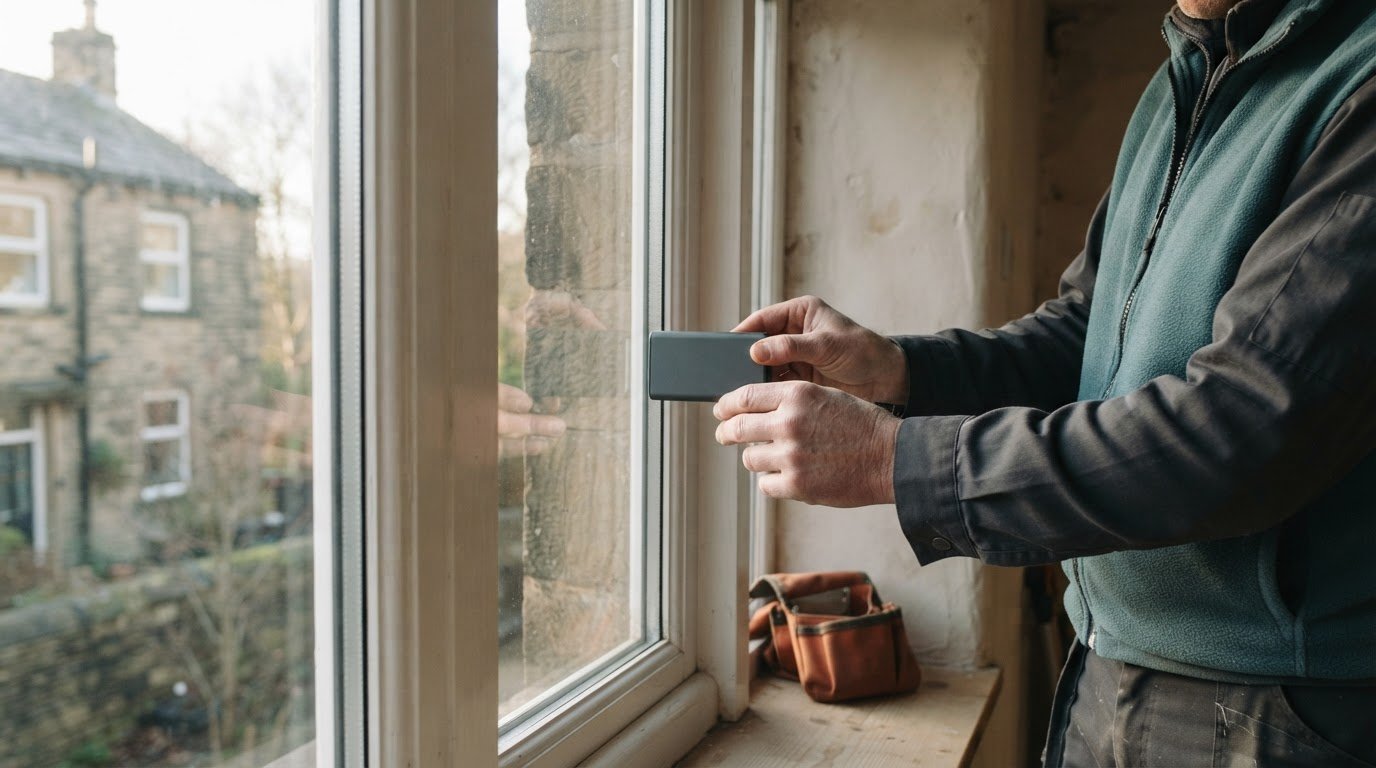
A window can admit daylight while limiting how much warmth escapes back through the glass. Low-E glass, explained simply, uses a very thin coating to reflect long-wave radiant heat into the room while allowing short-wave sunlight to pass through. In a standard double-glazed unit, the coating is usually on Face 3, the inner surface of the internal pane.
It’s easy to focus on the number of panes when considering insulation, but the coating, sealed space and glass specification also affect performance. The right combination can help a home retain heat without admitting more solar warmth than a room needs. This guide explains how Low-E coatings work, how glazing affects insulation and solar heat gain, and why orientation and exposure matter. It also shows how these choices relate to energy use and comfort, so you can identify which features to consider when planning an upgrade.
Key Takeaways
- Understand how soft-coat and hard-coat methods differ, and why the coating’s position within the sealed unit matters.
- Use U-values and g-values to interpret insulation and solar heat gain, rather than judging glazing by pane count alone.
- Match solar control to a room’s orientation, glazing size and exposure so useful warmth and daylight aren’t unnecessarily restricted.
- Consider the window as part of the home’s wider energy performance when planning an upgrade.
Which side of the glass is the coating actually on?
Standard double glazing has two panes separated by a sealed space. Low-E double glazing adds a low-emissivity coating to one pane. The coating reflects some radiant heat back towards its source, helping reduce heat transfer without simply blocking visible light.
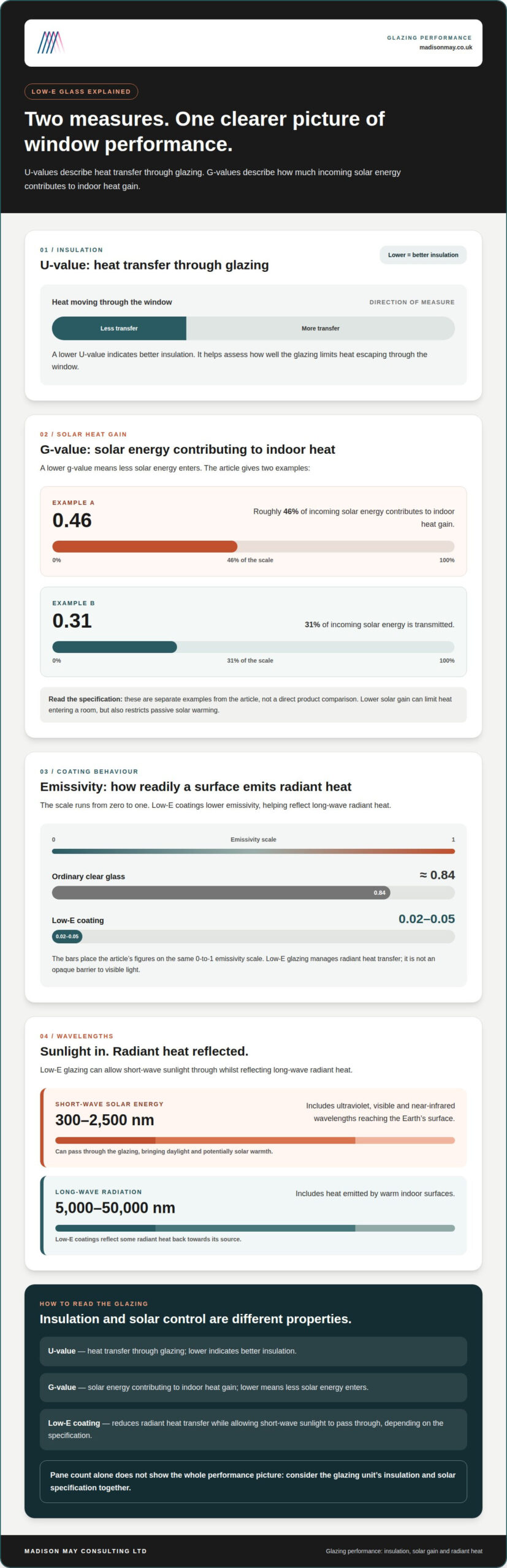
Emissivity describes how readily a surface emits radiant heat. Ordinary clear glass has an emissivity of approximately 0.84, while low-E coatings lower it to between 0.02 and 0.05. In practical terms, the coating helps reflect long-wave radiant heat, including warmth from inside during winter. Short-wave sunlight can still pass through the glass, bringing daylight and, depending on the specification, solar heat. Low-E glass therefore manages radiant heat transfer rather than acting like an opaque barrier.
The coating method affects performance. Soft-coat glass is made by sputtering microscopic layers of silver and metallic oxides onto cold glass inside a vacuum chamber. It offers higher energy efficiency than hard-coat glass, but can oxidise when exposed to air and moisture, so it is sealed inside a double- or triple-glazed unit. Hard-coat and soft-coat glass use different coating methods. These methods produce coatings with different properties: soft-coat is not simply a thicker version of hard-coat.
In a standard double-glazed unit, the low-E coating is usually on Face 3, the surface facing the sealed gap on the room-side pane. The numbering starts outside: Face 1 is the outer surface of the external pane, followed by Face 2 inside that pane. Faces 3 and 4 belong to the internal pane, with Face 4 facing the room. Keeping soft-coat sealed within the unit protects its delicate layers.
Coatings also differ in solar performance. High-solar-gain options let more solar heat through, which can help warm a room in winter. Solar-control coatings reject more incoming solar heat, helping limit unwanted gains in strongly sun-exposed spaces. Both can transmit visible light, but the balance depends on the glass specification. The coating’s position and performance are chosen as part of the glazing unit, not added as a separate surface treatment after installation.
Measuring insulating performance and solar heat gain
Glazing performance involves two related measures: heat escaping through the window and solar energy entering it. U-values and g-values show how these affect insulation and room comfort, helping you assess a specification beyond the number of panes.
Insulation and Solar-Gain Measures
A U-value measures heat transfer through glazing, while a g-value describes how much incoming solar energy contributes to indoor heat gain. A lower U-value indicates better insulation; a lower g-value means less solar energy enters. For example, a g-value of 0.46 means roughly 46% of incoming solar energy contributes to indoor heat gain. Seeing low-E glass explained through both figures helps distinguish heat retention from solar control.
Short-Wave Sunlight and Long-Wave Heat
Solar energy reaching the Earth’s surface includes ultraviolet, visible and near-infrared wavelengths from 300 to 2,500 nm. Long-wave radiation, including heat emitted by warm indoor surfaces, spans 5,000 to 50,000 nm. Low-E glazing can allow short-wave sunlight to pass through while reflecting long-wave radiant heat. This distinction matters because daylight transmission and heat retention are separate properties. Low-E glass explained through these wavelengths shows why a bright room can still retain warmth, depending on the unit’s insulation and solar transmission.
Seasonal Heat Loss and Solar Gain
In winter, heat inside a home radiates towards colder surfaces, and better-insulated glazing helps limit its passage through the glass. In summer, sunlight entering through windows can increase indoor heat gain, particularly where exposure is strong. A g-value of 0.31 indicates that 31% of incoming solar energy is transmitted. Lower solar gain can reduce heat entering a room, but also limits passive solar warming on colder days.
Emissivity and Infrared Transfer
Emissivity describes how readily a surface emits radiant energy, on a scale from zero to one, with one representing a black material. Infrared transfer is affected by the glazing surface as well as the gap between panes. Low-E coatings reduce radiant transfer; the selected glass must also balance insulation with daylight and solar heat. For a wider view of heat loss, insulation upgrades can be considered alongside glazing.
Choosing glazing based on climate, orientation and solar exposure
The right specification balances thermal insulation, useful solar warmth and summer solar control. Window orientation, size and exposure all affect that balance.
Solar Control and Summer Overheating
Solar-control Low-E glazing reduces incoming solar heat, helping limit overheating in rooms with strong sun exposure. In warm or moderate conditions, a solar-control coating on surface 2 can reflect incoming solar radiation before it passes through the double-glazed unit.
The right choice depends on the room. High-solar-control glass may suit a sun-exposed space that becomes uncomfortable in summer, but it can be counterproductive in a north-facing room because it blocks useful solar warmth. The aim is to manage summer heat without losing passive solar gain that could support comfort at other times.
Comparing Glazing Types
Low-E describes a coating that manages radiant heat transfer. Triple glazing describes a unit with three panes and two insulating spaces. Solar-control glass is designed to limit incoming solar heat, and solar-control properties can be combined with Low-E coatings.
These are different characteristics, not mutually exclusive choices. A triple-glazed unit, for example, can also have a Low-E coating, while its solar specification determines how much solar heat enters. Compare the whole unit’s insulation and solar performance with the window’s orientation, rather than choosing by pane count alone.
UK building regulations set thermal performance requirements for windows and doors. For replacement windows, Part L requires a whole-window U-value of 1.4 W/m²K or lower, or a Window Energy Rating of band B or better; this is a performance requirement, not a rule naming Low-E glass specifically.
The cost of Low-E glazing in the UK depends on the unit specification and project, with the price provided after a quote request. Existing windows may be upgraded by replacing the sealed glazing unit if the frame can accommodate it. Suitability depends on the frame and opening.
Potential drawbacks include losing useful solar warmth when high-solar-control glass is used on a north-facing window. On clear, still mornings, efficient Low-E windows can also develop external condensation, which evaporates as the sun rises.
Energy efficiency and heating costs
Low-E glazing can reduce heat escaping through a window, but its effect on heating costs depends on the home as a whole. The complete glazed unit, frame and way rooms are heated all influence energy use. Treat the glass specification as one part of a wider approach to thermal performance, not as a promise of a particular reduction in bills.
Clear glass allows around 90% of thermal energy to pass through and reflects the remaining 10%. A low-E surface changes radiant heat transfer, helping a glazed unit retain warmth indoors. Hard-coat Low-E glass has a centre-pane U-value of approximately 1.5 W/m²K; soft-coat Low-E glass has a centre-pane U-value of 1.0-1.2 W/m²K. A lower U-value indicates less heat transfer through the measured pane, which can help reduce heat loss.
Centre-pane figures describe the glass, not the whole window. Frames, spacers and the sealed space between panes also affect performance. A modern double-glazed unit combining Low-E glass, argon and a warm-edge spacer reaches a centre-pane U-value of about 1.0 to 1.1 W/m²K. Argon improves insulation within the gap, while the coating manages radiant heat transfer. Together, these components contribute to the unit’s efficiency.
Solar heat gain also affects room temperature and heating needs. In colder weather, sunlight entering through suitable glazing can contribute warmth. In sunnier periods, excess solar heat may raise indoor temperatures. A lower U-value addresses heat loss, while the g-value indicates how much incoming solar energy contributes to indoor warmth. Considering both measures helps balance winter comfort with summer conditions.
For a home with cold rooms or high heating demand, glazing performance can be considered alongside other improvements. Discuss energy-efficient home improvements with Madison May Consulting Ltd to explore how window choices fit within a wider plan for the property.
Madison May Consulting Ltd
Madison May Consulting Ltd helps homeowners and landlords consider glazing choices alongside their property’s wider energy performance. Its retrofit assessments review building fabric, services and ventilation, then identify practical improvements to reduce heat loss. This is useful when window performance is only one part of a home’s comfort concerns or planned upgrades.
Windows and doors, conservatory upgrades and ventilation assessments can form part of an energy-efficient home improvement plan. An EPC Improvement Plan can set out potential measures in the context of the property.
For guidance on your home’s next steps, contact Madison May Consulting Ltd.
Shape a glazing choice around the way you live
Start a glazing decision by considering how you want each room to feel. Think about where you value gentle daylight, where summer sun feels excessive and which spaces feel less comfortable in colder weather. These priorities give the technical choices a clear purpose for your home, rather than making the specification an end in itself.
Having low-E glass explained in the context of your home can clarify the next step. Consider how the windows relate to the rooms, the building and your wider plans. A thoughtful improvement should support your home’s character and everyday comfort, with choices shaped around your priorities rather than one feature in isolation.
For guidance on the next step for your property, contact Madison May Consulting today. A considered plan can help you move forward with greater clarity and confidence.
Frequently Asked Questions
Low-E glass: how does it work?
Low-E glass manages heat transfer at the glass surface while remaining transparent. It can help limit warmth radiating out through a window in colder weather while allowing daylight in. The coating is part of the complete glazing unit, so its effect depends on the glass combination and whether the specification also prioritises solar control.
What are the benefits of Low-E glass?
Low-E glass can help a home retain warmth, support indoor comfort and reduce heat transfer through its windows. It can also be specified to balance daylight with solar heat entering a room. For example, glazing in a sun-exposed living space may need a different solar balance from glazing in a shaded bedroom. The benefit depends on matching the glass to the room, not simply choosing the strongest coating.
Where and how is Low-E glass used?
Low-E coatings are commonly incorporated into sealed double- or triple-glazed units for windows and glazed doors. They may be considered for living rooms, bedrooms or conservatories, where comfort and sunlight needs differ. The glass specification can suit each room’s exposure and intended use, helping balance heat retention, daylight and incoming solar warmth across the property.
Can I use soft-coat Low-E glass in single glazing?
Soft-coat Low-E glass generally needs to be sealed inside a double- or triple-glazed unit. Its delicate coating can oxidise if exposed to air and moisture, so it is not suited to being left exposed as single glazing. The sealed unit protects the coating as part of the glazing assembly, rather than relying on a separate film applied to an existing pane.
Can you see through Low-E glass?
Yes. Low-E glass is designed to remain transparent, allowing you to see through it and enjoy daylight. The coating is extremely thin, not an opaque layer or privacy screen. Depending on the glass specification and viewing conditions, you might notice a subtle change in reflection or light transmission compared with an uncoated pane.
Does Low-E glass look different from ordinary glass?
It can look slightly different, although the effect is often subtle and varies with the coating and glazing specification. Some soft-coat glass transmits approximately 5-8% less visible light than totally uncoated glass. Reflections, daylight and the angle of view can influence what you notice, so the appearance may be more apparent in certain lighting than others.