

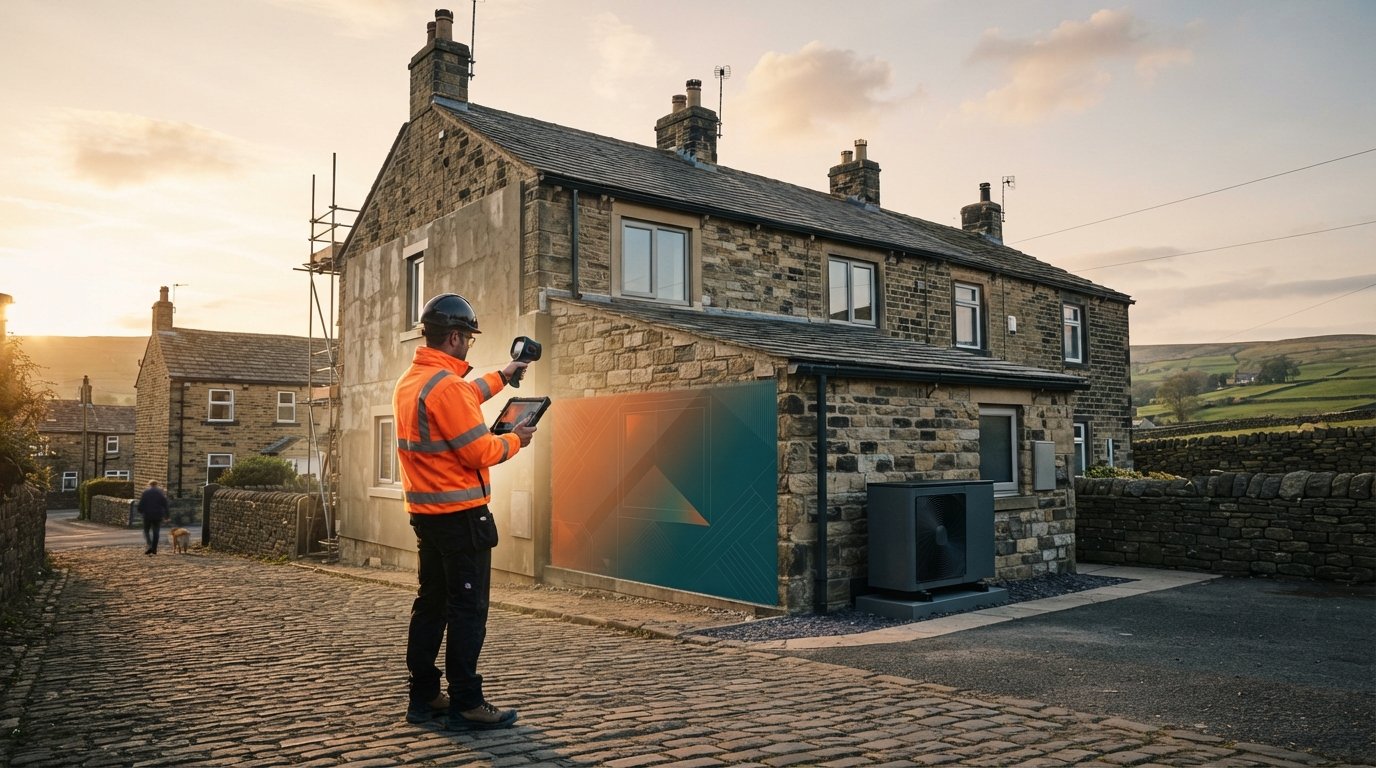
Your home’s transition to renewable energy is less about the machinery you install and more about the architectural story your property is already telling. You’ve likely encountered a confusing array of advice regarding whether your residence is truly prepared for low-carbon heating, which often leads to a lingering fear that inefficiency might result in unexpectedly high electricity bills. It’s natural to seek certainty when the comfort of your sanctuary is at stake. When you commission a professional heat pump suitability assessment, properties must be evaluated with a meticulous eye by specialists such as Madison May Consulting Ltd to ensure the building fabric can support such a sophisticated upgrade. This guide will reveal how a PAS 2035-aligned approach ensures your chosen system provides an enduring sense of warmth while remaining fully compliant with national retrofit standards. We’ll explore the vital intersection of insulation and modern technology, providing you with a clear roadmap to ensure your energy transition is as seamless as it is sustainable.
Key Takeaways
- Understand why a professional heat pump suitability assessment Yorkshire residents undergo is fundamentally different from a standard installer’s quote, as it prioritises your home’s unique thermal story.
- Discover the fabric-first philosophy, which ensures your property’s insulation is meticulously refined before you commit to new heating hardware.
- Access a comprehensive checklist that harmonises technical specifications with your personal lifestyle to maintain a sense of calm and comfort.
- Learn how PAS 2035 regulations and the oversight of a Retrofit Coordinator provide a sophisticated safety net for your energy transition.
- Gain a clear, curated roadmap that transforms the complexity of home retrofitting into a graceful journey toward a more efficient sanctuary.
Determining Heat Pump Suitability: Why an Independent Assessment is Essential
The decision to transition to a heat pump represents a significant chapter in the life of a home, yet the success of this evolution depends entirely on understanding the property’s unique thermal character. A comprehensive heat pump suitability assessment Yorkshire homeowners choose to undertake is far more than a simple technical check; it’s a holistic evaluation of how heat moves through every wall, window, and floor. Unlike a sales-led quote, which often focuses on the swift installation of hardware, an independent retrofit assessment provides an unbiased perspective that prioritises your long-term comfort over a transaction. This whole-house approach treats your residence as a living, breathing system where every element must work in harmony. A professional survey identifies hidden heat loss through meticulous thermal modelling before any hardware selection is even considered.
The Pitfalls of Skipping the Assessment Stage
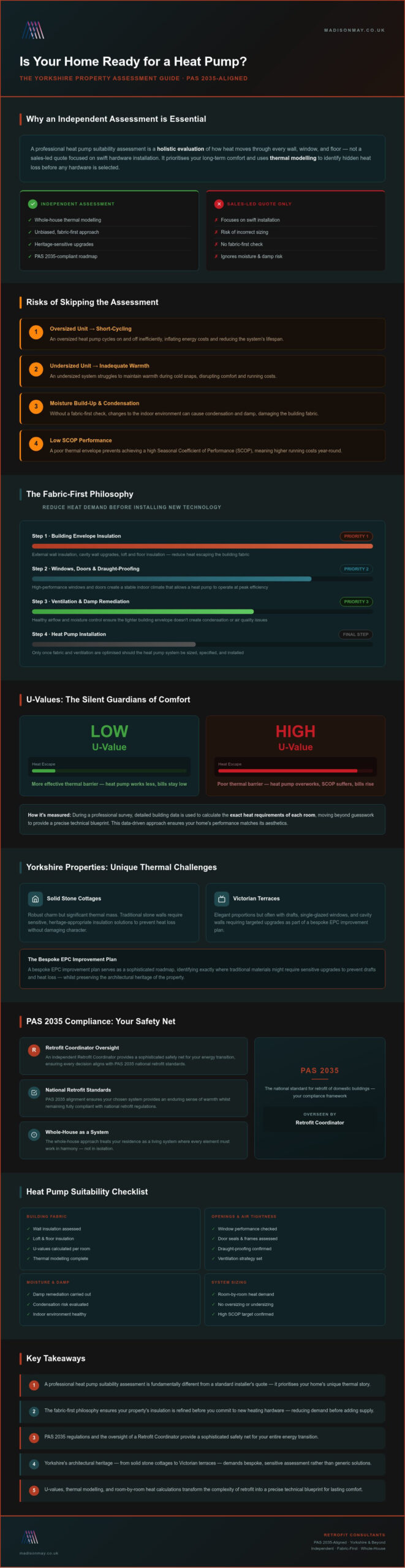
When the assessment stage is bypassed, the risks are often invisible until the first cold snap arrives. An oversized unit may lead to inefficient short-cycling, whilst an undersized system will struggle to maintain warmth, both of which inevitably inflate your energy costs and disrupt the peace of your home. Energy costs rise. Understanding heat pump technology requires acknowledging that these systems operate at lower temperatures than traditional boilers. Without a fabric-first check, you risk moisture build-up and condensation as the internal environment changes, potentially damaging the very aesthetics you’ve worked hard to curate. Ensuring the building fabric is truly heat pump ready is the only way to achieve a high Seasonal Coefficient of Performance (SCOP) and ensure your home remains a dry, healthy sanctuary that provides consistent warmth throughout the seasons.
Yorkshire Properties and the Thermal Challenge
Our regional landscape is defined by its architectural heritage, from the robust charm of solid stone cottages to the elegant proportions of Victorian terraces. These properties possess a distinct character, but they often present unique thermal challenges that standard solutions fail to address. A bespoke EPC improvement plan serves as a sophisticated roadmap, identifying exactly where traditional materials might require sensitive upgrades to prevent drafts and heat loss. The detail matters. By viewing the heat pump suitability assessment Yorkshire residents require as the first step in a transformative journey, you ensure that your home’s heritage is preserved whilst its efficiency is radically reimagined. This process allows you to approach the retrofit with a sense of quiet confidence, knowing that your investment is grounded in the reality of your property’s specific needs rather than a generic template.
The Fabric-First Philosophy: Ensuring Your Property is Thermal-Ready
The fabric-first philosophy is the cornerstone of any successful retrofit, prioritising the reduction of heat demand before the installation of new technology. It’s a principle that respects the architecture of your home, ensuring that every upgrade to the building’s envelope serves a dual purpose: enhancing thermal performance whilst preserving aesthetic integrity. When conducting a heat pump suitability assessment Yorkshire properties are evaluated for their ability to retain warmth, focusing on external house insulation and cavity wall upgrades that act as a protective layer for your sanctuary. High-performance windows and doors, alongside meticulous draught-proofing, create a stable indoor climate that allows a heat pump to operate at its most efficient. This approach ensures that the energy you pay for stays exactly where it belongs, within the heart of your home. Every material is chosen with care, reflecting a commitment to both beauty and functionality that transcends simple utility.
Understanding U-Values and Heat Loss
U-values are the silent guardians of your home’s comfort, measuring the rate at which heat escapes through your walls, floors, and roof. A lower U-value signifies a more effective thermal barrier, which is essential for ensuring your heat pump doesn’t have to work harder than necessary. During a professional survey, detailed building data is used to calculate the exact heat requirements of each room, moving beyond guesswork to provide a precise technical blueprint. This data-driven approach ensures that your home’s refined aesthetics are matched by its invisible performance. By following heat pump suitability guidance from trusted authorities, you can identify which specific areas of your property require attention to achieve a truly harmonious indoor environment.
Ventilation and Damp Remediation
Creating a thermal-ready home requires a delicate balance between airtightness and breathability. As you add insulation and seal draughts, you must also consider a professional ventilation assessment to ensure your indoor air remains fresh and healthy. Compliance with Part F building regulations is not merely a legal checkbox; it’s a vital safeguard against mould and condensation that can arise when a home’s natural airflow is altered. Identifying and resolving existing damp issues is a non-negotiable step that must occur prior to any heating upgrades. This ensures your property remains a healthy refuge for years to come. Engaging with a professional retrofit assessment provides the clarity needed to choose the right materials and ventilation strategies for your home’s specific story, ensuring a seamless transition to sustainable warmth.
Embarking on a transition to renewable energy is a deeply personal journey that requires a clear, curated roadmap to ensure your home remains a sanctuary of comfort. Whilst the technical details may seem complex, viewing them through the lens of a professional heat pump suitability assessment Yorkshire homeowners trust allows for a graceful and informed decision-making process. This checklist serves as your guide, transforming uncertainty into a structured plan for energy efficiency. By engaging with a detailed retrofit assessment, you gain the precise data needed to tick these boxes with absolute confidence, ensuring every material and system choice resonates with your property’s unique story.
Technical and Structural Requirements
The foundation of a successful installation lies in the hidden details of your home’s structure. It’s not merely about the pump itself, but how the existing environment supports its operation. A thorough evaluation focuses on the following technical pillars:
- Thermal Integrity: Your walls, loft, and floors should ideally achieve specific U-values that signify a home capable of retaining its warmth with minimal effort.
- Emitter Performance: Existing radiators or underfloor heating systems must be sized correctly to ensure they can distribute heat effectively at the lower flow temperatures characteristic of heat pump systems.
- Electrical Infrastructure: A thorough check of your fuse board and electrical supply is vital to confirm they can accommodate the load requirements of a modern heating system without compromise.
External and Spatial Considerations
Integrating new technology into a well-designed home requires a delicate balance of functionality and aesthetics. Completing a heat pump suitability assessment Yorkshire properties require ensures that spatial constraints are addressed with visionary creativity, turning technical necessity into a natural extension of your home’s architecture. Key considerations include:
- External Placement: There must be adequate clearance around the external air source unit to allow for optimal airflow and maintenance access, whilst respecting the visual harmony of your outdoor space.
- Internal Sanctuary: Sufficient space within the home is required for the integration of a hot water cylinder and buffer tanks, ideally positioned to maintain the seamless flow of your interior design.
- Acoustic Balance: Careful consideration of the unit’s placement is necessary to respect neighbouring boundaries and maintain the serene atmosphere of your garden refuge.
By addressing these elements with a measured and steady approach, you ensure that your transition to sustainable heating is both a practical success and a meaningful enhancement to your lifestyle.
The evolution of a property requires more than just skilled hands; it demands a rigorous framework that protects the integrity of the building and the peace of mind of its inhabitants. PAS 2035 stands as the definitive quality standard for the UK retrofit industry, ensuring that every energy-efficient measure is considered within the context of the whole house. This standard is particularly vital when conducting a heat pump suitability assessment Yorkshire homes need to remain resilient against the elements. By adhering to these guidelines, homeowners aren’t only guaranteed a higher calibre of craftsmanship but also unlock access to essential government-backed grants and funding that often require such meticulous compliance. Within this framework, the Retrofit Coordinator emerges as a project guardian, an expert who oversees the delicate balance between technical necessity and the homeowner’s personal vision.
The Role of the Retrofit Assessor
The journey begins with the Retrofit Assessor, whose role is to listen to the property’s story through a comprehensive data collection process. They examine the building fabric, the existing services, and the crucial nuances of ventilation to create a complete thermal portrait. This rigorous evaluation informs a meticulous EPC improvement plan, which acts as a strategic roadmap for your home’s enhancement. Their professional authority allows them to identify the most cost-effective and logical sequence of upgrades, ensuring that no detail is overlooked and every investment is intentional. This stage is where the abstract concept of efficiency becomes a concrete plan for your sanctuary.
Project Management and Coordination
Transitioning from a plan to a finished reality requires a level of oversight that only professional coordination can provide. A Retrofit Coordinator ensures that every contractor and material meets the exacting technical standards required for a successful retrofit. This oversight transforms a potentially complex construction project into a measured, steady, and graceful process. It’s about more than just efficiency; it’s about ensuring the final result is a harmonious union of functionality and comfort, where the technical upgrades feel like an effortless part of your home’s identity. If you’re ready to begin this sophisticated transition, you can arrange a PAS 2035-aligned assessment to ensure your project is guided by expert hands from the very start.
Creating a Personalised Energy Roadmap
A personalised energy roadmap provides the structure needed for such a significant undertaking. Operating on a fixed-fee consultancy model ensures the advice you receive is untainted by commission-led motives, positioning your consultant as a trusted ally and curator of your home’s future. This detailed plan doesn’t demand immediate, overwhelming changes. Instead, it allows for a phased approach where improvements are prioritised based on their impact on your comfort and long-term savings. You might choose to refine the building fabric this year and upgrade the heating system the next, moving at a pace that suits your lifestyle. This measured rhythm respects the heritage of your property, ensuring every intervention enhances its enduring quality whilst preparing it for a sustainable future. It’s about building a legacy of efficiency that resonates on a deeply personal level.
Taking the First Step Toward Your Sanctuary
Taking the first step toward creating your sanctuary is an act of visionary creativity. It begins with a consultation where your goals are heard and your property’s true potential is professionally uncovered. There is a profound peace of mind that comes from knowing every detail of your retrofit has been chosen with intentionality. Every choice, from the placement of a vent to the selection of high-performance doors, is part of a larger story of comfort and care. This isn’t merely a home improvement project; it’s the curation of a more resilient, efficient, and beautiful way of living. By engaging with expert guidance, you ensure your transition is as graceful as the home you’ve worked so hard to create. Explore our consultancy services and start your journey today to transform your residence into a modern refuge of warmth and efficiency.
Embrace a Future of Refined Thermal Comfort
Transitioning to a sustainable heating system is a profound investment in the enduring legacy of your home. By prioritising a fabric-first philosophy and understanding the technical nuances of your property’s thermal performance, you ensure that your energy transition is both efficient and deeply comfortable. A professional heat pump suitability assessment Yorkshire residents can rely on provides the clarity needed to navigate these complexities with quiet confidence. Our independent consultancy offers fixed-fee transparency and PAS 2035 compliant reports, ensuring that every recommendation is tailored solely to your property’s unique requirements, free from the pressure of sales bias. This measured, whole-house approach transforms a technical upgrade into a graceful journey toward a more resilient sanctuary. It’s time to move beyond guesswork and embrace a strategy that respects both the heritage and the future of your residence. Begin your property’s transformation with a professional suitability assessment and discover the true potential of your home as a sustainable refuge. Your journey toward a more balanced and efficient lifestyle starts with a single, intentional step.
Frequently Asked Questions
Is a heat pump suitability assessment mandatory for grants?
Yes, a professional evaluation is often a prerequisite for accessing government-backed grants such as the Boiler Upgrade Scheme. These schemes require evidence that the property is suitable for low-carbon heating to ensure public funds are used effectively. By commissioning a heat pump suitability assessment Yorkshire homeowners ensure their project meets the rigorous technical standards required for compliance. This independent survey provides the necessary documentation to support your application whilst guaranteeing that the proposed system will deliver genuine efficiency.
Can a heat pump work in a Yorkshire stone cottage with solid walls?
A heat pump can certainly warm a stone cottage, provided a fabric-first approach is adopted to manage the unique thermal properties of solid walls. These heritage properties often require sensitive insulation upgrades to reduce heat demand before a new system is installed. A professional assessment evaluates the building’s envelope to determine which improvements are necessary to maintain a stable indoor climate. This ensures your home remains a sanctuary of warmth whilst respecting its original architectural character.
What is the difference between an EPC and a Retrofit Assessment?
An Energy Performance Certificate (EPC) provides a high-level rating of a property’s efficiency, whereas a Retrofit Assessment is a much more granular, PAS 2035-aligned evaluation. The latter involves a detailed survey of the building’s fabric, current ventilation, and actual energy use. This deeper insight allows for the creation of a bespoke improvement plan that considers how various measures interact. It’s a more sophisticated tool for those seeking a truly transformative and intentional home upgrade.
How much does a professional suitability survey typically cost?
The investment for a professional suitability survey varies depending on the size and complexity of your property. Rather than a generic quote, you should look for a fixed-fee consultancy model that offers transparency and independence from hardware sales. This ensures the advice you receive is focused entirely on your home’s performance rather than a commission. You’ll receive a detailed report that serves as a strategic roadmap for your energy transition, providing value that outweighs the initial fee.
Will I need to replace all my radiators to install a heat pump?
It isn’t always necessary to replace every radiator, but some may need to be resized to accommodate the lower flow temperatures of a heat pump. Modern heat pumps work most effectively when they have a larger surface area to distribute heat. A suitability survey includes a room-by-room heat loss calculation to identify which emitters are already sufficient and which require a thoughtful upgrade. This ensures your home remains perfectly comfortable even during the coldest winter months.
How long does a full building performance survey take to complete?
A comprehensive on-site survey typically takes between two and four hours to complete, depending on the architectural complexity of your residence. During this time, the assessor meticulously records data regarding the building fabric, existing heating services, and ventilation systems. Following the visit, a detailed technical report is prepared, which involves sophisticated thermal modelling. This measured process ensures that every recommendation is grounded in the reality of your property’s unique story and thermal behaviour.
What happens if my property is found to be unsuitable for a heat pump?
If a property is currently deemed unsuitable, the assessment identifies exactly which fabric improvements are needed to reach the required standard. This isn’t a final rejection but rather the beginning of a curated roadmap for energy efficiency. The resulting EPC improvement plan outlines a cost-effective sequence of upgrades, such as insulation or draught proofing, to prepare your home. This approach ensures that when you do install a heat pump, it operates with the grace and efficiency you expect.
Does a suitability assessment include advice on solar panels and battery storage?
Yes, a holistic suitability assessment considers the entire energy ecosystem of your home, including the potential for renewable generation and storage. As part of a whole-house strategy, your consultant can evaluate how solar panels and battery storage might complement a heat pump to further reduce your reliance on the grid. This ensures that every element of your home’s energy strategy is integrated seamlessly, creating a harmonious union of technology that supports your personal journey toward sustainability.