
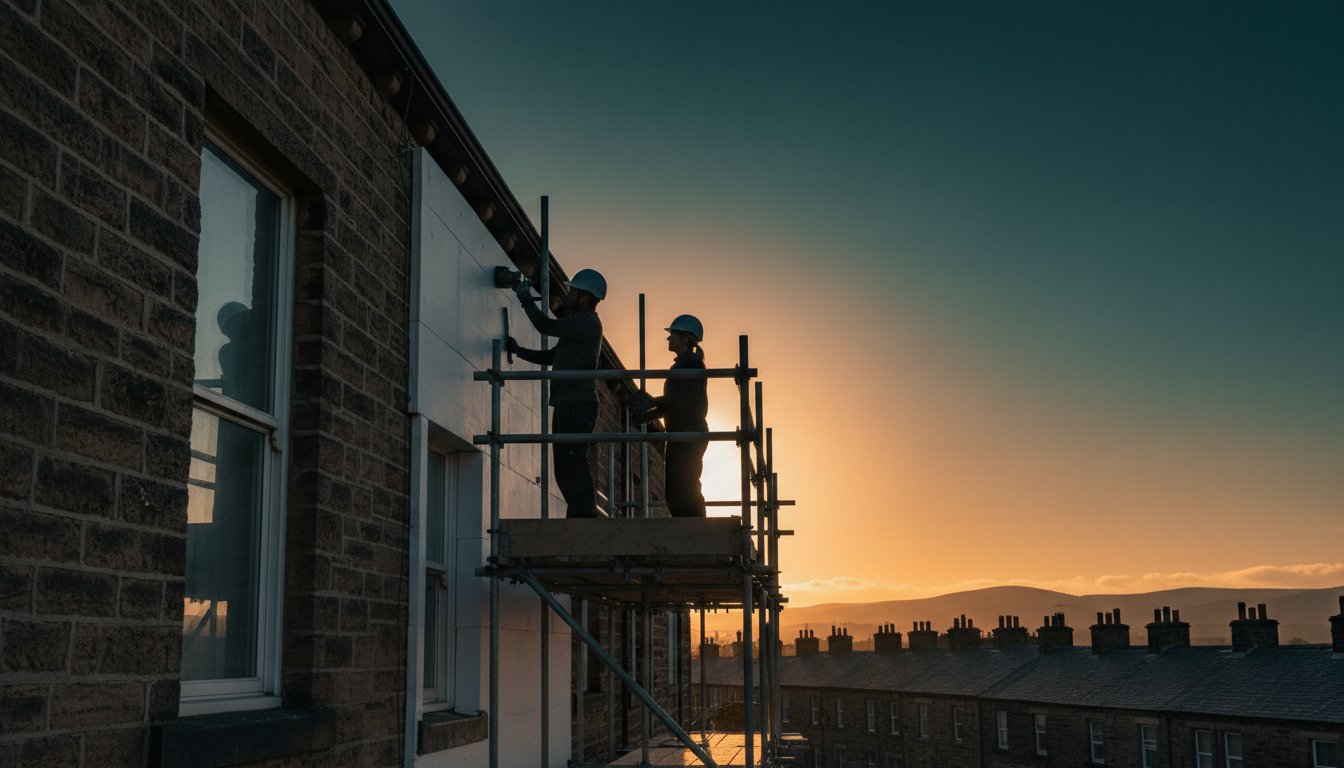
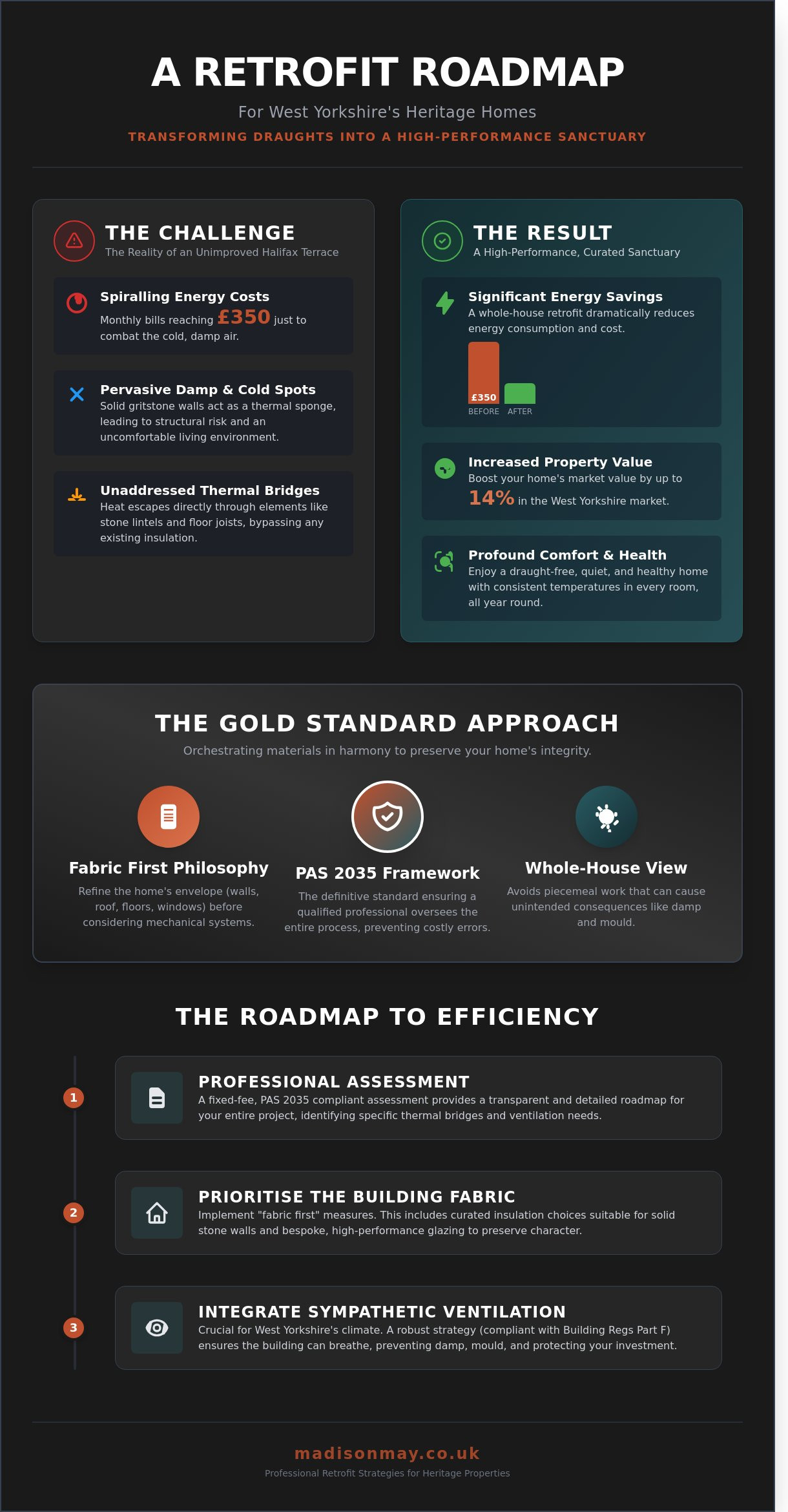
In January 2024, as the relentless Pennine rain lashed against the gritstone of a Halifax terrace, a local homeowner watched their monthly energy costs spiral towards £350 while the internal air remained stubbornly damp. It’s a familiar narrative for those of us in West Yorkshire, where the storied heritage of our architecture often struggles against the raw elements of the moorland. You likely feel that your home should be a sanctuary of warmth rather than a draughty reminder of the rising cost of living. We promise to show you how to transform your property into a high-performance sanctuary through bespoke, professional retrofit strategies that respect the soul of your building while implementing energy efficient home improvements that actually work.
This guide provides a meticulous roadmap for navigating the complexities of PAS 2035 and evolving building regulations, ensuring your investment is protected from the risks of poor ventilation or substandard craftsmanship. We’ll explore how curated insulation choices and sympathetic ventilation can create a seamless integration of modern performance and timeless aesthetics, preparing your property for future rental standards and lasting comfort.
Key Takeaways
- Learn to navigate the unique thermal complexities of Halifax’s heritage properties, ensuring your mill-stone grit or sandstone home remains a warm and enduring sanctuary.
- Discover the “fabric first” philosophy and how the PAS 2035 gold standard guarantees that your energy efficient home improvements are both meticulously planned and expertly executed.
- Understand the art of sequencing your retrofit journey, prioritising high-performance insulation and bespoke glazing to preserve your property’s character while enhancing its thermal soul.
- Explore how a professional, fixed-fee assessment provides a transparent roadmap, allowing you to curate a high-performance home that serves as a seamless reflection of your personal narrative.
The Halifax Heritage: Why Energy Efficient Home Improvements Matter in West Yorkshire
The rugged beauty of West Yorkshire, defined by its undulating hills and historic mill-stone grit, demands more from a home than mere shelter. For those residing in Halifax, energy efficient home improvements represent a curated transition from surviving the elements to thriving within a bespoke sanctuary. These enhancements aren’t simply about insulation; they’re about harmonising a property’s heritage with modern thermal performance. Standard, mass-market fixes often falter against the 1,000mm of annual rainfall and biting winds typical of the Pennine landscape. Instead, the focus shifts toward a whole-house approach to improving a home’s energy efficiency, where every material is chosen for its breathability and its ability to protect the building’s soul. This meticulous planning ensures that the emotional and financial investment results in a home that feels as enduring as the landscape itself.
The Real Cost of Heat Loss in Yorkshire Homes
Traditional sandstone and gritstone properties possess a thermal mass that modern brickwork simply cannot replicate. While a 1990s cavity wall relies on a void to trap air, the solid stone walls of a Victorian terrace act as a thermal sponge, absorbing moisture and losing heat rapidly if not managed with professional care. In Halifax, where winter temperatures frequently hover near 2°C, the financial drain of a leaky home is compounded by the structural risk of damp. Understanding the physics of these buildings is essential for a successful retrofit. In a traditional Halifax terrace, a thermal bridge is a specific point, such as a solid stone lintel or an uninsulated floor joist, where heat bypasses insulation to escape directly into the external environment.
Beyond the Bill: The Lifestyle Benefits of Retrofitting
Investing in energy efficient home improvements creates a profound sense of calm that transcends mere financial savings on a utility statement. A draught-free home becomes a quiet retreat, where the absence of cold spots allows for a more fluid, comfortable use of every room throughout the seasons. This level of craftsmanship can increase property values by up to 14% in the West Yorkshire market, as discerning buyers increasingly seek homes that offer both historical character and contemporary efficiency. It’s about the peace of mind that comes from a dwelling that is as resilient as it is beautiful, providing a sanctuary where the external weather remains a distant, visual backdrop to a warm and curated life.
The Whole-House Approach: Navigating PAS 2035 and Building Physics
Creating a sanctuary begins with understanding the structural soul of a property. Adopting a “fabric first” philosophy ensures that the very envelope of your home is refined before complex mechanical systems are introduced. This meticulous sequence prevents the common tragedy where expensive heating upgrades underperform because heat escapes through unaddressed thermal gaps. When we consider energy efficient home improvements, we aren’t just ticking boxes; we’re orchestrating a symphony of materials that must work in harmony to preserve the building’s integrity.
PAS 2035 serves as the definitive gold standard for this journey. Introduced in 2019, this framework ensures that every retrofit project is overseen by a qualified professional to avoid the pitfalls of “piecemeal” work. Attempting isolated jobs without a master plan often leads to unintended consequences, such as interstitial condensation or cold bridging. Professional coordination ensures that every measure, from high-performance glazing to internal wall insulation, is integrated with the grace and precision your home deserves. For those exploring the financial support for energy efficiency currently available in the UK, adhering to these standards is often a prerequisite for quality assurance and funding eligibility. As the UK government prepares for significant changes in building standards, understanding the future homes standard and its implications for Halifax and West Yorkshire homeowners becomes essential for long-term property planning.
The Ventilation Gap: Preventing Damp and Mould
In the atmospheric climate of West Yorkshire, the breathability of a building is paramount. Adding layers of insulation without a robust ventilation strategy is a significant risk. Building Regulations Part F, updated in June 2022, mandates that energy efficient home improvements must not compromise indoor air quality. If a home becomes too “tight” without adequate airflow, moisture levels can rise by 20% within weeks, leading to damp and mould. We look for subtle signs, such as persistent window condensation or a faint musty scent, to ensure your home remains a healthy, breathable environment.
The Role of a Retrofit Assessor in Halifax
A professional energy efficiency survey in Halifax transcends the basic requirements of a standard EPC. While a traditional EPC provides a generic snapshot, a bespoke retrofit assessment involves a deep dive into the building’s unique narrative. The assessor meticulously collects data on wall thicknesses, floor constructions, and existing services. This data-driven approach allows for a tailored plan that respects the heritage of local stone properties while achieving modern performance. It’s a transition from guesswork to a curated design process that ensures every pound invested delivers a tangible return in comfort and elegance.
Essential Measures for West Yorkshire Properties: Insulation, Windows, and Doors
West Yorkshire’s architectural heritage, from the grand mill-owner villas of Halifax to the sturdy gritstone terrace rows, demands a bespoke approach to energy efficient home improvements. Creating a sanctuary that remains warm during a Pennine winter requires more than just functional upgrades; it necessitates a deep respect for the building’s soul. For many homeowners, the journey begins with a meticulous evaluation of the building envelope. While modern developments in areas like Lindley often feature cavity walls that are easily filled, the traditional solid stone properties of the region require a more nuanced strategy to prevent moisture traps while enhancing thermal retention.
External wall insulation acts as a protective cloak, wrapping the property in high-performance materials that can reduce heat loss by up to 35%. In Halifax, this method is often preferred for properties without decorative stone facades, as it provides a fresh, clean aesthetic while significantly lowering energy bills. However, when the exterior masonry is a defining feature of the home’s narrative, internal wall insulation becomes the preferred path. This involves applying insulated PIR boards or breathable wood fibre to the inner face of the walls. It’s a delicate process that requires careful attention to detail around period cornicing and skirting boards to ensure the room’s proportions remain balanced and elegant.
The financial commitment for these structural changes is often offset by long-term savings and increased property value. Homeowners frequently consult the latest UK government financial support data to understand available grants or low-interest loans for such deep retrofits. In 2024, the cost of external insulation for a typical semi-detached stone home typically ranges from £8,000 to £12,000, but the impact on the home’s comfort and carbon footprint is transformative.
Insulating the Yorkshire Stone Home
Solid stone walls are notoriously difficult to heat. While they offer high thermal mass, they lack the air gap found in modern builds. Adding 270mm of mineral wool to the loft is the most accessible win, potentially saving £285 per year on heating costs. Draught proofing, often overlooked, is a quiet hero of energy efficiency. Sealing gaps around floorboards and sash windows with heritage-grade brushes provides a seamless integration of comfort without compromising the property’s historic charm. For homeowners in newer properties with unfilled cavity walls, understanding the grants for cavity wall insulation available in West Yorkshire can make this highly effective measure far more financially accessible.
Elegant Glazing: U-Values Meet Aesthetic Heritage
Windows are the eyes of a home, and in West Yorkshire, their design must mirror the local architectural language. Achieving high performance doesn’t mean sacrificing beauty. Selecting frames with a U-value of 1.2 W/m²K or lower ensures exceptional heat retention. For period properties, slimline double glazing or vacuum-insulated glass can be fitted into existing timber frames. This allows the original aesthetic to remain intact while providing the thermal sanctuary of a modern build. Triple glazing is increasingly popular in exposed hillside locations, offering a significant reduction in acoustic pollution and heat transfer. For homeowners seeking to understand how to integrate high-performance bespoke windows and doors into a West Yorkshire heritage property without compromising its historic essence, a professional retrofit approach ensures both beauty and thermal performance are achieved in harmony. For homeowners with existing glazed extensions, professional conservatory upgrades can transform these spaces from seasonal compromises into year-round sanctuaries with proper thermal performance.
The Roadmap to Efficiency: Sequencing Your Home’s Transformation
Crafting a home that breathes with ease and retains its warmth requires a rhythmic, intentional approach. In Halifax, where the rugged landscape meets historic architecture, energy efficient home improvements must be sequenced with care to ensure the building’s soul remains intact. This journey begins with a professional PAS 2035 assessment. This meticulous audit moves beyond surface-level checks, providing a bespoke data set that reveals exactly how your specific property interacts with the elements. It’s the essential first step in creating a sanctuary that’s both sustainable and deeply comfortable.
- Step 1: The Assessment. A qualified professional evaluates the thermal performance, identifying heat loss patterns unique to your home’s structure.
- Step 2: The Building Fabric. We prioritise the envelope. By addressing insulation and draught-proofing first, you create a thermal sanctuary that prevents approximately 25% of heat from escaping through the roof.
- Step 3: Ventilation. As we seal the home, we must ensure it breathes. Meticulous ventilation strategies protect the property from damp, preserving the integrity of the materials.
- Step 4: Heating and Renewables. Only once the fabric is secure do we introduce sophisticated technologies like air source heat pumps or solar arrays.
Prioritising Improvements for Maximum ROI
Financial wisdom dictates a “fabric first” philosophy. In West Yorkshire, insulating a typical solid-wall terrace can reduce annual energy bills by approximately £460 according to 2024 Energy Saving Trust data. For landlords, the impetus is even greater. With the UK government proposing that all rental properties reach an EPC C rating by 2030, early investment is a strategic necessity. It balances the upfront cost of energy efficient home improvements against the long-term value of a high-performing, compliant asset. A well-structured EPC improvement plan provides the clarity and sequencing needed to achieve this compliance efficiently, protecting both the property’s character and its financial future. Many homeowners also discover that addressing underutilised spaces, such as implementing comprehensive conservatory upgrades to create year-round living spaces, can significantly enhance both property value and daily comfort.
Project Management and Retrofit Coordination
A professional retrofit coordinator acts as the guardian of your project’s vision. They manage installers with a keen eye for technical excellence, ensuring that every detail aligns with the original design narrative. This oversight prevents common pitfalls, such as thermal bridging or inadequate airflow. The final handover isn’t just a signature; it’s a verification that your home now performs as a seamless, high-efficiency sanctuary. If you’re ready to begin your journey, explore our bespoke consultancy services to guide your transformation.
Curating Your Sanctuary: The Madison May Retrofit Experience in Halifax
At Madison May Consulting Ltd, we view energy efficient home improvements as a meticulous art form rather than a mere construction task. Your home is a sanctuary that deserves a bespoke approach to sustainability, blending technical precision with an aesthetic sensibility that honours the property’s soul. We’ve moved away from the transactional nature of the industry, opting instead for a relationship-driven model that prioritises your personal narrative. Our fixed-fee assessments, which start from £450 for a standard terrace property, provide the professional integrity you expect. There aren’t any hidden commissions or biased recommendations; we simply offer clear, expert guidance rooted in the heart of West Yorkshire.
Our commitment to the Halifax community involves a sophisticated journey through the following pillars:
- Bespoke Thermal Mapping: We use detailed imaging to identify heat loss patterns specific to stone-built Pennine properties.
- Professional Integrity: Our fixed-fee structure ensures our advice remains entirely independent and focused on your best interests.
- Craftsmanship: We advocate for the “whole-house” philosophy, ensuring every intervention works in harmony with your home’s existing materials.
Expertise Rooted in West Yorkshire
Halifax’s unique architectural heritage requires a nuanced touch that generic providers often overlook. With approximately 25% of local housing stock consisting of pre-1919 traditional construction, we focus on how these historic buildings breathe. Our team has supported over 150 homeowners in the Calder Valley since 2019, ensuring that energy efficient home improvements don’t compromise the masonry. We understand the Pennine climate’s challenges, particularly regarding professional damp remediation in West Yorkshire properties and moisture management in Victorian terraces. This local insight ensures your retrofit is effective, preserving the character of your residence while significantly enhancing your daily comfort.
Taking the Next Step Toward Efficiency
Booking your PAS 2035 aligned retrofit assessment is the first step toward a more intentional, high-performance home. This process delivers a bespoke EPC improvement plan that outlines a clear, staged path toward a Band B rating or higher. Our Halifax team offers warm, professional consultations that demystify the technical aspects of heat pumps, solar integration, and high-end insulation. We invite you to contact us for a conversation about your property’s future. Let’s begin the journey of transforming your house into a refined, sustainable sanctuary that reflects your values and your style.
Crafting the Future of Your Halifax Heritage Home
Your residence in Halifax is more than just a structure; it’s a sanctuary that deserves a future as enduring as its storied past. By embracing the whole-house approach defined by the PAS 2035 framework, you ensure that every meticulous change respects the unique building physics of your property. We’ve explored how sequencing energy efficient home improvements prevents the common pitfalls of moisture imbalance, protecting the 100-year-old masonry that defines our local landscape. This journey isn’t merely about technical upgrades. It’s about curating a space where warmth and elegance exist in perfect harmony through our specialist knowledge of West Yorkshire stone properties.
Our fixed-fee professional consultancy provides the clarity you need to navigate these complexities with quiet confidence. Every bespoke plan we create is tailored to the specific narrative of your residence, ensuring that your investment delivers both thermal efficiency and a refined living experience. Before embarking on any retrofit journey, we recommend starting with comprehensive building surveys that understand the unique characteristics of West Yorkshire properties, ensuring your home’s structural integrity is thoroughly assessed. We invite you to begin this transformative artistic journey with a partner who values quality as much as you do. Book your bespoke Retrofit Assessment in Halifax today and take the first step toward a home that feels as beautiful as it looks. Your sanctuary is waiting to be perfected.
Frequently Asked Questions
What are the most effective energy efficient home improvements for a stone house in Halifax?
Breathable internal wall insulation and professional draught proofing for Halifax stone properties are the most effective ways to enhance a Halifax stone property. Research from Historic England indicates that using vapor-permeable materials can reduce heat loss through solid masonry by 35% while protecting the building’s fabric. These meticulous upgrades ensure your home remains a warm sanctuary without compromising the timeless aesthetic of the local Yorkshire stone.
How much can I save on my energy bills with a professional retrofit assessment?
A professional retrofit assessment typically identifies bespoke pathways to save between £300 and £500 on annual energy bills for a standard property. These figures are based on the Energy Saving Trust’s 2023 data for average semi-detached homes in the North of England. By investing in a curated plan, you ensure that every pound spent on energy efficient home improvements delivers a measurable return on your comfort and investment.
Does adding insulation to an old Yorkshire home cause damp and mould?
Adding insulation only causes moisture issues if the property’s ventilation isn’t meticulously balanced with its new thermal layer. The 2019 Each Home Counts review found that damp occurs in less than 2% of installations when high-quality airflow standards are maintained. We focus on a holistic approach that respects the essence of the building, ensuring the air remains fresh and the structure stays perfectly dry.
What is PAS 2035 and why is it important for my home improvements?
PAS 2035 is the UK’s mandatory framework for high-quality energy efficient home improvements, acting as a visionary guide for residential retrofits. Since June 2021, all government-funded projects must adhere to this standard to protect homeowners from poor craftsmanship. It ensures that every detail of your renovation is handled with professional authority, prioritising the long-term health of your home and its occupants.
Are there energy efficiency grants available for homeowners in West Yorkshire?
Homeowners in West Yorkshire can currently access the Home Upgrade Grant (HUG2) and the ECO4 scheme for significant financial support. The West Yorkshire Combined Authority secured £14.9 million in 2023 to help residents improve their property’s thermal performance and reduce carbon emissions. These funds provide a graceful way to transition your home into a more sustainable, high-performance environment without the full burden of the initial cost. Homeowners with eligible cavity walls may also benefit from exploring the full range of grants for cavity wall insulation in West Yorkshire to further reduce the financial commitment of their retrofit journey.
How does a retrofit coordinator help with my home renovation project?
A retrofit coordinator serves as a trusted curator of your project, overseeing the entire journey from the initial assessment to the final handover. They manage the technical risks for the 1.2 million UK homes requiring retrofits annually, ensuring the integration of new technologies is seamless. This role provides a sense of calm and confidence, as a dedicated expert protects the narrative and quality of your home’s transformation.
Can I improve my EPC rating without losing the character of my period property?
You can certainly improve your EPC rating while preserving heritage by using discreet solutions like slim-profile vacuum glazing or breathable loft insulation. These bespoke windows offer a U-value of 0.7, matching the performance of modern triple glazing while fitting perfectly into original 19th-century timber frames. It’s a sophisticated way to blend modern efficiency with the historical soul of a period residence. For a deeper exploration of how to select the right bespoke windows and doors for your West Yorkshire sanctuary without compromising period character, a professional assessment can guide you through the most sympathetic and thermally effective options available.
What is the difference between a standard EPC and a Retrofit Assessment?
A standard EPC is a basic snapshot of energy performance, whereas a Retrofit Assessment is a meticulous, in-depth evaluation of a home’s unique potential. While an EPC survey often takes 45 minutes, a Retrofit Assessment involves a 2-hour technical survey and a detailed occupancy report. This deeper level of detail allows for a truly individualized service, creating a detailed EPC improvement plan that reflects your lifestyle and the property’s specific needs.
Elegant Loft Conversion Halifax: Crafting a Sustainable Sanctuary – Madison May
August 20, 2026[…] ecosystem. This balance is a cornerstone of successful loft conversion Halifax projects and broader Energy Efficient Home Improvements: A Guide, positioning your conversion as a sustainable sanctuary that protects both the building fabric and […]
U-Value Building Regulations UK: A Guide to Thermal Excellence in 2026 – Madison May
August 21, 2026[…] a refuge that remains resilient as the climate and energy landscape shift. We invite you to explore energy efficient home improvements through a professional consultation, where your vision for a high-performance sanctuary can finally […]
The Whole House Retrofit Approach: A Meticulous Journey to Home Performance – Madison May
August 22, 2026[…] choice between internal and external house insulation depends heavily on the architectural heritage and structural composition of the property. External […]
Damp Remediation: Restoring the Breathability and Integrity of Your Home – Madison May
August 28, 2026[…] proofing to masonry repair, is installed to the highest standards. Adopting a phased approach to energy efficient home improvements prevents the common pitfalls where new insulation inadvertently causes ventilation issues. This […]
Energy Efficient Windows: A Bespoke Guide to Thermal Elegance and Home Sanctuary – Madison May
August 28, 2026[…] unintended consequences of isolated upgrades. For those seeking a broader perspective, our guide on energy efficient home improvements in Halifax: a West Yorkshire guide offers further insight into creating a sustainable sanctuary. Let Madison May Consulting Ltd help […]
Loft Ventilation Regulations UK: 2026 Definitive Guide – Madison May
August 30, 2026[…] standards, ensuring that one enhancement never comes at the cost of another. When you invest in energy efficient home improvements, you’re essentially tightening the thermal envelope of your property. Whilst this is vital […]
Common Retrofit Mistakes: How to Protect Your Property and Investment in 2026 – Madison May
August 31, 2026[…] begins, a Retrofit Coordinator serves as your dedicated guardian, overseeing the quality of all energy efficient home improvements to ensure they perform exactly as intended. This layer of professional oversight ensures that the […]
Retrofit Assessment Reports: A Guide for Homeowners – Madison May
September 2, 2026[…] the true magic occurs when these findings are translated into action through professional retrofit coordination. This process takes the forensic data collected and shapes it into a living strategy; it’s […]
Professional Home Energy Efficiency Survey Guide – Madison May
September 16, 2026[…] Sealing a house to save energy without a proper ventilation assessment is a dangerous mistake. The relationship between airtightness and indoor air quality is a delicate balance where every measure taken to seal a home must be matched by a calculated strategy for fresh air circulation. Without this intentional flow, moisture from daily activities becomes trapped, leading to damp and mould that can ruin both your decor and your health. A professional survey identifies these hidden risks early. You can explore our detailed approach to this in our damp remediation pillar. […]
Air Source Heat Pump Cost UK: A Comprehensive Guide to Investment and Efficiency in 2026 – Madison May
September 17, 2026[…] increases both the initial capital investment and the subsequent running costs. By prioritising energy efficient home improvements, you ensure that your heating system works in harmony with your home rather than in a perpetual […]
Cost of Improving EPC Rating UK: A Definitive 2026 Guide to Property Enhancement – Madison May
September 17, 2026[…] compromising existing features. For those seeking more detailed regional insights, our guide to energy efficient home improvements offers a closer look at these essential […]
Damp in Solid Walls in Leeds: Moisture Management Guide – Madison May
September 18, 2026[…] brick is touched, a professional assessment is vital. Every successful remediation begins with a retrofit assessment to understand the unique story of the building. We start by addressing the “lowest hanging […]
Heat Pump Suitability Assessment in Yorkshire: An Expert Checklist for Your Home – Madison May
September 19, 2026[…] transforming uncertainty into a structured plan for energy efficiency. By engaging with a detailed retrofit assessment, you gain the precise data needed to tick these boxes with absolute confidence, ensuring every […]
The Essence of Unbiased Retrofit Consultancy: Elevating Home Performance – Madison May
September 21, 2026[…] is the cornerstone of any successful energy efficient home improvements strategy. In the complex world of modern construction, an independent consultant acts as your […]
TrustMark Registered Retrofit Companies: How to Choose Accredited Specialists – Madison May
September 22, 2026[…] interventions remain sympathetic to original stone and lime detailing. Review our insights on energy efficient home improvements to understand how holistic planning creates a warm, breathing environment that stands the test of […]
Do New Windows Save Money on Energy Bills? A Complete Guide – Madison May
September 24, 2026[…] performance flourishes when you integrate replacement glazing into an orchestrated programme of energy efficient home improvements, uniting the building fabric into a continuous, draught-free […]
Room in Roof Insulation Regulations UK: The Definitive 2026 Guide – Madison May
September 25, 2026[…] a single solution, our focus is on the long-term integrity of your home’s fabric. A professional Retrofit Assessment acts as the essential first step, peeling back the layers of your property’s current […]
Visionary Homebuyer’s Guide: Pre-purchase Retrofit Surveys – Madison May
September 25, 2026[…] orientation and potential solar gain, the report outlines a graceful, phased path for future energy efficient home improvements. Selecting the correct upgrades for a specific property type requires a thoughtful expert who […]