


What if that musty odour lingering in your home is more than just an annoyance? In West Yorkshire, where the climate can be particularly damp, homeowners often grapple with persistent damp patches that not only mar the beauty of their interiors but also pose serious health risks due to mould growth. You’re not alone in feeling overwhelmed by these challenges; many share your concerns. In this comprehensive guide to damp remediation, we will explore effective solutions tailored specifically for the unique environmental conditions of West Yorkshire. You will discover both cost-effective remedies and the merits of professional assistance versus DIY options, ensuring your sanctuary remains healthy and damp-free. Join us as we delve into the essentials of creating a serene, inviting space that reflects your personal story, free from the burdens of dampness.
Key Takeaways
- Understand the unique climate challenges in West Yorkshire that contribute to damp issues in homes, such as discoloured walls and musty odours.
- Learn how to effectively identify the source of damp in your property by conducting a thorough damp survey, ensuring you know what to expect.
- Discover essential DIY damp remediation techniques, including the materials needed and step-by-step instructions to tackle minor damp problems.
- Recognise the signs that indicate when professional intervention is necessary, along with the benefits of expert damp proofing services.
- Implement long-term maintenance strategies to keep your home damp-free, focusing on regular ventilation and insulation checks for lasting results.
Understanding Damp Issues in West Yorkshire Homes
Dampness is a pervasive concern for homeowners in West Yorkshire, a region characterised by its humid climate and variable weather patterns. The combination of rain, fog, and temperature fluctuations creates an environment where moisture can easily infiltrate homes, leading to a range of damp-related issues. Such conditions render the area particularly susceptible to various forms of damp, compelling homeowners to seek effective damp remediation solutions.
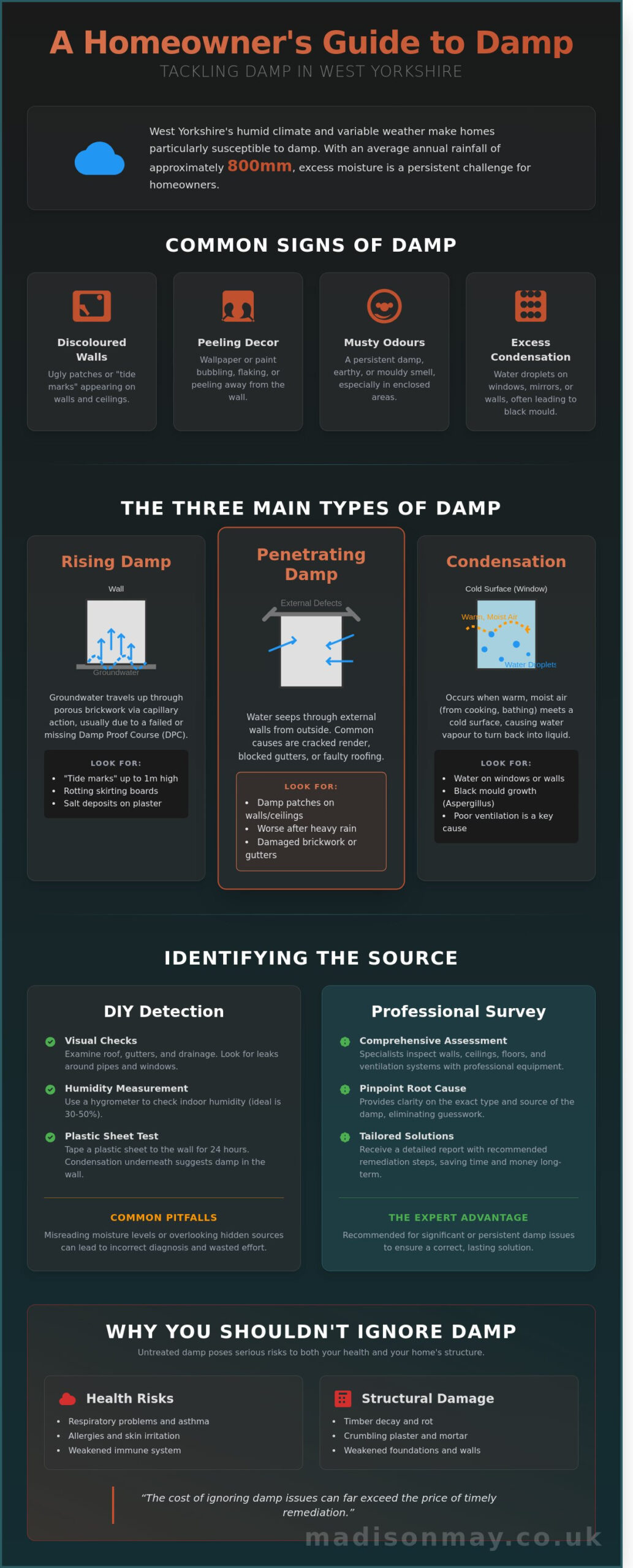
Common signs of damp can manifest in several ways, including:
- Discoloured walls and ceilings
- Peeling wallpaper or paint
- Musty odours
- Condensation on windows and surfaces
Recognising these indicators early can help mitigate further damage and maintain a healthy living environment.
The local climate significantly contributes to these damp problems. With an average annual rainfall of approximately 800mm, West Yorkshire experiences consistent moisture that can seep into homes. Coupled with the region’s historical architecture, which often features solid walls and minimal insulation, moisture control becomes a pressing issue. Certain areas within homes, such as basements, ground floors, and poorly ventilated spaces, are particularly prone to damp.
Types of Damp Commonly Found
Understanding the different types of damp is essential for effective remediation:
- Rising Damp: This occurs when groundwater rises through the walls of a property due to capillary action. It is often identified by a characteristic ‘tide mark’ on walls.
- Penegrating Damp: This type arises from water entering through external walls, typically due to faulty roofing, cracked brickwork, or poor drainage.
- Condensation: Often a result of insufficient ventilation, condensation occurs when warm, moist air meets cooler surfaces, leading to water droplets forming.
Why Damp Should Not Be Ignored
Ignoring damp issues can have serious ramifications. Health risks associated with mould can include respiratory problems, allergies, and other illnesses, particularly for vulnerable individuals such as children and the elderly. Ensuring your environment supports your health is a key pillar of wellness, much like seeking specialized care from an ED Health Clinic, the comprehensive services offered by the Houston Medical Wellness Clinic, or accessing a free neuropathy phone consultation. Moreover, untreated damp can lead to significant structural damage, weakening walls and foundations over time. As industry experts often advise, “The cost of ignoring damp issues can far exceed the price of timely remediation.” Investing in immediate solutions can save homeowners from greater financial burdens in the future.
Identifying the Source of Damp in Your Property
Understanding the source of damp in your home is crucial for effective damp remediation. Identifying the underlying issues can prevent further damage and enhance your living environment. Here are steps to help you determine the cause of dampness in your property.
Begin by observing the visible signs of damp, which may manifest as discoloured patches on walls, peeling paint, or a musty smell. Pay close attention to areas that are prone to moisture accumulation, such as basements and bathrooms. A systematic approach will yield the best results:
- Check for external factors: Examine your roof, gutters, and drainage systems for blockages or damage that may lead to water ingress.
- Inspect your interior: Look for leaks around pipes, radiators, and windows. Ensure that sealants are intact to prevent moisture penetration.
- Consider humidity levels: Use a hygrometer to measure indoor humidity, which should ideally be between 30-50%.
For a comprehensive assessment, consider conducting a damp survey. This professional evaluation can pinpoint the source of damp and recommend appropriate remediation measures. A damp survey typically includes a detailed examination of the following areas:
Professional Damp Surveys: What to Expect
A professional damp survey is an essential step in your damp remediation journey. Trained specialists will assess various areas in your home, including:
- Walls and ceilings: Looking for signs of rising damp or penetrating damp.
- Floors: Checking for dampness beneath floorboards or in basements.
- Ventilation: Evaluating the adequacy of air flow in your home.
The benefits of a comprehensive survey are manifold. Not only does it provide clarity on the root cause of damp, but it also offers tailored solutions, which can save you time and money in the long run.
DIY Damp Detection Methods
For homeowners keen to take a proactive approach, DIY methods can supplement professional assessments. Tools such as moisture meters and thermal imaging cameras can effectively identify damp areas. A simple moisture test can be conducted by:
- Sealing a plastic sheet against the wall with tape for 24 hours. If condensation forms beneath, dampness is likely present.
However, be cautious of common pitfalls in DIY detection. Misreading moisture levels or overlooking hidden damp areas can lead to misdiagnosis, potentially exacerbating the problem. If you suspect significant damp issues, it may be wise to engage a professional.
Taking the right steps to identify and address damp sources is fundamental in ensuring your home remains a sanctuary. Should you need assistance with damp remediation, explore our expert services to guide you on this journey.
DIY Damp Remediation Techniques
Addressing damp issues in your West Yorkshire home doesn’t always require professional intervention. With some basic materials and a bit of effort, you can tackle minor damp remediation effectively. Here, we outline essential materials, step-by-step techniques, and preventive measures to improve your home’s condition.
Before starting, gather the following materials:
- Sealants (silicone, acrylic, or polyurethane)
- Damp-proof paint
- Insulation material (foam boards or mineral wool)
- Cleaning solutions (bleach or vinegar)
- Protective gear (gloves, mask, goggles)
To address minor damp issues, follow these steps:
- Identify the Source: Look for visible signs of dampness, such as discoloured walls or peeling paint.
- Clean the Area: Remove any mould or mildew using a cleaning solution. Ensure the area is dry before proceeding.
- Seal Cracks and Leaks: Apply sealant to any identified cracks or gaps in walls and around windows to prevent moisture ingress.
- Apply Damp-Proof Paint: Once the area is sealed, use damp-proof paint to protect against future damp issues.
Improving ventilation is another crucial aspect of damp remediation. Adequate airflow helps reduce humidity levels, making it harder for damp to take hold. Simple upgrades can transform your home’s atmosphere:
- Open windows regularly to encourage air circulation.
- Install extractor fans in kitchens and bathrooms, where moisture tends to accumulate.
- Consider using a dehumidifier in particularly damp rooms.
For further guidance on ventilation standards, refer to A Homeowner’s Guide to Part F Building Regulations in West Yorkshire.
Sealing and Insulating: First Line of Defence
Ventilation Solutions for Damp Prevention
Improving home ventilation can significantly mitigate damp issues. Aside from opening windows, consider installing trickle vents or using air bricks to maintain airflow throughout your home. These methods help to lower humidity levels, thereby reducing the chances of damp developing. If you are also troubled by condensation on windows in your West Yorkshire home, improved ventilation is one of the most effective first steps you can take. For a thorough understanding of how your property’s airflow contributes to damp, a professional ventilation assessment in Halifax can identify the precise causes and recommend bespoke solutions. A well-maintained climate control system also plays a vital role in regulating indoor air; for an example of how professional HVAC services optimize residential environments, check out Christensen Heating and Cooling.
When working in damp areas, safety should be paramount. Wear protective gear to avoid exposure to mould spores and ensure the area is adequately ventilated during the remediation process. Following these techniques not only addresses existing damp but also creates a more pleasant living environment, allowing your home to truly reflect its essence as a sanctuary. It is also worth considering that poorly fitted or single-glazed windows and doors are a common source of draughts and moisture ingress in West Yorkshire’s older stone-built properties, and upgrading to high-performance bespoke options can form an important part of your damp prevention strategy.
For homeowners who prefer to delegate these maintenance tasks, a professional service like Local Fishing Handyman LLC offers the expertise needed to handle sealing, insulating, and other essential repairs that keep dampness at bay.
When to Call in the Professionals
Homeowners in West Yorkshire may often overlook the subtle signs of damp and mould until they develop into serious issues. Knowing when to call in the professionals for damp remediation can save both time and money. If you notice persistent musty odours, peeling wallpaper, or unsightly mould spots, these are clear indicators that professional intervention is necessary. Furthermore, if dampness has led to structural damage, such as rotting timber or crumbling plaster, immediate action is imperative.
Engaging a professional damp specialist can transform your home into a sanctuary, free from the perils of dampness. The process typically begins with a thorough inspection, where experts utilise advanced technology to identify the source of the damp. Following this, they will propose a tailored remediation plan, which may include various techniques such as chemical damp-proof courses (DPCs) or tanking systems. The advantages of opting for professional damp proofing are manifold; not only does it ensure a comprehensive solution, but it also often comes with guarantees that provide peace of mind.
Cost considerations are essential when seeking professional help. While damp remediation can range from £500 to £3,000 depending on the severity and methods required, investing in professional services can prevent more costly repairs down the line. It is wise to obtain quotes from multiple providers and understand what to expect from their services. This includes checking for warranties, timelines, and follow-up support.
Choosing the Right Damp Specialist
Selecting a reputable damp specialist is crucial. Look for the following criteria:
- Experience in the field of damp remediation.
- Certifications from recognised industry bodies, such as the Property Care Association (PCA).
- Insurance coverage that protects your home during the process.
When interviewing potential providers, consider asking these questions:
- What methods do you recommend for my specific damp issue?
- Can you provide references from previous clients?
- What guarantees do you offer on your work?
Understanding Professional Damp Proofing Techniques
Professional damp remediation encompasses various techniques, each with its pros and cons. Chemical DPC involves injecting a damp-proofing solution into walls to create a barrier against moisture, ideal for rising damp. Tanking, on the other hand, is a process used for waterproofing basements and involves applying a waterproof membrane. While chemical DPC is less intrusive, tanking can be more effective for severe damp conditions. An example of successful remediation is a historic property in Halifax, where a combination of tanking and ventilation improvements eliminated chronic damp issues, restoring the home to its former glory.
For a deeper understanding and further assistance with your damp concerns, consider exploring Comprehensive Building Surveys in Halifax: Crafting Your West Yorkshire Sanctuary. By collaborating with knowledgeable professionals, you can ensure your home remains a serene retreat, free from the challenges of damp and mould.
Take the first step towards a healthier home by contacting us today.
Maintaining a Damp-Free Home: Long-Term Solutions
To ensure a lasting solution to damp issues, it is essential to adopt a proactive approach. Regular maintenance tasks play a pivotal role in preventing the recurrence of damp while fostering a healthy living environment. This involves creating a routine that prioritises ventilation, insulation checks, and seasonal assessments, all aimed at safeguarding your sanctuary from the perils of moisture and mould.
Seasonal Maintenance Tips
Each season presents unique challenges that can contribute to damp issues. By conducting specific maintenance tasks, you can fortify your home against the elements:
- Winter: Focus on insulating pipes and checking for drafts. Ensure that gutters are clear to prevent ice build-up, which can lead to water ingress.
- Spring: Inspect areas prone to condensation, such as bathrooms and kitchens. Address any signs of rising damp in basements or lower walls, as moisture often becomes more prominent with the thawing of winter.
- Summer: Enhance ventilation by opening windows and utilising fans. Consider installing trickle vents to maintain airflow, reducing the risk of stagnant moisture.
Regular checks for signs of damp-such as peeling paint, musty odours, or mould growth-should be integrated into your seasonal routine. Early detection of these indicators can be pivotal in executing effective damp remediation, saving time and resources in the long run.
Integrating Damp Prevention in Home Renovations
When embarking on home renovations, it is vital to integrate damp prevention strategies into your design choices. Start by selecting materials that offer natural resistance to moisture. For instance, consider using breathable paints and water-resistant wall boards that can help mitigate damp issues. Additionally, opting for solid wood floors rather than carpets can aid in moisture control, as wood does not absorb damp as easily. Renovation projects also present an ideal opportunity to assess your bespoke windows and doors, as upgrading to thermally efficient, well-sealed units can dramatically reduce moisture ingress and draughts in West Yorkshire’s heritage properties.
As you plan your refurbishments, think about how your choices can enhance your home’s resilience against moisture. Incorporating damp-resistant materials not only preserves your living space but also contributes to a more energy-efficient home. If you are considering a broader retrofit project, it is worth understanding how the PAS 2035 framework for West Yorkshire home retrofit can safeguard your property from moisture-related risks introduced by poorly executed energy improvements. For further insights, explore our detailed guide on Energy Efficient Home Improvements in Halifax: A West Yorkshire Guide. Homeowners who want to take a structured approach to reducing energy costs while managing moisture risks may also benefit from following a tailored EPC improvement plan for their West Yorkshire property, which sequences insulation and ventilation upgrades to protect both comfort and building fabric.
In summary, maintaining a damp-free home is a continuous journey of awareness and action. By committing to regular maintenance and making informed choices during renovations, you can protect your home from damp issues, ensuring it remains a tranquil sanctuary for years to come.
Embrace a Damp-Free Future
Addressing damp issues in your West Yorkshire home is essential for creating a sanctuary that reflects your true self. By understanding the sources of damp, implementing DIY remediation techniques, and knowing when to enlist professional help, you can effectively combat these challenges. The journey doesn’t end there; maintaining a damp-free environment is key to preserving your home’s integrity and comfort.
For expert guidance tailored to your unique needs, discover professional damp remediation services in West Yorkshire with Madison May Consulting Ltd. Our team is dedicated to providing bespoke solutions, ensuring compliance with PAS 2035 standards for West Yorkshire retrofits, and offering comprehensive retrofit assessments by regional damp specialists.
Take the first step towards a healthier home today; your sanctuary awaits.
Frequently Asked Questions
What are the most common signs of damp in a home?
The most common signs of damp include discolouration on walls, peeling paint, and a musty odour. You may also notice black mould growth in corners or around windows. Additionally, if you experience condensation on surfaces or increased humidity levels, these can indicate underlying damp issues that require attention.
Can I solve damp problems myself without professional help?
While minor damp issues can sometimes be addressed with DIY solutions, such as improving ventilation and using dehumidifiers, significant damp problems often require professional damp remediation. Assessing the root cause of damp-whether it’s rising damp, penetrating damp, or condensation-is crucial, and a professional can provide tailored solutions.
How much does professional damp proofing typically cost in West Yorkshire?
Professional damp proofing services in West Yorkshire generally range from £400 to £1,500, depending on the extent of the problem and the required treatment. A comprehensive survey is often necessary to determine the best course of action and associated costs, ensuring that the damp issues are effectively resolved.
What is the difference between damp proofing and waterproofing?
Damp proofing is a method designed to prevent moisture from entering the walls and floors of a property, typically through chemical treatments or membranes. Waterproofing, on the other hand, focuses on creating a barrier to water ingress, often used in basements or below ground level. Both techniques aim to protect your home from damp-related issues.
Are there any government grants for damp remediation?
Currently, there are no specific government grants solely for damp remediation in the UK. However, funding may be available through local councils for energy efficiency improvements, which can indirectly address damp issues. It’s advisable to check with your local authority for any applicable schemes or support.
How does damp affect my home’s structural integrity?
Damp can significantly compromise a home’s structural integrity by weakening walls, ceilings, and foundations over time. Prolonged exposure to moisture can lead to timber decay, rusting of metal fixtures, and ultimately, costly repairs. Addressing damp issues promptly is essential to preserving the longevity and safety of your home.
What are the health risks associated with living in a damp home?
Living in a damp home poses various health risks, including respiratory issues, allergies, and skin irritations. Prolonged exposure to mould can lead to severe conditions such as asthma or other chronic respiratory diseases. It’s crucial to address damp remediation to create a safe and healthy living environment.