

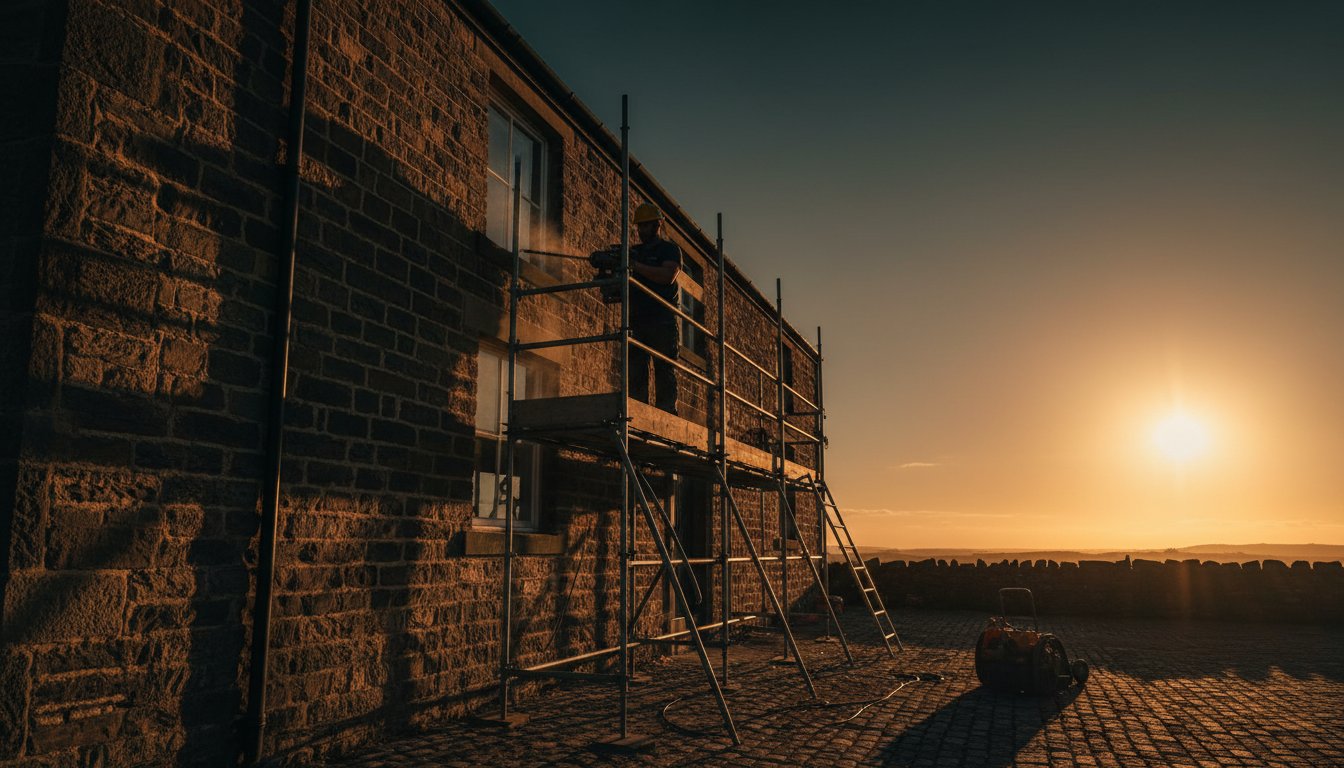
Imagine standing in a beautifully curated living room in West Yorkshire, where the aesthetic charm of traditional stone is betrayed by a persistent, creeping chill that no amount of heating can quite subdue. You aren’t alone in this experience; the Energy Saving Trust notes that 33% of a home’s heat is lost through uninsulated walls, making the search for grants for cavity wall insulation a vital priority for those seeking both comfort and efficiency. You likely feel that your home should be a sanctuary of warmth and calm, yet the intricate nature of government schemes often creates a barrier to achieving that vision.
This guide illuminates the path to securing funding, ensuring your property remains a healthy, energy-efficient retreat through a lens of professional retrofit guidance. We’ll clarify the distinctions between ECO4 and the Great British Insulation Scheme (GBIS) for 2024, providing the meticulous assurance you need to protect your home’s structural integrity from the threat of damp. By the end of this journey, you’ll understand how to blend modern thermal performance with the timeless character of your residence, creating a space that resonates with a sense of quiet, lasting calm.
Key Takeaways
- Identify if your West Yorkshire property meets the 2026 eligibility criteria, focusing on the specific EPC ratings and income tiers required to access essential funding.
- Learn how to navigate the technical nuances of insulating traditional stone-faced homes, ensuring your thermal sanctuary remains healthy and free from damp.
- Discover the meticulous steps for securing grants for cavity wall insulation, from initial self-assessment to the engagement of a professional retrofit consultant.
- Explore how to integrate insulation into a curated home improvement strategy that balances modern efficiency with a commitment to craftsmanship and heritage.
The 2026 Landscape of Grants for Cavity Wall Insulation in West Yorkshire
The rolling hills and historic stone architecture of West Yorkshire provide a breathtaking backdrop for life, yet they also present unique challenges for maintaining a temperate, inviting home. In 2026, the availability of grants for cavity wall insulation has become a vital resource for homeowners in Halifax and the surrounding valleys. These funding initiatives aren’t merely administrative responses to energy crises; they’re the cornerstone of a regional movement to eradicate fuel poverty and align our heritage homes with the UK’s 2050 carbon neutrality targets. As we move through the final stages of the Great British Insulation Scheme (GBIS), the focus has shifted toward a more meticulous, site-specific approach to home energy health.
Properties in West Yorkshire require a nuanced understanding of masonry and moisture. Before committing to an upgrade, it’s essential to understand the technical essence of what is cavity wall insulation and how it functions within the specific context of Pennine weather patterns. Unlike standard suburban builds in the south, our local homes often face high exposure to driving rain, meaning the choice of material and the quality of the installation must be handled with visionary care to ensure the home remains a dry, breathable sanctuary.
Major Funding Streams: ECO4 and GBIS Explained
ECO4 stands as the primary mechanism for low-income and vulnerable households in 2026, focusing on a holistic transition to energy efficiency. For those in the ‘General Group’ who don’t meet the stricter ECO4 criteria, the Great British Insulation Scheme offers a curated path toward single-measure improvements. Local West Yorkshire councils, particularly Calderdale and Kirklees, frequently augment these national streams with Local Authority Flex (LA Flex) funding. This allows for a more personal touch, extending eligibility to residents who may fall outside standard brackets but face high heating costs due to the unique narrative of their property’s age and location.
Why Halifax Homeowners are Prioritising Insulation Now
The damp, rhythmic winds that sweep through Halifax can quickly turn an uninsulated house into a source of constant discomfort. By securing grants for cavity wall insulation, residents aren’t just saving money; they’re investing in the longevity of their home’s soul. Financial data from early 2026 suggests that a typical semi-detached home in the region can reduce annual energy expenditure by approximately £285. This immediate relief is paired with the long-term aesthetic and functional value of a professionally insulated space. It transforms a drafty house into a thermal sanctuary where the warmth is felt, not just measured, creating a seamless integration of modern efficiency and timeless comfort.
Eligibility Criteria: Do You Qualify for Funding?
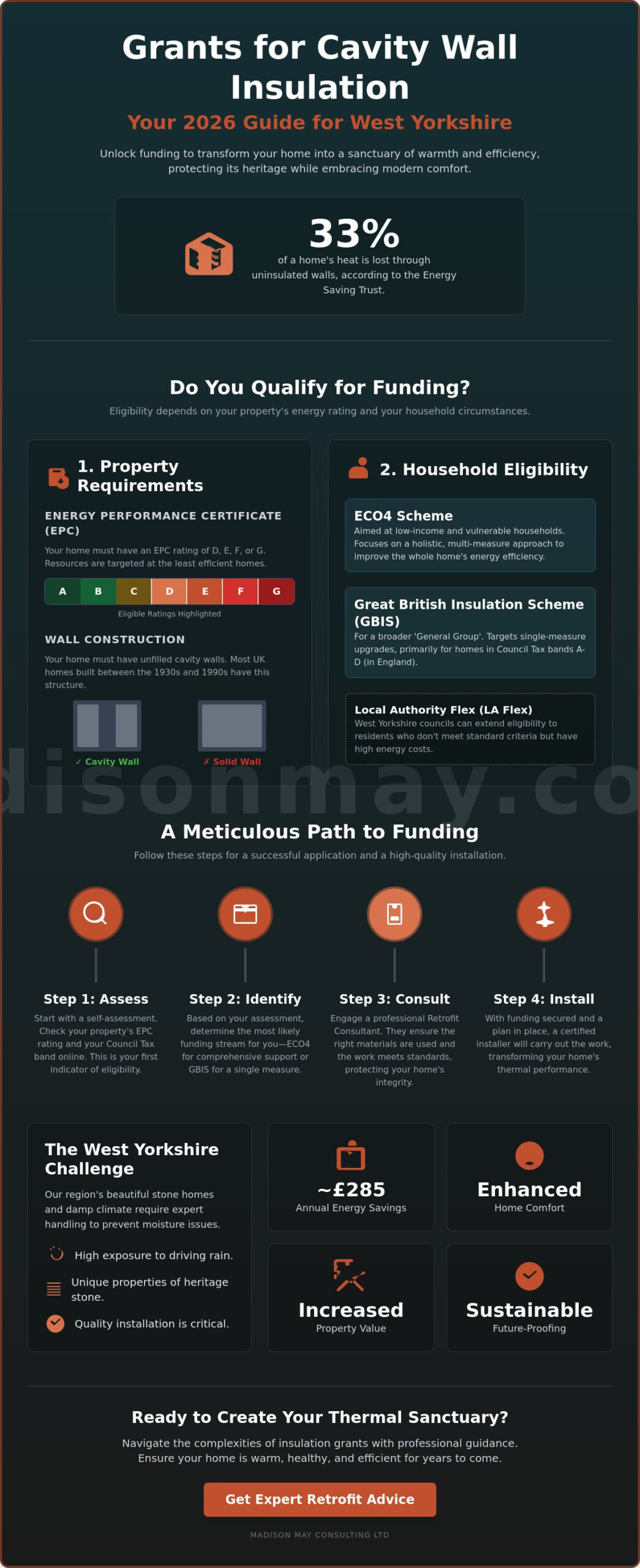
Securing grants for cavity wall insulation requires more than a simple desire for a warmer home; it involves a meticulous alignment with specific governmental and environmental standards. The current funding landscape, extending towards 2026, distinguishes between the ‘Low Income’ and ‘General’ eligibility groups. To qualify, your residence must possess an Energy Performance Certificate (EPC) rating of D, E, F, or G. This ensures that resources are directed toward homes where the thermal transformation will be most profound, turning drafty spaces into curated sanctuaries of comfort.
In West Yorkshire, the architectural heritage presents unique considerations. Many properties crafted from local gritstone or sandstone may appear solid, yet they often contain the necessary void for insulation. Identifying a true cavity is essential. While solid stone walls require different treatments, many post-1930s builds in towns like Huddersfield or Halifax feature traditional cavities hidden behind a heritage facade. For landlords, accessing these funds helps meet the Minimum Energy Efficiency Standards (MEES), which currently mandate a minimum EPC rating of E for private rentals, though higher targets are anticipated by 2030.
The ‘General Group’ and Council Tax Banding
The Great British Insulation Scheme focuses on the ‘General Group,’ which targets households in lower Council Tax bands. In England, homes within bands A to D are typically eligible for support. Residents across Leeds, Bradford, and Wakefield can verify their specific band through their local authority’s digital portal. For those living in the more isolated reaches of the Pennines, certain rural exceptions might apply, as these properties often face harsher climatic conditions and higher heating demands than their urban counterparts.
Income-Related Benefits and ECO4 Access
The ECO4 scheme remains the primary route for low-income households, providing comprehensive grants for cavity wall insulation to those receiving specific benefits. These include Universal Credit, Pension Credit, and Child Benefit, provided the household income falls below specific caps. If you don’t receive these benefits but still struggle with energy costs, the ‘LA Flex’ route allows West Yorkshire councils to nominate households in fuel poverty for funding. This ensures that the warmth of a well-insulated home isn’t restricted by rigid administrative boundaries.
The journey toward a more efficient home begins with a professional Retrofit Assessment. This evaluation serves as the definitive proof of your property’s needs and eligibility. It’s a thoughtful first step in ensuring your home reflects the quality and care you value. If you’re ready to explore how these criteria apply to your unique space, you can begin your assessment journey today.
The West Yorkshire Challenge: Ensuring Quality in Traditional Properties
The West Yorkshire landscape, defined by its rugged millstone grit and historic sandstone, presents a unique architectural narrative that requires a gentle, expert hand. For homeowners in Halifax and Huddersfield, the primary hesitation when exploring grants for cavity wall insulation isn’t the financial investment, but a deep-seated concern for the building’s long-term health. There’s a pervasive fear that filling these voids will invite damp and mould into a cherished stone sanctuary. This isn’t merely an emotional response; it’s a technical reality rooted in the way our heritage properties were constructed.
Stone-faced cavities common across the Pennines are rarely uniform or clean. Debris or mortar “snots” trapped during original construction can create physical bridges where moisture travels from the outer leaf to the inner wall. When a home is insulated without a meticulous assessment, these bridges become conduits for moisture. The reality is that “free” insulation offered by high-volume installers can become incredibly costly if the building’s breathability is compromised. We’ve seen instances where poorly managed retrofits resulted in remediation costs exceeding £3,500 to rectify internal wall damage.
The Ventilation Gap: Avoiding Post-Insulation Damp
When we seal a home to retain its warmth, we inadvertently trap the moisture generated by the simple rhythms of daily life. Without a curated approach to airflow, this leads to persistent condensation. Our philosophy dictates a strict adherence to Approved Document F of the Building Regulations, which mandates that any increase in a building’s airtightness must be balanced with improved, intentional ventilation. It’s why we believe a professional Damp Remediation survey should always precede any insulation work. This ensures the structural integrity of your home is preserved before any thermal measures are introduced, maintaining the delicate equilibrium between comfort and conservation.
PAS 2035: Your Safeguard Against Poor Installation
To protect the soul of your property, Madison May advocates for the PAS 2035 gold standard in every project. This is the mandatory quality framework for all measures funded through the Great British Insulation Scheme and other government initiatives. It introduces a vital role: the Retrofit Coordinator. Think of this professional as your “Project Guardian” throughout the grant process. They don’t just tick boxes; they ensure that every element of the retrofit works in harmony with the building’s specific needs.
Securing grants for cavity wall insulation shouldn’t feel like a compromise on quality. By following the PAS 2035 framework, we ensure your Halifax home remains a breathable, healthy environment. This holistic approach transforms a simple energy upgrade into a transformative journey, where modern efficiency and timeless craftsmanship meet. It provides the peace of mind that your sanctuary is being enhanced by experts who value the heritage of West Yorkshire as much as you do.
A Meticulous Path to Funding: How to Apply in 2026
Securing grants for cavity wall insulation requires a disciplined approach that respects both the technical requirements and the heritage of your property. You’ll first need to verify your home’s eligibility by examining its Energy Performance Certificate (EPC) rating and Council Tax band. Most schemes in West Yorkshire currently prioritize homes with an EPC rating of D or lower and properties within Council Tax bands A to D. This initial self-assessment prevents future delays and ensures your property aligns with the 2026 funding criteria.
- Step 1: Verify your EPC rating via the official GOV.UK register and confirm your Council Tax band.
- Step 2: Consult a professional retrofit coordinator to ensure your insulation works in harmony with your home’s existing structure.
- Step 3: Submit your formal application through the West Yorkshire Combined Authority hub or an accredited energy supplier.
- Step 4: Facilitate a technical survey where an assessor uses bore-scope cameras to inspect the cavity’s condition.
- Step 5: Oversee the installation and the vital post-work ventilation check to maintain a healthy living environment.
The technical survey is a pivotal moment in your journey. An assessor will visit to ensure your walls are suitable for treatment, checking for existing debris or damp that could compromise the insulation’s integrity. They’ll look at the exposure of your walls to wind-driven rain, a common factor in the Yorkshire landscape. Once the installation is complete, the team must verify that your home’s ventilation systems, such as trickle vents and extractor fans, are functioning perfectly to prevent condensation.
Preparing for Your Retrofit Assessment
Gathering your home’s history is the first step in crafting a thermal sanctuary. Share any previous Building Surveys with your assessor to highlight structural nuances that might otherwise be overlooked. This is also the ideal moment to identify Draught Proofing needs. A whole-house approach ensures that insulation works in tandem with your home’s natural rhythm, preventing the moisture issues often caused by isolated, single-measure improvements.
Navigating the 2026 Deadlines
The current landscape of grants for cavity wall insulation is defined by the March 31, 2026 deadline. This date marks the conclusion of several major funding cycles before the Future Homes Standard introduces more stringent requirements. Regional demand in West Yorkshire often leads to 12-week lead times during peak seasons. Starting your journey now protects you from the rush and ensures your application is processed before these legislative shifts alter the criteria for eligibility.
Discover how bespoke retrofit planning can transform your home’s essence and secure its future.
Beyond the Grant: Creating a Sustainable Future for Your Home
Securing grants for cavity wall insulation marks the beginning of a profound transition for your property. At Madison May, we view this initial step as a single, foundational layer within a more expansive Energy Efficient Home Improvement plan. True thermal comfort is rarely the result of one isolated measure; it’s an intricate dance between the building’s fabric and the lives lived within its walls. When insulation, high-performance windows, and intelligent heating systems work in harmony, the result is a home that feels effortless and intentional.
The Whole-House Philosophy
A residence functions as a living, breathing entity where every element influences the next. While cavity treatments address the vertical boundaries, their efficacy is amplified when paired with meticulous loft insulation and floor treatments. This holistic strategy prevents the thermal bridges that often lead to dampness in older West Yorkshire properties. Beyond the technical data, there’s a deep emotional resonance in a home that remains consistently warm and silent. This sense of sanctuary is a powerful asset. Recent market trends show that energy-efficient homes in the region can command a premium, as discerning buyers prioritize properties that offer both historic soul and modern performance. We help you cultivate a space that is as valuable as it is beautiful.
Partnering with Madison May Consulting
Our role is to serve as your sophisticated guide through the complexities of property evolution. We provide independent, PAS 2035 compliant retrofit assessments across West Yorkshire, ensuring that every intervention is technically sound and aesthetically sympathetic. We understand that your home is a reflection of your personal narrative. Therefore, we ensure that while you utilize grants for cavity wall insulation, the heritage and architectural integrity of your building are never compromised. Our process is measured and steady, prioritizing your vision above all else.
We invite you to transition from seeking a funded measure to embarking on a bespoke property transformation. Let’s explore how we can elevate your living environment into a curated sanctuary of warmth and light. Contact us today for a design and energy consultation that honors the unique essence of your home.
Cultivating Your Refined Thermal Sanctuary
The evolution of your home into a sanctuary of warmth is a journey of both precision and purpose. In 2026, the availability of grants for cavity wall insulation provides a significant opportunity for West Yorkshire residents to enhance their living spaces while honoring the character of heritage properties. Success in these retrofits relies on a meticulous adherence to PAS 2035 standards, a framework designed to ensure every technical improvement harmonizes with the building’s original essence. Because West Yorkshire stone properties present distinct structural challenges, a curated approach is essential to avoid the pitfalls of generic solutions. Our role as independent consultants is to act as your visionary guide, offering expert oversight that remains entirely separate from the installation process. This independence guarantees your retrofit journey is defined by quality, clarity, and a commitment to your personal comfort. You can transform your property into a space of quiet warmth and enduring beauty. Secure your thermal sanctuary; book a professional Retrofit Assessment with Madison May today.
Embrace the opportunity to create a home that resonates with both modern efficiency and timeless grace.
Frequently Asked Questions
Can I get a grant for cavity wall insulation if I am a landlord in Halifax?
Yes, landlords in Halifax can access funding if their tenants meet specific income or health criteria defined by the ECO4 or Great British Insulation Scheme. The grant focuses on properties with an EPC rating of E, F, or G to help owners meet legal Minimum Energy Efficiency Standards. By improving the thermal envelope, you enhance the sanctuary of your rental property while protecting its structural integrity.
Is the Great British Insulation Scheme still available in 2026?
The Great British Insulation Scheme is currently legislated to run until March 2026, providing a defined window for homeowners to enhance their property’s essence. While future iterations depend on government policy, the present funding pot of £1 billion is specifically allocated for this period. Securing your application before this deadline ensures you benefit from the current government commitment to residential thermal efficiency.
How do I know if my stone-built West Yorkshire house has a cavity?
You can identify a cavity by examining the brickwork pattern or through a meticulous borescope inspection by a qualified professional. Stone properties in West Yorkshire often have solid walls, but those built after 1920 might feature a hidden void. If the stonework shows only the long sides of the blocks, it’s likely a cavity exists. A surveyor can confirm this by drilling a small, discreet hole in the mortar.
Will insulating my cavity walls cause damp or mould issues?
Insulating your cavity walls won’t cause damp if the installation is performed with the precision and care your home deserves. In fact, it often prevents interstitial condensation by keeping the inner leaf of the wall warmer. Every installation under the grant scheme includes a 25 year CIGA guarantee. This ensures your home remains a dry, breathable, and serene environment for decades to come.
What is the difference between ECO4 and the Great British Insulation Scheme?
ECO4 is a comprehensive, multi-measure approach for low-income households, whereas the Great British Insulation Scheme focuses on single, high-impact improvements for a wider demographic. While ECO4 requires a holistic upgrade of the home’s energy narrative, the latter targets properties in Council Tax bands A to D. Both pathways offer significant opportunities to secure grants for cavity wall insulation without the burden of upfront costs.
Do I need a new EPC to apply for an insulation grant?
You don’t need to commission a new EPC yourself, as the grant process usually includes a fresh assessment to document your home’s current thermal state. This ensures the proposed interventions are bespoke to your property’s specific needs. The assessor will evaluate the existing fabric of your home, ensuring the final design reflects a seamless integration of efficiency and comfort within your living space.
How long does the installation of cavity wall insulation typically take?
The installation of cavity wall insulation is a remarkably swift process, typically completed within 3 to 5 hours for a standard home. Technicians drill small, rhythmic holes into the external mortar joints, injecting the insulating material before sealing them with a matching finish. This meticulous approach ensures your daily life remains undisturbed, leaving you with a sanctuary that’s instantly more refined and thermally stable.
What happens if my home is not eligible for a full grant?
If a full grant isn’t available, you may still qualify for a partial subsidy that covers a substantial portion of the installation fee. Government data suggests these contributions can often cover 50% to 75% of the total cost for eligible households. Even a partial grant represents a wise investment in the longevity and soul of your home, reducing energy bills by approximately £285 annually according to current Energy Saving Trust figures.