

What if the most expensive mistake you’re making with your property isn’t the upgrade you choose, but the sequence in which you install it? You’ve likely felt the unsettling climb of energy costs even after making minor adjustments, leaving you to wonder why the warmth seems to escape as quickly as it’s generated. It’s a shared sentiment amongst many homeowners that the cheapest way to improve home energy efficiency is rarely found in a single, impulsive purchase. Instead, it lies in a professional, fabric-first assessment that ensures every penny spent is an investment in lasting performance rather than a temporary patch.
You deserve a home that functions as a serene sanctuary, a place where meticulous craftsmanship and thermal efficiency exist in a seamless union. This guide provides a clear, prioritised roadmap to help you navigate the complexities of modern energy regulations whilst protecting your property from the risks of damp and mould. By following a strategic path from draught proofing to sophisticated insulation upgrades, you can transform your living space into a high-performance environment that offers both enduring comfort and a sense of quiet, sustainable luxury.
Key Takeaways
- Understand why viewing your property as a high-performance sanctuary is the essential first step towards preserving its heritage and long-term value.
- Discover why a professional assessment is truly the cheapest way to improve home energy efficiency, preventing the wasted capital and frustration of a piecemeal approach.
- Learn to prioritise the ‘Fabric First’ philosophy, ensuring your home’s structure is meticulously insulated before you consider investing in complex heating upgrades.
- Master the delicate balance between airtightness and ventilation to create a warm, serene environment whilst protecting your home from the risks of damp and mould.
- Gain the clarity needed to navigate the evolving energy landscape with a bespoke roadmap that harmonises technical rigour with a refined aesthetic sensitivity.
Redefining the Energy Efficient Home as a Private Sanctuary
A home is more than a mere structure; it’s a deeply personal refuge, a space where the noise of the outside world should fade into a gentle hum of tranquillity. When we consider the cheapest way to improve home energy efficiency, we must look beyond the immediate reduction in utility costs. True efficiency is an investment in the very heritage of your property, ensuring that its character is preserved whilst its performance is elevated to modern standards. By adopting a whole-house philosophy, you transform your living environment into a high-performance sanctuary that breathes with ease and remains resilient against the elements.
This shift in mindset moves us away from viewing energy upgrades as a series of isolated chores. Instead, it positions them as a form of stewardship. A home that is consistently cold or plagued by damp is a home under stress. By stabilising the internal environment, you protect the fabric of the building from the degradations caused by moisture and temperature fluctuations. This isn’t just about saving money; it’s about honouring the identity of the space and ensuring its longevity for generations to come.
The True Value of a High-Performance Thermal Envelope
The thermal envelope is the invisible boundary that guards your sanctuary, encompassing the walls, roof, windows, and floors that separate your curated interior from the unpredictable British weather. When this envelope is compromised, heat loss doesn’t just impact your finances; it alters the sensory experience of your home. You might feel a subtle chill whilst reading in a favourite corner or notice how a room loses its warmth the moment the heating subsides. High-quality materials and professional-grade insulation upgrades are essential to maintaining a consistent temperature, effectively turning your property into a low-energy house that feels balanced and intentional. It creates a barrier against external noise, too, fostering a quieter environment that supports rest and focus.
Efficiency as a Catalyst for Lifestyle Enhancement
Imagine a winter evening where the air remains perfectly still, free from the restless draughts that often plague older properties. This level of comfort is achieved through a deliberate union of functionality and beauty. Improving your home’s performance shouldn’t feel like a clinical exercise. Instead, it’s a transformative journey that enhances your daily life. Whether you’re considering a loft conversion or sophisticated draught proofing, these measures provide the psychological peace of mind that comes from knowing your home is future-proofed. Aesthetic refinements, such as bespoke windows and doors, should always be developed in tandem with energy goals, ensuring that every detail contributes to a sense of enduring quality and calm.
The Elegance of Low-Cost Interventions: Immediate Quick Wins
Improving a home’s thermal performance doesn’t always require grand structural shifts or extensive renovations. Often, the cheapest way to improve home energy efficiency begins with a careful observation of the subtle leaks that quietly erode your comfort. These “heat thieves” are the invisible currents moving through letterboxes, sash windows, or the gaps between original floorboards. By addressing these minor imperfections with a sense of craftsmanship, you create an immediate and tangible shift in the atmosphere of your rooms. It’s a process of reclaiming your space from the elements, one small detail at a time.
Whilst larger investments are part of a long-term roadmap, these initial steps offer a high return on both comfort and cost. There are many Simple Low or No Cost Ways to begin this journey, but the true elegance lies in the precision of the execution. It’s about moving beyond basic DIY fixes to solutions that respect the aesthetic and structural integrity of your property. This thoughtful approach ensures that even the most modest changes contribute to a more harmonious and resilient home.
Mastering the Art of Draught Proofing
Professional draught proofing is far more than a functional fix; it’s an act of refinement. When you choose materials that blend seamlessly with your interior design, the intervention becomes invisible. It’s about preserving the character of your property whilst sealing away the restless winter air. From the delicate edges of timber window frames to the threshold of your front door, these measures eliminate the cold spots that disrupt the serenity of a room. The impact is felt immediately, as the air remains still and the warmth lingers long after the heating has been lowered.
Refining Your Heating and Hot Water Controls
Beyond the physical fabric, how we interact with our heating systems dictates the home’s rhythm. Basic thermostats often lack the nuance required for a modern lifestyle. Moving to a zonable, intelligent system allows you to organise your warmth with rhythmic precision, ensuring that energy is only used where it’s needed. This level of control mirrors the natural flow of your day, providing warmth in the kitchen for breakfast and a gentle cool in the bedrooms for rest. Don’t overlook the “forgotten” efficiency of insulating hot water cylinders and exposed pipes. These are small, quiet improvements that reduce heat loss and ensure your system operates with effortless grace. For those seeking a truly tailored approach, exploring a bespoke EPC Improvement Plan can provide the necessary clarity to prioritise these wins effectively.
The Fabric First Philosophy: Why Professional Assessment is the Smartest Investment
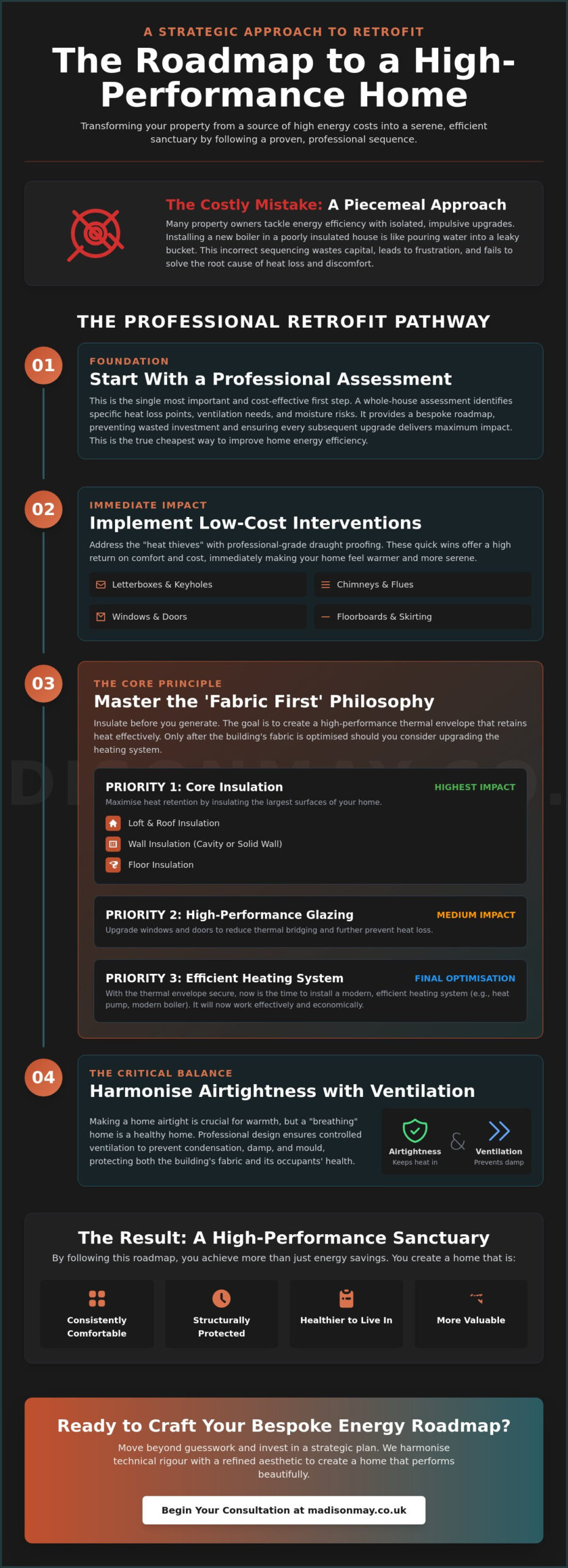
While the allure of immediate, visible changes like new windows or a modern heat pump is understandable, the cheapest way to improve home energy efficiency is often found in the quiet deliberation of a professional survey. A piecemeal approach to home improvements frequently leads to wasted capital, as measures installed in isolation may fail to perform or, worse, create new issues like poor air quality. By adopting a “Fabric First” philosophy, you ensure that the very bones of your property are optimised to retain heat before you invest in expensive mechanical systems. It’s a method that prioritises the building’s structure, creating a resilient foundation for all future upgrades.
Investing in a PAS 2035 assessment acts as a vital guardian against what industry experts call “retro-failure.” This standard ensures that every intervention is considered as part of a whole, preventing the common mistake of insulating a room so tightly that it can no longer breathe. This level of technical rigour provides a sense of security, transforming a potentially stressful renovation into a curated journey towards a high-performance sanctuary. It’s about making informed choices that respect the unique story and structural needs of your property.
Understanding the Retrofit Assessment Process
A qualified assessor moves through your home with an eye for detail, examining the building fabric, existing ventilation, and current services. Unlike a standard EPC, which provides a generalized snapshot, a bespoke retrofit roadmap offers a deep, rhythmic understanding of how your specific home behaves. This process identifies exactly where heat is lost and where moisture might gather, ensuring that every pound you spend is targeted for maximum impact. A whole-house approach is a comprehensive risk-management strategy that protects homeowners from the unintended consequences of mismatched energy measures.
Sequencing Your Upgrades for Maximum ROI
The order in which you improve your home is just as critical as the materials you choose. Loft insulation is frequently the most cost-effective “big” move, offering a significant thermal barrier for a relatively modest investment. However, it’s essential to consider your EPC improvement plans before rushing into replacing windows or doors. Professional coordination ensures that each measure works in harmony with the next, preventing the need to undo previous work as your project evolves. This structured sequence allows you to manage your budget with confidence, knowing that each step is a building block towards a more efficient, serene, and valuable property.
Harmonising Insulation with Ventilation: Avoiding the Damp Trap
A home that is meticulously sealed becomes an efficient vessel for warmth, but without a dedicated strategy for airflow, it can quickly become a trap for moisture. Whilst the cheapest way to improve home energy efficiency involves reducing heat loss through airtightness, this must never come at the expense of indoor air quality. Modern building standards, specifically Building Regulations Part F, mandate that we must not worsen the ventilation of a property when making energy improvements. Failing to respect this balance often leads to the silent accumulation of condensation, which eventually manifests as unsightly and unhealthy mould amongst your carefully curated spaces.
If your property has already suffered from these unintended consequences, professional damp remediation is the essential first step in restoring the integrity of your sanctuary. It’s not merely about treating a surface; it’s about identifying the underlying failure in the home’s respiratory system. Addressing these issues ensures that your investment in insulation doesn’t inadvertently damage the very fabric you’re trying to protect. A home that cannot breathe is a home under duress, and true efficiency requires a more sophisticated, balanced approach.
The ‘Insulate Tight, Ventilate Right’ Rule
In a traditional, draughty home, air exchange happens by accident. When we insulate and draught-proof, we take control of that process. Moisture-laden air from cooking, bathing, and even breathing needs a clear path out of the property. Passive ventilation, such as trickle vents or air bricks, provides a simple solution, whilst mechanical heat recovery systems offer a more advanced way to refresh the air without losing precious warmth. Early warning signs of a breakdown in this harmony include persistent misting on windows or a lingering damp scent in rooms that should feel fresh and inviting.
Professional Ventilation Assessments
Determining the correct airflow for a bespoke property requires more than a cursory glance. A professional ventilation assessment considers the specific volume of your rooms and the lifestyle of the inhabitants. This technical rigour protects both your physical health and the building’s longevity. These systems can be integrated discreetly, ensuring that the pursuit of performance doesn’t disrupt the refined aesthetic of your interior. To ensure your property remains a healthy, high-performance environment, you should arrange a professional ventilation assessment as a fundamental part of your retrofit journey.
Crafting Your Bespoke Energy Roadmap with Madison May
At Madison May Consulting Ltd, we believe that your home’s transition to efficiency should be as seamless and refined as the spaces we help you create. Understanding that the cheapest way to improve home energy efficiency is through strategic foresight rather than reactive spending allows you to invest with absolute confidence. Our approach combines technical rigour with a deep aesthetic sensitivity, ensuring that every upgrade respects the unique heritage of your property whilst delivering high-performance results. By choosing a fixed-fee assessment, you gain the clarity needed to navigate an uncertain energy market without the pressure of a hidden agenda.
The peace of mind offered by professional Retrofit Coordination cannot be overstated. It’s the difference between a collection of mismatched products and a harmonised system that works in concert with your lifestyle. Madison May Consulting Ltd acts as your sophisticated guide, taking the complexity out of the design process and allowing you to focus on the emotional impact of your transformed sanctuary. This is the first step toward a home that isn’t just warmer, but more elegant and inherently more valuable.
Your Journey from Assessment to Achievement
- Step 1: A comprehensive on-site survey that honours your property’s unique character and structural nuances.
- Step 2: The creation of a rhythmic, prioritised improvement plan that maps out your upgrades in the most logical and cost-effective sequence.
- Step 3: Professional guidance through the installation phase to ensure that every material chosen and every detail executed meets our standards of meticulous craftsmanship.
Why Independent Consultancy is the Ultimate Saving
When you engage with Madison May Consulting Ltd, you’re choosing a partner who prioritises your personal story over a sales quota. Many product installers will only offer the one solution they happen to sell, which rarely aligns with the cheapest way to improve home energy efficiency for your specific building. Our unbiased, expert advice is rooted in the PAS 2035 standards, providing a gold-standard roadmap that avoids expensive mistakes. Beyond immediate comfort, a curated energy plan significantly enhances the resale value of your property. According to research from American Home Shield in 2025, 77% of homeowners believe that green homes retain their value better than traditional builds, ensuring your investment today secures a more prestigious future for your home.
Securing Your Future-Proofed Sanctuary
The journey toward a high-performance property is a transformative process that harmonises technical rigour with refined domestic comfort. By embracing the Fabric First philosophy discussed throughout this guide, you move beyond the frustration of rising bills and into a world of enduring warmth. You’ve learned that the cheapest way to improve home energy efficiency isn’t found in a single, impulsive purchase, but in a meticulously sequenced roadmap that avoids the hidden costs of mismatched upgrades. This strategic approach ensures your property remains a healthy, serene refuge whilst meeting the evolving energy standards of 2026.
As a Yorkshire-based independent consultancy with national reach, Madison May Consulting Ltd provides the expert guidance required to navigate these complexities. Our PAS 2035 aligned assessments and bespoke EPC improvement roadmaps offer a clear path forward, protecting your home’s heritage and its future value. It’s time to elevate your living environment into a space that reflects your identity and vision. Our process is designed to be steady and graceful, ensuring you feel supported at every stage of your home’s evolution.
Begin your journey to a more efficient sanctuary with a Madison May Consulting Ltd Retrofit Assessment. Your property is more than just a building; it’s a legacy worth preserving with quiet confidence and care.
Frequently Asked Questions
What is the single cheapest way to improve my home’s energy efficiency?
Professional draught proofing is widely considered the cheapest way to improve home energy efficiency. It involves sealing the small, often overlooked gaps around windows, doors, and floorboards that allow warmth to escape and cold air to enter. By addressing these subtle heat thieves, you can significantly enhance your comfort levels for a relatively modest investment compared to larger structural changes.
Is it worth paying for a professional retrofit assessment?
Investing in a professional retrofit assessment is essential for any homeowner who values precision and long-term performance. This survey prevents the piecemeal approach that often leads to wasted capital on mismatched measures. It provides a technical roadmap that ensures every pound is spent effectively, protecting your property from unintended consequences like damp whilst ensuring compliance with standards like PAS 2035.
How can I stop heat escaping through my windows without replacing them?
You can effectively reduce heat loss through your windows by investing in professional-grade draught proofing. This subtle intervention seals the perimeters of your frames without the need for a full replacement, preserving the aesthetic heritage of your property. It’s a meticulous process that eliminates the restless winter air, allowing your rooms to remain warm and serene even on the coldest evenings.
Does adding loft insulation always save money on energy bills?
Loft insulation is a powerful tool for heat retention, but its success depends on a balanced approach. If you seal the loft space without considering the necessary airflow, you risk trapping moisture that can lead to structural damage. When installed as part of a whole-house strategy, it’s one of the most effective ways to lower your energy consumption and create a more harmonious environment.
Why has my house become damp after I installed new insulation?
Dampness often occurs after insulation because the home’s natural breathability has been restricted without a corresponding ventilation strategy. When a house is sealed too tightly, moisture from daily activities cannot escape, leading to condensation and mould. A professional ventilation assessment can identify where the balance has been lost and suggest remediation to restore a healthy living environment.
Can I improve my EPC rating on a limited budget?
Improving your EPC rating is entirely possible on a restricted budget by following a curated EPC Improvement Plan. This strategy focuses on high-impact, lower-cost interventions such as insulation upgrades, draught proofing, and refining your heating controls. These steps provide a solid foundation for the cheapest way to improve home energy efficiency, helping you move toward a more sustainable property whilst managing your financial resources with care.
What is the ‘Fabric First’ approach and why does it matter?
The Fabric First approach prioritises the building’s structure, such as its insulation and airtightness, before considering mechanical upgrades like new heating systems. It matters because it reduces the overall demand for energy in the first place. By ensuring the envelope of your home is performant, you create a more resilient sanctuary that requires less energy to stay warm and comfortable year-round.
How much could a bespoke EPC improvement plan save me annually?
Whilst specific savings vary depending on the unique character of your property, a bespoke EPC improvement plan prevents the significant financial loss associated with incorrect or poorly sequenced upgrades. By identifying the most cost-effective path for your specific home, you ensure that every investment contributes to a measurable reduction in energy demand. This professional coordination ensures long-term value and a more efficient, elegant living space.