


What if the question isn’t whether your home can accommodate a heat pump, but whether your home is ready to embrace the future of warmth? You might find yourself asking, is my property suitable for a retrofit assessment, particularly as you weigh the promise of £7,500 Boiler Upgrade Scheme grants against the fear of intrusive works or rising running costs. It is a common concern amongst homeowners who value the heritage of their property but desire the quiet efficiency of modern technology.
We understand that your home is more than just a building; it’s a carefully curated refuge where every detail matters. Moving away from traditional boilers doesn’t have to mean compromising on the aesthetic harmony of your interiors or enduring a draughty winter. By adopting a fabric-first philosophy, you can ensure your property reaches a state of thermal readiness that makes a heat pump not just viable, but exceptionally effective.
This article explores the essential criteria for a successful transition and explains how a professional retrofit plan provides a clear, structured roadmap for your energy-efficient improvements. You’ll discover how to move beyond conflicting advice and gain the confidence to create a future-proof sanctuary that remains consistently comfortable and beautifully sustainable for years to come.
Key Takeaways
- Understand how the transition from traditional boiler bursts to a gentle, rhythmic heating cycle creates a more consistent and serene environment within your home.
- Explore the fabric-first philosophy and why a whole-house approach to insulation is the necessary foundation for avoiding technical errors and high energy bills.
- Evaluate your property’s internal infrastructure, from radiator surface area to thermal mass, to understand if your property is suitable for a retrofit assessment West Yorkshire.
- Discover how a PAS 2035 assessment provides a property-specific EPC Improvement Plan, offering a meticulous roadmap that replaces confusion with clarity.
- Learn the benefits of an independent consultancy that values your home’s unique heritage, focusing on long-term thermal integrity rather than mere hardware installation.
The Evolution of Home Heating: Why Suitability is a Journey
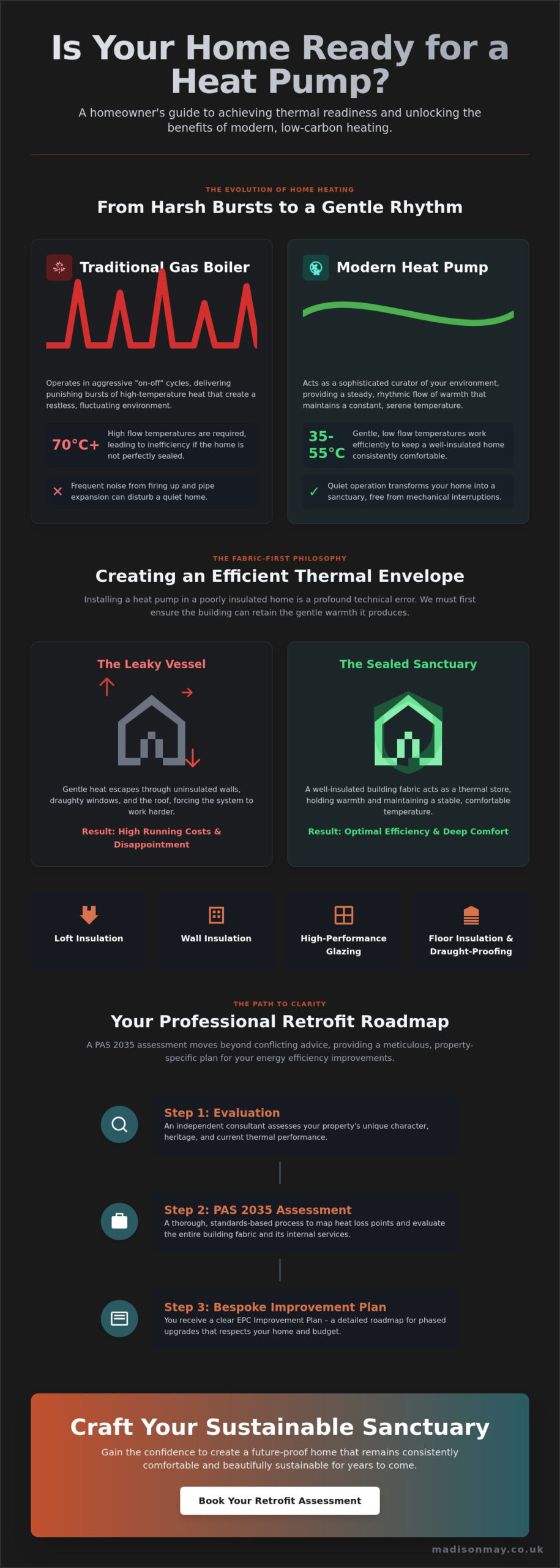
Traditional heating systems often feel like a series of aggressive interruptions. A gas boiler fires up, delivers a punishing burst of high-intensity heat, and then falls silent, leaving the room to cool until the cycle repeats. This “on-off” behaviour creates a restless atmosphere where temperatures fluctuate and comfort is fleeting. In contrast, a Heat pump acts as a sophisticated curator of your environment. It provides a steady, rhythmic flow of warmth that maintains a constant temperature, transforming your home into a serene sanctuary where the air feels balanced and the silence is undisturbed by the clatter of expansion pipes.
Understanding this shift is the first step when asking, is my property suitable for a retrofit assessment West Yorkshire. Suitability isn’t a simple binary choice; it’s a spectrum influenced by the unique character of your building fabric, the existing internal services, and the specific rhythms of your lifestyle. A Victorian terrace in Saltaire requires a different approach than a mid-century home in Ilkley, yet both can achieve thermal readiness through a visionary strategy that prioritises the building’s long-term health.
Understanding Low-Temperature Heating Systems
The primary distinction lies in the temperature of the water circulating through your radiators. Whilst a gas boiler often exceeds 70°C, a heat pump operates most efficiently at flow temperatures between 35°C and 55°C. This gentler approach requires a home that acts as a reliable vessel for heat. We focus on the “thermal envelope”, the continuous layer of insulation and draught-proofing that wraps around your living space. If this envelope is compromised, the gentle warmth escapes before it can settle, making the system work harder than necessary. Ensuring your property is suitable for a retrofit assessment West Yorkshire allows us to map these heat loss points with precision.
The Environmental and Lifestyle Shift
Choosing a low-carbon heating system is a profound commitment to both global stewardship and personal well-being. With the Future Homes Standard set to mandate low-carbon heating in new builds from 2027, retrofitting your current home aligns your property with the highest standards of modern living. It is about moving away from the “quick fix” of a boiler replacement towards a deeper refurbishment that enhances long-term property value. This transition fosters a sense of calm, knowing your home is prepared for the future whilst providing a healthier, more consistent indoor climate for your family.
The Fabric First Philosophy: Insulation as the Essential Foundation
Installing a high-performance heat pump into a draughty, uninsulated home is a profound technical error that often leads to disappointment and excessive running costs. It is akin to placing a delicate, steady flame inside a lantern with broken glass; the warmth is lost to the evening air before it can ever truly settle. When considering if your property is suitable for a retrofit assessment West Yorkshire, we must first look at the building’s ability to retain the gentle energy these systems provide. A whole-house approach ensures that every element of the structure works in harmony, viewing the walls, floors, and roof as a single, integrated system of heat retention rather than a collection of separate rooms.
By prioritising the building fabric, we create a more efficient environment that requires less energy to maintain a perfect temperature. This strategy often allows for the installation of a smaller, more discreet heat pump unit, which reduces both the initial investment and the long-term impact on your utility bills. A home that is well-insulated doesn’t just save money; it feels different. The surfaces are warmer to the touch, and the subtle draughts that once ghosted through the hallways are replaced by a sense of deep, enveloping calm.
Evaluating Your Current Insulation Levels
The journey begins with an honest appraisal of your loft, cavity wall, or solid wall insulation. These layers act as the quiet guardians of your comfort, significantly reducing the heat demand of the property. A U-value is simply a numerical measure of how much heat escapes through a specific material; the lower the number, the more effectively your home holds its warmth. Whilst you can use an official government suitability checker for a preliminary glance, a professional survey uncovers hidden vulnerabilities. We often find significant heat loss through uninsulated floorboards or forgotten chimneys that can undermine even the most advanced heating technology.
The Intersection of Insulation and Ventilation
As we refine the air-tightness of a home, we must remain mindful of its need to breathe. Creating a sealed environment without a professional ventilation assessment can inadvertently invite condensation and damp, compromising the very sanctuary we aim to protect. Compliance with Building Regulations Part F is not merely a legal requirement; it is a commitment to maintaining exceptional indoor air quality. This delicate balance ensures your living spaces remain fresh and vibrant whilst staying effortlessly warm. If you are ready to explore how to harmonise these elements, our insulation upgrades can help transform your property into a model of modern efficiency.
Evaluating Internal Infrastructure: Beyond the Heat Source
Whilst the insulation provides the protective envelope, the internal infrastructure serves as the heartbeat of your home’s thermal comfort. A property’s thermal mass is its silent strength. Many homes in West Yorkshire, built with traditional stone or solid brick, possess an innate ability to store heat effectively. This mass acts like a thermal battery, absorbing the steady warmth from a low-temperature system and releasing it slowly, which helps maintain that sought-after sense of constant serenity. Determining is my property suitable for a retrofit assessment West Yorkshire involves a meticulous look at these hidden details, ensuring your internal systems can translate the pump’s energy into a comfortable living environment.
Beyond the walls, we must consider the physical footprint of the technology itself. Finding a discreet, aesthetically pleasing location for the outdoor unit is essential for preserving the curated look of your garden or courtyard. Modern units are designed with an understated elegance, yet they require sufficient airflow to operate with peak efficiency. Inside, the transition often requires a dedicated hot water cylinder equipped with a larger internal coil. This specific design is necessary to transfer heat effectively at lower temperatures, ensuring your morning ritual remains a luxurious experience without the need for a traditional high-heat boiler.
Radiators vs. Underfloor Heating
Underfloor heating is often the favourite partner for low-carbon systems due to its expansive surface area, which allows heat to rise with a gentle, even rhythm. However, traditional properties can still achieve exceptional performance by upgrading to oversized radiators. These are not merely functional items; they can be chosen to complement the heritage of your rooms whilst providing the necessary surface area to warm the space at lower flow temperatures. This approach allows you to maintain an elegant aesthetic without compromising on the technical requirements of the PAS 2035 framework.
The Pipework and Cylinder Challenge
The veins of your heating system-the pipework-must be capable of handling the flow rates required by modern heat pumps. Older systems featuring microbore pipework, often just 8mm or 10mm in diameter, may struggle to deliver enough water to the radiators effectively. A professional survey identifies these bottlenecks early, allowing for a planned refurbishment of the pipework where necessary. Organising a dedicated plant room or utility space to house the new cylinder and control systems is a vital step in your journey. When asking is my property suitable for a retrofit assessment West Yorkshire, remember that even the most complex internal challenges can be resolved with a visionary plan that prioritises both functionality and beauty.
The Professional Retrofit Assessment: Navigating PAS 2035
Whilst basic online questionnaires offer a fleeting glimpse of possibility, they lack the depth required for a truly transformative home improvement journey. When you ask, is my property suitable for a retrofit assessment West Yorkshire, you are seeking more than a generic confirmation; you are looking for a definitive, scientifically grounded roadmap. An independent retrofit assessment stands as the gold standard in this pursuit, providing a meticulous verification of your property’s current state and its future potential. This process replaces the fragmented advice often found amongst hardware installers with a cohesive, property-specific strategy that treats your home as a singular, living system.
A key advantage of this professional approach is the involvement of a Retrofit Coordinator. This individual acts as a visionary guide, ensuring that every proposed measure-from insulation to heating upgrades-works in perfect harmony. Their oversight prevents the common pitfall of “over-speccing” a system, where an oversized and expensive heat pump is installed to compensate for unknown heat loss. Instead, professional data collection allows for precision, ensuring your investment is perfectly balanced with your home’s actual requirements, preserving both your budget and the building’s structural integrity.
The Meticulous Data Collection Process
The journey begins with a comprehensive building survey that examines the delicate interplay of fabric, services, and ventilation. We utilise advanced techniques, such as thermal imaging, to uncover hidden draughts and cold bridges that traditional inspections might overlook. This detailed building survey provides the essential data required for accurate heat loss calculations, ensuring that any subsequent upgrades are based on reality rather than estimates. It is an attentive, listening process that respects the unique story of your property whilst identifying every opportunity for enhancement.
Creating Your Bespoke Roadmap
Once the data is gathered, it is distilled into a sequenced EPC Improvement Plan that prioritises improvements in a logical, effective order. This roadmap typically places fabric improvements before heating upgrades, ensuring your home is prepared to hold the warmth before the new system is introduced. Navigating the complexities of PAS 2035:2023 compliance ensures that your refurbishment meets the highest industry standards, providing profound peace of mind before any major financial commitments are made. If you are ready to begin this sophisticated journey, you can book a professional assessment to define your home’s path to thermal excellence.
Crafting Your Sustainable Sanctuary: The Madison May Approach
At Madison May Consulting Ltd, we believe that thermal integrity is a quality that must be carefully cultivated rather than simply purchased. Our independent consultancy is dedicated to the enduring health of your home, remaining entirely separate from the hardware sales that often cloud the industry. We sell the clarity of a visionary plan. When you ask, is my property suitable for a retrofit assessment West Yorkshire, you are inviting us to become the trusted curators of your home’s thermal future, balancing heritage with high-performance technology.
Our approach centres your personal story. We recognise that a home is a deeply personal refuge, an outward expression of identity that deserves more than a one-size-fits-all solution. By adhering to a whole-house philosophy, we ensure that every intervention, from loft conversions to insulation upgrades, contributes to a seamless experience of luxury. This commitment to meticulous craftsmanship ensures that your investment results in a space that is not only efficient but also resonates on a personal level.
A Visionary Guide Through Complexity
The path to a low-carbon home can often feel overwhelmed by technical jargon and shifting regulations. Our fixed-fee assessment services provide a space for calm deliberation, bridging the gap between complex energy requirements and the emotional reality of your living space. We position your property as a resilient sanctuary, a place of peace that remains unaffected by the uncertainty of rising energy costs or environmental change. This visionary guidance allows you to move forward with a quiet confidence, knowing that every detail has been considered with care and imagination.
Next Steps for Your Property
Beginning your journey is a simple yet transformative act. By booking an initial consultation, you can identify the high-impact upgrades that will most effectively enhance your home’s thermal performance. A well-coordinated energy-efficient home improvement plan is the foundation of a more resilient and elegant lifestyle. We invite you to enquire about a professional Retrofit Assessment for your property today. Together, we can define a path that respects your home’s heritage whilst embracing the sophisticated comfort of a future-proof sanctuary.
Embracing the Future of Refined Home Comfort
Achieving thermal readiness is a transformative journey that begins with a deep respect for your property’s unique character. By prioritising a fabric-first philosophy and meticulously evaluating your internal infrastructure, you ensure that the transition to low-carbon heating is both seamless and effective. This approach moves beyond the simple installation of hardware; it focuses instead on the creation of a balanced, serene environment that serves as a true refuge. When you ask, is my property suitable for a retrofit assessment West Yorkshire, you are seeking the clarity and confidence that only a bespoke, professional roadmap can provide.
Our independent expert consultancy offers PAS 2035 aligned assessments and comprehensive EPC improvement roadmaps, designed to guide you through every stage of your home’s evolution with grace and precision. We invite you to begin your meticulous home transformation with an expert Retrofit Assessment. By centring your personal story and the heritage of your property, we help you craft a sustainable sanctuary that remains a source of pride and comfort for years to come. Your journey towards a more resilient, elegant, and efficient home starts with a single, thoughtful step.
Frequently Asked Questions
Can I install a heat pump in a Victorian or older property?
Yes, Victorian properties can successfully accommodate heat pumps provided the building fabric is sufficiently prepared. The thick stone walls common in West Yorkshire offer excellent thermal mass, yet they must be paired with high-quality insulation and draught proofing to prevent the gentle warmth from escaping. A professional assessment ensures the system is tailored to the unique heritage and structural character of your older home.
Do I need to replace all my radiators to make my home suitable?
You don’t always need to replace every radiator, though some upgrades are often necessary to maintain a serene and comfortable climate. Because heat pumps operate at lower flow temperatures, radiators require a larger surface area to distribute heat effectively. A detailed survey identifies which specific rooms require larger units, allowing you to choose elegant designs that complement your interior aesthetic whilst meeting technical requirements.
Will a heat pump be loud enough to disturb my neighbours or my own peace?
Modern heat pumps are designed to operate with a quiet, rhythmic hum that rarely exceeds the sound of a household refrigerator. When correctly positioned with professional guidance, the noise levels are negligible and won’t disturb your peace or the tranquillity of your neighbours. It’s a subtle, atmospheric addition to your home’s exterior that reflects the sophisticated, calm nature of the technology.
How much outdoor space is required for an air source heat pump unit?
An air source unit typically requires a space similar in size to a standard washing machine, along with a small clearance area to ensure unobstructed airflow. Finding a discreet, aesthetically pleasing location is an essential part of the design process. This ensures the technology integrates seamlessly with your garden or courtyard, preserving the visual harmony and curated feel of your personal sanctuary.
Can a heat pump provide enough hot water for a large family home?
A correctly specified heat pump system can effortlessly provide abundant hot water for even the largest family homes. This is achieved through the installation of a dedicated, high-performance hot water cylinder designed for low-temperature systems. These cylinders feature larger internal coils to ensure rapid and efficient heating, ensuring your morning rituals remain a luxurious and uninterrupted experience for everyone in the household.
Is planning permission required for a heat pump in the UK?
Most air source heat pump installations in the UK fall under Permitted Development, meaning formal planning permission is not typically required. However, specific rules apply to listed buildings or properties situated within conservation areas. It’s vital to verify local regulations before commencing work, as this ensures your transition to sustainable heating remains compliant with all regional heritage and building standards.
What happens if my property is currently on a microbore pipework system?
If your property uses microbore pipework, it may require an upgrade to ensure is my property suitable for a retrofit assessment West Yorkshire. These narrow pipes can restrict the water flow rates that heat pumps require to operate with peak efficiency. Replacing these sections with standard copper piping during a refurbishment ensures the system can deliver a constant, gentle warmth to every corner of your home.
Is it better to upgrade my insulation before or after installing a heat pump?
It is always better to prioritise insulation upgrades before installing a heat pump to follow the fabric-first philosophy. By securing the thermal envelope first, you reduce the total heat demand of your property, which often allows for a smaller and more cost-effective heating unit. This logical sequence ensures your home is perfectly prepared to hold energy, creating a more resilient and efficient environment.