
What if the most profound act of care for your home’s heritage isn’t a new marble kitchen island, but the invisible layers that protect its very soul? It’s understandable to feel a sense of friction when the desire for a refined, comfortable sanctuary meets the daunting reality of upfront costs. You might worry that modern draught proofing or heating upgrades will compromise the unique character of your rooms, whilst your partner might prioritise immediate visual changes. This tension often makes getting buy-in for home energy improvements feel like a hurdle rather than a shared vision for the future.
We recognise that this process is as much an emotional conversation as a financial one. This guide will help you bridge that gap, offering a thoughtful approach to securing agreement from stakeholders by framing energy efficiency as a transformative artistic journey. We’ll explore how to align competing priorities and act before the December 2025 tax credit deadline, ensuring your home remains a sustainable, cherished refuge for generations to come. From understanding the rhythmic balance of a whole-house retrofit to navigating the subtle nuances of heritage preservation, you’ll discover how to articulate the enduring value of a home that truly performs.
Key Takeaways
- Learn how to reframe invisible thermal improvements as essential acts of preservation that protect your home’s heritage and enduring character.
- Shift the conversation from abstract financial figures to the evocative, sensory benefits of a draught-free sanctuary and consistent, enveloping warmth.
- Discover how professional data and PAS 2035 assessments serve as neutral arbiters when getting buy-in for home energy improvements amongst stakeholders.
- Explore strategies for aligning energy efficiency goals with visible renovations, such as loft conversions or extensions, to ensure a cohesive project vision.
- Gain insight into a meticulously organised approach that balances technical rigour with a sophisticated appreciation for your home’s unique aesthetic identity.
Beyond the Thermostat: Why Getting Buy-in for Home Energy Improvements is a Challenge
A home is a living history, an intricate tapestry woven from the memories and choices of those who dwell within its walls. Often, we find ourselves enchanted by the visible chapters of this story: the tactile beauty of a reclaimed timber floor or the soft, ambient glow of a bespoke lighting installation. Yet, the most vital elements of our comfort are frequently the ones we cannot see. This “invisible investment” dilemma is perhaps the greatest hurdle when getting buy-in for home energy improvements. We are instinctively drawn to aesthetic transformations that offer immediate visual gratification, often overlooking the silent, structural performance that truly defines the soul of a sanctuary.
True buy-in within a household is a nuanced achievement. It requires a shared resonance on the allocation of resources, the cadence of the project timeline, and the perceived impact on daily life. For many, the prospect of disruption feels like a violation of the home’s peace. There is a deep-seated psychological comfort in the familiar, leading us to believe that doing nothing is the safer path. We must recognise that every change to a home should feel intentional and deeply respectful of its existing character. Professional guidance is essential to ensure that getting buy-in for home energy improvements isn’t seen as a chore, but as a collective step toward a more harmonious living environment.
The Clash of Priorities: Aesthetics vs. Performance
Friction often arises when partners view the renovation budget through different lenses. One might prioritise the sensory delight of a new conservatory, whilst the other focuses on the pragmatic necessity of insulation upgrades. This tension stems from the false belief that energy efficiency is a utilitarian compromise that detracts from a home’s elegance. To find common ground, we must reframe the conversation. A high-performing home isn’t just about utility; it’s about enhancing a valuable asset. When we view draught proofing or heating upgrades as the essential foundation for a more refined lifestyle, the conflict begins to dissolve. It’s about creating a space where beauty and performance exist in perfect symmetry.
The Long-Term Vision: Legacy and Responsibility
We are, in many ways, the temporary stewards of our properties, tasked with preserving their heritage for those who follow. Our responsibility involves more than just maintenance; it requires a visionary approach to future-proofing. Utilising a standardised Home Energy Rating provides a clear, objective benchmark that transcends personal opinion. By understanding where a home sits on this scale, we can create a meticulous plan that respects its past whilst preparing it for the future. A retrofit is ultimately a gift to our future selves, ensuring our refuge remains a place of enduring quality and quiet confidence amongst changing environmental standards.
The Multi-Sensory Case for Efficiency: Comfort, Health, and Quietude
Whilst financial spreadsheets often dominate the conversation, the true value of a retrofit is felt rather than calculated. To succeed in getting buy-in for home energy improvements, we must shift our gaze from abstract payback periods to the immediate, visceral transformation of the living experience. A home that performs well is a home that feels fundamentally different. It is the transition from a collection of draughty rooms to a unified, thermally stable sanctuary where warmth feels consistent and enveloping. This sensory shift is often the most profound argument for those who value the home as a place of rest and restoration.
High-quality insulation and glazing provide more than just thermal resistance; they offer a profound acoustic shield. In our increasingly loud world, the ability to close the door and enter a space of absolute quietude is the ultimate modern luxury. By reducing external noise pollution, these improvements turn a house into a serene refuge. This acoustic calm, paired with the absence of cold spots, creates an environment where every corner of a room is usable and inviting, regardless of the weather outside. It’s about reclaiming the full potential of your living space.
The End of the Cold Spot: A New Standard of Comfort
The physical sensation of a thermally stable home is difficult to overstate. It’s the feeling of walking into a room in mid-winter and finding the air just as gentle as a spring afternoon. For a hesitant partner, this tangible increase in daily comfort is often far more persuasive than a projected energy bill saving. To make the invisible visible, Professional Home Energy Assessments can utilise thermal imaging to illustrate exactly where heat and comfort are escaping. Seeing the vivid colours of heat loss on a screen transforms a subjective debate into an objective, visual reality that is hard to ignore.
Health as a Luxury: Damp Remediation and Air Quality
A truly sophisticated interior must also be a healthy one. There is an intrinsic link between building performance and the prevention of mould, which is why integrated damp remediation is so vital for preserving both the building’s fabric and the wellbeing of its inhabitants. We must also address the ‘ventilation gap’ that can occur when a home is made airtight. By positioning sophisticated ventilation systems as an essential component of a luxury interior, we ensure the home remains a breathable, fresh environment. This holistic approach ensures your sanctuary is as healthy as it is beautiful. If you are ready to begin this journey, you might consider how a tailored retrofit strategy can elevate your living experience.
From Subjective Opinions to Objective Data: The Power of a Professional Assessment
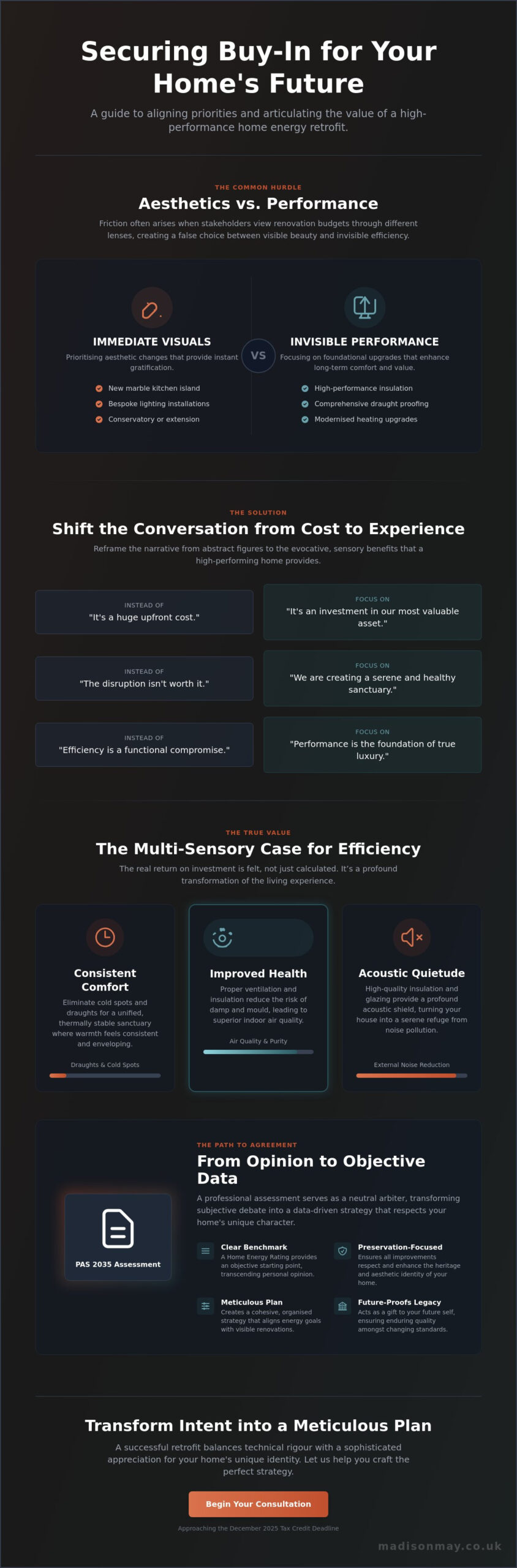
When discussions regarding a home’s future become clouded by differing opinions, data acts as a clarifying lens. The challenge of getting buy-in for home energy improvements often lies in the absence of a shared, objective truth. Without a professional anchor, one person’s desire for warmth can be dismissed as a luxury, whilst another’s concern over costs is seen as an obstacle. An independent PAS 2035 assessment serves as the ultimate neutral arbiter in these domestic negotiations. It replaces the guesswork of fragmented quotes with a rigorous, data-driven methodology that respects the building’s unique physics and history.
By establishing a clear EPC improvement plan, you provide the household with a logical sequence of works. This roadmap reduces financial anxiety by outlining exactly what needs to be done and when. It also helps in identifying eligibility for incentives such as the energy-efficient home improvement credit, provided the work is completed before the expiration of these programmes at the end of 2025. Within this framework, the Retrofit Coordinator acts as a dedicated project guardian, ensuring that every material chosen and every technician employed aligns with the overarching vision of a refined, efficient sanctuary.
The Whole-House Approach vs. Piecemeal Upgrades
Attempting to modernise a home through isolated projects often leads to unintended consequences. Installing a high-capacity heat pump without first addressing draughts or insulation is frequently a costly mistake, resulting in an oversized system that never quite feels right. A home is a delicate ecosystem where heating, ventilation, and insulation must exist in a rhythmic balance. Using professional building surveys allows you to see the property as a single, coherent entity. This bird’s-eye view creates a roadmap that everyone in the household can trust, ensuring that every pound spent is an investment in long-term harmony rather than a temporary patch.
Mitigating Risk: Technical Standards and Compliance
Professional oversight is the bridge between a visionary idea and a successful reality. It ensures that energy saving measures don’t inadvertently lead to structural damage or poor indoor air quality. There’s a profound peace of mind that comes from knowing your improvements meet exacting national regulatory standards. A fixed-fee assessment is a small price for avoiding expensive future errors; it’s an insurance policy for your home’s heritage. When you rely on technical standards rather than subjective feelings, getting buy-in for home energy improvements becomes a collaborative journey toward excellence.
Crafting the Proposal: How to Organise Your Home Improvement Strategy
Successfully getting buy-in for home energy improvements requires more than enthusiasm; it demands a structured, evidentiary approach that speaks to both the heart and the head. To move from a conceptual desire to a tangible project, you must first curate a robust evidence base. This collection of data, including current Energy Performance Certificates (EPCs), thermal imaging, and a clear record of utility expenditure, provides a transparent narrative of the home’s current performance. When these facts are laid bare, the need for intervention becomes an undeniable priority for every stakeholder involved.
Aligning energy goals with existing renovation plans is a masterstroke in domestic diplomacy. If a household is already considering a loft conversion or a ground-floor extension, it’s the perfect moment to integrate insulation upgrades or draught proofing. This approach transforms the retrofit from a standalone disruption into a logical enhancement of a broader vision. By phasing the work into manageable, less intrusive stages, you respect the rhythm of daily life whilst steadily building toward a high-performance sanctuary. Beyond the immediate comfort, these improvements offer a significant ‘value add’ by ensuring MEES compliance and enhancing the property’s long-term market valuation.
The Financial Narrative: Investment vs. Expense
When discussing the budget, it’s vital to present the ‘Total Cost of Ownership’ rather than just the initial quote. A home is a long-term asset; therefore, financial decisions should reflect its enduring nature. We must factor in the rising cost of carbon and the inevitable energy price volatility that lies ahead. There’s also a distinct urgency to complete these projects before the 31 December 2025 deadline, after which significant federal tax credits will expire. Whilst it’s sensible to discuss available grants or incentives, the focus should always remain on the quality of the craftsmanship. Cutting corners on materials to save a small amount today often leads to compromised performance tomorrow. It’s about choosing enduring quality over temporary ‘freebies’.
Living Through the Change: Planning for Minimal Disruption
The fear of a home in disarray is a significant barrier to agreement. To mitigate this, we advocate for a ‘sanctuary-first’ schedule that protects the household’s peace of mind throughout the process. A Retrofit Coordinator acts as your project guardian, managing the messy complexities and coordinating technicians on your behalf. This professional oversight ensures that the timeline is realistic and the execution is meticulous. If you’re ready to transform your intent into a structured roadmap, you can request a bespoke retrofit strategy to guide your journey. Setting clear expectations from the outset is the key to maintaining harmony whilst your home evolves.
The Madison May Approach: Transforming Intent into a Meticulous Plan
The Madison May philosophy is rooted in the belief that technical excellence should never exist in isolation from beauty. When getting buy-in for home energy improvements, the assurance of a meticulous, professional framework is paramount to success. We utilise the PAS 2035 standard not merely as a regulatory requirement, but as a foundational promise of quality. This ensures that every intervention, from draught proofing to heating upgrades, is part of a coherent, balanced whole that respects the unique physics of your property. It’s a process defined by calm deliberation and a steadfast commitment to the home’s integrity.
Our process is a journey of discovery, moving from the initial spark of an idea to a fully realised energy efficient home improvement strategy. We act as the bridge between your aesthetic vision and the technical demands of a high-performing property. By translating complex data into a clear narrative of comfort and care, we help you present a compelling case to partners or co-owners. It is about creating a shared confidence that the home’s sanctuary will be enhanced, not compromised. This collaborative approach turns a daunting project into a shared artistic journey.
A Tailored Experience for Discerning Homeowners
Every property we enter tells a unique story, shaped by its architectural heritage and the lives lived within it. We treat these narratives with the utmost reverence, ensuring that modern efficiency measures feel like a natural evolution rather than an intrusion. For instance, selecting bespoke windows and doors allows us to maintain the delicate character of a period home whilst achieving contemporary standards of thermal performance. Our focus remains on creating environments that resonate on a personal, emotional level; spaces where the intersection of functionality and grace feels effortless and intentional.
Your Next Step Towards a More Efficient Sanctuary
The transition from contemplating a change to experiencing its benefits begins with a single, thoughtful conversation. Booking an initial consultation serves as a powerful catalyst for getting buy-in for home energy improvements amongst your household. During our first visit, you can expect an attentive ear and a visionary eye, as we listen to your personal story and assess the property’s potential. We are here to close the gap between the desire for a better home and the quiet reality of living in one. Let us guide you through the complexities of the design and retrofit process, ensuring your refuge remains a place of enduring peace and refined quality.
Cultivating a Legacy of Comfort and Care
The transformation of a house into a high-performing sanctuary is a journey that requires both vision and consensus. By reframing thermal performance as a sensory luxury and an act of stewardship, you shift the conversation from mere expenditure to the creation of an enduring legacy. We have explored how objective data and PAS 2035 standards act as a neutral foundation, easing the path toward getting buy-in for home energy improvements amongst those who share your home. This structured approach ensures that every detail, from ventilation assessments to heating upgrades, is handled with the poise and meticulous care your property deserves.
The path from a draughty room to a serene, quiet refuge is paved with expert guidance and a deep respect for architectural character. Whether you require a detailed EPC improvement roadmap or specialist advice on damp remediation, the right partnership turns a complex renovation into a seamless experience. Begin your journey towards a more efficient sanctuary with a Madison May assessment and rediscover the quiet confidence of a home that truly performs. Your sanctuary is waiting to be realised.
Frequently Asked Questions
How do I convince my partner that the high cost of retrofit is worth it?
Convincing a partner requires moving beyond simple bill savings to the physical sensation of a more refined lifestyle. Focus on the emotional impact of a sanctuary that feels consistently warm and quiet throughout every season. By presenting the retrofit as a way to protect the home’s heritage and your shared wellbeing, you elevate the conversation from a mere expense to a visionary investment in your property’s future.
Can I improve my home’s energy efficiency without compromising its period features?
Preserving architectural character is entirely compatible with modern performance through the use of sympathetic, bespoke materials. Improvements like high-quality draught proofing or slender-profile windows and doors can be integrated seamlessly into the existing aesthetic. These invisible layers of efficiency protect the building’s soul whilst providing the contemporary comfort you desire, ensuring your home remains an authentic expression of its heritage.
What is the most cost-effective first step for getting buy-in for home energy improvements?
Booking a professional building survey or assessment is the most effective way of getting buy-in for home energy improvements within a household. This initial step provides the objective evidence needed to move past subjective disagreements and create a shared vision. It allows you to identify which measures offer the greatest impact on both comfort and performance, ensuring your resources are allocated with meticulous care.
How does a PAS 2035 assessment help with the decision-making process?
A PAS 2035 assessment provides a rigorous, whole-house roadmap that eliminates the risks of fragmented, piecemeal upgrades. It serves as a project guardian, ensuring that every material and system chosen works in harmony with the others. This professional oversight gives every stakeholder confidence that the technical standards are met and that the final result will be a balanced, high-performing sanctuary.
Will energy-efficient improvements actually increase my property’s market value?
Enhancing a property’s thermal performance and EPC rating often makes it a more compelling prospect for future buyers. As energy regulations evolve, a home that is already future-proofed and MEES compliant stands out as a more secure and desirable asset. Beyond the financial uplift, the tangible quality and comfort of a well-executed retrofit add an aspirational value that resonates with a discerning market.
How much disruption should we expect during a whole-house energy upgrade?
Disruption is managed through a carefully organised schedule that prioritises the household’s daily rhythm. Whilst some mess is inevitable during works like insulation upgrades or refurbishment, a Retrofit Coordinator oversees the technical complexities on your behalf. By setting realistic timelines and phasing the installation, we ensure that the journey towards a more efficient home remains a graceful and controlled experience.
Is it better to do all energy improvements at once or in stages?
Whilst a whole-house strategy is essential for technical harmony, the actual work can be phased to suit your lifestyle and budget. This measured approach allows you to address the most urgent priorities first, such as draught proofing or heating upgrades, without the need for a single, overwhelming project. Each stage builds logically upon the last, ensuring your home evolves steadily toward its peak performance.
What happens if we add insulation but don’t address the ventilation in our home?
Increasing insulation without addressing ventilation can lead to trapped moisture and the eventual growth of mould. It’s vital to maintain a breathable environment, which is why a ventilation assessment is a cornerstone of any responsible retrofit plan. By ensuring fresh air circulates effectively, you protect the building’s fabric and the health of everyone inside, keeping your refuge truly restorative.