

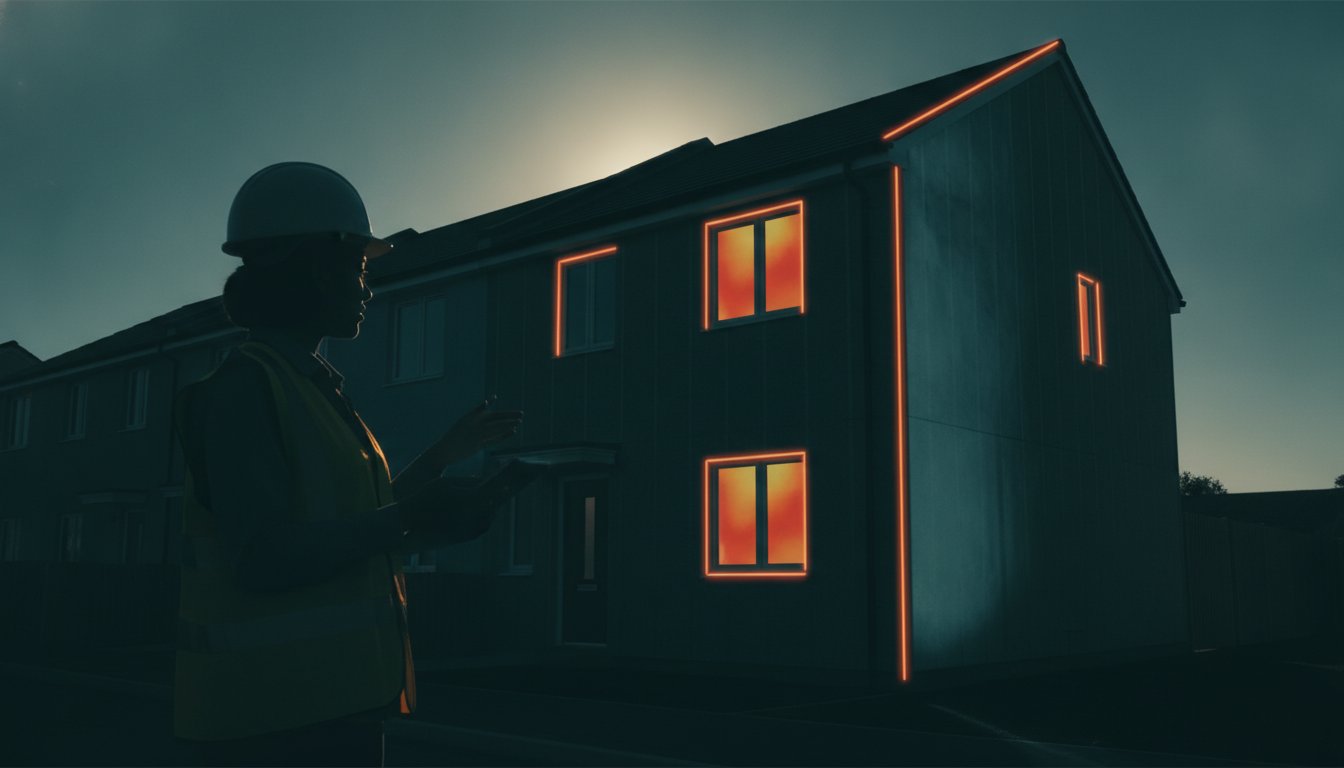
You might expect that wrapping your home in a fresh layer of insulation would be the final, definitive step towards a more sustainable and serene way of living. However, for many, the arrival of the first winter statement after such an investment brings a sharp sense of disillusionment rather than the anticipated relief. If you find yourself troubleshooting high bills after insulation, it’s important to recognise that you’re likely facing a performance gap where the theoretical benefits of your upgrades haven’t quite translated into the lived experience of your home.
It’s incredibly frustrating to invest in your property’s future only to remain plagued by persistent cold spots, lingering draughts, or the creeping anxiety of potential damp issues. We understand that a home should be a carefully curated refuge; one that remains effortless to heat and fundamentally healthy to inhabit. In this guide, we’ll reveal why your energy costs might remain stubbornly high and how to uncover the hidden thermal gaps compromising your efficiency. By looking at your property through the lens of a professional retrofit assessment, you’ll gain a clear diagnostic plan to finally secure the lower bills and lasting warmth your home deserves.
Key Takeaways
- Recognise the “performance gap” and understand why insulation is merely one element of a home’s intricate thermal envelope.
- Discover how hidden thermal bridges and bypasses can allow warmth to escape around your new insulation, compromising your sanctuary.
- Learn why troubleshooting high bills after insulation often involves addressing the crucial balance between air-tightness and sophisticated ventilation.
- Utilise a diagnostic roadmap that prioritises kWh consumption and heating control efficiency over simple monetary comparisons.
- Understand the role of a professional Retrofit Coordinator in acting as a guardian for your home’s long-term energy performance and health.
The Paradox of the Insulated Home: Why Bills May Remain High
Imagine the quiet expectation of opening your first winter energy statement after a significant investment in your property’s efficiency. Instead of the anticipated decline in costs, you’re met with a figure that feels stubbornly familiar. This dissonance is more than a financial burden; it’s a disruption of the peace you sought to create within your walls. When you begin troubleshooting high bills after insulation, you’re often confronting a complex reality where the theoretical promise of a project meets the uncompromising scrutiny of the British winter.
Insulation is often viewed as a singular cure, yet it’s merely one component of a home’s delicate thermal envelope. If the installation hasn’t been coordinated with the house’s unique story and structural nuances, the result is rarely the sanctuary you imagined. This frustration is common, but you must look beyond the raw numbers on the page to understand the underlying behaviour of your home’s fabric.
Understanding the Fabric First Philosophy
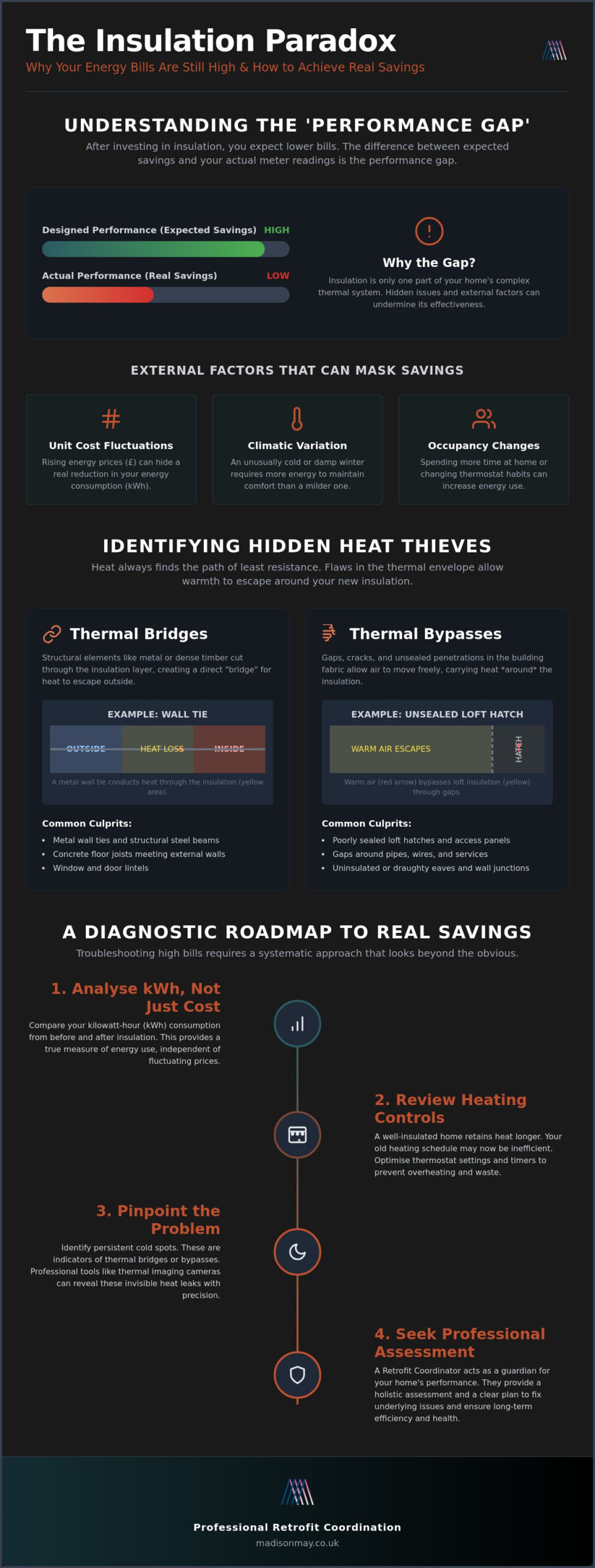
The “Fabric First” approach dictates that the order of improvements is as vital as the materials chosen. When we prioritise the building’s core structure, we ensure that every subsequent upgrade, from heating systems to windows, performs at its peak. However, if insulation is applied without considering the continuity of the thermal layer, heat will naturally find the path of least resistance. A Thermal bridge can occur where structural elements like wall ties or floor joists cut through the insulation, creating a direct conduit for heat to escape into the cold air outside. True efficiency is an art of meticulous detail, where airtightness and insulation work in a rhythmic union to prevent these invisible leaks from compromising your comfort and the “Art of Warmth” you wish to cultivate.
External Factors Masking Your Savings
When you’re troubleshooting high bills after insulation, it’s also possible that your home is performing better, but external variables are obscuring the evidence. It’s helpful to consider these common factors:
- Unit Cost Fluctuations: Rising energy prices can easily mask a reduction in the actual kilowatt-hours (kWh) consumed.
- Climatic Variation: An unusually cold or damp season will require more energy to maintain a steady internal temperature than the previous year.
- Occupancy Changes: More time spent at home or a change in thermostat habits can offset the physical savings provided by new materials.
Ultimately, the performance gap is the discrepancy between designed energy use and real-world meter readings. Identifying this gap is the first step towards restoring the thermal harmony your home deserves.
Identifying Hidden Thermal Bridges and Bypasses
While insulation acts as a protective mantle for your home, its efficacy is entirely dependent on its continuity. Heat is a patient traveller, always seeking the path of least resistance. In many properties, this path is paved by structural elements such as wall ties, floor joists, or steel lintels that penetrate the insulation layer. This phenomenon, known as thermal bridging, creates a direct conduit for warmth to flee into the external environment, leaving behind cold spots that disrupt the calm of your living space. When you’re troubleshooting high bills after insulation, these structural shortcuts are often the primary culprits, quietly draining energy and undermining your investment.
Equally subtle is the “thermal bypass”. This occurs when air moves through gaps or cavities, carrying heat around the very material meant to trap it. You might have the highest quality mineral wool in your loft, but if it’s rendered ineffective by a poorly sealed loft hatch or uninsulated eaves, the performance will suffer. These small, overlooked apertures act like an open window, allowing the warmth you’ve paid for to dissipate into the night sky. If you suspect your roof’s integrity is compromising your insulation’s performance, click here to find out more about professional roofing services. True thermal harmony requires a seamless wrap, where every edge and junction is treated with the meticulous craftsmanship your home deserves.
The Science of Cold Spots
When specific corners of a room remain stubbornly chilly, it’s rarely a coincidence. These cold surfaces represent a failure in the thermal envelope, encouraging atmospheric moisture to settle and creating the conditions for damp to flourish. Our building surveys utilise a diagnostic approach to map these invisible flaws, ensuring your sanctuary remains both dry and dignified. By identifying where the fabric of your home is compromised, we can move beyond guesswork and towards a definitive solution that protects both your property and your peace of mind.
Air Leakage: The Invisible Heat Thief
A home must be “tight” yet “breathable” to function as a healthy refuge. Unplanned air infiltration through floorboards, chimney flues, or service penetrations acts as an invisible heat thief, pulling cold air in whilst pushing warm air out. It’s a delicate balance to strike, as insulation and ventilation work together to maintain a stable indoor climate. Without addressing these unintended leaks, your new insulation is like wearing a heavy coat but leaving it unzipped. Engaging in professional retrofit coordination ensures that air-tightness is addressed alongside insulation, creating a truly efficient and comfortable environment that resonates on a personal level.
The Ventilation Gap: Why Adding Insulation Changes Home Behaviour
When we wrap our homes in high-performance materials, we often inadvertently alter the delicate atmospheric balance within. A traditional property naturally “breathes” through small gaps in its fabric, but modern insulation seeks to seal these apertures to retain warmth. While this is essential for efficiency, it creates a new requirement for a more sophisticated approach to air exchange. Troubleshooting high bills after insulation requires an understanding that a home is a living entity; when you change its skin, you must also consider its breath.
Neglecting the standards set out in “Approved Document F” during energy works is a frequent cause of performance failure. There is a common misconception that opening windows defeats the purpose of your new insulation. In reality, controlled ventilation is the only way to prevent your sanctuary from becoming a sealed box of stagnant, heavy air. Without a planned strategy for air movement, the humidity generated by daily life has nowhere to go, leading to a hidden energy drain that many homeowners fail to recognise.
The Cost of Damp Air
The scientific reality is that moist air is significantly more expensive to heat than dry air. Water has a much higher heat capacity than oxygen or nitrogen, meaning your boiler must work considerably harder to raise the temperature of a humid room. When moisture levels remain high, the air feels “heavy” and requires more kilowatt-hours to reach a comfortable state. Persistent condensation doesn’t just feel unpleasant; it can eventually seep into your new insulation materials. Once mineral wool or cellulose becomes damp, its U-value drops sharply, as water conducts heat far more effectively than the trapped air pockets within the material. A professional ventilation assessment ensures that your home remains dry, light, and effortless to warm.
PAS 2035 and the Whole-House Approach
To protect homeowners from the pitfalls of uncoordinated works, the UK government introduced the PAS 2035 framework. This standard moves away from the “single-measure” mindset that has historically plagued the industry. When an installer adds insulation without considering the impact on the rest of the building, the result is often the very high bills and damp issues you’re currently facing. A truly effective retrofit treats the property as a single, integrated system. This is why we advocate for a meticulous EPC improvement plan that balances thermal retention with adequate ventilation. By following a whole-house roadmap, you ensure that every measure works in harmony, securing the long-term health of your property and the lasting comfort of your lifestyle.
A Diagnostic Roadmap: Troubleshooting Your Energy Performance
Restoring the thermal equilibrium of your home requires a transition from intuition to evidence. When troubleshooting high bills after insulation, the process begins with a quiet, methodical analysis rather than immediate action. It’s easy to be misled by the financial figure on a monthly statement, but currency is a volatile metric in an era of fluctuating energy prices. To understand the true performance of your property, you must look at the raw energy consumed, measured in kilowatt-hours (kWh). This data provides the only objective truth regarding how your home’s fabric is behaving.
Evaluate your heating system with the same scrutiny. Insulation fundamentally changes the thermal inertia of a space; it warms more rapidly and retains that warmth with greater tenacity. If your boiler continues to operate at high flow temperatures or follows an old, aggressive schedule, you’re likely overshooting the comfort levels of your sanctuary and wasting energy in the process. A simple sensory survey can also be revealing. On a still, cold evening, a mindful walk through your rooms may uncover lingering draughts near floorboards or service penetrations that your new insulation has failed to address. Ultimately, DIY diagnostics have their limits, and commissioning a professional assessment is often the only way to uncover the hidden defects that compromise your home’s integrity.
Analysing the Data
Smart meter data provides an evocative window into your home’s daily rhythm, allowing you to track “ramp-up” times and identify peak consumption periods. You should compare kWh usage from the previous year, whilst adjusting for seasonal changes, to determine if your energy consumption has truly decreased. By comparing these figures against degree days, which account for external temperature variations, you can separate the impact of a harsh winter from the actual performance of your home’s fabric.
Advanced Diagnostic Tools
For those who value precision, advanced tools offer absolute clarity. Thermal imaging allows us to visualise heat loss, turning invisible thermal bridges into a clear map of necessary corrections. This is often complemented by air pressure testing, which remains the gold standard for identifying unplanned air infiltration. A PAS 2035 retrofit assessment integrates these technical findings into a cohesive strategy for your property. To secure the thermal harmony you deserve, you may wish to arrange a professional retrofit assessment to identify every hidden gap in your home’s efficiency.
The Meticulous Path to Efficiency: Professional Retrofit Coordination
The journey towards a truly efficient home is rarely linear; it is a meticulous path that requires both visionary creativity and technical precision. When you find yourself troubleshooting high bills after insulation, the solution often lies in the appointment of a Retrofit Coordinator. Acting as a dedicated project guardian, these professionals oversee the delicate transitions between various energy-efficient home improvements, ensuring that the theoretical savings of a design are actually realised within your walls. This level of stewardship is vital for protecting the long-term value of your property, ensuring that all works comply with the rigorous demands of PAS 2035 and building regulations whilst maintaining the house’s unique character.
Choosing a professional who operates on a fixed-fee basis provides a sense of calm and luxury, as you are receiving unbiased advice tailored specifically to your home’s unique heritage. This approach elevates the conversation from a list of functional tasks to a transformative artistic journey. It allows you to focus on the emotional impact of a well-designed space, secure in the knowledge that the technical complexities are being managed with poise and visionary expertise. By investing in professional coordination, you’re not just fixing a performance gap; you’re ensuring that every detail is intentional and every material is chosen with care to create a lasting legacy of comfort.
The Role of the Retrofit Coordinator
The presence of a coordinator prevents the performance gap from recurring in future upgrades by ensuring all measures work in a steady, graceful rhythm. They meticulously manage the intersection of fabric and fittings, such as the harmonious integration of wall insulation with high-performance bespoke windows and doors. This coordinated plan ensures that every material contributes to a seamless experience of warmth, preventing the uncoordinated “single-measure” installs that often lead to troubleshooting high bills after insulation further down the line.
Creating Your EPC Roadmap
Whilst a standard EPC provides a generic rating, a bespoke EPC Improvement Plan offers a sophisticated roadmap for your property’s evolution. It allows you to prioritise measures based on their ability to restore thermal harmony, focusing on the intersection of functionality and beauty. By identifying the most cost-effective path to efficiency, you can move forward with quiet confidence, inviting a sense of ease back into your home as you craft a deeply personal refuge that reflects your identity and provides a true sanctuary from the world outside.
Restoring the Art of Comfort
Reclaiming the warmth and serenity of your home requires moving beyond a simple installation mindset and embracing a whole-house philosophy. We’ve explored how invisible thermal bridges and uncoordinated ventilation can undermine even the most significant investments. When you are troubleshooting high bills after insulation, success lies in viewing the data and the building’s fabric as one integrated, breathing system. True efficiency is never an accident; it’s the result of intentional design and meticulous execution.
Lasting peace of mind comes from professional oversight and a clear, diagnostic plan. Our PAS 2035 aligned assessments and expert retrofit coordination provide the technical clarity needed to close the performance gap for good. By choosing our fixed-fee professional consultancy, you’re securing a definitive roadmap for your property’s long-term health and efficiency. Book your professional Retrofit Assessment with Madison May today and begin the journey toward a more serene, sustainable sanctuary. Your home deserves to be a perfect refuge of enduring quality and warmth.
Frequently Asked Questions
Why is my house still cold after cavity wall insulation?
A cold home after cavity insulation often stems from “voids” or gaps where the material hasn’t settled uniformly within the wall. If debris remains within the cavity, it creates a bridge for cold to enter, disrupting the thermal harmony you expect. Troubleshooting high bills after insulation in these cases usually requires a specialist borescope inspection or thermal imaging to reveal exactly where the protective layer is failing to perform.
Can new insulation actually make my energy bills go up?
Insulation itself won’t increase your energy consumption, but poor installation can lead to high relative humidity within your living spaces. Moist air requires significantly more energy to warm than dry air, which may lead to higher bills if your ventilation hasn’t been modernised alongside the insulation. Additionally, rising energy unit costs often obscure the actual reduction in your kilowatt-hour usage. It’s essential to analyse your consumption data to find the truth.
How do I know if my insulation was installed correctly?
The most reliable way to verify an installation is through a professional building survey or thermal imaging session. You might notice physical signs like persistent cold spots on walls or patches of mould that suggest the insulation is discontinuous. A Retrofit Coordinator can evaluate the work against PAS 2035 standards, ensuring that the intersection of materials is seamless and that no hidden thermal bypasses are compromising your sanctuary’s efficiency.
What is a thermal bridge and how does it affect my heating bill?
A thermal bridge is a structural shortcut, such as a metal lintel or timber joist, that allows heat to bypass your insulation entirely. These elements conduct warmth from the interior to the cold exterior far more efficiently than the surrounding insulated fabric. This invisible drain forces your heating system to work harder to maintain a steady temperature. Identifying these bridges is a key part of troubleshooting high bills after insulation and restoring balance to your home.
Is it normal to have more condensation after insulating my loft?
Increased condensation is a frequent side effect of insulating a loft without addressing the breathability of the space. By sealing the loft, you trap moisture generated from daily life within the home’s envelope. Without adequate ventilation, this moisture settles on cold surfaces, leading to damp and potential mould. A professional assessment ensures that your loft insulation is balanced with sophisticated air exchange, protecting both your property’s heritage and your personal health.
To see how these principles are applied by specialists in other regions, you can find out more about professional roofing and gutter services that prioritise a home’s thermal integrity.
How much can a professional retrofit assessment save me?
A professional retrofit assessment saves you from the financial frustration of investing in uncoordinated or ineffective home improvements. By identifying the specific performance gap in your property, it ensures that your future investments are targeted and technically sound. Whilst we don’t quote specific monetary savings, the insights gained prevent the costly cycle of trial and error. It provides a definitive, expert roadmap toward a more effortless and sustainable way of living.
What should I do if my energy bills are still high after multiple upgrades?
If your bills remain high after multiple works, you likely require a whole-house diagnostic plan to uncover uncoordinated measures. It’s possible that your heating controls aren’t optimised for your new thermal envelope or that hidden draughts are negating your upgrades. Commissioning a Retrofit Coordinator allows for a meticulous review of how your windows, doors, and insulation interact. This professional oversight is often the final step in securing the sanctuary you’ve been building.
Does a higher EPC rating always mean lower energy bills?
An EPC rating is a theoretical model of a building’s potential, but it doesn’t always reflect real-world energy costs or occupant behaviour. Factors such as your specific heating habits, the accuracy of the original assessment, and the presence of thermal bridges can all create a performance gap. A higher rating is a wonderful aspiration, but true efficiency requires a bespoke improvement plan that considers the unique story and physical reality of your specific home.