

What if the pursuit of a warmer home didn’t require sacrificing the historic soul of your period terrace or stone cottage? Many homeowners find themselves caught between the desire for contemporary comfort and the need to protect the architectural integrity of their property. You’ve likely felt that intrusive chill whilst relaxing in a quiet corner, or perhaps you’ve watched energy bills climb despite your best efforts to insulate. It’s a common frustration to feel that your sense of sanctuary is being disrupted by persistent draughts, yet the fear that insensitive modern upgrades might ruin a heritage facade often leads to hesitation.
Finding the right energy efficient windows your property requires involves more than just a simple replacement; it’s a transformative journey that respects the past whilst embracing the future. This guide will show you how to harmonise architectural heritage with exceptional thermal performance through a meticulous, whole-house approach. We’ll demystify technical jargon and explain why a professional retrofit assessment is the essential first step for any discerning homeowner. By the end, you’ll understand how to create a home that feels serene, warm, and perfectly aligned with modern energy standards, ensuring your property remains a beautiful, curated refuge for years to come.
Key Takeaways
- Learn how to select the energy efficient windows Halifax properties require to eliminate disruptive draughts whilst meticulously preserving architectural heritage.
- Understand the technical nuances of U-values and thermal breaks to ensure your investment delivers measurable warmth and a refined, serene atmosphere.
- Discover why window upgrades must be integrated into a ‘fabric first’ retrofit framework to prevent unintended consequences like damp and poor ventilation.
- Explore the art of harmonising modern high-performance glazing with timeless materials that honour your home’s unique history and character.
- Recognise how a professional PAS 2035 assessment serves as a guardian for your project, ensuring every detail contributes to a cohesive and efficient sanctuary.
The Poetics of Thermal Comfort: Why Windows Define the Home’s Sanctuary
A window is a silent narrator of a home’s story. It frames the shifting light of the seasons whilst protecting the quiet life within. In many traditional properties across West Yorkshire, however, this narrative is often interrupted by the “silent thieves” of comfort: single glazing and persistent draughts. These elements do more than just increase energy bills; they strip away the sense of sanctuary, creating cold spots that force us to retreat from the very spaces designed for our relaxation. When you can no longer sit comfortably by a window to read or enjoy the view because of a lingering chill, the home’s role as a refuge is compromised.
Achieving thermal consistency is as much a psychological benefit as it is a physical one. There is a profound sense of peace that comes from knowing every corner of your home is equally warm and inviting. By removing the erratic temperature fluctuations associated with older frames, you restore the balance of your living environment. This meticulous attention to detail ensures that the thermal performance of your home matches its aesthetic beauty, creating a seamless experience of luxury and calm that resonates through every room.
The Pennine Climate and the Necessity of Performance
Living in the shadow of the Pennines brings a unique set of architectural challenges. Traditional stone dwellings, whilst beautiful, are susceptible to wind-driven heat loss that can make a room feel perpetually unsettled. Selecting the right energy efficient windows Halifax homeowners require means creating a robust thermal break between the harsh exterior elements and your interior life. By understanding The Art and Science of High-Efficiency Glazing, we can appreciate how modern technology provides a barrier that invites light whilst strictly excluding the cold. This transition turns a draughty residence into a thermally efficient refuge where the weather is observed, not felt.
The Economic and Aesthetic Argument for Upgrades
Decoding Performance: The Art and Science of High-Efficiency Glazing
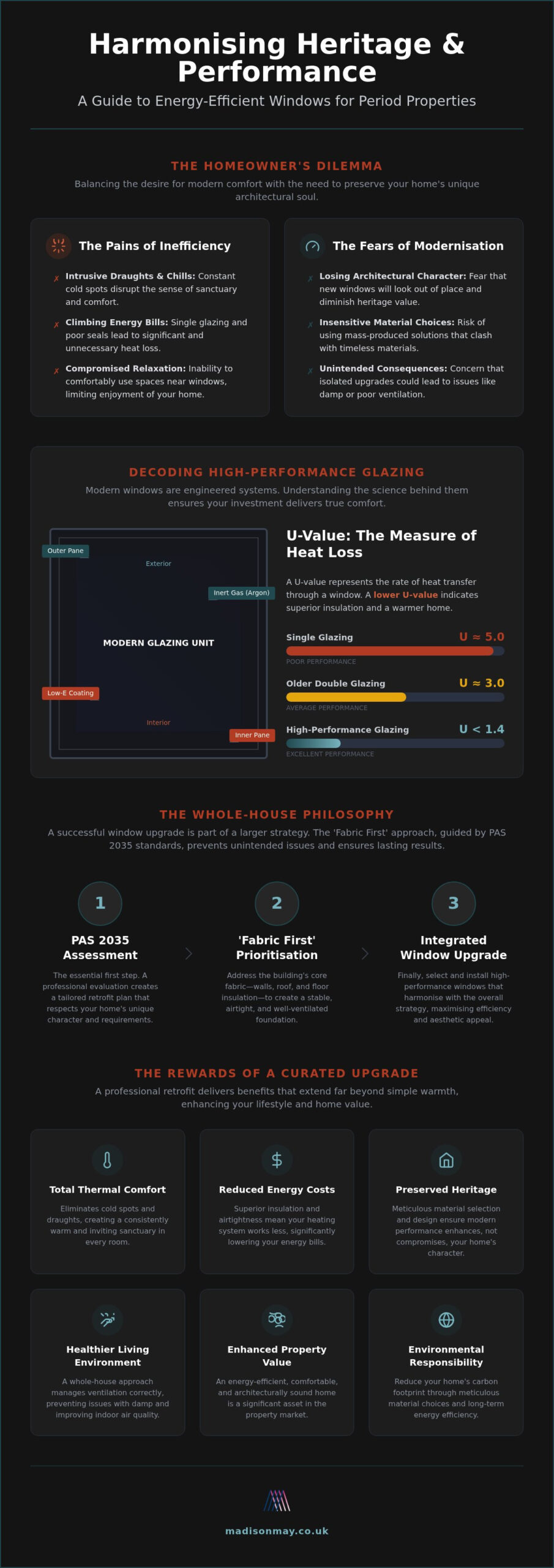
To achieve the sanctuary described previously, one must look beneath the surface of the glass. High-performance windows are marvels of modern engineering, designed with a level of precision that ensures long-term comfort. Understanding the metrics behind these units allows you to make an informed choice that balances beauty with measurable efficiency. Precision matters. Decoding window performance requires a look at how heat moves through different materials and coatings. A U-value is the rate of heat transfer through a structure, where a lower figure represents superior insulation.
Modern units utilise invisible layers of Low-Emissivity (Low-E) coatings to reflect internal warmth back into your living space. This ensures that the energy you pay for remains exactly where it belongs. Between the panes, inert gases like argon or krypton provide a denser barrier than standard air, significantly slowing thermal transfer. We must also consider the G-value, or solar gain. This metric manages the delicate balance of harvesting natural warmth from the sun whilst preventing the discomfort of overheating during the brighter months. Finding the right energy efficient windows Halifax homeowners can rely on involves harmonising these technical factors with your home’s orientation.
Double vs. Triple Glazing: A Sophisticated Comparison
Whilst double glazing remains a standard of excellence, triple glazing is often the essential choice for those seeking the ultimate in acoustic and thermal serenity. It’s particularly effective for homes near busier roads or exposed hillsides where wind noise can be intrusive. However, the additional pane increases the weight and structural requirements of the installation. Choosing the right glazing depth is vital to ensure the new units fit the narrative of your existing frames without appearing bulky or out of place.
The Invisible Details of Window Construction
The integrity of a window unit depends on details that are often hidden from view. Warm-edge spacers and multi-chambered frames are critical components that prevent a “thermal bridge,” where heat bypasses the glass through the frame itself. Airtight seals are equally important; even the most advanced glass cannot compensate for a frame that allows air leakage. A tailored Retrofit Assessment provides the clarity needed to ensure these invisible details work in harmony with your property’s unique structure, protecting your investment and your comfort.
Materiality and Heritage: Harmonising Frames with Architectural Narrative
The choice of frame material is a pivotal moment in the design process. It requires a deep understanding of the building’s existing narrative and its place within the local landscape. Selecting the right energy efficient windows Halifax properties require often comes down to this delicate dialogue between history and performance. It is here that we move beyond mere utility and begin to curate the visual identity of the property, ensuring that every new installation feels like an organic evolution rather than a modern intrusion. This meticulous attention to materiality ensures that the sanctuary you build is as beautiful as it is warm.
Timeless timber remains the pre-eminent choice for heritage properties. It offers a warmth and authenticity that synthetic materials simply cannot replicate. When sourced sustainably, timber frames provide an enduring legacy, maturing gracefully alongside the stone or brickwork of a traditional home. For those pursuing a more contemporary aesthetic, perhaps for a minimalist extension or a mid-century renovation, architectural aluminium offers sleek sightlines and exceptional structural strength. Meanwhile, the evolution of composite materials has introduced a new chapter in window design; these frames offer the tactile aesthetic of wood combined with the enhanced durability of modern polymers, creating a balanced solution for the discerning homeowner.
Navigating Conservation Areas and Listed Building Consent
Many residences in West Yorkshire sit within protected conservation areas where the preservation of the streetscape is paramount. In these instances, the path to efficiency requires a specialised touch. Secondary glazing often serves as a discreet solution for the most sensitive facades, allowing for significant thermal improvement without altering the original external glass. Alternatively, bespoke timber profiles can be meticulously crafted to mirror historic joinery, satisfying strict planning requirements whilst delivering modern comfort. Working with a consultant who acts as a project guardian ensures that the intersection of regulation and beauty is managed with poise and expertise.
Colour and Finish: The Final Layer of Design
The final layer of your home’s thermal transformation is the curation of colour and hardware. A thoughtful palette should complement the natural hues of local millstone grit or traditional brickwork, grounding the property in its environment. Beyond the visual, the tactile experience of quality hardware provides a daily reminder of the home’s craftsmanship. Handles and stays should feel substantial and deliberate, reflecting the care taken in every other aspect of the project. For more inspiration on tailoring these details, consider Choosing bespoke windows and doors for your West Yorkshire sanctuary to elevate your home’s aesthetic and functional harmony. This integrated approach ensures that every element of your window upgrade contributes to a sense of refined, enduring quality.
The Whole-House Philosophy: Why Windows Require a Retrofit Framework
Replacing windows in isolation is a common mistake that can disrupt the delicate equilibrium of a historic home. Whilst the allure of new glass is strong, installing high-performance units without considering the rest of the building’s fabric can lead to unintended consequences. When a property becomes suddenly airtight, moisture that once escaped through draughty frames can settle on cold surfaces, leading to damp or mould. This is why a ‘Fabric First’ approach is essential. Your windows must work in harmony with wall and loft insulation to create a truly cohesive thermal envelope that protects the building’s integrity.
When searching for the best energy efficient windows Halifax has to offer, it’s vital to view them as one chapter in a comprehensive building survey. Adhering to the PAS 2035 standard ensures that every improvement is safe, effective, and tailored to the specific needs of the property. This professional framework acts as a project guardian, moving beyond simple aesthetics to consider how each change affects the building’s overall health and performance. By treating the home as a single, interconnected system, we ensure that modern upgrades don’t compromise the architectural soul of the dwelling.
The Ventilation Gap: Breathing Life into Your Property
Modern Building Regulations, specifically Part F, mandate that we don’t just “seal” a house but “ventilate” it correctly. Controlled ventilation, often achieved through discreet trickle vents or sophisticated mechanical systems, ensures that indoor air quality remains high whilst heat is retained. It’s a balance of science and comfort that prevents the air from becoming stagnant or humid, ensuring your sanctuary remains a healthy environment for its inhabitants.
The Retrofit Assessment Process: A Five-Step Journey
The path to a thermally efficient sanctuary is a structured one, designed to provide clarity and confidence at every stage. Choosing energy efficient windows Halifax homeowners can trust starts with this meticulous five-step journey:
- Step 1: Data Collection. A meticulous audit of the building’s current state and historical fabric.
- Step 2: Thermal Imaging. Utilising advanced technology to uncover hidden paths of heat escape and cold bridging.
- Step 3: EPC Improvement Plan. Creating a bespoke, logical sequence of upgrades tailored specifically for your property.
- Step 4: Retrofit Coordination. Professional oversight to ensure every technical installation meets the highest standards of craftsmanship.
- Step 5: Post-Installation Evaluation. A final review to ensure the thermal performance and sanctuary you envisioned are fully realised.
To ensure your home improvement project is managed with this level of professional care, consider booking a professional Retrofit Assessment as your first vital step. This ensures that every pound spent contributes to a warmer, more elegant, and enduring home.
Crafting Your Sanctuary: The Madison May Consulting Ltd Experience
Madison May Consulting Ltd occupies a unique position in the landscape of home improvement, acting as a trusted design and efficiency partner for those who value the intersection of heritage and modern performance. Selecting the right energy efficient windows Halifax property owners invest in is a significant decision, one that requires more than a simple sales pitch; it demands an attentive listener who prioritises your personal story and the unique architectural needs of your home. By positioning ourselves as consultants rather than contractors, we provide the quiet confidence and visionary creativity needed to transform a draughty house into a thermally perfect refuge.
Our commitment to understated elegance is reflected in our meticulous approach to every assessment. We understand that a well-designed space is about more than just numbers on a certificate; it’s about the emotional impact of a room that feels consistently warm and serene. Madison May Consulting Ltd guides you through the complexities of energy grants and regulatory compliance with the poise of a sophisticated guide, ensuring that every material chosen and every detail planned is intentional, contributing to a home that resonates on a deeply personal level.
A Roadmap for Your Home’s Future
Clarity is the foundation of any successful renovation. A meticulous EPC improvement plan provides a clear, logical vision for your property, ensuring that every upgrade is sequenced to maximise performance and value. This roadmap removes the guesswork, offering the peace of mind that comes from independent, expert advice. Because Madison May Consulting Ltd operates on a fixed-fee basis, our recommendations remain entirely objective, focused solely on the enduring legacy of your home. We oversee the technical coordination, ensuring that the installation of your energy efficient windows Halifax units integrates seamlessly with the broader fabric of the building.
Begin Your Consultation Journey
Every transformation begins with a single spark of inspiration, an invitation to share your home’s story and your vision for its future performance. The first step is often the most vital: booking a PAS 2035 aligned assessment. This professional survey serves as a guardian for your project, protecting your investment from the unintended consequences of isolated upgrades. For those seeking a broader perspective, our guide on energy efficient home improvements in Halifax: a West Yorkshire guide offers further insight into creating a sustainable sanctuary. Let Madison May Consulting Ltd help you navigate the complexities of the design process with grace, moving steadily toward a home that is as efficient as it is beautiful.
Securing the Future of Your West Yorkshire Sanctuary
The transition to a thermally efficient home is a journey of refinement, where every choice reflects a commitment to quality and architectural integrity. We’ve explored how selecting the right energy efficient windows Halifax properties require is not merely a functional upgrade, but a curated design choice that balances advanced thermal science with the timeless beauty of your home’s original narrative. By embracing a whole-house philosophy through the PAS 2035 framework, you ensure that your improvements are safe, sustainable, and deeply sympathetic to your building’s unique character. This approach prevents unintended consequences like damp, instead fostering a space that feels consistently warm and serene.
Madison May Consulting Ltd stands as your project guardian, offering fixed-fee independent consultancy and expert heritage property guidance. Our PAS 2035 aligned retrofit assessments provide the data-driven roadmap your property deserves, allowing you to invest with confidence and poise. We invite you to begin your journey to a more refined, energy efficient home with a professional assessment. It’s time to reclaim your sense of sanctuary and ensure your home remains a source of comfort and pride for generations to come. We look forward to helping you craft a space that truly resonates.
Frequently Asked Questions
What is the most energy efficient window material for a heritage home?
Sustainable timber is the pre-eminent choice for heritage properties because it offers natural insulating properties combined with architectural authenticity. Unlike synthetic alternatives, high-quality timber frames can be meticulously crafted to match historic profiles whilst providing the robust thermal break necessary for modern comfort. This material matures gracefully alongside traditional stone, ensuring your home’s aesthetic remains as enduring as its warmth.
How much can I realistically save on my heating bills with new windows?
Upgrading from single glazing to high-performance double glazing can reduce the heat loss through your windows by approximately 18% or more. Whilst the Energy Saving Trust indicates that a typical semi-detached home might save around £85 annually, the true value lies in the reduction of your carbon footprint and the removal of cold spots. The resulting thermal consistency allows you to lower your thermostat without compromising your sense of sanctuary.
Do I really need a retrofit assessment before replacing my windows?
Yes, a professional retrofit assessment is the essential first step to ensure your window upgrades don’t cause unintended structural issues. It provides a whole-house perspective, ensuring that new energy efficient windows Halifax installations are properly integrated with your property’s existing insulation and ventilation systems. This framework acts as a project guardian, protecting your investment and the long-term health of your home.
Will installing energy efficient windows cause condensation or mould?
High-performance windows won’t cause mould if they are installed as part of a balanced ventilation strategy, though they can trap moisture if a property becomes too airtight. This is why professional assessments prioritise Building Regulations Part F, ensuring that whilst you retain heat, your property still breathes effectively. This careful balance prevents the build-up of humidity and protects your interior from the risk of damp.
What is the difference between double and triple glazing for acoustic insulation?
Triple glazing offers superior acoustic insulation by adding an extra pane and an additional gas-filled cavity to dampen sound waves. It’s particularly effective at reducing low-frequency noise from heavy traffic or wind, creating a deeper sense of serenity in homes exposed to busy West Yorkshire roads. For those seeking the ultimate in acoustic and thermal performance, the additional pane provides a significant barrier against the external world.
Can I get a grant for energy efficient windows in the UK?
Grants such as the Great British Insulation Scheme or the Home Upgrade Grant (HUG) may be available depending on your property’s current EPC rating and your household income. Eligibility criteria often change, so it’s vital to consult with an independent expert who can help you navigate the current landscape of government incentives. These schemes often require a PAS 2035 aligned assessment to ensure the upgrades meet strict quality standards.
How do U-values affect the energy rating of my property?
A U-value measures the rate of heat transfer through a window; a lower figure represents superior insulation and better heat retention. Improving these values through energy efficient windows Halifax upgrades can directly boost your property’s EPC rating. A higher rating not only reduces your environmental impact but can also enhance the market value of your home, making it more attractive to future buyers who value efficiency.
What are trickle vents and are they compulsory for new windows?
Trickle vents are small, discreet openings in a window frame that provide background ventilation, and they are generally compulsory for replacement windows under Building Regulations Part F. They play a vital role in maintaining indoor air quality and preventing moisture build-up without causing the intrusive draughts associated with older, poorly sealed frames. They ensure your home remains healthy and fresh whilst your new glazing keeps the warmth inside.