

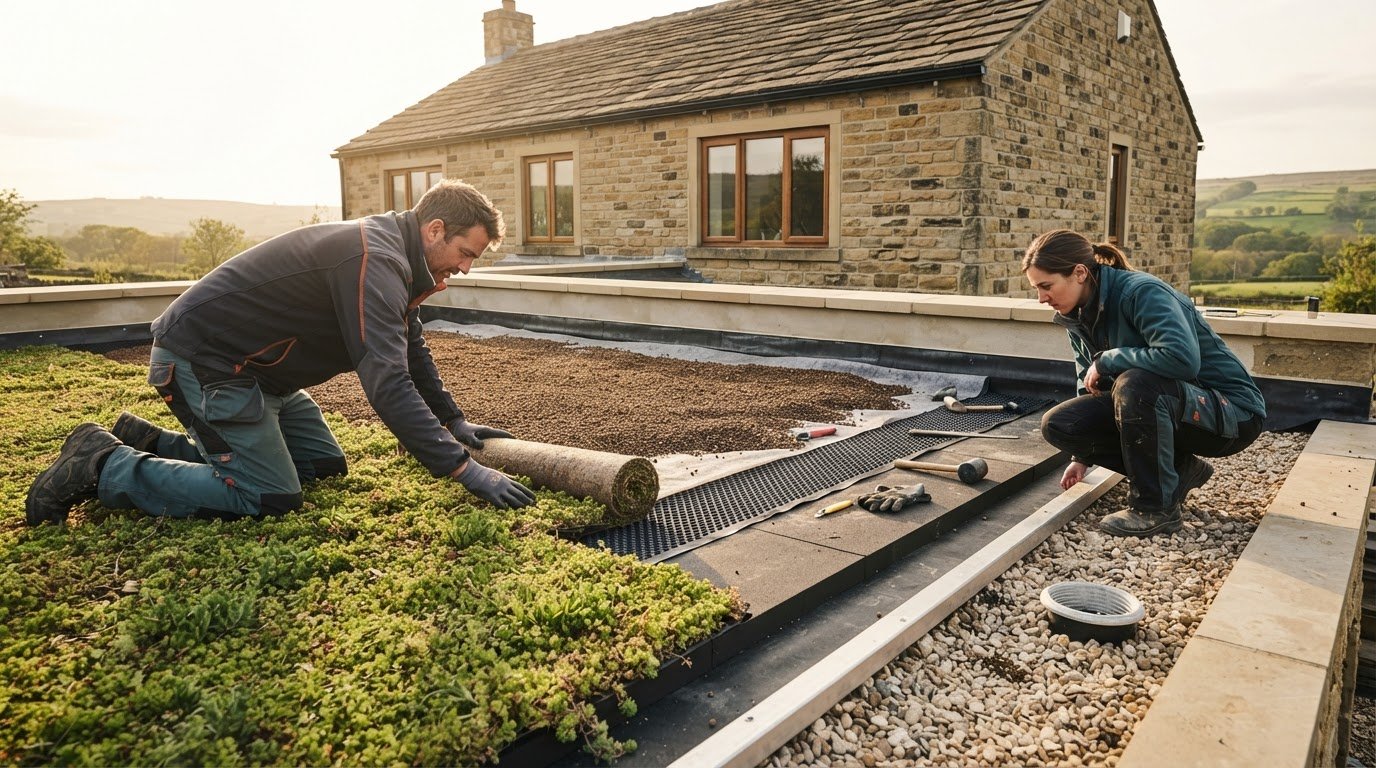
A green roof can add insulation, but it does not replace conventional roof insulation as the main thermal barrier. The green roof benefits for insulation come from an additional layer that may help limit heat loss in winter and keep a building cooler in summer. The effect depends on moisture levels and roof design.
It is understandable to expect a planted roof to improve comfort and energy use. To understand the green roof benefits for insulation, consider how the planted layer works alongside the insulation beneath it, rather than instead of it.
This comparison explains how green roofs differ from conventional insulation, how they may affect cooling demand and fuel bills, and which practical factors shape their performance. It also explains why a whole-home assessment can help identify whether roof insulation or other improvements are likely to make the greatest difference to your property.
Key Takeaways
- Treat a planted roof as a supplementary layer, not a substitute for the roof’s main insulation.
- Understand how shade and moisture can influence indoor temperatures and cooling demand.
- Factor in roof structure, drainage and growing-medium depth when considering an extensive green roof.
- See how a whole-home view of heat loss can help put potential fuel-bill savings in context.
Do green roofs insulate as well as traditional insulation?
No. A green roof adds a supplementary layer, while conventional insulation remains the roof’s primary thermal barrier. Its contribution depends partly on moisture levels and the roof’s construction.
Green roof thermal performance
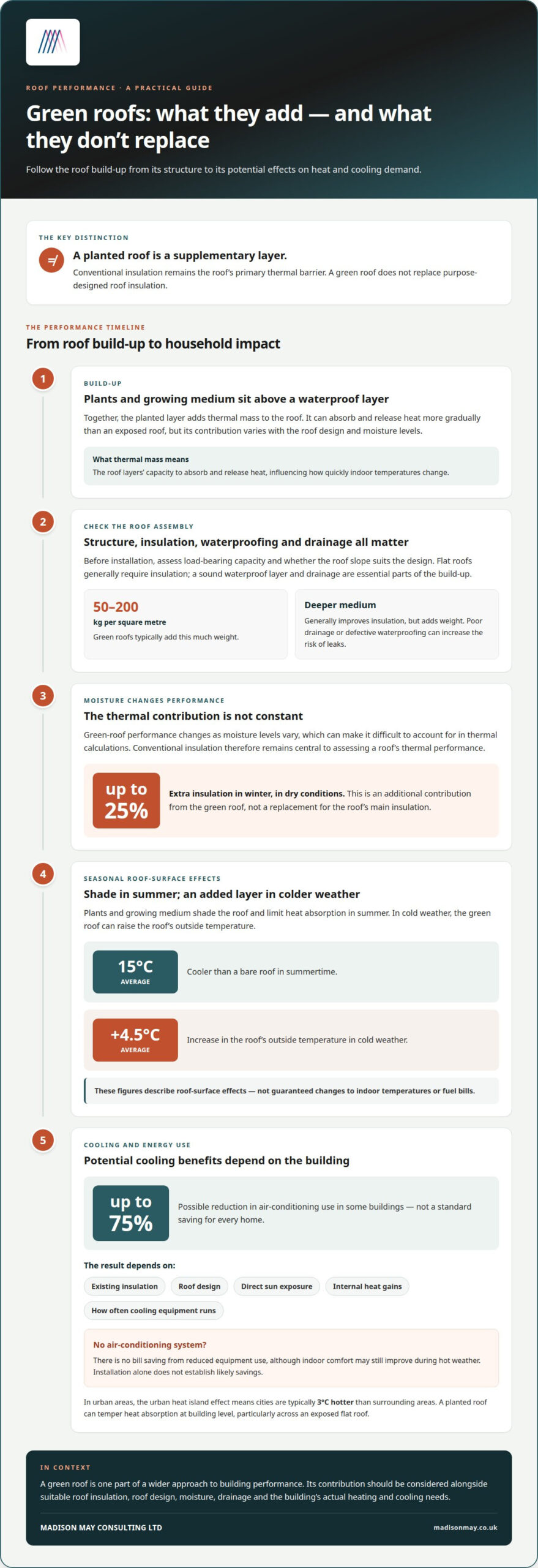
A green roof combines plants and growing medium above a waterproof layer, adding thermal mass to the roof. In dry conditions, it can provide up to 25% extra insulation during the winter months. This may reduce heat transfer, but the layer doesn’t perform as a direct replacement for purpose-designed roof insulation. The distinction matters when planning comfort and energy efficiency.
Calculating thermal benefits
Thermal calculations estimate heat flow through a roof, but green-roof performance changes as moisture levels vary. Moisture levels vary, so the thermal contribution of green roofs can be difficult to account for in calculations. Conventional insulation therefore remains central to calculating a roof’s thermal performance. In the UK, flat roofs generally require insulation. Planning permission is not needed for most domestic and commercial green roof installations, but local planning requirements can vary, so check with your local council.
Summer and winter insulation
In summer, plants and growing medium shade the roof and limit heat absorption, which can help keep rooms cooler. A green roof can keep a property cooler than a bare roof by an average of 15°C in summertime. In cold weather, it can raise the roof’s outside temperature by an average of 4.5°C. These figures describe roof-surface effects, not guaranteed indoor temperature changes or fuel-bill savings.
Thermal mass and energy efficiency
Thermal mass is the capacity of roof layers to absorb and release heat, influencing how quickly temperatures change indoors. A deeper growing-medium layer generally improves insulation, but adds weight. Green roofs typically add between 50 and 200 kg per square metre, so excess load and poor drainage are important design risks. Defective waterproofing can also lead to leaks.
Cooling and air-conditioning demand
A green roof changes how heat moves between a roof and the rooms below. In summer, vegetation shades the surface, while the growing medium absorbs and releases heat more gradually than an exposed roof. This effect matters in urban areas, where the urban heat island effect makes cities typically 3°C hotter than surrounding areas. A planted roof can temper heat absorption at building level, particularly across an exposed flat roof.
Green roofs can reduce air-conditioning use by up to 75% in some buildings. That figure describes a possible reduction, not a standard saving for every home. The result depends on the building’s existing insulation, roof design, exposure to direct sun, internal heat gains and how often cooling equipment runs. A home without air-conditioning won’t receive a bill saving from reduced equipment use, though indoor comfort may still improve during hot weather.
Heating and cooling needs are connected: limiting summer heat entering a building may reduce cooling demand, while a green roof also provides some insulation in winter. The balance depends on the roof build-up and changing moisture levels. A roof that holds more moisture behaves differently in drier conditions, so performance can vary by season. Green roofs form one part of a sustainable approach, not a substitute for suitable insulation or efficient heating controls.
For household energy costs, the practical question is how much cooling or heating the property currently needs. Roof exposure, indoor temperatures and the type of heating or cooling equipment all shape the effect on bills. Installation alone doesn’t establish the likely saving: a green roof may reduce air-conditioning demand in a building that uses it frequently, but have little direct effect on cooling costs where no system is used. For a wider view of household energy needs, heating upgrades can be considered alongside insulation and other improvements.
Insulation for extensive green flat roofs
Extensive green roofs use relatively lightweight growing media and vegetation, which can make them more suitable for some existing buildings than deeper systems. Their insulation contribution may be modest, so they supplement rather than replace the roof’s main insulation. Even a shallow layer can absorb heat and provide shade, while plants add habitat and soften the appearance of a flat roof.
Before installation, the roof structure needs enough load-bearing capacity for the complete system, and its slope must suit the design. The build-up needs a sound waterproof layer beneath the growing medium, with drainage to carry excess rainwater away. Flat roofs generally require insulation, so the existing insulation and waterproofing are important parts of the assessment. Poor drainage or a damaged waterproof layer can trap water and increase the risk of leaks.
Scotland’s wet, cold conditions do not rule out a green roof. With effective drainage and waterproofing, these roofs can perform in that climate. Regular rainfall can also support plant growth and reduce the need for irrigation. The balance is important: vegetation needs moisture, but excess water must drain through the system rather than remain against the roof structure.
Green roofs can also create wildlife refuges in cities. Research in Switzerland and the UK has found refuges for rare invertebrate populations, while roof habitats can support birds such as Lapwings, Skylark and Common Tern. These ecological benefits depend on planting and roof design, not insulation alone. For a porch, garage or garden building, an extensive system may offer a lighter retrofit option. For a home, suitability depends on the roof structure and existing insulation. The aim is to integrate vegetation, waterproofing, drainage and insulation into one carefully considered roof assembly.
Insulation and potential fuel-bill reductions
A roof’s thermal performance influences how much heat escapes in winter and enters during warmer weather. Homes in the UK can lose around 25% of their heat through an uninsulated roof, so the existing insulation matters when estimating the contribution of a green roof. Its growing medium and vegetation add another layer, but savings depend on the complete roofing system, not planting alone.
A green roof can reduce heat loss due to wind by up to 50% compared with a bare roof. That comparison is with an exposed roof, not necessarily a home with effective insulation already installed. The distinction is important: where insulation is absent or inadequate, improving the main thermal barrier addresses a different need from adding vegetation above the roof. The material, moisture levels and roof construction all influence heat flow.
The effect on fuel bills depends on the building’s actual energy use. In winter, reducing heat loss means the heating system has less work to do to maintain indoor comfort. In summer, a cooler roof may reduce air-conditioning demand in buildings that use it. The impact on a household bill depends on heating and cooling use, the energy tariff and the performance of existing insulation. A green roof alone does not produce a fixed saving.
For a useful comparison, consider the roof alongside the home’s other heat-loss pathways. An uninsulated loft, draughts around openings and inefficient windows can all affect heating demand, while a green roof addresses the roof surface. Where the main insulation is inadequate, improving it first gives a clearer basis for judging additional measures. This whole-home view helps distinguish a roof’s environmental and comfort benefits from direct bill reductions.
To understand which roof and insulation measures suit your property, explore insulation upgrades as part of a considered energy-efficiency plan.
Madison May Consulting: Insulation upgrades
Madison May Consulting Ltd helps homeowners and landlords identify insulation improvements that may suit their property. Its retrofit assessments and EPC improvement plans review the building fabric, services and ventilation to identify practical ways to reduce heat loss.
A whole-home perspective is useful when weighing roof insulation against a green roof, or when windows, doors or a conservatory may also affect comfort and energy use. Madison May Consulting Ltd supports insulation upgrades and other energy efficient home improvements, with recommendations tailored to the property rather than a single roof feature.
If you are planning improvements and want a clearer view of your options, contact Madison May Consulting Ltd to discuss your property and next steps.
Plan the next improvement around your home
The green roof benefits for insulation are best understood as part of a property-wide plan, not as an isolated feature. Start by deciding what matters most at home: steadier indoor comfort, lower energy use, or making better use of an existing roof. That priority can help determine which improvements to consider first.
Madison May Consulting helps homeowners and landlords consider energy efficient home improvements in the context of their property, including windows and doors or conservatory upgrades. A tailored assessment can clarify the building’s needs and help turn broad intentions into practical next steps.
If you’re ready to explore suitable improvements for your home, contact Madison May Consulting today. A more comfortable, thoughtfully improved home begins with a clear plan.
Frequently Asked Questions
Green Roof Benefits: Why specify a green roof?
A green roof offers more than a planted finish: it can support vegetation, retain rainfall and help protect roofing materials from ultraviolet exposure and temperature fluctuations. A project might, for example, prioritise habitat creation or managing rainwater at source alongside building performance. Suitability still depends on the roof’s structure, waterproofing and drainage, so the design should reflect the building’s purpose as well as its appearance.
How do green roofs improve energy efficiency in Scottish homes?
In Scottish homes, a green roof can moderate heat transfer through the roof, while vegetation shades the surface in warmer weather. The result depends on the roof build-up and how moisture behaves in the local climate. Effective drainage and waterproofing are especially important in wet conditions. If temperatures at home feel uneven, consider the roof as one part of the property’s overall fabric, ventilation and heating performance.
Can green roofs help reduce heating costs in Scotland?
A green roof can contribute to lower heating demand by adding a layer that slows heat movement through the roof. The effect on a Scottish household’s costs depends on existing insulation, the home’s condition, heating use and energy tariff. A green roof will not address heat escaping through uninsulated walls or draughts around windows. Considering these elements together gives a more useful picture of potential savings than looking at the roof alone.
Do green roofs help keep homes cooler in summer as well?
Yes. Vegetation shades the roof, and the growing medium can absorb heat, helping limit how much warmth reaches the rooms below. The effect is most relevant when the roof receives strong sunlight and rooms beneath it become uncomfortably warm. Indoor conditions also depend on windows, ventilation and heat from appliances. A green roof may improve comfort even in a home without air conditioning.
Does the type of green roof affect the U-value of a roof?
Green roofs cannot currently be assigned a U-value, so their thermal contribution is not included in standard roof U-value calculations. The growing medium’s moisture content changes over time, making its thermal performance variable. For an inverted warm roof, the growing medium is not recognised as contributing to the U-value calculation. Roof type and layers still matter when assessing which insulation can be counted in the calculation.
How do green roofs improve insulation and reduce heat loss in winter?
A green roof adds a layer above the roofing system, which can slow heat transfer and reduce exposure to wind and temperature changes. In dry conditions, it can provide additional insulation during winter. The effect varies as moisture levels change, so a green roof should not be treated as a replacement for the roof’s main insulation. If a home has persistent heat loss, its wider insulation and ventilation needs may also warrant attention.