


A search for a comprehensive property assessment may bring up different types of evaluation, so it helps to know what each can tell you. An EPC gives a standardised snapshot, while a retrofit assessment can examine how your home’s building fabric, heating and ventilation work together. That broader view can help explain why some rooms feel cold, or why one upgrade alone may not solve the problem.
It’s understandable to be unsure where heat is escaping or which improvements deserve attention first. Insulation, heating and ventilation affect one another, so acting without a clear picture can lead to a disjointed plan. A property-specific assessment gathers evidence about these elements, giving recommendations a practical foundation rather than treating your home as a generic list of measures.
This guide explains what an assessment can uncover, how it differs from an EPC and how to judge the value of its findings. It also explores how an EPC improvement plan can organise suitable upgrades into a considered sequence, helping you make informed decisions about comfort, energy performance and next steps.
Key Takeaways
- Learn how to distinguish a property-specific retrofit assessment from an EPC or online check.
- See how evidence about your home’s building fabric, heating services and ventilation can build a more complete picture of its energy performance.
- Find out what to gather before an assessment and how to describe comfort concerns without guessing at their cause.
- Understand how a PAS 2035-aligned approach supports joined-up thinking across the whole home.
- Discover how an EPC improvement plan can help organise suitable measures into a considered sequence.
What does a home energy audit assess, and what can it reveal?
A home energy audit is a structured review of a property’s energy performance and opportunities for improvement. A useful assessment looks beyond an energy bill or a single feature, considering how the building fabric, heating and other services, and ventilation interact. The findings depend on the property and the evidence available, so recommendations should reflect the home rather than assume every house needs the same measures. For a foundational overview, see What is a home energy audit.
Which parts of the home are considered during an energy assessment?
An assessment considers the building fabric, the elements that separate indoor and outdoor spaces. This can include insulation, windows and doors, alongside signs or patterns that may indicate heat loss. For example, persistent cold spots or draughts can help identify where to focus questions, but they don’t prove a particular defect on their own.
Heating and other building services also affect overall performance. An assessment considers them in the context of the property, rather than treating the heating system as an isolated upgrade. Ventilation and moisture matter too. Reducing unwanted draughts without considering how fresh air moves through the home could leave an important part of the picture unaddressed. Together, these details can help inform choices about comfort and potential improvements, without guaranteeing a particular reduction in energy use or bills.
What can an assessment tell you that an EPC may not?
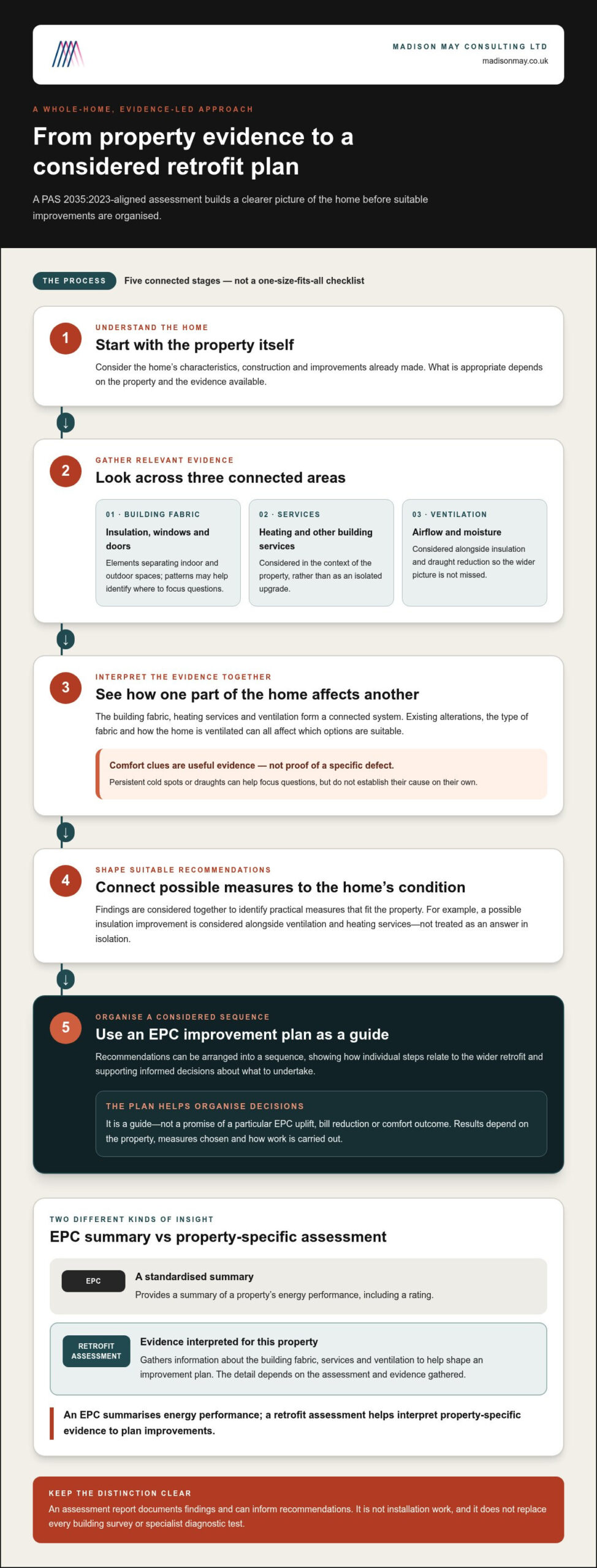
An Energy Performance Certificate (EPC) provides a standardised summary of a property’s energy performance, including a rating. A retrofit assessment gathers property-specific information about the building fabric, services and ventilation to help shape an improvement plan. The level of detail depends on the assessment and the evidence gathered.
An EPC summarises a home’s energy performance; a retrofit assessment helps interpret property-specific evidence to plan improvements.
This distinction helps you choose the right information for the decision ahead. An energy bill review shows what you’ve been charged and how much energy has been used, but it doesn’t identify the building features behind comfort issues or heat loss. An assessment report documents findings and can inform recommendations; it isn’t installation work. Nor does it replace every building survey or specialist diagnostic test, which may be needed to investigate a particular concern. Used in context, it can offer a considered starting point for deciding what to explore and how improvements might fit together.
How a PAS 2035-aligned home energy audit builds a clearer picture
A home energy audit is most useful when it looks at the property as a connected system, rather than treating each possible upgrade as a separate decision. PAS 2035:2023 sets out a whole-home approach to domestic retrofit. In practice, this means building a picture in stages: understand the home, gather relevant evidence, consider how its elements work together, then use the findings to plan suitable improvements.
What information is gathered about the home?
The assessment takes account of the property’s characteristics, including its construction and any improvements already made. Information about insulation, windows and doors helps describe the building fabric; details about heating and other building services add context about how the home is supplied with warmth and energy. The assessment also considers ventilation, particularly alongside insulation or draught reduction, so recommendations reflect the need to manage airflow and moisture as well as heat loss.
This evidence-led view matters because the same measure can have different implications in different homes. An existing alteration, the type of building fabric or the way the property is ventilated may all affect which options are appropriate. The assessor interprets the available information in context, rather than assuming one standard checklist suits every household.
How do assessment findings become recommendations?
Findings are considered together to identify practical measures that fit the property and its existing condition. For example, a possible insulation improvement should be considered alongside ventilation and the home’s heating services, rather than treated as an isolated answer to discomfort. Recommendations can then be organised in an EPC improvement plan, helping homeowners understand a considered sequence and how individual steps relate to the wider retrofit.
A joined-up assessment connects evidence about the whole home, helping avoid upgrade decisions that overlook how one measure may affect another.
The plan is a guide for decision-making, not a promise of a particular EPC uplift, bill reduction or comfort outcome. Those depend on the property, the measures chosen and how work is carried out. An EPC remains a separate rating document; the official Energy Performance Certificate (EPC) guidance explains its role in the home-buying and selling process.
Madison May Consulting Ltd provides domestic retrofit assessments aligned with PAS 2035, gathering information on building fabric, services and ventilation to inform property-specific recommendations. Its domestic retrofit assessment and EPC improvement planning can turn findings into a more coherent route forward, while leaving decisions about which improvements to undertake with the homeowner.
Home energy audit, EPC or online check: which gives you the right insight?
The right option depends on the decision you need to make. If you need a recognised summary of a home’s energy rating, an EPC may be the relevant document. If you’re considering several improvements and want to understand how they relate to your property, a retrofit assessment can offer more tailored planning insight. An online check can help you explore general questions, but it can’t examine the home or verify its condition. The key question is whether you need a rating, an initial indication or a plan.
| Option | Purpose and typical output | Useful for |
|---|---|---|
| EPC | A standardised rating document summarising a home’s energy performance. | Understanding the property’s rating or meeting a relevant certificate need. |
| Retrofit assessment | A property-specific review of available evidence about the home, informing improvement recommendations. | Planning measures and considering how building fabric, services and ventilation interact. |
| Online check | An initial indication based on information entered by the user. | Exploring general questions before deciding what further insight is needed. |
Is an EPC enough when you want to improve your home?
An EPC can be a helpful starting point because it gives you a standardised view of energy performance. But a rating document is not the same as a detailed improvement plan. If you’re weighing up changes to insulation, windows, heating or draught reduction, you may need more context about the property’s fabric, existing services and ventilation. The separate guide to EPC improvement plans explores how recommendations can be organised into a considered sequence.
When is a whole-home retrofit assessment more useful?
A whole-home assessment is particularly relevant when you’re considering multiple measures or when one change could affect another. Improving insulation or reducing draughts, for instance, should be considered alongside how the home is ventilated and how moisture is managed. This joined-up view helps you explore suitable options without treating each upgrade as a standalone fix. For broader context, see the guide to energy-efficient home improvements.
Neither an EPC nor an online check replaces every survey or diagnostic investigation. Choose based on the insight you need: a rating, an initial indication or evidence to help shape property-specific improvements.
How to prepare for a home energy audit and use its findings
A little preparation can help make an assessment more relevant to the way you use your home. Before your assessment, gather what you already know, note the issues you’ve noticed and think about what you want improvements to achieve. You don’t need to diagnose the cause of a cold room or draught. Clear observations give the assessment useful context, while the evidence helps identify what may be contributing to the problem.
What should you have ready before the assessment?
Collect any documents that may help build a picture of the property, such as an existing EPC, details of past improvements and available information about the heating system. If you can’t find everything, share what you have. The aim is to provide useful context, not create a complete technical file.
Make a short room-by-room note of comfort concerns. Record where you notice draughts, cold spots or ventilation issues, and when they’re most apparent, such as during particular weather or at certain times of day. Describe what you experience rather than deciding what has caused it.
Finally, list any planned work and your priorities. You might be seeking a more comfortable living space, better energy performance or advice that fits with a refurbishment. Knowing what matters most helps focus the discussion on decisions that are meaningful to your household.
How can you prioritise recommendations after the audit?
Start by reading findings in related groups: building fabric, heating and other services, and ventilation. Then consider where one recommendation may affect another. For instance, an insulation measure and a ventilation consideration may need to be understood together, rather than treated as unrelated tasks.
An EPC improvement plan can organise suitable measures into a considered sequence, giving you a clearer view of how the steps fit together. Use it to understand the reasoning behind recommendations and identify which decisions may need attention before others. It’s a planning guide, not a guarantee of a particular saving, comfort change or EPC result. Suitability and likely outcomes depend on the home and the evidence available, so keep that property-specific context in view as you weigh up options.
With the assessment findings beside your own priorities, you can distinguish immediate concerns from longer-term plans and consider how each proposed improvement supports the whole home. For guidance shaped around your property, explore a domestic retrofit assessment and EPC improvement plan.
Choosing Madison May for a home energy audit and improvement plan
If you’re looking for a home energy audit to help make sense of possible upgrades, Madison May Consulting Ltd provides domestic retrofit assessments aligned with PAS 2035. The assessment offers an evidence-led view of the property, helping you move from general concerns about comfort or energy performance towards recommendations shaped around your home.
What does Madison May’s retrofit assessment help you understand?
The assessment gathers information about the building fabric, services and ventilation. Looking at these elements together can help build a clearer picture of how the home performs and where improvement opportunities may lie. For instance, insulation, heating and ventilation are considered as connected parts of the property, rather than as a generic list of upgrades that might suit any house.
Findings inform practical, property-specific recommendations and an EPC improvement plan. This shows how potential measures may relate to one another and provides a considered sequence for planning future work. The plan supports informed decisions; it doesn’t promise a particular reduction in bills, change in comfort or EPC rating. Outcomes depend on the property, the measures selected and how any work is carried out.
Madison May’s services include assessment and retrofit consultancy, helping you understand the home and set out a considered way forward rather than assuming every recommendation should be installed. That distinction can help homeowners and landlords weigh up options in light of their property and priorities.
What is a sensible next step after reading your audit guide?
If you own or manage a domestic property and are considering several improvements, a tailored assessment can bring relevant evidence into one view. The EPC improvement plan can then organise suitable recommendations into a clearer route, so you can consider how they fit your home and future plans.
For property-specific guidance, Explore a home retrofit assessment.
Make your next home improvement decision with clarity
A home energy audit can offer more than a snapshot: it can connect what you notice at home with evidence about the property and a practical way to consider improvements. An EPC provides a rating, while a retrofit assessment gives more property-specific context about building fabric, services and ventilation.
Madison May Consulting Ltd provides domestic retrofit assessments aligned with PAS 2035, followed by detailed EPC improvement plans with recommendations arranged in a considered sequence. This whole-home perspective can help you weigh up options without treating every upgrade as a separate decision or assuming a particular saving or result.
To understand your property more clearly and explore suitable next steps, explore a home retrofit assessment. Start with a property-specific assessment and use the resulting improvement plan to guide your next decisions.
Frequently Asked Questions
What is included in a home energy audit?
A home energy audit is a structured review of a property’s energy performance and possible improvements. A domestic retrofit assessment can gather information about the building fabric, including insulation, windows and doors, alongside heating and other services, ventilation and moisture considerations. The findings depend on the home and available evidence. The resulting report can inform tailored recommendations, but it isn’t installation work or simply a review of energy bills.
Is a home energy audit the same as an EPC?
No. An Energy Performance Certificate (EPC) is a standardised document that summarises a home’s energy performance with a rating. A retrofit assessment gathers property-specific information to help inform an improvement plan. An EPC can be useful for understanding a rating, while an assessment offers a broader basis for considering upgrades. Neither document necessarily replaces a building survey or a specialist investigation into a particular issue.
Do I need a home energy audit before adding insulation?
You don’t necessarily need an assessment before every insulation improvement, but it can help you understand how a proposed change fits the whole home. A retrofit assessment considers insulation alongside the property’s construction, heating services, ventilation and moisture. This wider view can inform decisions and highlight issues to consider before work is planned. The suitability of any measure depends on the property and the evidence available.
How long does a home energy audit take?
There isn’t one fixed duration for every domestic assessment. The time involved can depend on the property, the information available and the scope of the assessment. A home’s characteristics and existing improvements may affect what needs to be considered. The assessment and its written findings are distinct stages, so allow time for the evidence to be reviewed and interpreted before using recommendations to plan potential improvements.
Can a home energy audit improve my EPC rating?
An assessment doesn’t itself change an EPC rating; it can help identify and organise improvements that may affect a home’s energy performance. Madison May’s EPC improvement plans set out tailored recommendations in a considered sequence, based on information about the property. Any rating change depends on the measures carried out and how the home performs when assessed. No particular uplift or bill saving can be assumed in advance.
Who is a home energy audit useful for?
A home energy audit can be useful for homeowners and landlords who want to understand their property before planning energy improvements. It may be especially helpful if you’re considering several measures, have concerns about comfort or heat loss, or want to make upgrades in a more considered order. Madison May Consulting Ltd provides domestic retrofit assessments across the country, helping turn property evidence into practical, tailored improvement planning.