

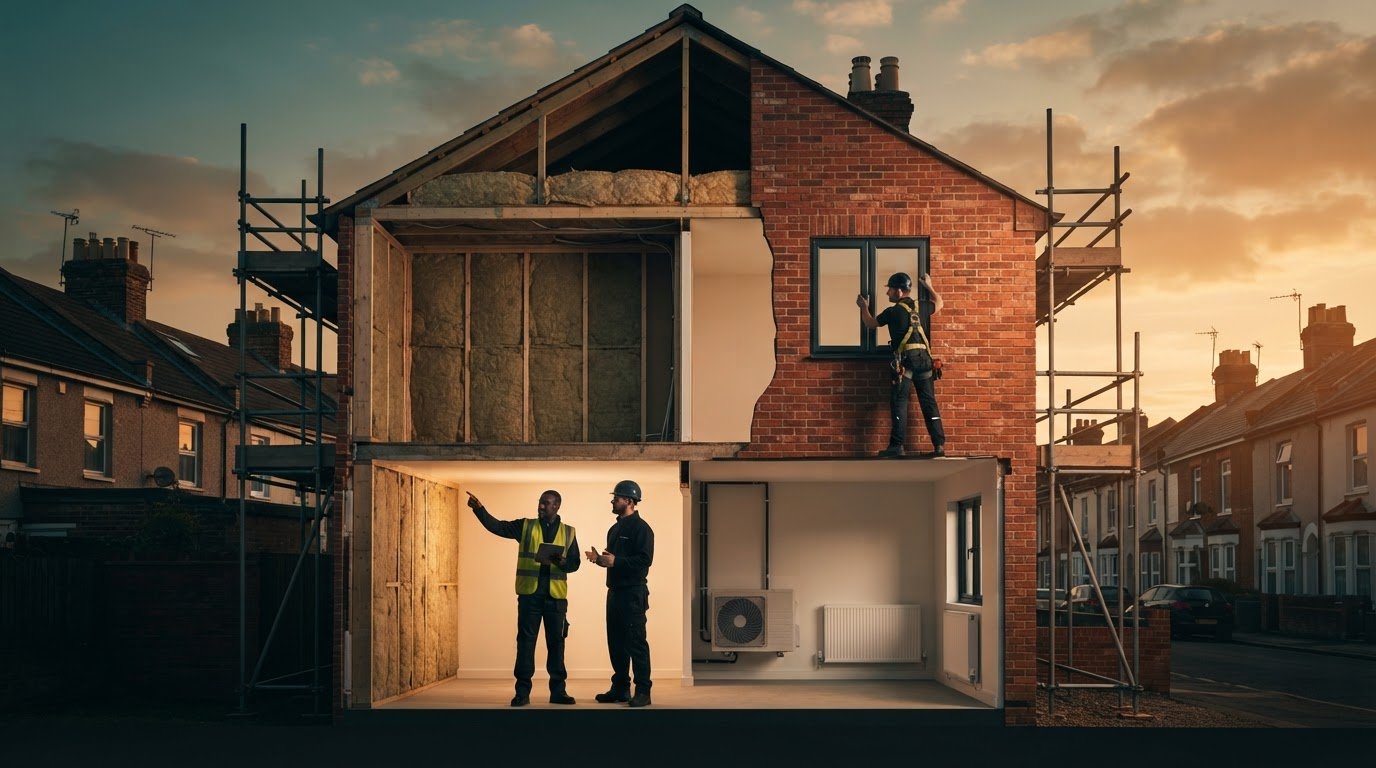
Replacing windows is not simply a choice between frames: the work around them can shape the finished cost, whilst the energy savings depend on how the whole home performs. The hidden costs of home energy upgrades can include the additional work needed to make insulation, windows and heating work well together. For an air-source heat pump, the UK Government says the Boiler Upgrade Scheme offers £7,500 towards the cost.
It’s understandable to focus on the installation price and wonder whether lower bills will make the investment worthwhile. The answer depends on your property, the condition of its existing features and which improvements are needed alongside the main upgrade.
This guide explains what can affect the cost of insulation, heating upgrades, heat pumps and replacement windows, how potential savings fit into the picture, and where support may be available. It also shows why considering the whole home can make it easier to weigh comfort, energy use and the work involved before deciding what to improve.
Key Takeaways
- Compare insulation costs with possible bill savings, and consider how loft and cavity wall improvements could work together.
- Look beyond the window price: whole-home replacement and the energy savings depend on the property and the glazing chosen.
- Before planning a heat pump, consider whether the home’s insulation, radiators or pipework may need upgrading; the UK Government’s Boiler Upgrade Scheme offers £7,500 towards an air source heat pump.
- For a clearer plan, explore how energy efficient home improvements, windows and doors, conservatory upgrades or ventilation assessments could address your home’s needs.
1. Insulation, windows, doors and heating upgrades
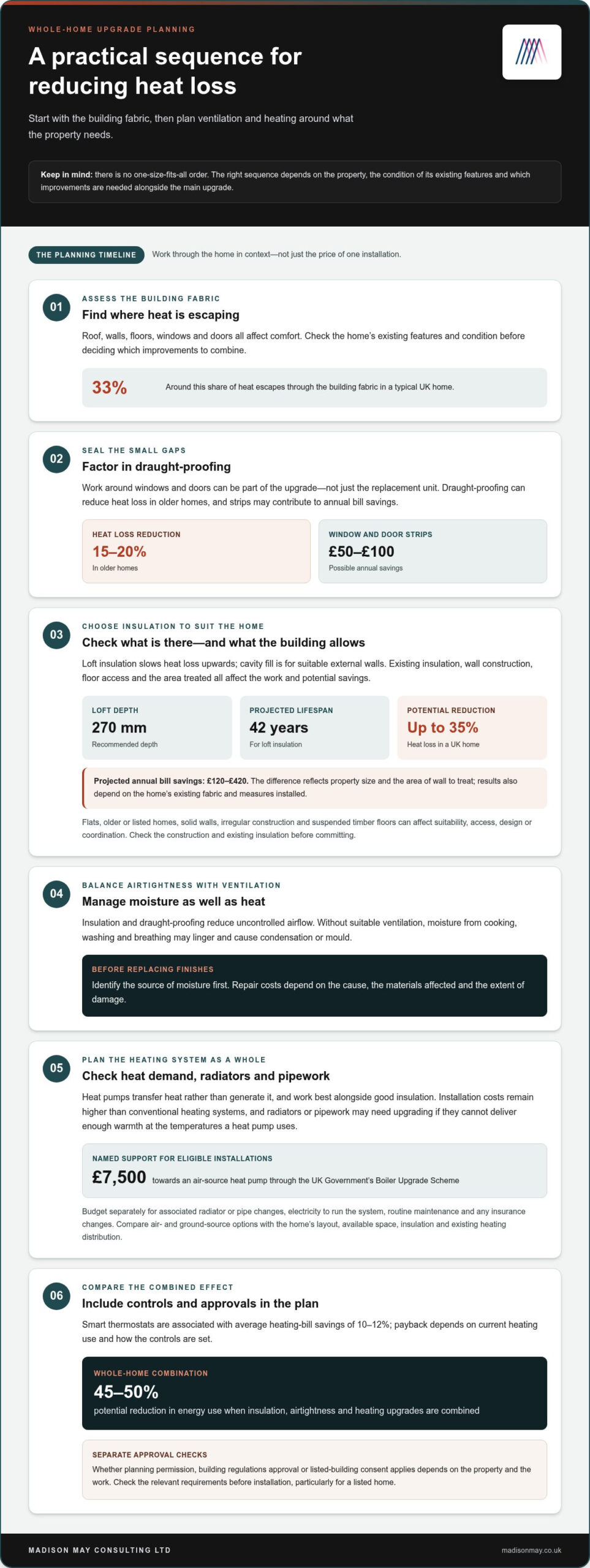
Start with heat loss: around 33% of heat in a typical UK home escapes through its building fabric. Roofs, walls, floors, windows and doors each affect comfort, so the best sequence depends on the property.
Small gaps matter. Draught-proofing can reduce heat loss by 15-20% in older homes, and window and door strips may save £50-£100 a year. These figures help show why the hidden costs of home energy upgrades can include work beyond the main installation, such as sealing gaps or improving insulation alongside new windows.
There isn’t one blanket answer: whether planning permission, building regulations approval or listed-building consent applies depends on the property and the work. Treat these as separate approval questions to resolve before installation, particularly when changing a listed home.
Insulation and draught-proofing can reduce uncontrolled airflow. Without suitable ventilation, moisture from cooking, washing and breathing may linger, causing condensation or mould. Repair costs depend on the source of moisture, the materials affected and the extent of damage, so identify the cause before decorating or replacing finishes.
Heating controls can also add to the budget. Smart thermostats are also associated with average heating-bill savings of 10-12%, so payback depends on current heating use and how controls are set.
Boilers, heat pumps and electric heating suit different homes. Heat pumps transfer heat rather than generate it, and work best alongside good insulation; installation costs remain higher than conventional heating systems. For households retaining gas central heating or reviewing boiler efficiency alongside fabric improvements, regional specialists such as Gas2Heat.com Ltd can advise on system upgrades and ongoing maintenance. Compare the full upgrade plan, including any radiator or pipework changes, rather than judging appliances by purchase price alone. Combining insulation, airtightness and heating upgrades can reduce energy use by 45-50%.
2. Loft and cavity wall insulation costs and savings
Loft insulation is a practical starting point when heat escapes through the roof. The recommended depth is 270 mm, and its projected lifespan is 42 years. Check existing insulation before adding more, since its depth and condition affect the work required.
Projected annual bill savings range from £120 to £420. The difference reflects property size and the area of wall to treat. Insulation can reduce heat loss in a UK home by up to 35%, though the result depends on the home’s existing fabric and the measures installed.
Costs vary by property type. Flats can involve shared walls, floors or access arrangements, while older homes may have solid walls or irregular construction that affects which insulation methods are suitable. Listed buildings need a fabric-sensitive approach, as unsuitable work can affect historic materials. These constraints can add design, access or coordination work beyond the insulation itself.
Underfloor insulation can reduce heat loss, but its value depends on floor construction, access and the area treated. Suspended timber floors require different work from solid floors, so weigh likely savings against installation costs and any related repairs. Windows and draught sealing can complement insulation by limiting heat loss around openings. Compare improvements as a package, rather than assuming one measure will solve every source of heat loss.
Insulation type matters: loft insulation slows heat loss upwards, while cavity fill reduces transfer through suitable external walls. Before committing, identify the wall construction and existing insulation, then consider ventilation and moisture movement. Efficient home improvements should also sit within a wider plan: heating controls, lighting and appliances affect electricity use, whilst solar panels may alter how a household uses electricity and its carbon emissions. A whole-home insulation plan can help organise those choices around the building.
3. Heat pump costs, grants and possible radiator or pipe upgrades
A heat pump’s installation cost depends on its type and the home’s heating requirements. The UK Government’s Boiler Upgrade Scheme offers £7,500 towards an air source heat pump. This contribution can reduce the upfront outlay for eligible installations, but it doesn’t remove the need to plan the full project.
Radiators or pipework may need upgrading if they can’t deliver enough warmth at the temperatures a heat pump uses. Include this work when assessing the budget. The home’s insulation, heat loss and room-by-room heating demand affect system suitability, winter comfort and running costs. A well-insulated property helps a heat pump provide heating and hot water with lower carbon emissions.
Keep grants and VAT separate in your calculations. The named support is the Boiler Upgrade Scheme contribution; VAT treatment for solar PV panels or heat pumps is a separate part of the project budget. Grant eligibility does not determine VAT relief. Any project estimate should distinguish the heat pump installation from associated work, such as radiator or pipe changes.
Ongoing costs include the electricity used to run the system, routine maintenance and any insurance changes associated with the home or equipment. Electricity use depends on heat demand, controls and how effectively the system supplies warmth. As experienced HVAC specialists like Around the Clock Heating and Air Conditioning point out, regular maintenance helps ensure heating equipment runs at optimum efficiency over its lifespan. Plan for maintenance of the heat pump and its components, while insurance costs depend on the policy and property details.
Before choosing a system, compare air- and ground-source options against the home’s layout, available outdoor or ground space, insulation and existing heating distribution. Heat pumps transfer heat rather than generating it, allowing them to operate at higher efficiencies than traditional boilers. Combining heating upgrades with insulation and airtightness can reduce energy use by 45-50%. A measured, whole-home plan helps weigh the grant against installation and supporting improvements, rather than focusing on the contribution alone.
4. Window replacement costs compared with energy savings
Replacing windows involves a large upfront outlay, so compare the whole-house cost with realistic savings. Costs vary according to the property, the number of windows and the materials chosen.
Replacing single-paned windows with double or triple glazing can save around £140-£160 a year on energy bills. That saving is modest beside the installation cost, so replacement may make most sense where existing windows are failing, draughty or uncomfortable. Triple glazing tends to cost 10-50% more than double glazing, adding to the upfront investment.
Compare like with like before deciding. Consider how the specification affects warmth, noise insulation and the home’s appearance, and whether frames, seals or surrounding finishes need attention. Installation can involve more than fitting glass: access, removing old windows and making good disturbed areas all affect the project scope. Include these details when comparing estimates.
Energy-efficient windows can help retain warmth, but the effect on bills depends on the home’s overall heat loss and heating systems. A higher-specification window may improve comfort without delivering savings that quickly offset its higher cost. The home’s EPC rating, on a scale from A to G, provides wider context for energy performance, rather than measuring window savings alone.
UK home energy survey and retrofit assessment fees depend on property size, construction, services and ventilation covered. The price depends on the case and is given after a quote request; scope, building complexity and report detail shape the cost. Compare that assessment against the decisions it can inform, including whether window replacement belongs alongside other improvements.
For a considered window plan, plan your window improvements around the property’s condition, comfort and likely energy-bill impact. The key takeaway: weigh the full installation cost against annual savings, not the glazing price alone, and consider replacement alongside the home’s wider energy performance.
Madison May Consulting: Energy efficient home improvements
Madison May Consulting Ltd helps homeowners consider energy efficient home improvements when weighing insulation, windows or other changes to reduce heat loss. Its windows and doors service can form part of a plan to improve comfort, while conservatory upgrades address another part of the home’s building fabric.
Where insulation or tighter windows could affect airflow, ventilation assessments and damp remediation can help address moisture and ventilation concerns alongside the planned work. Considering these elements together helps you understand how individual improvements may affect the home, rather than treating each installation in isolation.
If you’re comparing possible upgrades or deciding what to tackle first, contact Madison May Consulting Ltd to discuss your home and its improvement needs.
Make your next upgrade a considered one
The next step is to turn broad intentions into a clear order of work. Start with the rooms that feel least comfortable, then note what may be affecting them: cold surfaces, draughts, uneven temperatures or signs of moisture. This gives you a practical way to weigh appearance, comfort and energy use together, rather than choosing an upgrade simply because it seems familiar.
Understanding the hidden costs of home energy upgrades means allowing for the work around the main improvement, not just the visible result. A well-organised plan can help identify which decisions depend on others, what questions remain and where to begin without committing to every measure at once. Madison May Consulting offers energy efficient home improvements, including windows and doors and conservatory upgrades, to help shape a response around your home.
Contact Madison May Consulting to discuss a thoughtful next step for your property. A clearer plan can make the path to a more comfortable home feel more manageable.
Frequently Asked Questions
Can I get help with costs?
Yes, eligible households can access support through relevant schemes. According to UK Government, the Boiler Upgrade Scheme offers £7,500 towards an air source heat pump. Support depends on the measure and property criteria, so include the grant only against eligible work. Madison May Consulting can help identify available funding and the technical requirements involved in an application.
Does double glazing really save money?
Double glazing can reduce heat loss and energy bills, particularly where existing windows are single-glazed. However, savings alone may not repay replacement costs quickly. Compare the full installation scope with expected bill reductions, comfort improvements and the condition of your current windows. If your existing windows are sound, addressing draughts or insulation first may be a more cost-effective way to improve comfort.
Is cavity wall insulation worth it?
Cavity wall insulation can be worthwhile where walls have suitable, unfilled cavities and the work addresses the home’s heat loss. Its value is lower if cavities are already filled, unsuitable or affected by moisture. Establish the wall construction and condition before deciding, then compare likely bill reductions with the work required. In a flat, shared walls mean less exposed external wall area than in a detached home.
What hidden costs come with home energy upgrades in the UK?
The hidden costs of home energy upgrades often involve work around the main installation: access, removing old materials, making good, ventilation changes, controls or repairs to finishes. A written project scope should clarify what each estimate includes and excludes. Older properties can also need extra design consideration because their construction and existing materials affect the suitable installation sequence.
What extra costs can arise when installing loft or cavity wall insulation?
Loft insulation work can involve clearing access, moving stored belongings, protecting wiring or restoring disturbed finishes. Cavity wall insulation can require preparation around vents and openings, followed by making good drill holes. Existing moisture or ventilation problems need separate attention, since filling a cavity doesn’t resolve their cause. Include these associated tasks when comparing project estimates, not just the insulation and installation.
What are the hidden costs of replacing a boiler with a heat pump in the UK?
Replacing a boiler with a heat pump can involve more than removing one appliance and fitting another. The project scope can include radiator or pipework changes, hot-water storage, heating controls, electrical work and making good around removed equipment. Suitability also depends on insulation and the home’s heat demand. Assess the grant separately from these supporting works to understand the overall project budget.