


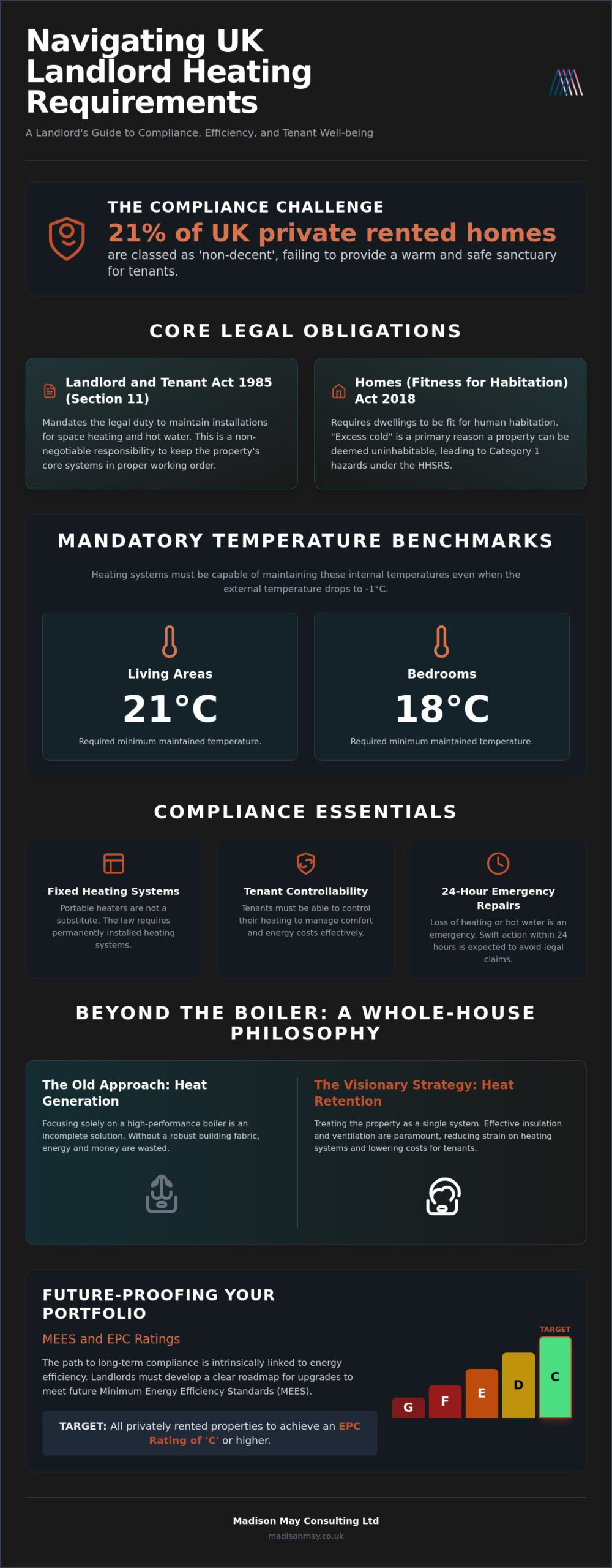
Statistics reveal that 21% of privately rented homes in the UK are currently classed as non-decent, failing the essential standards designed to provide a warm and safe sanctuary. It is natural to feel a sense of trepidation as the regulatory landscape shifts, particularly with the Renters’ Rights Act 2025 set to commence on 1 May 2026. You may find the overlap between energy standards and housing acts confusing, especially whilst trying to resolve persistent damp issues that a simple boiler service cannot fix. Ensuring your property meets the latest landlord heating requirements UK legislation demands is now about the meticulous craft of creating a healthy, compliant environment.
This guide provides a sophisticated roadmap to help you navigate these legal obligations with confidence. We will explore specific thermal benchmarks, such as maintaining 21°C in living spaces, and the journey toward achieving an EPC rating of C by 2030. You will discover how a professional retrofit strategy, incorporating insulation and ventilation assessments, secures your investment and offers the peace of mind that comes from providing a truly comfortable home. We shall outline how to elevate property value whilst honouring your duty of care to every tenant.
Key Takeaways
- Master the fundamental legal obligations under the Landlord and Tenant Act 1985 and the Homes (Fitness for Habitation) Act 2018 to ensure your property remains a habitable sanctuary.
- Navigate the shifting landscape of landlord heating requirements UK by adopting a whole-house philosophy that harmonises heat generation with meticulous insulation.
- Align your portfolio with future MEES standards by developing a clear roadmap towards an EPC rating of C through purposeful energy-efficient upgrades.
- Recognise the value of a PAS 2035 retrofit assessment as a sophisticated tool for uncovering deeper building performance insights than a standard EPC.
- Transition from reactive repairs to a visionary property strategy that ensures long-term compliance whilst prioritising the enduring well-being of your tenants.
The Legal Framework: Understanding UK Landlord Heating Obligations
The foundation of a respectful and lawful tenancy rests upon the Landlord and Tenant Act 1985. Under Section 11 of this legislation, you have a clear, non-negotiable duty to maintain the installations that provide space heating and water. It’s the bedrock of property management, ensuring that every home remains a place of safety and warmth. When a system fails, the responsibility to restore it doesn’t just sit with a maintenance team; it’s a legal imperative that defines the character of your service as a property owner. Understanding the specific landlord heating requirements UK law demands is the first step in creating a compliant, welcoming home.
The Homes (Fitness for Habitation) Act 2018 refined these expectations. It requires that a dwelling is fit for human life, and “excess cold” is one of the primary reasons a property might be deemed legally uninhabitable. Meeting the landlord heating requirements UK regulators enforce isn’t about doing the bare minimum. It’s about ensuring the property functions as a cohesive, warm environment that resonates with the needs of its inhabitants. Local authorities use the Housing Health and Safety Rating System (HHSRS) to judge these conditions. If a home cannot stay warm, it’s often classed as a Category 1 hazard, which can lead to significant penalties.
Specific temperature benchmarks are used to measure compliance during inspections:
- Living Areas: The system must be capable of reaching and maintaining 21°C.
- Bedrooms: These spaces must be capable of reaching at least 18°C.
- External Conditions: These internal levels must be achievable even when the temperature drops to -1°C outside.
Fixed Heating vs. Portable Solutions
A collection of portable electric heaters isn’t a substitute for a robust, fixed system. To comply with the law, heating must be permanently installed and capable of being controlled by the tenant. This degree of controllability is essential. It allows residents to curate their own comfort and manage their energy costs effectively. A fixed system, whether it’s a modern boiler or an energy-efficient upgrade, provides the reliable infrastructure necessary for a property to be considered a true sanctuary rather than a temporary shelter.
Emergency Repairs and Timeframes
Losing heat or hot water during the winter months is an emergency that requires swift, decisive action. You’re typically expected to respond and resolve such issues within 24 hours. Partnering with expert technicians, such as Trust Boilers & Renewables, ensures that these critical repairs are managed with the precision and speed required to maintain a safe environment. Prolonged delays don’t just cause discomfort; they leave you vulnerable to legal claims under the Fitness for Habitation Act. Maintaining a clear, chronological record of all repairs and safety checks is vital. This paper trail acts as a testament to your commitment to quality, proving that you’ve prioritised the tenant’s well-being and the property’s long-term health.
Beyond the Boiler: Why Insulation is the Secret to Compliance
A high-performance boiler is often the first thought when addressing the landlord heating requirements UK legislation mandates, yet it remains only one part of a more intricate story. Without a robust building fabric, even the most sophisticated heating system becomes a futile effort in energy expenditure. We must adopt a visionary “whole house” philosophy, treating the property as a singular, living organism where energy flow is carefully managed. It is about the harmony between the warmth we create and the structure’s ability to hold it, ensuring that every kilowatt of energy is used with intention and care.
Investing in the building’s envelope is often far more prudent than simply installing high-output heating. By understanding that landlord heating requirements UK standards are as much about retention as generation, you can make more informed investment decisions. As detailed in the Minimum Energy Efficiency Standard (MEES) guidance, the path to compliance is increasingly tied to the overall thermal performance of the dwelling. Insulation provides a silent, enduring layer of protection that reduces the strain on mechanical systems, lowering bills for tenants whilst protecting the property’s structural integrity. Beyond the metrics, there is a profound sensory shift; a well-insulated home feels still, quiet, and deeply secure, transforming a functional space into a genuine sanctuary.
The Role of Draught Proofing
Minor air leaks are the silent thieves of comfort, particularly in the period properties that make up a significant portion of the UK’s rental stock. These gaps around windows, doors, and floorboards can negate the warmth provided by even the most modern radiators. Effective draught proofing is a delicate art that requires a balanced approach. It involves sealing the unnecessary exits for heat whilst ensuring that necessary ventilation pathways remain clear to prevent the air from becoming stagnant or unhealthy.
Insulation Upgrades as a Compliance Tool
Loft and cavity wall upgrades are essential tools for meeting the 21°C standard required in living areas. For solid-wall properties, external wall insulation offers a transformative thermal profile, significantly reducing heat loss through the building’s skin. By meticulously managing thermal bridging, we can eliminate the cold spots where surface condensation thrives. This proactive approach prevents the damp and mould that 21% of private rental homes currently struggle with, ensuring the property remains a healthy environment for its residents. For those seeking a bespoke path to property excellence, a tailored EPC improvement plan can provide the clarity needed to navigate these complex thermal requirements.
MEES and EPC Ratings: The Intersection of Heating and Efficiency
The intersection of energy efficiency and legal compliance is where many property owners feel the most pressure. Whilst the current Minimum Energy Efficiency Standards (MEES) require an Energy Performance Certificate (EPC) rating of E, this is merely the starting point of a more ambitious journey. By 1 October 2030, all domestic private rented properties must achieve an EPC rating of C. This shift elevates landlord heating requirements UK standards from simple maintenance to strategic asset management. Choosing the right heating technology is a pivotal decision; whilst traditional gas boilers remain common, the move towards low-carbon alternatives like heat pumps is heavily incentivised through the PAS 2035 retrofit standard framework.
Crucially, the financial commitment required for these upgrades is not open-ended. The government has established a cost cap of £10,000 per property for MEES compliance. If a property fails to reach the required standard after this investment, a 10-year exemption can be registered. However, the goal should always be the creation of a high-quality living environment that avoids the need for exemptions. A home that barely meets the legal minimum often falls short of being a true refuge for its inhabitants.
The Meticulous EPC Improvement Plan
A standard EPC report often provides a generic list of recommendations that may not suit the unique character of a heritage building. A bespoke EPC improvement plan offers a more refined approach, ensuring that works are sequenced with precision. This prevents the creation of “stranded assets,” where an expensive new heating system is installed before the building’s insulation is ready to support it. By viewing the property through a visionary lens, you ensure that today’s investments remain valid for decades to come.
Smart Controls and Tenant Behaviour
Technology serves as a graceful bridge between efficiency and daily life. Smart thermostats and intelligent controls can significantly boost an EPC score whilst offering tenants a sense of agency over their environment. These systems learn the rhythms of the household, reducing energy waste without sacrificing warmth. Educating residents on how to use these sophisticated tools is an act of attentive service. It balances automated efficiency with the need for personal overrides, ensuring the home remains a responsive and intuitive sanctuary.
The Professional Audit: PAS 2035 and Retrofit Assessments
PAS 2035 represents the UK’s gold standard for domestic energy efficiency retrofits, moving beyond the surface-level checks of a standard EPC to offer a profound understanding of a building’s unique character. Whilst an EPC provides a snapshot, a retrofit assessment offers a detailed narrative of how energy moves through your property, identifying exactly where heat escapes and where comfort is compromised. This meticulous approach is becoming central to meeting the evolving landlord heating requirements UK legislation demands, ensuring that every intervention is intentional and technically sound. A professional building survey serves as the essential first chapter in this journey, uncovering the hidden structural nuances and heritage details that dictate how a heating upgrade should be designed to honour the original craftsmanship of the home.
The Retrofit Coordinator acts as a visionary guardian for your project, overseeing the entire process to ensure that different measures work in perfect harmony. They bridge the gap between technical complexity and practical implementation, ensuring that a new heating system doesn’t conflict with insulation or ventilation strategies. This level of oversight provides a sense of ease and luxury, reassuring you that your property is in the hands of a thoughtful expert who prioritises the building’s long-term health and your personal story. It is a transformative journey that elevates property management into the realm of professional stewardship.
Ventilation: The Often-Forgotten Requirement
Adding insulation without a thorough ventilation assessment is a common oversight that can lead to unintended consequences like condensation, damp, and poor air quality. PAS 2035 dictates clear pathways to compliance, ensuring that as we seal a home to retain heat, we also provide the breathability it needs to remain a healthy sanctuary. It’s about achieving a delicate balance where thermal efficiency and fresh air coexist effortlessly, preventing the stagnant atmosphere that so often plagues poorly executed refurbishments. We ensure that every material is chosen with care to maintain this vital equilibrium.
Risk Management for Landlords
Adopting this professional framework protects you from the risks of poor-quality installations that often plague piecemeal home improvements. In the traditional building stock found across the UK, maintaining a precise moisture balance is critical to preventing structural decay and ensuring the property remains a safe refuge for its inhabitants. Using professional data from these assessments doesn’t just ensure you meet the landlord heating requirements UK law specifies; it also provides a robust justification for property valuations and future investment strategies. To secure the future of your property portfolio with grace and poise, consider commissioning our Retrofit Coordination services to guide your next journey in home improvement.
Crafting a Compliant Sanctuary: The Madison May Approach
The journey towards meeting landlord heating requirements UK standards shouldn’t be a source of constant anxiety or a sequence of disjointed, reactive repairs. It’s an opportunity to reimagine your property as a meticulously crafted environment that resonates with quality and enduring value. At Madison May, we move away from the frantic, piecemeal approach to maintenance, favouring instead a visionary, long-term strategy that treats your portfolio with the respect it deserves. Our consultancy acts as a sophisticated bridge, translating the dense language of legislation into practical, elegant solutions that enhance both the building’s performance and the inhabitant’s well-being.
Providing a high-performance rental home offers rewards that transcend simple financial returns. There’s a profound sense of satisfaction in knowing that your property serves as a warm, secure sanctuary, fostering a deeper connection between the tenant and their living space. This commitment to excellence naturally leads to longer tenancies and a more resilient investment. By choosing a path of proactive stewardship, you ensure your property remains a beacon of comfort whilst effortlessly satisfying the most stringent legal demands. It’s a transformative process that turns a simple dwelling into a cherished home.
Our Bespoke Consultancy Service
Our commitment to understated elegance and professional authority defines every interaction we have with our clients. We don’t believe in generic, one-size-fits-all advice; instead, we tailor our PAS 2035 assessments to the specific story and architectural heritage of your property. This personalised approach ensures that every recommendation, from a heating upgrade to draught proofing, is perfectly aligned with the building’s unique requirements. It’s an expert-led process that provides the peace of mind you need to manage the complexities of modern housing standards with grace and poise.
Contact Us for a Meticulous Property Review
We invite you to begin a conversation about your portfolio’s energy performance and its future potential. The intersection of beauty, warmth, and the law is where we excel, acting as your attentive guide through the transformative process of retrofit and refurbishment. Let us help you turn the challenge of compliance into a journey of artistic and functional refinement. Your property’s story is waiting to be told through the lens of comfort and quality, ensuring it remains a safe, warm sanctuary for years to come.
Discover our Retrofit Assessment Services and take the first step toward a meticulously retrofitted property.
Securing the Future of Your Property Portfolio
Providing a home that is both legally compliant and deeply comfortable is an act of visionary stewardship. We’ve explored how the landlord heating requirements UK standards demand a holistic approach, where the harmony between heat generation and retention is meticulously maintained. By moving beyond reactive repairs and embracing a whole-house philosophy, you transform a simple building into a resilient asset and a true sanctuary for your tenants.
Our sophisticated consultancy is rooted in the PAS 2035 aligned framework, offering the clarity and poise needed to navigate shifting energy regulations. Through expert EPC Improvement Plans and specialist Retrofit Coordination, we ensure that every upgrade is an intentional step toward enduring quality. This strategic foresight protects your investment whilst honouring the personal story of the property and those who dwell within its walls.
The path to property excellence is one of steady, graceful progress. With the right expert guidance, you can feel confident that your portfolio will remain a warm, safe, and beautiful refuge for many years to come.
Frequently Asked Questions
What is the minimum legal temperature for a rental property in the UK?
A rental property must be capable of maintaining a temperature of 21°C in living rooms and 18°C in bedrooms when the outside temperature is -1°C. These specific benchmarks ensure that the home remains a healthy environment even during the harshest winter months. Failing to meet these standards can lead to a property being classed as having a Category 1 hazard under the Housing Health and Safety Rating System.
Do I have to provide a boiler, or are electric heaters enough?
You are not strictly required to provide a gas boiler, but you must provide a fixed heating system that the tenant can control. Whilst electric heaters are permissible, they must be permanently installed rather than portable units. Modern landlord heating requirements UK standards prioritise systems that are efficient and affordable, as expensive heating can contribute to fuel poverty and persistent damp issues.
How long do I have to fix a broken boiler as a landlord?
You are generally expected to respond to a total loss of heating or hot water within 24 hours, particularly during winter. This is considered an emergency repair because a home without warmth is deemed unfit for habitation. Whilst the actual repair might take longer if specialist parts are required, providing temporary fixed solutions and clear communication is essential to maintaining your duty of care.
Is it a legal requirement to have a thermostat in a rented house?
There is no single law stating a property must have a thermostat, but the heating system must be controllable by the tenant to meet modern standards. Most local authorities expect to see thermostatic radiator valves or a central thermostat to ensure the property is heated efficiently. Under the latest energy efficiency frameworks, smart controls are highly recommended as they help achieve necessary EPC ratings.
Can a tenant sue me if the house is too cold?
Tenants have the right to take legal action under the Homes (Fitness for Habitation) Act 2018 if the property is too cold to live in safely. If the heating system cannot reach the required temperatures or if the building fabric is so poor that it causes excess cold, the court can order repairs and award compensation. It is an important reminder that a property must be a safe refuge.
Does the 21 degree rule apply to every room in the house?
The 21°C requirement specifically applies to the main living areas, whilst bedrooms have a slightly lower threshold of 18°C. Other areas, such as hallways or kitchens, do not have these specific temperature mandates, but they must still be adequately ventilated to prevent condensation. This distinction allows for a more nuanced approach to energy use whilst ensuring the most occupied spaces remain comfortable and inviting sanctuaries.
What happens if my property fails the HHSRS heating assessment?
If a property fails an HHSRS assessment due to inadequate heating, the local authority can issue an Improvement Notice requiring you to carry out specific works. Ignoring these notices can lead to heavy fines, and for properties that fall below the minimum energy standards, penalties can reach up to £30,000. It is a serious indicator that the property needs a professional retrofit approach to restore its value.
How does the Future Homes Standard affect existing rental properties?
The Future Homes Standard primarily targets new builds from 2025, but it signals a broader shift towards the decarbonisation of all UK housing. For existing rental properties, this means an eventual move away from fossil fuel boilers towards low carbon alternatives like heat pumps. By aligning with these standards now, you prepare your portfolio for the 2030 requirement for all tenancies to reach an EPC rating of C.