

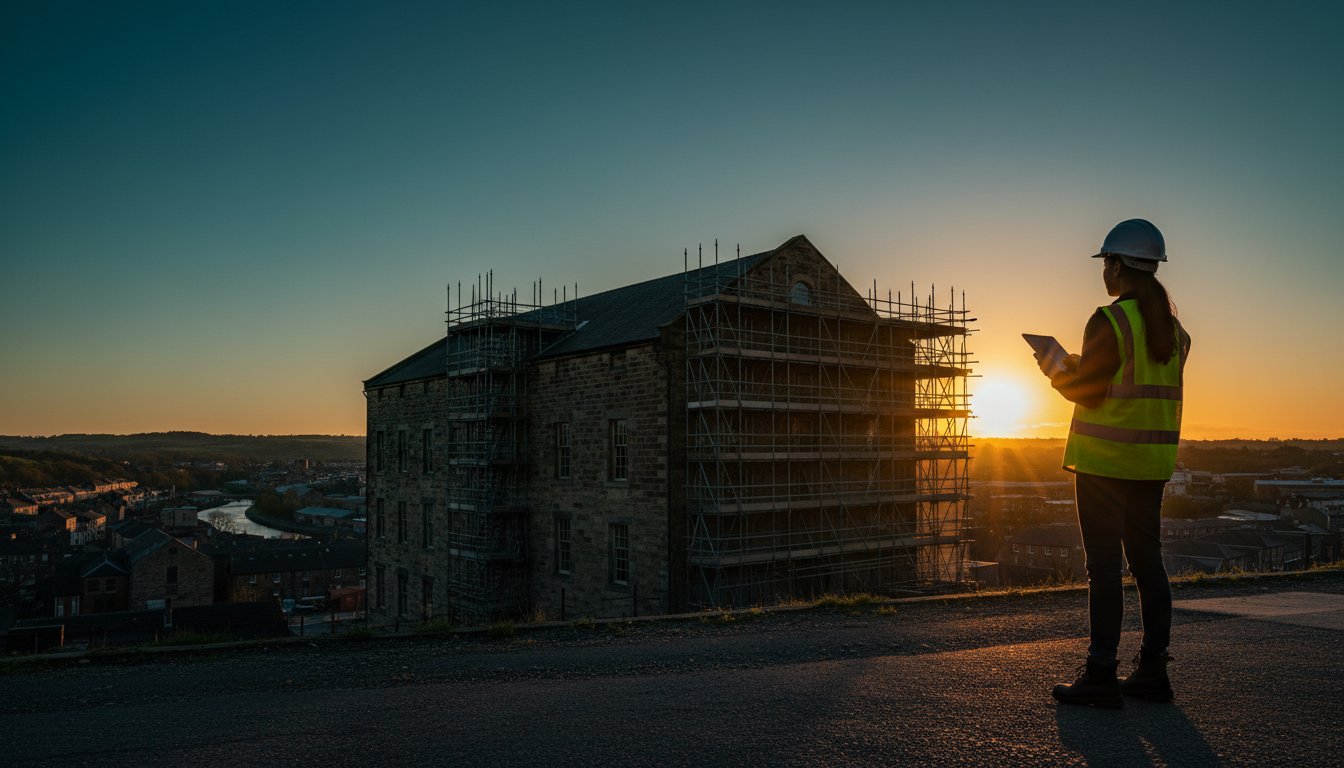
In the quiet corners of a Halifax stone terrace or the light-filled heights of a contemporary West Yorkshire apartment, a subtle shift in the landscape of property ownership took root on April 28, 2022. You might find yourself gazing at your walls, wondering if the sanctuary you’ve meticulously curated is caught in the complex web of the building safety act 2022. It’s natural to feel a sense of unease when technical definitions like ‘higher-risk’ are mentioned in the same breath as your home, especially when the threat of unexpected repair costs feels like a shadow over your investment.
You deserve to feel that your home is a place of refined calm, not a source of financial anxiety or legal confusion. We’ll help you understand how these vital regulations serve as a protective shield for your property, ensuring that the essence of your living space remains secure. This guide explores the ‘waterfall’ cost protections and clarifies whether your building is considered ‘relevant’ under the new law. We’ll walk through the essential details every Halifax property owner needs to know to maintain their home as a true sanctuary of peace and safety.
Key Takeaways
- Discover how the ‘Golden Thread’ of information transforms building management into a meticulous narrative of safety and long-term security for your investment.
- Clarify whether your property, from modern apartments to Halifax’s iconic converted mills, is classified as a higher-risk building under the building safety act 2022.
- Uncover the vital financial safeguards that protect qualifying leaseholders, ensuring the burden of historical remediation costs does not fall upon your shoulders.
- Learn why integrating building safety with energy retrofit assessments is essential for creating a home that is as efficient as it is secure.
- Gain a sophisticated perspective on navigating complex regulations through a bespoke consultancy journey designed to protect both your property and your peace of mind.
Understanding the Building Safety Act 2022 in West Yorkshire
The Building Safety Act 2022 represents a transformative moment in the history of British property management and architectural integrity. Born from the urgent necessity to address systemic failures identified after the June 2017 Grenfell Tower fire, this legislation introduces the most significant changes to UK Building Regulations in nearly 40 years. It’s no longer enough for a building to merely look the part; it must possess a documented, verifiable soul of safety that protects every resident within its walls.
At the heart of this legislative shift is the “Golden Thread” of information. This digital narrative preserves the entire lifecycle of a building, from its initial design concepts to its daily operational reality. For Halifax property owners, this means maintaining a meticulous record that ensures safety isn’t an afterthought but a continuous, curated presence. The Act reshapes the hierarchy of responsibility, placing clear obligations on “Accountable Persons” to manage risks with a level of precision that mirrors the craftsmanship of a bespoke interior.
By the time we reach 2026, the transition periods for many of these new mandates will have matured. Property owners in West Yorkshire must recognize that the relationship between residents, landlords, and the government has been fundamentally rebalanced. There’s now a formal pathway for residents to voice concerns, ensuring that the sanctuary of the home is supported by a transparent and responsive management structure.
The Vision of the Building Safety Regulator
The Health and Safety Executive (HSE) now oversees the new national Building Safety Regulator, a body designed to enforce these rigorous standards with quiet authority. In West Yorkshire, local authorities coordinate closely with central mandates to ensure that higher-risk buildings meet every requirement. This transition marks a departure from reactive repairs, moving instead toward a culture of prevention. It’s an approach that values the longevity of the structure as much as its aesthetic appeal, ensuring that every renovation or maintenance task follows a strictly governed protocol.
A Sanctuary Built on Compliance
Safety is the essential foundation of any curated home journey. At Madison May, we understand that true peace of mind comes from knowing the framework of your life is secure. Legislative clarity provides an emotional anchor, allowing homeowners to focus on the refined details of their living spaces without the weight of uncertainty. Our commitment involves harmonizing these essential safety standards with a sophisticated design ethos. We believe that compliance shouldn’t be a burden; it’s the first step in crafting a timeless environment where beauty and security coexist in perfect symmetry.
Identifying ‘Higher-Risk’ and ‘Relevant’ Buildings in Halifax
On 28 April 2022, the building safety act 2022 introduced a tiered classification system that fundamentally alters how we perceive structural integrity. For property owners in the heart of West Yorkshire, understanding whether a residence falls under the ‘higher-risk’ category is the first step in a journey toward compliance and peace of mind. This classification generally applies to buildings that stand at least 18 metres tall or possess at least 7 storeys, containing at least two residential units.
The Unique Profile of Halifax Mill Conversions
Halifax is defined by its stone-clad industrial soul, where 19th-century mills have been reimagined as bespoke residential sanctuaries. These heritage structures often exceed the 18-metre threshold due to their expansive ceiling heights and robust architectural frames. Because these conversions frequently house multiple dwellings, they often meet the criteria for ‘relevant’ buildings. Owners must conduct a meticulous assessment of the building fabric, as the interplay between historic masonry and modern safety standards requires a curated approach to risk management. Where traditional scaffolding would disturb the delicate heritage stonework of such structures, drone survey services offer a refined alternative for capturing precise structural data without intrusion. If you’re seeking to enhance the aesthetic safety of such a space, exploring a bespoke design consultation can help align heritage charm with contemporary security.
The Height Factor and Occupancy Criteria
Measuring a building’s height isn’t merely about the roofline; the law requires measurement from the lowest adjacent ground level to the finished floor surface of the top storey. According to the official government guidance on the Building Safety Act, any structure meeting these height metrics must identify an ‘Accountable Person’. This individual or entity holds the legal responsibility for managing structural and fire safety risks, a complex role often handled by comprehensive facilities management providers like The CFS Group. In mixed-use spaces near the Halifax town centre, where commercial units sit beneath luxury apartments, the distinction between residential and non-residential areas is vital. A building is ‘relevant’ if it’s at least 11 metres high, a threshold that protects approximately 90% of leaseholders from the costs of cladding remediation.
Determining your status as a qualifying leaseholder is essential for financial protection. Under the building safety act 2022, those who meet specific criteria are shielded from the costs associated with historical safety defects. You’re likely protected if you meet these conditions:
- The lease was granted before 14 February 2022.
- The building is at least 11 metres or five storeys high.
- The property is your main home, or you own no more than three UK dwellings in total.
It’s a vital safeguard for the local community. It ensures that the burden of remediation doesn’t fall solely on those seeking a quiet life in our town’s historic quarters. Every detail of your occupancy status matters when navigating these protections.

Protecting Your Investment: The Financial Safeguards of the BSA 2022
Within the quiet sanctuary of a Halifax apartment, the true value of an investment lies in its enduring security and the peace of mind it offers the owner. The building safety act 2022 introduces a refined “waterfall” system designed to ensure that the financial burden of historical defects is distributed with a sense of justice. This hierarchy dictates that the developer who created the defect must pay first. If the developer no longer exists or cannot be reached, the responsibility shifts to the building owner, provided they meet certain financial benchmarks. Only as a final, restricted resort are costs passed to the leaseholders.
The legislation offers a profound sense of relief for those concerned about cladding. For qualifying leaseholders, the cost of remediating unsafe cladding is now zero. This is a statutory protection that cannot be bypassed. For non-cladding defects, such as inadequate fire doors or structural flaws, the law imposes a strict financial ceiling. In West Yorkshire, this cap is typically set at £10,000 for a period of ten years. This prevents the sudden, jarring service charge hikes that once threatened the financial narrative of home ownership in the region. It ensures that the rhythm of your lifestyle remains undisturbed by unexpected five-figure demands.
- Cladding Remediation: 100% protection for qualifying leaseholders.
- Non-Cladding Cap: £10,000 limit for properties outside London valued under £1,000,000.
- Developer Responsibility: Legal mechanisms to compel original builders to fund repairs.
- Transparency: Landlords must prove they’ve exhausted other funding before asking leaseholders for a single penny.
The Leaseholder Protection Certificate
The Leaseholder Protection Certificate is a bespoke document that serves as the soul of a property transaction under the new regime. It confirms your status as a qualifying leaseholder as of February 14, 2022, ensuring you inherit the full suite of financial protections. By the time the Halifax property market reaches 2026, this certificate will be as essential as a title deed. You must maintain meticulous records, including your lease agreement and proof of residency, to ensure this document is curated correctly for future buyers.
Challenging Unfair Costs
If a landlord attempts to pass on prohibited safety costs, it’s vital to remember that you have the legal right to dissent. Seeking advice from West Yorkshire legal experts allows you to navigate these complexities with quiet confidence. A curated paper trail is your most powerful tool; keep every service charge demand and piece of correspondence in a dedicated folder. When you challenge a cost through the First-tier Tribunal, the clarity of your documentation often dictates the success of your journey toward a fair resolution.
The Intersection of Building Safety and Energy Retrofit
The pursuit of a carbon-neutral home shouldn’t come at the expense of its structural integrity. We view the building safety act 2022 as a vital framework that elevates the retrofitting process from a simple utility upgrade to a curated preservation of your sanctuary. In Halifax, where historic stone architecture often meets modern high-rise living, the integration of energy efficiency and safety is a legal and aesthetic necessity. Since April 2023, the Building Safety Regulator has demanded a digital “Golden Thread” of information. This record ensures that every thermal improvement, from heat pumps to triple glazing, is mapped alongside fire safety data to protect the building’s long-term narrative.
- PAS 2035 standards now require a Retrofit Coordinator to oversee all energy upgrades in residential settings.
- The Golden Thread must link Energy Performance Certificate (EPC) improvement plans directly to the building’s safety case report.
- Structural assessments are mandatory before adding heavy cladding or external wall insulation to buildings over 11 metres.
Retrofitting with Meticulous Care
Adding external wall insulation requires a safety-first mindset that respects the original craftsmanship of your property. Improperly installed materials can create hidden fire bridges or trap moisture, compromising the very walls that provide shelter. Our Retrofit Coordinators act as stewards of your home’s safety, ensuring compliance with the building safety act 2022 throughout every phase of the transition. Madison May protects your Halifax home by vetting every material for its fire rating and structural weight, ensuring your energy journey is as secure as it is sustainable.
Ventilation and Fire Safety: A Delicate Balance
Modern draught-proofing can inadvertently disrupt the delicate balance of airflow required by Part F building regulations. When we seal a home to retain heat, we must implement bespoke ventilation strategies to prevent the buildup of toxic smoke or condensation in an emergency. A professional assessment is the only way to ensure your home remains a safe sanctuary. We analyze the specific geometry of your space to design ventilation systems that work in harmony with fire dampers and smoke extracts. This precision prevents safety hazards while maintaining the serene, quiet atmosphere of a well-insulated room. For properties where persistent draughts remain despite extensive renovations, air pressure testing can reveal the hidden pathways that compromise both comfort and energy efficiency.
Every detail matters when securing the soul of your home. If you’re ready to enhance your property’s efficiency without compromising its safety, explore our bespoke retrofit consultancy for a seamless experience.
Navigating the Journey with Madison May: Your Project Guardian
Compliance often feels like a sterile exercise in bureaucracy, yet we view the requirements of the building safety act 2022 as an opportunity to deepen the soul of your property. We curate a path through these intricate regulations by blending technical precision with an artist’s eye for detail. Our role as your project guardian ensures that the structural integrity of your home remains as resolute as its aesthetic appeal. By translating complex statutory instruments into a clear, actionable roadmap, we allow you to focus on the poetry of your living space rather than the prose of legislation.
This strategic approach of turning regulatory complexity into a clear, actionable plan is a principle that extends far beyond property management. In the corporate world, for instance, management consultancies such as redefinebrands.co.za specialise in helping organisations navigate similar large-scale transformations to achieve sustainable growth.
Our bespoke consultancy serves Halifax landlords who recognize that excellence requires more than a mere checklist. We address the dual challenges of MEES (Minimum Energy Efficiency Standards) and BSA compliance through a philosophy that prioritizes safety, efficiency, and timeless design. This journey begins with a meticulous survey of your West Yorkshire property, where we examine every stone and joist to understand its unique essence. We don’t just look for faults; we look for the potential to harmonize modern safety standards with the heritage of your sanctuary. When a non-invasive assessment is required to preserve the character of a historic facade, our drone survey services in West Yorkshire provide a meticulous bird’s-eye perspective that captures precise structural data without the disruption of traditional scaffolding. When energy efficiency improvements fail to deliver expected comfort levels, comprehensive air pressure testing often reveals the invisible leaks that undermine both thermal performance and regulatory compliance.
A Bespoke Strategy for Your Home
Generic advice fails to respect the character of Halifax’s architectural heritage. Our team understands that a Victorian terrace near Savile Park requires a different touch than a repurposed mill in the town center. We move beyond standard templates to create a tailored property narrative, ensuring every safety upgrade feels like a seamless integration rather than an intrusion. Professional coordination brings a profound sense of calm, as we manage the 2023 regulatory shifts with quiet confidence and visionary care.
Your Invitation to a Safer Future
The transition from a technical assessment to an elegant improvement should be effortless. We invite you to contact Madison May for a refined approach to building performance that honors both the law and your personal aesthetic. Our process ensures your investment is protected by the most current standards while enhancing the atmosphere of your home. Discover how we can protect and enhance your Halifax sanctuary and embark on a transformative journey where safety becomes a cornerstone of luxury.
Securing Your Halifax Legacy Through Mindful Compliance
The journey toward a safer, more sustainable home in West Yorkshire requires a blend of technical precision and aesthetic vision. Navigating the building safety act 2022 isn’t just a matter of mere compliance; it’s a vital opportunity to fortify your property’s future. By identifying buildings over 18 metres or 7 storeys and leveraging the financial protections established in April 2023, you protect both your capital investment and your personal peace of mind. True sanctuary is found when structural integrity meets the refined efficiency of a PAS 2035 aligned retrofit. For properties requiring detailed structural analysis, comprehensive building surveys provide the foundation for understanding both safety compliance and energy performance potential.
Madison May offers a bridge between these complex regulations and the creation of a harmonious living space. Our Halifax-based regional expertise ensures every detail of your bespoke retrofit coordination is handled with the grace and meticulous care your home deserves. We’re here to curate a path that transforms legislative requirements into a seamless narrative of quality and safety. Our approach prioritizes your personal story, ensuring your home remains a reflection of your values.
Book a Meticulous Building Assessment with Madison May
Your vision for a secure, beautiful sanctuary is well within reach.
Frequently Asked Questions
Does the Building Safety Act 2022 apply to my detached house in Halifax?
The Building Safety Act 2022 doesn’t generally apply to detached houses in Halifax, as its primary focus remains on higher-risk residential buildings at least 18 meters tall or consisting of 7 storeys. These regulations ensure that multi-occupancy structures meet rigorous safety standards. If your home is a standard two-storey dwelling, you won’t need to navigate the complex digital record-keeping required for larger West Yorkshire developments, allowing you to focus on the bespoke design of your personal sanctuary.
What is the ‘Golden Thread’ and why is it important for West Yorkshire residents?
The Golden Thread is a digital record that preserves the integrity of a building’s safety information from its initial design through its entire lifecycle. For residents in West Yorkshire, this meticulous documentation ensures that every structural detail of a high-rise sanctuary is transparent and accessible. It’s a mandatory requirement under the building safety act 2022 for buildings exceeding 18 meters, creating a seamless narrative of safety and craftsmanship that protects the soul of the home.
Can my landlord charge me for cladding removal under the new 2022 Act?
Your landlord cannot legally charge you for cladding removal if you’re a qualifying leaseholder in a building over 11 meters tall. The 2022 legislation provides robust financial protections, ensuring that the burden of remediating historical defects falls on developers or freeholders rather than residents. Since June 2022, these legal safeguards have shielded thousands of flat owners in Halifax from remediation costs that often exceeded £50,000 per household, preserving the financial harmony of their investment.
Who is the ‘Accountable Person’ in a typical Halifax mill conversion?
In a typical Halifax mill conversion, the Accountable Person is usually the freeholder or the Resident Management Company that holds the legal obligation to repair the common parts. This individual or entity must assess and manage building safety risks for any structure over 18 meters. Under Section 72 of the Act, they’re responsible for maintaining the building’s safety case report to protect the structural integrity and the personal stories woven into these historic West Yorkshire spaces.
How does the Act affect my plans for a loft conversion or extension?
The Act impacts your extension plans by introducing more stringent oversight and extending the liability period for structural defects to 30 years. Even if your Halifax home isn’t a high-rise, the new Building Safety Regulator maintains higher standards for all construction work. You’ll find that the process requires more detailed planning and a deeper focus on the intersection of beauty and structural integrity to ensure your sanctuary remains safe for decades to come.
What should I do if I think my building in West Yorkshire is unsafe?
You should immediately report any concerns to the Building Safety Regulator, a new body established by the Health and Safety Executive. This regulator oversees the safety of approximately 12,500 higher-risk buildings across England, including several prominent developments in West Yorkshire. Taking this step ensures that the vision of the building safety act 2022 is upheld, protecting the sanctuary of your home through professional intervention and the calm deliberation of expert inspectors.
Does the BSA 2022 impact my Energy Performance Certificate (EPC) rating?
The 2022 Act doesn’t directly alter your Energy Performance Certificate rating, but the structural remediations it mandates often lead to improved thermal efficiency. Since April 2020, landlords have been required to meet a minimum Grade E rating for all tenancies. When a building undergoes cladding replacement or insulation upgrades to meet new safety standards, the resulting environment often achieves a more refined balance of comfort and energy performance, enhancing the home’s overall essence.
Is a Leaseholder Protection Certificate mandatory for selling my flat?
A Leaseholder Protection Certificate is essential when selling your flat to prove you’re exempt from paying for historical safety defects. This document confirms your status under Schedule 8 of the Act, which protects 95% of qualifying leaseholders from the costs of non-cladding defects. Without this certificate, the transition of your property’s narrative to a new owner may be delayed, as it provides the financial clarity and peace of mind needed for modern West Yorkshire conveyancing.