


A home is far more than a simple asset; it is a sanctuary that deserves to be as efficient as it is elegant. You likely feel the mounting pressure of the EPC C target for landlords deadline on October 1, 2030, particularly as the Warm Homes Plan introduces more rigorous standards and the threat of significant fines. It is entirely natural to feel a sense of unease when shifting government mandates and the complexities of the upcoming 2026 Home Energy Model dominate the conversation, leaving many to wonder how to balance regulatory necessity with the architectural integrity of their property.
We understand that you seek to protect your investment whilst creating a space that resonates with quality and quiet comfort. This guide provides a meticulous roadmap to navigate the evolving MEES regulations through a strategic, design-led approach to property retrofit. We will explore the nuances of the new measurement systems and the government’s expenditure caps, offering a clear path to transform your portfolio into a collection of high-performing, beautiful environments that are prepared for the future.
Key Takeaways
- Understand the definitive shift to the EPC C target for landlords deadline on October 1, 2030, and how the Warm Homes Plan replaces previous phased approaches with a single, clear mandate.
- Prepare for the 2026 EPC overhaul, which moves away from simple energy usage metrics to prioritise a property’s inherent ability to retain heat through its building fabric.
- Discover why insulation upgrades must be harmonised with a meticulous ventilation assessment to prevent the common pitfalls of damp and mould whilst ensuring a healthy living environment.
- Learn how to sequence your property’s energy improvements through a professional retrofit assessment, ensuring your investment is both cost-effective and enduringly valuable.
- Gain clarity on how a bespoke EPC Improvement Plan can transform your portfolio into a collection of compliant, high-performing, and refined sanctuaries.
The EPC C Deadline: Navigating the Warm Homes Plan and 2030 Mandates
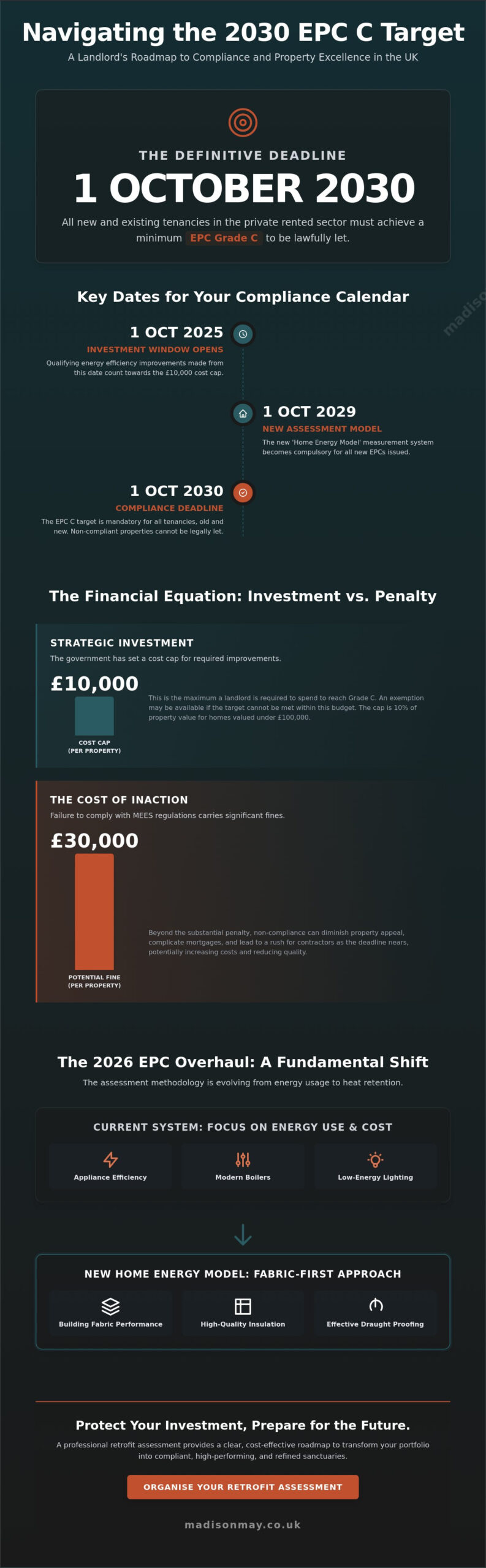
The transition from a minimum Grade E to the new EPC C target for landlords deadline on October 1, 2030, represents a profound shift in the stewardship of the UK’s housing stock. This mandate, a cornerstone of the government’s £15 billion Warm Homes Plan, seeks to refine our living spaces into more efficient, sustainable sanctuaries. An Energy Performance Certificate (EPC) has long been a standard requirement, yet these upcoming regulations elevate the document from a mere administrative formality to a central pillar of property management. Under the new rules, the previous phased introduction has been replaced by a single, definitive date for all tenancies, ensuring a unified standard across the private rented sector.
Achieving this standard requires a thoughtful approach to investment. The government has established a cost cap of £10,000 per property, which serves as a financial ceiling for necessary upgrades. For properties valued under £100,000, this cap is even more sensitive, limited to 10% of the property’s value. If a property cannot reach the Grade C threshold despite spending up to this limit, a 10-year exemption may be granted. This ensures that the path to compliance remains grounded in financial reality whilst still encouraging significant progress toward energy efficiency.
Key Dates for Your Compliance Calendar
Success in this transition relies on a clear understanding of the timeline. Marking these dates allows for a calm, measured approach to property refurbishment.
- October 1, 2025: Any qualifying energy efficiency improvements made from this date onwards will count towards the £10,000 cost cap, allowing early adopters to benefit from their foresight.
- October 1, 2029: The transition to the new Home Energy Model measurement system becomes compulsory for all new certificates.
- October 1, 2030: This is the definitive EPC C target for landlords deadline for all existing and new tenancies in England and Wales.
The Financial Implications of Non-Compliance
The risks of overlooking these mandates extend far beyond simple administrative friction. Fines for failing to meet the Minimum Energy Efficiency Standards (MEES) can reach a substantial £30,000 per property, a figure that underscores the government’s commitment to these targets. Beyond direct penalties, a poor rating can diminish a property’s appeal to discerning tenants and complicate mortgage eligibility. Lenders are increasingly sensitive to energy performance, often linking portfolio valuations and interest rates to a building’s efficiency. For landlords looking to align their investment strategy with these standards, MaddisonV Properties provides the professional management and advisory required to safeguard asset value. With an estimated 340,000 properties requiring upgrades each year to meet the national target, acting early protects you from the inevitable rush for contractors. This ensures your projects are finished with the meticulous care they deserve rather than being rushed to meet a ticking clock.
The 2026 EPC Overhaul: Shifting from Energy Use to Heat Retention
The evolution of the Energy Performance Certificate represents a profound shift in how we perceive the essence of a home. For years, assessments focused heavily on the cost of energy and the efficiency of appliances, yet the 2026 overhaul introduces a more sophisticated philosophy. This new methodology, known as the Home Energy Model, prioritises the building fabric itself, moving the focus from what a property consumes to how effectively it retains warmth. For those working towards the EPC C target for landlords deadline in 2030, this change necessitates a more rhythmic and logical approach to property management, where the structural integrity and thermal performance of a sanctuary take centre stage.
This transition is not merely a technical update; it is a recalibration of value. Under the current system, a property might achieve a higher rating through modern boilers or LED lighting, even if the walls remain poorly insulated. The 2026 criteria will likely reveal that many properties currently holding a Grade C or D rating may see their scores fluctuate when the focus shifts to heat retention. By prioritising the “fabric-first” approach, the government aims to ensure that improvements are enduring, focusing on high-quality insulation and draught proofing that protect the character and comfort of the building for decades to come.
Understanding the New Measurement Metrics
The Home Energy Model departs from purely cost-based metrics to embrace actual thermal performance. This system will eventually integrate smart data and real-world monitoring, providing a more evocative and accurate picture of a home’s behaviour. Properties featuring premium double glazing and advanced insulation upgrades will be favoured, as these elements are fundamental to a building’s ability to maintain a serene internal environment. Engaging an expert to conduct a Retrofit Assessment and building survey ensures that every nuance of your property’s thermal envelope is documented with the precision required by these new standards.
Preparing for the 2029 System Compulsion
Whilst the new model begins its rollout in 2026, it becomes compulsory for all new certificates from October 1, 2029. Landlords who secured a Grade C rating before this transition will remain compliant until their certificate expires, as EPCs typically retain their validity for 10 years. However, any assessment commissioned after the 2029 threshold will be subject to the more meticulous Home Energy Model. This requires a deeper level of data collection regarding building services and ventilation. Preparing now allows you to curate a long-term plan that respects the heritage of your property whilst meeting the modern demands of the 2030 deadline with quiet confidence.
The Ventilation Gap: Why Hasty Upgrades Risk Damp and Mould
The pursuit of the EPC C target for landlords deadline often leads to a singular focus on sealing a property against the elements. Whilst draught proofing and thick layers of insulation are essential for heat retention, they can inadvertently create what experts call a “Ventilation Gap” if the building’s ability to breathe is neglected. A home is a living entity that requires a rhythmic exchange of air to remain healthy and vibrant. When we wrap a heritage building in modern thermal materials without a sophisticated understanding of moisture behaviour, we risk trapping humidity amongst the very fabric we seek to protect. This imbalance is where the quiet elegance of a well-maintained property can quickly give way to the persistent issues of damp and mould.
True craftsmanship in property retrofit involves a delicate, intentional balance. It’s not enough to simply keep the warmth in; we must ensure that stale, moisture-laden air can escape through controlled pathways. Without this equilibrium, the risk of surface and interstitial condensation increases significantly, potentially undermining the long-term asset value you’ve worked so hard to build. A whole-house approach treats the property as a single, integrated system. It ensures that energy efficiency and indoor air quality exist in a natural and effortless union, rather than a forced compromise that leads to technical failure.
The Intersection of Insulation and Part F Regulations
Compliance with the EPC C target for landlords deadline must always align with broader building standards, particularly Part F of the Building Regulations. These mandates require that when significant energy improvements are made, the ventilation must be assessed and, if necessary, enhanced to match the new airtightness of the building. Ignoring this step often leads to moisture settling within wall cavities or roof spaces, where it can cause structural decay. This is why damp remediation and ventilation are fundamental components of a successful EPC strategy, protecting the structural integrity of the home from the inside out.
Curating a Healthy Sanctuary for Tenants
Beyond the technicalities of compliance, there’s a profound emotional impact to providing a home that feels like a true sanctuary. A warm, well-ventilated space fosters a sense of calm and wellbeing that encourages long-term tenant retention. By addressing ventilation with the same care as a high-end refurbishment, you reduce the risk of mould-related legal claims whilst enhancing the property’s reputation in a competitive market. Integrated ventilation solutions, such as discreet mechanical extractors or refined passive vents, can be chosen to complement your interior design. This ensures that the functional necessity of air exchange never compromises the sophisticated atmosphere of the living space.
Crafting Your Roadmap: The Meticulous Path to EPC Grade C
Approaching the EPC C target for landlords deadline requires more than a reactive scramble to install new technology. It demands a curated roadmap that respects the unique story of your property whilst ensuring every pound spent contributes to a lasting legacy of efficiency. A generic checklist found on a standard certificate often overlooks the nuances of older buildings; instead, a successful transformation relies on a sequence of measures that are technically sound and aesthetically harmonious. By prioritising a “Fabric First” philosophy, you ensure the core of the home is thermally secure before moving to more complex mechanical upgrades. This methodical approach is best captured within a meticulous EPC improvement plan, which serves as your definitive guide through the 2030 transition.
Sequencing is the heartbeat of a successful retrofit. If you install a high-capacity heating system before addressing draughts or insulation, you risk creating an inefficient environment that fails to meet the required standards. A professional strategy ensures that each improvement builds upon the last, creating a seamless experience for both the landlord and the tenant. This level of foresight protects against wasted expenditure and technical failures, such as the condensation issues discussed previously, by ensuring the building envelope is prepared for the upgrades it will receive. It is a journey from the initial spark of inspiration to a finished, high-performing sanctuary.
The Retrofit Assessment: A Deep Dive into Building Performance
A standard EPC provides a surface-level snapshot, but a comprehensive building survey offers a deep dive into the actual performance of your property. This assessment identifies the “low-hanging fruit” that can make an immediate impact, such as professional draught proofing and enhanced loft insulation. For more complex structures, it evaluates the feasibility of external wall insulation or heating upgrades, ensuring these measures are appropriate for the building’s age and construction. This level of detail transforms a simple home improvement project into a visionary architectural journey.
The Role of PAS 2035 in Compliance
For the discerning landlord, PAS 2035 retrofit standards represent the gold standard of compliance and quality. This framework ensures that all energy-efficient measures are technically compatible and professionally installed, eliminating the risk of piecemeal work that can harm a property’s heritage. A Retrofit Coordinator acts as your sophisticated guide, managing the entire process with quiet confidence and visionary creativity. This oversight provides the peace of mind that your property will meet the EPC C target for landlords deadline whilst maintaining its status as a refined place of refuge. To secure the future of your portfolio with an expert hand, consider our bespoke Retrofit Coordination services.
Professional Retrofit Consultancy: Your Partner in Transformation
The journey towards the EPC C target for landlords deadline on October 1, 2030, does not have to be a path walked in solitude or confusion. At Madison May Consulting Ltd, we view this regulatory shift as a moment for visionary stewardship, where the functional necessity of energy efficiency meets the refined aesthetics of high-end property management. Our role is to act as your sophisticated guide, translating the complexities of the mandates into a clear, actionable vision for your portfolio. We believe that every property has a unique story, and our mission is to ensure that story continues with grace, efficiency, and enduring value. By choosing a partner who understands the intersection of heritage and performance, you transform a compliance exercise into a meaningful investment in the future of your assets.
Confidence in an uncertain regulatory landscape stems from clarity. Whilst specific financial ceilings exist, the true value lies in how that capital is deployed amongst various competing priorities. Madison May Consulting Ltd provides the expertise needed to navigate these choices, ensuring that your property remains a sanctuary for tenants whilst securing its place in a greener economy. This is not merely about reaching a grade on a certificate; it is about curating a high-performing environment that resonates on a personal level with those who call it home, ensuring your portfolio remains exceptional throughout the 2030s.
Fixed-Fee Assessments for Portfolio Clarity
Navigating the financial landscape of property upgrades requires absolute transparency. Madison May Consulting Ltd offers fixed-fee Retrofit Assessment and building surveys that remove the ambiguity often associated with large-scale improvements. These assessments are not mere checklists; they are deep explorations into the building fabric, services, and ventilation of each home. By collecting meticulous data, we provide a bespoke EPC Improvement Plan that balances cost-effectiveness with the need for enduring quality. This roadmap allows you to invest with quiet confidence, knowing that each measure is chosen for its ability to provide both thermal comfort and long-term asset protection.
Retrofit Coordination: Overseeing the Artistic Journey
The physical transformation of a space is an artistic journey that requires steady, expert hands. Our Retrofit Coordination service ensures that every installation, from heating upgrades to premium windows and doors, meets the rigorous technical standards required for modern compliance. We manage the delicate balance between insulation and air exchange, ensuring that every detail is intentional and every material is chosen with care. This seamless experience moves logically from the initial spark of inspiration to the final, finished detail. Contact Madison May Consulting Ltd today to begin your property’s transformative journey towards the 2030 standards and beyond.
Securing the Future of Your Property Portfolio
The evolution of the private rented sector towards the EPC C target for landlords deadline is an invitation to elevate the standard of our housing stock. Throughout this guide, we have explored the necessity of a fabric-first approach and the nuances of the 2026 Home Energy Model, highlighting that true efficiency is born from a balance of thermal performance and air quality. Rather than viewing these mandates as a burden, they offer a structured path to enhance the character and longevity of your portfolio. By addressing the building envelope with the same care as an interior refurbishment, you create a space that is prepared for the environmental and regulatory demands of the coming decade.
Madison May Consulting Ltd stands as your visionary partner in this transformation, offering the specialist expertise in building fabric and ventilation required to navigate these changes with quiet confidence. Our PAS 2035 aligned retrofit assessments and bespoke EPC improvement plans provide a clear, sophisticated roadmap for your investment, ensuring your properties remain both compliant and highly desirable. Begin your journey toward a compliant, high-performing sanctuary with Madison May Consulting Ltd. With an expert hand to guide you, the coming years offer a graceful transition into a more refined and sustainable future.
Frequently Asked Questions
What is the current EPC C target for landlords deadline?
The definitive EPC C target for landlords deadline is October 1, 2030. This date applies to all existing and new tenancies across England and Wales, replacing previous proposals for a phased rollout. By consolidating the requirement into a single date, the government aims to ensure a uniform standard of energy efficiency across the entire private rented sector, providing landlords with a clear timeline for their property refurbishments.
Do all rental properties have to be EPC C by 2030?
Yes, the mandate applies to all private rented homes, regardless of when the tenancy began. Under the government’s Warm Homes Plan, every property must achieve this minimum standard by the EPC C target for landlords deadline. Whilst some exemptions exist for heritage buildings or specific high-cost scenarios, the vast majority of landlords must prepare for this transition to avoid significant fines and protect their asset value.
How much will it cost to get my property to an EPC C rating?
The government expects a maximum expenditure of £10,000 per property to reach the required Grade C rating. This figure serves as a financial ceiling for energy efficiency improvements, such as insulation upgrades and heating improvements. For properties valued under £100,000, this expenditure cap is further reduced to 10% of the property’s value, ensuring that the financial commitment remains proportionate to the asset’s worth.
What happens if I cannot afford the EPC improvements?
If the cost of reaching Grade C exceeds the £10,000 cap, you may apply for a high-cost exemption. A 10-year exemption is available for properties that cannot reach the target despite spending up to the limit. This allows you to manage your portfolio with financial clarity whilst still demonstrating a commitment to improving the thermal performance of your buildings where it is practically and financially feasible to do so.
Will the 2026 EPC overhaul change my current rating?
The 2026 overhaul is likely to influence current ratings because it introduces the Home Energy Model. This new methodology prioritises how a property retains heat rather than focusing solely on the cost of energy usage. Consequently, a property that currently holds a Grade C through efficient appliances might see its rating change if the building fabric itself is not sufficiently insulated to meet the new, more sophisticated measurement standards.
Can I get a grant to help with EPC C improvements?
Financial support is being delivered through the £15 billion Warm Homes Plan initiative. This government programme is designed to help landlords and homeowners improve energy efficiency across the UK. It’s advisable to monitor official government portals or consult with a retrofit coordinator to identify which specific grants or subsidies your property might be eligible for as the 2030 deadline approaches, ensuring you maximise available funding.
What is the “Fabric First” approach in retrofitting?
The “Fabric First” approach prioritises improvements to the building’s envelope, such as insulation, draught proofing, and high-quality windows, before addressing heating systems. By ensuring the walls, roof, and floors are thermally sound, you create a property that inherently requires less energy to stay warm. This method is considered the most enduring way to create a comfortable, efficient sanctuary that stands the test of time.
Why is ventilation so important when improving an EPC rating?
Controlled ventilation is essential because energy improvements like draught proofing and insulation make a home significantly more airtight. Without a rhythmic exchange of air, moisture from daily activities can become trapped, leading to damp and mould. A meticulous ventilation assessment ensures that your property remains a healthy, breathable environment whilst still achieving its new energy efficiency goals, protecting both the building fabric and tenant wellbeing.