

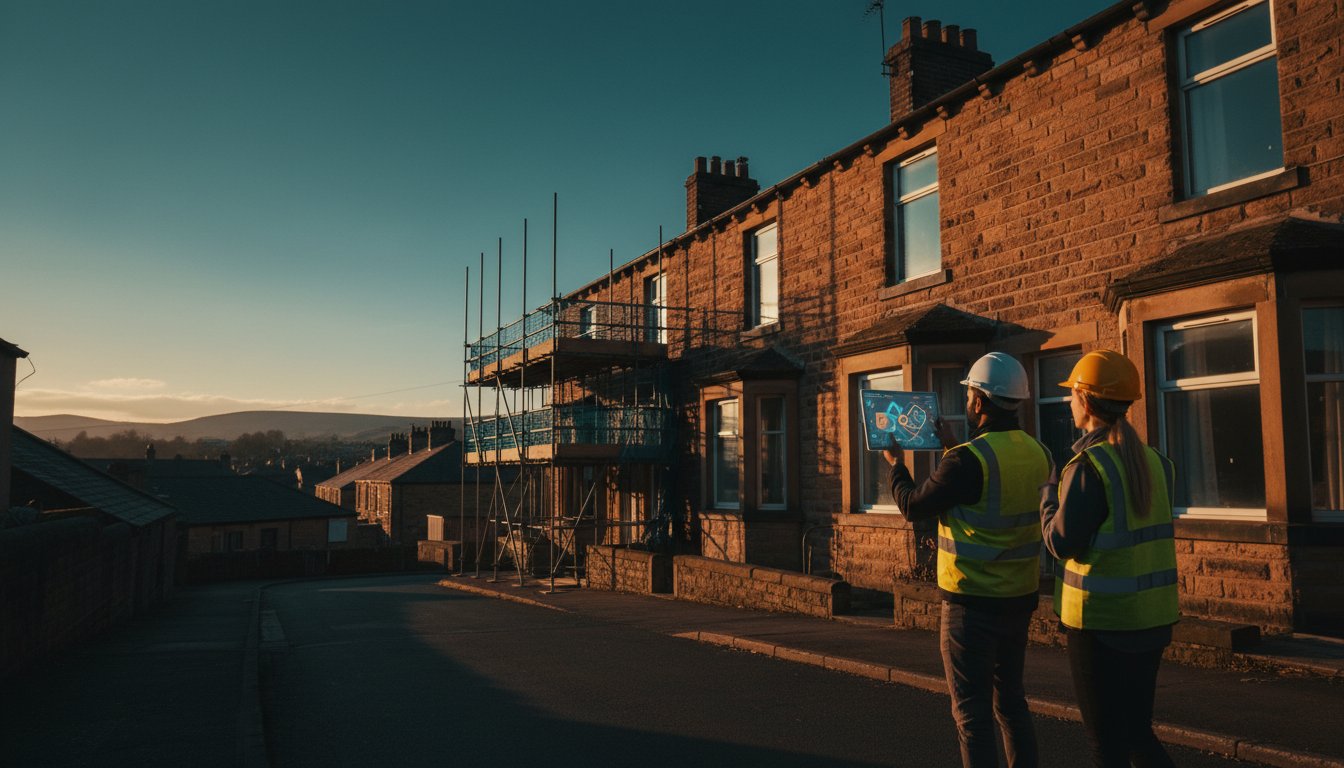
What if the historic stone walls that define our local heritage are actually the key to a more refined, sustainable future for your rental portfolio? As the deadline for the updated landlord EPC requirements 2026 West Yorkshire draws closer, owners of the 60% of local rental properties currently rated below Band C find themselves balancing the weight of new regulations against the meticulous care required for older buildings. You likely recognize that while this legislative shift presents a logistical challenge, it’s also an invitation to elevate the character and quality of your investments.
It’s natural to feel concerned about the complexities of retrofitting solid stone structures or finding a local assessor who truly understands the soul of a Pennine cottage. The path to compliance doesn’t have to be clinical. This guide offers a curated path through the evolving legislative landscape, promising to help you transform drafty houses into warm, energy-efficient sanctuaries. We’ll examine practical strategies for improving thermal performance, increasing property value, and eliminating the persistent threat of damp, ensuring your journey toward compliance is as seamless as a bespoke design process.
Key Takeaways
- Gain a sophisticated understanding of the evolving landlord EPC requirements 2026 West Yorkshire, ensuring your portfolio transitions seamlessly from mere compliance to a standard of enduring excellence.
- Discover the transformative power of PAS 2035, moving beyond piecemeal fixes toward a curated, whole-house retrofit strategy that honors the architectural integrity of your property.
- Master the delicate science of moisture management to protect West Yorkshire’s heritage stone properties, ensuring that insulation enhances comfort without compromising the building’s structural health.
- Explore a meticulous five-step journey to define a bespoke narrative for your property, beginning with an initial consultation and moving through a comprehensive building survey.
- Learn how to transform the perceived burden of regulatory compliance into an inspired journey of property enhancement, crafting energy-efficient sanctuaries that resonate with a sense of calm.
The 2026 Landscape: EPC Requirements for West Yorkshire Landlords
The arrival of 2026 brings a sense of quiet transformation to the property market across the rolling hills of West Yorkshire. For the discerning property owner, the current regulatory environment is a bridge between past traditions and a more sustainable future. While the present focus rests on the Minimum Energy Efficiency Standards (MEES), the horizon is defined by the government’s 2030 mandate. This roadmap requires a shift from the basic ‘E’ rating toward a more refined ‘C’ target. Understanding the landlord EPC requirements 2026 West Yorkshire is about more than avoiding penalties; it’s about preserving the heritage of your portfolio. The Energy Performance Certificate (EPC) serves as the primary document in this journey, acting as a meticulous guide for every structural improvement.
This transition is part of a larger narrative where the home becomes a reflection of care and quality. The intersection of the Renters’ Rights Act 2026 and these energy expectations creates a new standard for the tenant experience, moving toward seeing a rental property as a sanctuary. By targeting a ‘C’ rating now, you’re choosing a path of visionary creativity that anticipates future legislation. This proactive stance ensures your investment remains a seamless integration of beauty and functionality, shielding it from the volatility of changing laws.
Current MEES Regulations in 2026
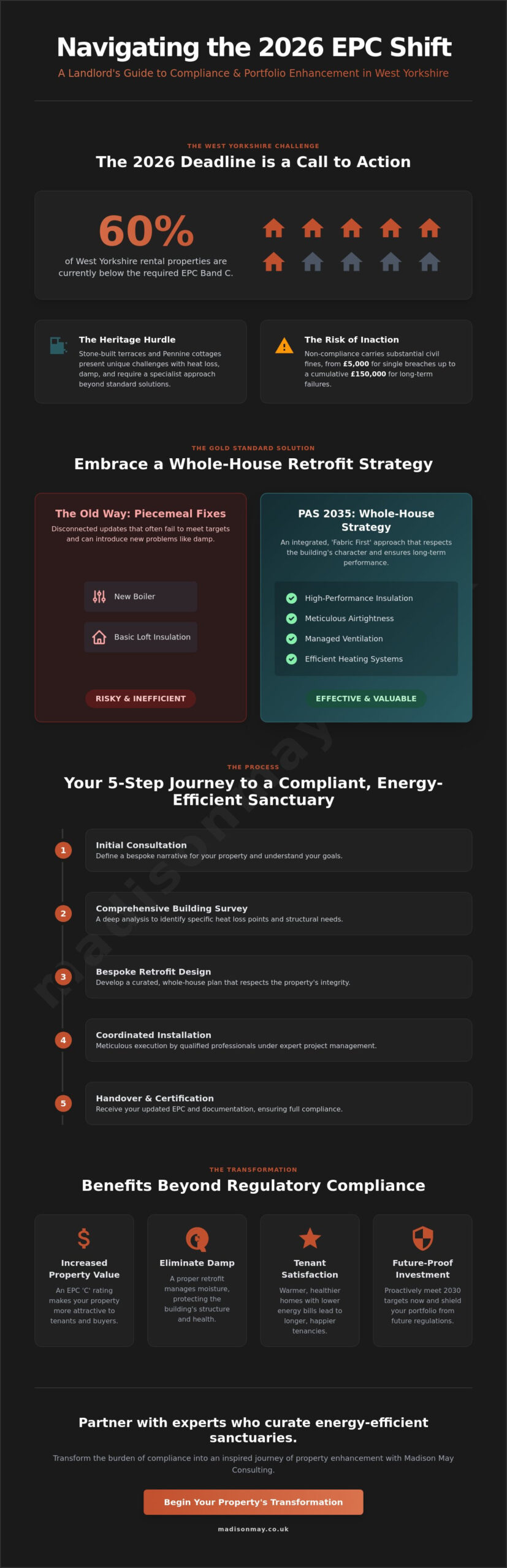
Compliance remains the bedrock of a successful tenancy. In 2026, it’s a legal necessity for all existing tenancies to hold a valid EPC rating of ‘E’ or above. The risks of overlooking these details are substantial. In the Yorkshire region, civil fines for non-compliance can reach £5,000 for individual breaches, while cumulative penalties for long-term failures can rise to £150,000. These aren’t just numbers; they represent a significant threat to the financial harmony of your estate. The Private Landlord Ombudsman now plays a central role in enforcing these standards, ensuring that every home meets the promised essence of quality and warmth.
The Regional Context: Why West Yorkshire Properties Fall Behind
West Yorkshire’s architectural landscape is defined by its rugged charm, yet this heritage often presents challenges for energy performance. In the stone-built terraces of Halifax, Huddersfield, and Bradford, approximately 42% of homes struggle to meet modern thermal benchmarks. The harsh climate of the Pennines brings damp winds and low temperatures that test even the most solid structures. Standard solutions often fall short. Navigating the landlord EPC requirements 2026 West Yorkshire involves more than just ticking boxes; it requires a deep understanding of the local environment. A bespoke approach is required, starting with local building surveys that identify specific points of heat loss. By focusing on meticulous insulation and high-quality glazing, you can transform these historic spaces into warm, enduring environments that reflect the true value of your investment.
The Shift to EPC C: Why PAS 2035 is the Meticulous Gold Standard
The journey toward meeting the landlord EPC requirements 2026 West Yorkshire demands a departure from the superficial. In previous years, achieving a passing grade often involved a series of disconnected updates, perhaps a new boiler or a few inches of loft insulation. This piecemeal approach is no longer sufficient for the discerning property owner. To truly elevate a home to a Band C, we must embrace a curated, whole-house strategy. This is the essence of PAS 2035, a framework that ensures every intervention is intentional and every material choice respects the building’s soul.
West Yorkshire properties, with their characteristic millstone grit and solid-wall Victorian terraces, present unique challenges that standard assessments often overlook. A ‘Fabric First’ philosophy is essential here. By prioritizing the building’s envelope through high-quality insulation and meticulous airtightness, we create a stable thermal environment. This foundation reduces the demand for energy before we even consider the installation of expensive heating technologies. It’s a rhythmic process where the physical structure and the internal systems work in a seamless integration.
The Role of the Retrofit Coordinator
A Retrofit Coordinator acts as the guardian of your project’s integrity, ensuring that technical standards are met without compromise. They manage the delicate balance between energy efficiency and building breathability, which is vital for the stone-built homes across the Pennines. For those navigating the complexities of local heritage, investing in PAS 2035 in West Yorkshire is the most reliable way to secure long-term compliance. These experts guide the client journey, turning a regulatory requirement into a transformative artistic journey for the property.
Retrofit Assessments vs. Standard EPCs
While the current Minimum Energy Efficiency Standard (MEES) sets a baseline of ‘E’, the 2026 targets require a more sophisticated level of detail. A standard EPC survey is often a 30-minute snapshot based on the Reduced Data SAP (RdSAP) methodology, which relies on broad assumptions. In contrast, a Retrofit Assessment provides a deeper narrative. It identifies specific thermal bridges and bespoke ventilation needs, ensuring that we don’t accidentally create moisture issues while trying to trap heat.
By creating a detailed roadmap, landlords can avoid the unintended consequences of poor design, such as interstitial condensation that can damage historic masonry. This level of precision protects your investment and ensures the home remains a sanctuary for its occupants. If you’re ready to transform your portfolio into a collection of high-performing, elegant homes, a bespoke energy consultation can provide the clarity you need to move forward with confidence.
The West Yorkshire Challenge: Stone, Damp, and Meticulous Insulation
West Yorkshire’s architectural identity is etched into its rugged gritstone and historic brickwork. For many property owners, the looming landlord EPC requirements 2026 West Yorkshire present a profound technical dilemma. There’s a persistent belief that insulating these storied stone structures inevitably invites damp. This concern isn’t without merit, yet it often stems from a misunderstanding of how traditional buildings breathe. Unlike modern cavity-walled homes, our heritage properties rely on the movement of moisture through porous materials, a natural rhythm that must be respected during any retrofit.
Before considering internal wall insulation (IWI) or external house insulation, the building’s current health must be the absolute priority. Any existing moisture trapped within the fabric will only be exacerbated by poorly planned thermal upgrades. This is why professional damp remediation in West Yorkshire is the essential first chapter of your renovation story. It ensures the stone is dry and the structural integrity is sound before we layer in the modern comforts of energy efficiency. By addressing the root cause of damp, we preserve the aesthetic narrative of Yorkshire’s heritage while achieving contemporary standards of warmth.
Breathable Insulation for Period Properties
Victorian terraces require a sympathetic touch. Using non-breathable synthetic foams can trap water vapour, leading to interstitial condensation and the eventual decay of timber joists. We advocate for vapour-permeable materials like wood fibre or lime-based renders that respect the original building’s soul. Thermal imaging serves as a vital diagnostic tool here. It reveals hidden cold spots and defects within the masonry that the naked eye might miss, allowing for a truly bespoke insulation strategy that aligns with the landlord EPC requirements 2026 West Yorkshire while protecting the building fabric.
Ventilation: The Silent Partner of Insulation
As we seal a property to meet modern standards, we must also ensure it can exhale. Part F of the Building Regulations reminds us that the philosophy of building tight must be paired with ventilating right. Controlled ventilation, such as demand-controlled mechanical extract or sophisticated heat recovery systems, balances the need for heat retention with the necessity of fresh, healthy air. A bespoke ventilation assessment protects your investment from the silent threat of mould, ensuring the property remains a healthy sanctuary for your tenants and a source of pride for years to come.
Crafting Your EPC Improvement Plan: A 5-Step Journey
Transforming a property portfolio into a collection of energy-efficient sanctuaries begins with a deep understanding of each building’s unique soul. This process isn’t merely about ticking boxes for compliance; it’s a curated journey that respects the heritage of your assets while embracing a sustainable future. By following a structured path, you can ensure that your properties meet the landlord EPC requirements 2026 West Yorkshire standards with grace and precision.
- Initial Consultation: We begin by defining the narrative for your portfolio, aligning your aesthetic goals with the necessary thermal improvements to create a cohesive vision.
- The Data Collection Phase: A meticulous building survey and professional retrofit assessment capture the intricate details of the structure, identifying where the essence of the home is being lost through inefficiency.
- The Improvement Roadmap: We prioritize measures based on their ability to enhance comfort and reduce carbon impact, ensuring every pound spent is a wise investment in the property’s longevity.
- Implementation & Coordination: Our team oversees the seamless integration of energy-saving technologies, managing the delicate balance between modern functionality and timeless design.
- Final Certification: The journey concludes with a new EPC rating, providing you with the quiet confidence that your properties are future-proofed against evolving regulations.
Prioritizing Your Upgrades
The path to a Band C rating often starts with subtle, low-cost interventions like draught-proofing and the installation of smart thermostats to create a more responsive environment. For those seeking a deeper transformation, enhancing windows and doors with high-performance, bespoke glazing offers a significant uplift in both thermal retention and acoustic calm. Major works, such as integrating air source heat pumps or solar arrays, represent the final step in crafting a truly self-sustaining sanctuary.
Financial Planning and ROI
Investing in energy efficiency yields rewards that extend beyond mere compliance. Data from Rightmove suggests that improving a home from an EPC rating of E to C can increase its market value by an average of £11,000, or approximately 7% to 15% depending on the specific location. These refined spaces attract discerning tenants who value lower utility costs and a higher quality of life, effectively reducing void periods. In the Halifax area, landlords can also explore the Boiler Upgrade Scheme, which provides grants of £7,500 to help transition toward low-carbon heating solutions, ensuring the landlord EPC requirements 2026 West Yorkshire are met with financial intelligence.
Ready to elevate your portfolio and secure your property’s future? Contact Madison May today to begin your bespoke EPC improvement journey.
Madison May: Your Partners in Curating Energy-Efficient Sanctuaries
The shift toward stricter landlord EPC requirements 2026 West Yorkshire presents more than a regulatory hurdle; it’s an opportunity to redefine the soul of your rental portfolio. At Madison May, we view every stone-built terrace in Hebden Bridge or Victorian villa in North Leeds as a unique narrative waiting to be told. We don’t merely tick boxes for compliance. Instead, we bring a sophisticated approach to retrofit that honors the heritage of West Yorkshire properties while ensuring they meet the highest standards of modern efficiency. Our team combines PAS 2035 authority with an artist’s eye, ensuring your investments remain both lawful and deeply desirable.
A Bespoke Approach to Retrofit
We believe a home should be a sanctuary, a place where warmth and light are curated with intention. This philosophy guides our retrofit process, moving beyond basic insulation to a seamless integration of functionality and beauty. By focusing on the intersection of technical rigour and refined aesthetics, we transform drafty spaces into high-performing assets that tenants truly cherish. You can find clarity in this journey through our meticulous EPC improvement plan. This roadmap serves as your guide, balancing the nuances of historic architecture with the demands of the 21st century. It’s about preserving the essence of the building while securing its future.
Securing Your Property’s Future
Waiting for the 2030 deadline is a risk that savvy investors choose to avoid. By addressing the landlord EPC requirements 2026 West Yorkshire now, you secure a competitive advantage in a market that increasingly values sustainability. Our fixed-fee assessments remove the ambiguity of cost, providing a transparent foundation for your property’s evolution. We offer a measured, steady path toward compliance that respects your timeline and your budget.
- Expert Guidance: Comprehensive PAS 2035 compliant assessments tailored to the specific West Yorkshire climate.
- Curated Materials: A selection of retrofit solutions that respect the character and heritage of your building.
- Skilled Craftsmanship: Direct access to our network of trusted local professionals who understand the weight of quality.
The path to a more efficient, beautiful portfolio begins with a single conversation. We invite you to contact us for a bespoke consultation, where we can explore how to elevate your properties into the sanctuaries they were meant to be. Let’s ensure your assets are protected, compliant, and consistently extraordinary. Your journey from a compliance burden to property enhancement starts here.
Securing the Legacy of Your West Yorkshire Heritage
The transition toward more efficient homes isn’t merely a regulatory hurdle; it’s an opportunity to redefine the essence of your property portfolio. As the 2026 deadline approaches, the move to an EPC rating of C requires more than just superficial changes. It demands the meticulous application of PAS 2035 standards to protect the unique character of our local stone architecture from damp and degradation. By viewing these updates through the lens of quality craftsmanship, you ensure your investments remain both compliant and deeply desirable for years to come.
Navigating the complex landlord EPC requirements 2026 West Yorkshire mandates requires a partner who understands the delicate balance between modern efficiency and historical integrity. At Madison May, we serve as your PAS 2035 aligned retrofit experts, specializing in the nuanced needs of West Yorkshire heritage properties through a transparent, fixed-fee consultancy. We invite you to begin this transformative journey with a team that values the soul of your space as much as its performance. Book your bespoke Retrofit Assessment in West Yorkshire today and let’s curate a sanctuary that stands the test of time.
Frequently Asked Questions
Is it a legal requirement for landlords to have an EPC C rating by 2026?
No, the current legal mandate remains at a minimum rating of E, following the government’s decision in September 2023 to scrap previous targets. While the new administration has signaled a shift toward higher standards by 2030, landlords navigating landlord EPC requirements 2026 West Yorkshire won’t face a mandatory C rating by that specific year. It’s a period for thoughtful preparation rather than immediate enforcement of the higher grade.
What are the specific penalties for West Yorkshire landlords who fail to meet EPC standards?
Local authorities across the region, such as Leeds City Council, can impose financial penalties up to £5,000 for properties that have been in breach of the Minimum Energy Efficiency Standards for less than three months. For more persistent non-compliance exceeding three months, these fines can escalate to £150,000. These measures ensure every home remains a safe, warm sanctuary, reflecting a commitment to the heritage and quality of our local housing stock.
Can I still rent out my property if it has an EPC rating of E in 2026?
You can legally rent your property with an EPC rating of E in 2026, as this remains the current statutory minimum for domestic private rented properties in England and Wales. While the journey toward a more sustainable future continues, your property stays compliant as long as it doesn’t fall into the F or G categories. Maintaining this standard is essential for the seamless integration of comfort and legal security within your rental portfolio.
How much does a PAS 2035 Retrofit Assessment cost for a terraced house in Halifax?
For a traditional terraced home in Halifax, a PAS 2035 Retrofit Assessment typically costs between £400 and £600, depending on the architectural complexity of the dwelling. This meticulous evaluation goes far beyond a standard survey, offering a curated roadmap for improvements that respect the building’s essence. It’s an investment in the long-term health of the structure, ensuring that any future interventions are both beautiful and technically sound.
What is the ‘cost cap’ for EPC improvements, and does it still apply in 2026?
The current cost cap is £3,500, including VAT, which represents the maximum amount you’re required to spend to improve a property to an EPC E rating. This cap remains the standard for landlord EPC requirements 2026 West Yorkshire, providing a clear financial boundary for your renovation plans. If the necessary improvements exceed this figure, you can apply for a high-cost exemption through the PRS Exemptions Register, which is valid for five years.
Will insulating my stone-built Yorkshire property cause damp and mould?
Improper insulation can indeed lead to moisture issues in stone properties, but a bespoke approach using breathable materials like wood fibre or lime plaster preserves the building’s soul. When we treat a home as a living narrative, we prioritize ventilation and vapour permeability to prevent the dampness that often follows modern, non-porous solutions. Meticulous design ensures that your sanctuary remains dry, warm, and structurally vibrant for generations to come.
How do I find a qualified Retrofit Coordinator in West Yorkshire?
You can find a qualified professional by searching the TrustMark National Register, which is the government-endorsed quality scheme for home improvements in the UK. This platform allows you to filter by location, ensuring you find a coordinator in West Yorkshire who understands our unique local landscape. Selecting a TrustMark-registered expert ensures your project is handled with the grace and technical precision that high-end heritage properties deserve.
What is the difference between a standard EPC and a Retrofit Assessment?
A standard EPC is a brief, visual inspection providing a general energy score, whereas a Retrofit Assessment is a deep, rhythmic exploration of a building’s performance. It includes a detailed condition survey, an occupancy assessment, and a ventilation report to create a truly individualized plan. This comprehensive process ensures that every change contributes to a harmonious, efficient environment, reflecting the meticulous craftsmanship required for a modern sanctuary.