

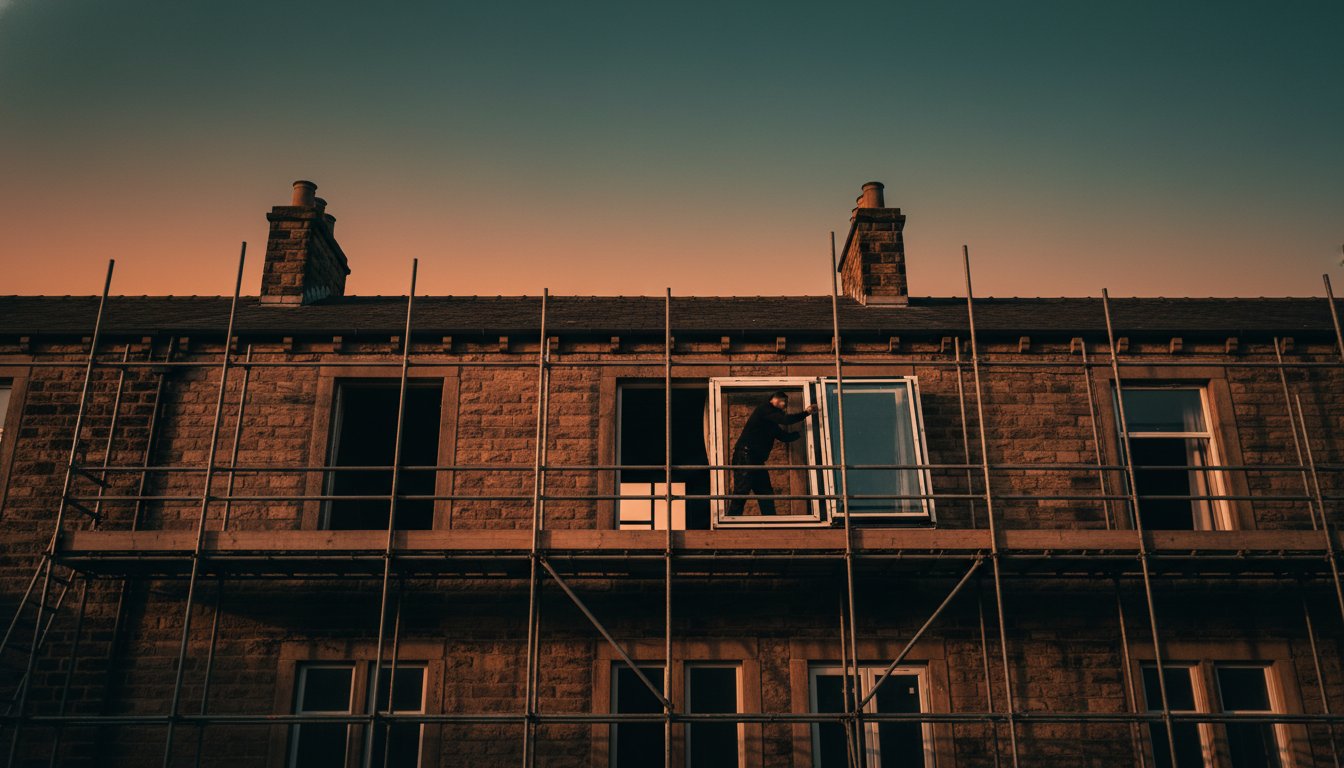
Imagine a winter evening in West Yorkshire where the wind rattles the window frames, and despite the heating being on, a persistent chill still clings to the corners of your living room. If you’ve spent your evenings researching the best methods for improving home comfort for my family Wakefield, you’re likely familiar with the frustration of rooms that never quite stay warm. It’s a common worry to invest in partial fixes only to find that damp or condensation begins to creep in where you least expect it.
You deserve a home that acts as a true sanctuary, balancing refined aesthetics with the quiet confidence of superior performance. This guide promises to show you how a meticulously planned, whole-house approach to energy efficiency can transform your property into a serene and healthy environment. We’ll explore a professional roadmap for energy improvements, moving through the precision of the PAS 2035:2023 standard and the current 0% VAT incentives on energy-saving materials, ensuring your journey toward a more sustainable lifestyle is both seamless and deeply rewarding.
Key Takeaways
- Discover how a multisensory approach to improving home comfort for my family Wakefield creates a sanctuary defined by silence, warmth, and pure air.
- Understand why the PAS 2035 framework serves as the essential gold standard for ensuring every property improvement is both safe and meticulously coordinated.
- Uncover the science of breathability to learn how you can insulate your home effectively whilst avoiding the common pitfalls of condensation and damp.
- Gain a clear, professional roadmap for sequencing upgrades, from bespoke windows to heating, to ensure your investment delivers lasting thermal efficiency.
- Experience a collaborative design journey where the unique heritage of your home and your family’s story are prioritised at every stage of the process.
Redefining the Sanctuary: What Family Comfort Truly Means
True comfort is rarely found in a single upgrade or a temporary fix. It’s a sophisticated, multisensory experience that begins the moment you step through your front door. For many residents, the journey of improving home comfort for my family Wakefield involves moving beyond the basic necessity of warmth and into the curation of a genuine sanctuary. A home shouldn’t just be a place where you reside; it should be a personal refuge that reflects your identity and the care you provide for those within its walls. By investing in a holistic strategy, improving home comfort for my family Wakefield becomes a legacy of quality that benefits your loved ones for years to come.
When a property is treated as a cohesive system rather than a collection of separate rooms, the atmosphere shifts. This comprehensive transformation, often described as a deep energy retrofit, focuses on the building as a whole to ensure every corner remains inviting. The psychological impact of a draught-free environment is profound. When the air is still and the temperature is consistent, family harmony often follows. You find yourselves relaxing in spaces you once avoided, no longer tethered to the nearest heat source or bothered by the subtle whistle of the wind through old frames.
The Sensory Elements of a Comfortable Home
Atmospheric comfort is defined by more than just air temperature. There’s a distinct difference between the inconsistent, often dry heat produced by standard radiators and the gentle, enveloping embrace of radiant warmth. This sensory depth extends to the silence of a well-insulated home. By prioritising acoustic comfort, you reduce the intrusion of external noise from busy Wakefield streets, creating a space where quiet conversation and rest can flourish. The introduction of soft, natural light through high-performance windows and doors enhances the aesthetic appeal of your interiors whilst maintaining the thermal envelope, ensuring your home feels as beautiful as it is functional.
Beyond the Thermostat: Health and Wellbeing
A well-regulated home is a foundation for physical health. Stable indoor temperatures and improved air purity are essential for the respiratory health of children and the elderly, protecting them from the damp conditions that often plague older Yorkshire properties. When you remove the stress of seasonal weather changes, you gain a lasting peace of mind. You don’t have to worry about the reliability of your heating during a cold snap or the potential for mould growth in the winter months. Instead, you can focus on the moments that matter, knowing your environment is performing optimally to support your family’s wellbeing. Professional consultancy acts as the essential bridge in this process, turning a house into a healthy, high-performing sanctuary through meticulous planning and visionary design.
The Whole-House Philosophy: Why PAS 2035 is the Gold Standard
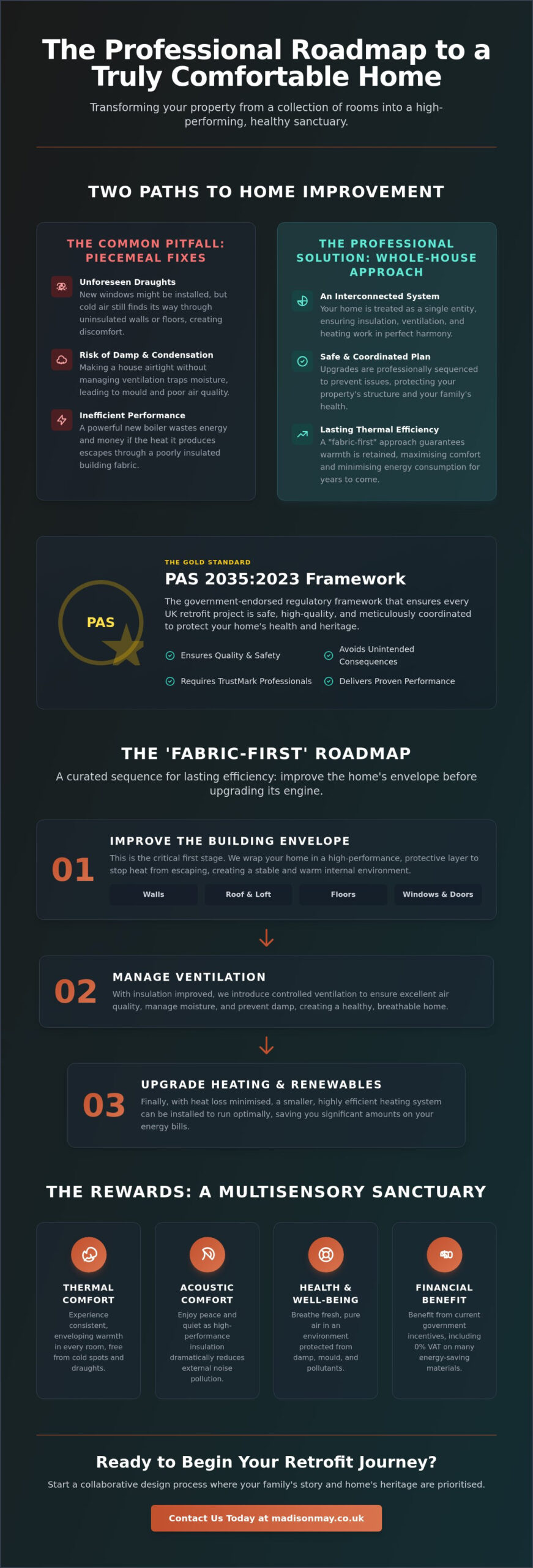
Whilst many approach property renovations as a series of isolated tasks, achieving a truly high-performing home requires a more rhythmic, intentional strategy. This is known as the “Whole House Approach.” It’s a philosophy that treats your property as a single, interconnected system where every change affects the performance of the rest. When considering the best path for improving home comfort for my family Wakefield, this holistic view is essential to avoid the common pitfalls of piecemeal improvements that often fail to deliver the promised warmth.
PAS 2035:2023 stands as the meticulous regulatory framework that ensures quality and safety in every retrofit project. This standard is particularly vital because it moves away from the risks of uncoordinated installations, which can inadvertently lead to condensation or structural damage. By engaging TrustMark-registered professionals, you can be certain that your project follows a rigorous, government-endorsed path. This professional coordination ensures that every material chosen and every system installed works in harmony to protect the heritage and health of your home.
Understanding the Fabric-First Principle
The core of any successful retrofit is the fabric-first principle. This methodology dictates that we must improve the building envelope, encompassing the walls, floors, and roof, before we even consider upgrading the heating system. Think of it as wrapping your home in a high-quality, protective layer that keeps the warmth exactly where it belongs. A professional assessment identifies hidden heat loss through thermal bridging, those cold spots where heat escapes through structural connections. By addressing these gaps first, you ensure that any future heating upgrades don’t have to work twice as hard to compensate for a leaky building.
The Role of a Retrofit Coordinator
A Retrofit Coordinator acts as the guardian of your project’s technical integrity, managing the delicate balance between insulation, heating, and ventilation. They ensure that as you seal your home to keep it warm, you aren’t accidentally trapping stale air or moisture. This role is crucial for creating a bespoke EPC Improvement Plan, which sequences works to provide the best return on investment for improving home comfort for my family Wakefield. For those seeking a deeper technical insight into how this process unfolds, our PAS 2035 guide offers an evocative look at this meticulous gold standard. If you’re ready to begin your journey, a professional retrofit assessment is the first step toward a more serene and efficient home.
Balancing Warmth and Breathability: Solving the Damp and Insulation Paradox
The most frequent reservation homeowners express when considering improving home comfort for my family Wakefield is the fear that a warmer house might become a damp one. It’s a valid concern; sealing a property to prevent heat loss can, if poorly executed, trap the moisture generated by everyday life. However, this is not a failure of insulation itself, but a failure of coordination. True breathability in a property, particularly within the charming heritage architecture of West Yorkshire, is a delicate balance that requires a professional’s eye to resolve the paradox between thermal efficiency and healthy airflow.
Condensation is essentially a symptom of a home out of balance. When warm, moisture-laden air meets a cold surface, droplets form, creating the perfect conditions for mould. By wrapping the home in high-quality insulation as part of a whole-house strategy, we raise the temperature of those internal surfaces. Yet, we must also provide a clear path for that moisture to exit. This is where the “Ventilation Gap” often appears in standard renovations, where a singular focus on keeping heat in neglects the necessity of letting stale air out. Improving home comfort for my family Wakefield requires a strategy that treats air quality with the same reverence as thermal retention.
Why Insulation Requires a Ventilation Strategy
Modern living is inherently humid. Activities like cooking, bathing, and even breathing release litres of water into the atmosphere daily. To manage this elegantly, we look to Part F of the Building Regulations, which provides the essential framework for ventilation. Whether through discreet mechanical heat recovery systems or carefully placed passive vents, these solutions ensure your family’s health is never compromised for the sake of warmth. It’s about creating a home that breathes with you, maintaining air purity whilst preserving the serenity of your living space.
Remedying Dampness Through Professional Assessment
Before any insulation is added, a thorough understanding of the building’s current state is vital. Thermal imaging surveys allow us to see what the naked eye cannot, pinpointing cold spots and existing moisture ingress that could undermine your project. Addressing these issues through professional damp remediation is a proactive, design-led step. It’s an act of restoration that clears the way for a more efficient future, ensuring that your home’s health is restored before its performance is enhanced. This professional intervention provides the reassuring narrative that your property is being cared for with the meticulous attention it deserves.
A Curated Roadmap: Prioritising Upgrades for Lasting Efficiency
Improving home comfort for my family Wakefield is a journey that requires a steady hand and a clear vision. Rather than rushing into expensive heating installations, we begin with a logical, measured sequence of improvements. This progression ensures that every pound spent builds upon the last, creating a cumulative effect that finally banishes those persistent cold spots. It starts with the subtle details, such as professional draught-proofing and building surveys, which identify exactly where your sanctuary is losing its warmth. By addressing the building’s fabric first, you create a stable environment that allows subsequent upgrades to perform at their peak.
Reimagining existing spaces is a vital part of this roadmap. Loft conversions and conservatory upgrades are often the most thermally challenging areas of a Yorkshire home, yet they hold the potential to become your favourite retreats. Through advanced insulation and high-performance materials, these rooms can be transformed from seasonal spaces into year-round havens. To ensure this investment is sound, a fixed-fee Retrofit Assessment is indispensable. Unlike “free” surveys that may be tied to specific products, a professional assessment provides an unbiased, technical foundation for your project, preventing wasted expenditure on ill-suited measures.
Windows and Doors: The Art of the Thermal Envelope
There is a distinct sensory delight in the smooth operation of high-performance glazing. Beyond the visual appeal, bespoke windows and doors act as the primary guardians of your home’s thermal envelope. In the context of refined design, U-values represent more than just technical data; they are the measure of your home’s ability to remain serene regardless of the weather outside. By choosing materials that offer a perfect union of security, beauty, and thermal performance, you eliminate the chill that often lingers near older frames, replacing it with a consistent, radiant calm.
EPC Improvement Plans: A Sequenced Approach
For both homeowners and landlords, an EPC Improvement Plan serves as a visionary roadmap. It details the transition from traditional gas boilers to modern, low-carbon heating upgrades, ensuring your property is prepared for the future. This sequenced approach doesn’t just improve daily life; it adds significant long-term value to your property through a higher EPC rating. When you follow a professional plan, the path to improving home comfort for my family Wakefield becomes a clear, rewarding narrative of transformation. If you’re ready to define your own roadmap, you can book a comprehensive retrofit assessment to begin the process with confidence.
The Madison May Journey: Navigating Your Retrofit with Professional Poise
The process of improving home comfort for my family Wakefield is a deeply personal endeavour. It’s a journey that requires more than just technical expertise; it demands a curator who understands that your home is an outward expression of your identity. At Madison May, we view the consultative experience as a calm, imaginative partnership. We don’t arrive with a pre-packaged set of solutions. Instead, we take the time to listen to the unique story of your property, acknowledging its heritage and the specific ways your family interacts with each space. This attentive approach ensures that every recommendation is intentional, moving you closer to a home that feels exactly right.
As an independent consultancy, we prioritise your vision over product sales. We aren’t here to push a specific brand of insulation or a particular heating system. Our loyalty lies with the integrity of your project and the comfort of your loved ones. This independence allows us to act as a sophisticated guide, navigating the complexities of the design process with professional poise and visionary creativity. When the retrofit is complete, the transformation is more than just thermal; it’s the feeling of a space that has finally achieved its full potential as a serene, healthy sanctuary.
The Professional Retrofit Assessment Process
The path begins with a meticulous data collection phase. We conduct a comprehensive fabric survey, an analysis of existing services, and a detailed ventilation assessment. This isn’t a rushed inspection; it’s an expert-led project management exercise that brings quiet confidence to your renovation. The result is a PAS 2035:2023 compliant report that provides absolute clarity on the state of your property. By following this regulated standard, we ensure that every material chosen is selected with care, providing you with a reliable foundation for all future improvements and ensuring your home performs at its peak.
Crafting Your Home’s Personal Energy Story
At the heart of our philosophy is the effortless union of functionality and beauty. We believe that improving home comfort for my family Wakefield should never mean compromising on the aesthetic character of your interiors. Retrofitting is an investment in your family’s future, a way to secure a legacy of quality and health within your own private refuge. It’s about more than just energy bills; it’s about the enduring meaning found in a space that truly performs and resonates on a personal level. If you’re ready to transform your property into the sanctuary it was meant to be, you can begin your journey with a professional Retrofit Assessment today.
Embracing a Future of Lasting Sanctuary
The transformation of your property from a drafty house into a high-performing sanctuary is a journey of meticulous intention. We have explored how the gold standard of PAS 2035 ensures every technical detail is balanced, from the initial fabric-first upgrades to the sophisticated integration of ventilation systems. By prioritising a curated roadmap over isolated fixes, you ensure that the path toward improving home comfort for my family Wakefield is one of clarity and enduring value. This is more than a simple renovation; it’s a commitment to the health and harmony of your loved ones within a space that truly understands their story.
Our independent, design-led consultancy is here to guide you through this artistic and technical evolution. Through PAS 2035 aligned retrofit assessments and expert EPC improvement roadmaps, we provide the quiet confidence required to make visionary changes. You are invited to Request Your Bespoke Retrofit Consultation and begin the process of refining your home’s unique performance. Your property holds the profound potential to be a place of perfect, sustainable calm; with the right expertise, that vision is well within reach.
Frequently Asked Questions
How does a whole-house retrofit improve my family’s daily life?
A whole-house retrofit transforms your property into a sanctuary by providing consistent warmth, acoustic silence, and improved air purity. Improving home comfort for my family Wakefield starts with eliminating cold spots and draughts, allowing every room to be used comfortably throughout the year. This holistic approach reduces the stress of seasonal temperature fluctuations and creates a healthier, more serene environment for children and the elderly alike.
Is it possible to insulate my home without causing damp or mould issues?
Yes, provided that insulation is balanced with a meticulous ventilation strategy. Damp and mould typically occur when moisture is trapped within a sealed envelope, but a professional whole-house approach ensures that as we improve thermal retention, we also manage airflow. By following the fabric-first principle and assessing breathability, we protect the structural integrity of your property whilst enhancing its warmth.
What is a PAS 2035 Retrofit Assessment and why do I need one?
A PAS 2035 Retrofit Assessment is a comprehensive, regulated survey that serves as the technical foundation for any property improvement project. You need one to ensure that all energy-efficient measures are coordinated, safe, and effective. It involves an in-depth look at the building’s fabric, existing services, and ventilation, providing a professional roadmap that prevents the unintended consequences often seen with uncoordinated, piecemeal installations.
How much can I expect to save on energy bills with a professional EPC Improvement Plan?
Savings vary depending on the measures implemented, but industry data suggests significant annual reductions for those who follow a structured plan. For instance, cavity wall insulation can save between £110 and £410 per year, whilst loft insulation can save up to £380. A professional EPC Improvement Plan sequences these upgrades to maximise your return on investment, ensuring your property reaches a rating of C or higher as efficiently as possible.
Can I upgrade my windows and doors whilst maintaining the character of my home?
Absolutely, as bespoke windows and doors are designed to marry heritage aesthetics with modern thermal performance. By choosing high-performance glazing that respects the original architecture of your West Yorkshire home, you can eliminate draughts without compromising on beauty. This union of functionality and elegance ensures your property remains a personal refuge that reflects its historical identity whilst performing at a contemporary standard.
What happens if my home currently has a low EPC rating?
A low EPC rating indicates that your property is losing heat inefficiently, but it also presents a significant opportunity for transformation. Improving home comfort for my family Wakefield often begins with properties rated D, E, or F. Through a professional assessment, we identify the most impactful upgrades, such as insulation or heating improvements, to elevate your rating. This not only enhances daily comfort but also increases the long-term market value of your home.
How do ventilation regulations (Part F) affect my home improvement plans?
Part F regulations mandate that any increase in a building’s airtightness must be accompanied by a corresponding assessment of its ventilation. When you add insulation or new windows, the natural leaks that once provided airflow are removed. To prevent stale air and moisture build-up, we integrate discreet mechanical or passive systems that ensure your home remains healthy and breathable, adhering to these essential safety standards.
Is a retrofit assessment worth the investment for a private landlord?
Yes, an independent retrofit assessment is a vital tool for landlords aiming to meet future EPC requirements whilst protecting their capital investment. It provides a clear, prioritised roadmap for property refurbishment, ensuring that upgrades are durable and effective. By investing in professional coordination, you avoid the cost of remedial work caused by poor installations and ensure your tenants enjoy a warm, damp-free living environment.