

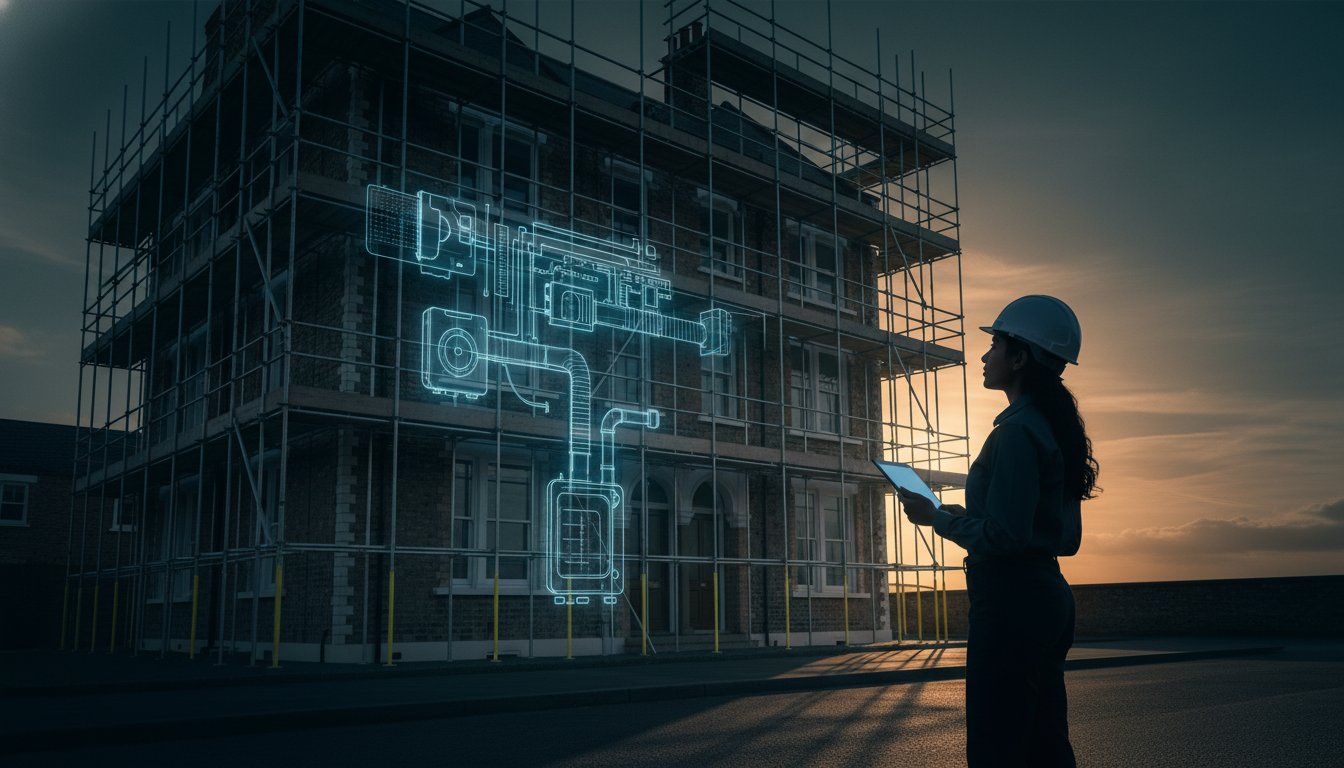
A truly comfortable home is not merely a matter of turning up the thermostat; it is the result of a deliberate, architectural symphony that silences the cold and invites a lasting serenity. You likely know the frustration of persistent draughts that no amount of heating seems to cure, or the quiet anxiety that follows conflicting advice from different tradespeople. It’s exhausting to manage a property that feels as though it’s working against you, particularly when the fear of damp or poorly executed upgrades looms in the background. Understanding the long term benefits of whole house retrofit allows you to move beyond these temporary fixes, shifting your focus from mere maintenance to a visionary investment in your property’s future performance.
By embracing a holistic, PAS 2035:2023 aligned approach, you can transform a drafty house into a high-performance sanctuary that stands as a testament to quality craftsmanship. This article explores how a strategic roadmap elevates your EPC rating and adds substantial value, whilst shielding your household from the volatility of rising energy price caps. We will preview the essential steps of a professional modernisation plan, showing you how a coordinated sequence of insulation and heating upgrades replaces confusion with clarity to ensure your home remains a warm, low-cost refuge for decades to come.
Key Takeaways
- Learn why a holistic, ‘fabric first’ methodology is superior to disjointed, piecemeal upgrades that can often lead to unintended structural issues.
- Understand the long term benefits of whole house retrofit, including enhanced property value and a significantly improved EPC rating that shields your home from energy market volatility.
- Discover how a professional ventilation strategy eliminates the risk of damp and mould, ensuring your newly insulated home remains a healthy, breathable sanctuary.
- Gain a clear understanding of the PAS 2035 journey, from the initial building survey to the essential oversight provided by a Retrofit Coordinator.
- Explore how partnering with a dedicated consultant provides a transparent, fixed-fee roadmap for modernising your property with quiet confidence and meticulous care.
What is Whole House Retrofit? Beyond Piecemeal Improvements
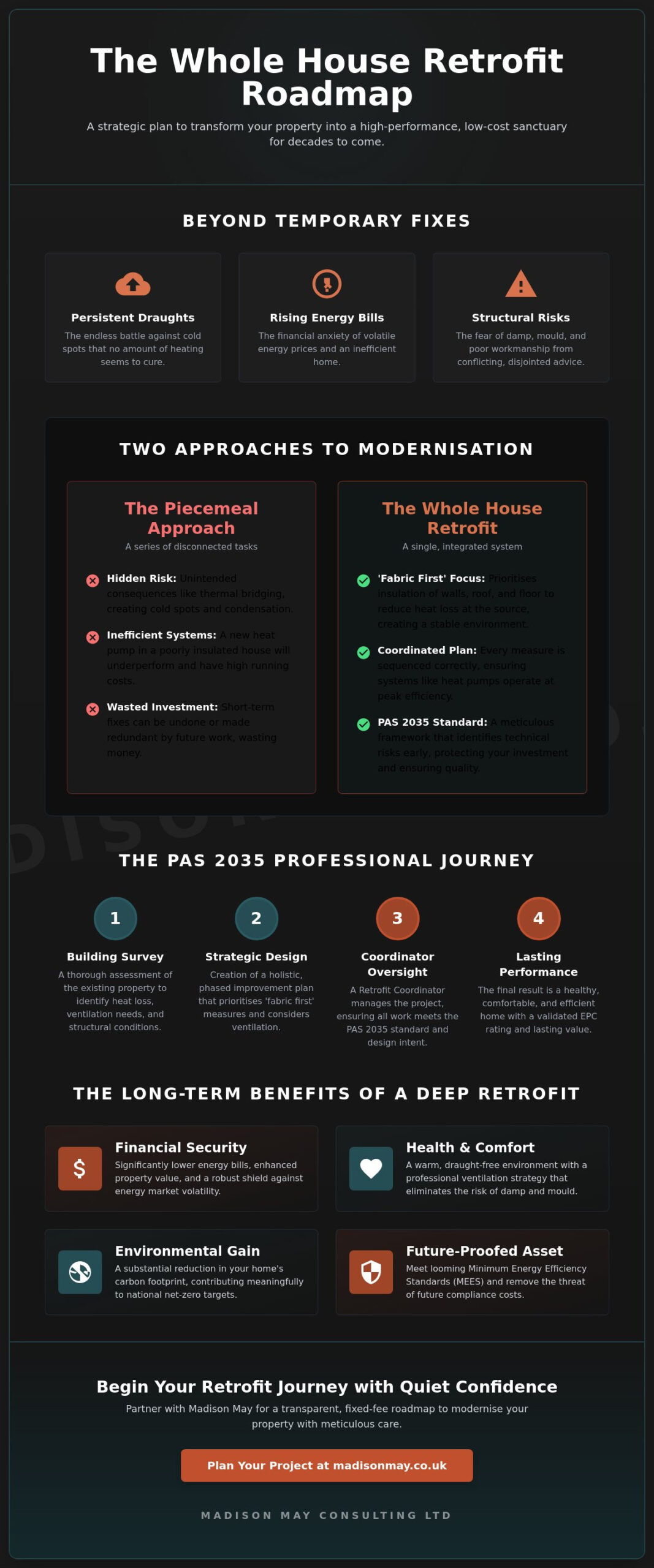
A house is a complex tapestry of interacting elements, a reality that becomes apparent the moment one begins to modernise. A Deep energy retrofit is far more than a simple renovation; it’s a strategic reimagining of your property’s physical identity. Whilst many homeowners approach energy efficiency as a series of disconnected tasks, a whole house retrofit treats the building as a single, integrated system where every measure affects the performance of the next. This methodology ensures that the long term benefits of whole house retrofit are realised through a coordinated plan rather than a collection of well-intentioned but disjointed improvements. Central to this process is the PAS 2035:2023 standard, which acts as a guardian of quality, providing the meticulous framework necessary to protect your investment and ensure every measure is technically sound.
The Fabric First Philosophy
At the heart of any sophisticated modernisation lies the ‘fabric first’ philosophy. This approach prioritises the building’s envelope, focusing on high-quality insulation for walls, floors, and roofs before considering mechanical upgrades. By reducing heat loss at the source, we create a calm, stable environment that requires far less energy to maintain. Fabric measures are inherently durable, often outlasting mechanical systems by decades, and they provide the essential foundation upon which low-carbon heating systems can operate at peak efficiency. It is the most sustainable starting point for those who value enduring quality over quick, superficial fixes.
Piecemeal vs. Holistic: The Hidden Risks
Attempting to improve a home through isolated projects often introduces hidden risks. For instance, insulating only one room can create ‘thermal bridging’, where cold spots at the edges of the insulation lead to condensation and moisture issues amongst older properties. Similarly, installing a heat pump without first addressing the building’s fabric often results in underwhelming performance and unexpectedly high running costs. A PAS 2035 assessment is vital here, as it identifies these technical risks early in the design process. This professional foresight ensures that the long term benefits of whole house retrofit aren’t undermined by poor planning, allowing you to invest with the quiet confidence that your home will remain a healthy, high-performance sanctuary for years to come.
The Financial and Environmental Rewards of a Deep Retrofit
Investing in the fabric of your home is a profound act of financial stewardship that resonates far beyond the immediate horizon. By significantly reducing energy demand, you create a robust buffer against the inherent volatility of global markets. With the Ofgem energy price cap projected to reach £1,862 for a typical household by July 2026, the long term benefits of whole house retrofit become increasingly clear to the discerning homeowner. This isn’t just about saving pence; it’s about decoupling your daily comfort from external economic pressures. A comprehensive Deep Energy Retrofits strategy achieves this by ensuring your property requires minimal energy input to remain perfectly temperate. Beyond the immediate relief on utility bills, a superior Energy Performance Certificate (EPC) rating acts as a hallmark of quality. This certification often unlocks exclusive ‘green mortgage’ rates and attracts a new generation of buyers who prioritise lasting sustainability as much as architectural heritage. This elevation in status transforms your house from a standard dwelling into a high-performance asset that contributes meaningfully to national net-zero targets through a substantial reduction in its carbon footprint.
Future-Proofing Asset Value
The regulatory landscape is shifting towards higher standards, with the looming Minimum Energy Efficiency Standards (MEES) already influencing the rental sector and domestic regulations likely to follow. A visionary retrofit removes the threat of future compliance costs, effectively completing the home’s energy evolution for the next three decades. This foresight ensures your property remains a desirable asset amongst a market that is increasingly wary of inefficient, high-maintenance buildings, appealing directly to buyers who value a home that is both beautiful and responsible.
Operational Cost Savings
True efficiency is found in the synergy between a sealed building envelope and modern heating upgrades. When insulation does the heavy lifting, heating systems operate at lower, more consistent temperatures, extending their lifespan and reducing mechanical wear. This strategic reduction in load is the most effective way to lower your carbon footprint whilst maintaining an exquisite level of comfort. If you are ready to begin this transition, an EPC Improvement Plan can provide the clarity needed to protect your investment. Ultimately, the true return on investment reveals itself not merely in monthly figures but in the graceful avoidance of future structural repairs and the preservation of the building’s soul.
The Comfort and Health Dividend: Solving the Ventilation Gap
One of the most persistent concerns amongst owners of period properties is the fear that modernising a home will inadvertently lead to damp and mould. It’s a valid anxiety, often born from witnessing poorly planned upgrades where insulation was applied without a strategy for airflow. When you seal a building to prevent heat loss, you also trap the moisture generated by daily life. Without a professional design that integrates Part F of the building regulations, this “sealing” effect can indeed compromise air quality. However, a visionary retrofit does the opposite; it solves the ventilation gap by creating a balanced ecosystem where fresh air is managed with the same precision as heat retention. The long term benefits of whole house retrofit are felt in the very air you breathe, replacing the stale, humid atmosphere of a drafty house with a crisp, filtered environment that supports long-term respiratory health.
Eradicating Damp and Mould
True protection for your property’s structure comes from a moisture-balanced design. This process ensures that damp remediation is not just a reactive fix but a fundamental part of the building’s new identity. By choosing breathable, vapour-permeable materials over traditional, non-permeable alternatives, we allow moisture to move safely through the building fabric rather than becoming trapped against cold surfaces. A holistic approach eliminates the thermal bridges and cold spots where condensation typically gathers, ensuring that every corner of your home remains dry and structurally sound. This meticulous attention to detail transforms the health of the building, providing a permanent solution to the persistent issues that often plague older Yorkshire homes.
Acoustic and Thermal Equilibrium
There is a profound emotional shift that occurs when a home achieves true thermal equilibrium. Beyond the warmth, there is a newfound silence. High-performance insulation, paired with bespoke windows and doors, creates a formidable barrier against the intrusions of the outside world. External noise from traffic or weather is hushed, leaving you with a serene sanctuary where the internal temperature remains stable whilst the elements fluctuate wildly outside. This level of comfort is a significant part of the long term benefits of whole house retrofit, offering a sense of calm and well-being that is impossible to achieve through minor, superficial changes. It’s an investment in a lifestyle defined by peace, where your home finally becomes the quiet, restorative refuge it was always intended to be.
The Retrofit Journey: Navigating the PAS 2035 Framework
The transition from a drafty, inefficient house to a high-performance sanctuary is a journey of meticulous refinement, guided by the PAS 2035:2023 standard. This framework exists to silence the noise of conflicting advice, replacing it with a clear, professional roadmap that protects both the property and the homeowner. Unlike traditional renovations that often rely on guesswork, this process is rooted in empirical data and architectural foresight. By following this structured path, you ensure that the long term benefits of whole house retrofit are not left to chance but are designed into the very fabric of your home. By establishing this foundation, you secure the long term benefits of whole house retrofit, creating a legacy of comfort and efficiency that endures for decades. It’s a sophisticated evolution that begins with a deep understanding of the building’s current state before a single brick is touched.
The Assessment and Design Phase
The journey commences with a comprehensive PAS 2035 compliant site survey, a process that captures the intricate details of the building’s fabric, services, and ventilation. This isn’t a mere visual inspection; it often involves advanced diagnostic tools such as thermal imaging and air pressure testing to uncover hidden heat loss centres that would otherwise remain invisible. This data forms the bedrock of a bespoke EPC Improvement Plan, which serves as your long-term investment roadmap. This plan is designed with flexibility in mind, allowing for a phased implementation that respects your personal timeline whilst ensuring every measure remains compatible with future upgrades.
The Role of the Retrofit Coordinator
Central to the success of this journey is the Retrofit Coordinator, a dedicated professional who acts as the ‘project guardian’. Whilst the Retrofit Assessor gathers the essential data, the Coordinator oversees the design and installation, ensuring that every measure is technically sound and harmoniously integrated. They are responsible for managing the technical risks that often accompany complex retrofits, such as ensuring that new insulation doesn’t inadvertently compromise the building’s breathability. Their oversight provides the ultimate safeguard for your investment, culminating in a final certification that proves the home’s improved performance. If you are ready to begin your property’s modernisation with a trusted expert, we invite you to book a professional Retrofit Coordination consultation today. This professional oversight ensures that the finished project is not just a collection of parts, but a unified, high-performing environment that will resonate on a personal level for generations.
Madison May: Your Partners in Crafting a Sustainable Sanctuary
At Madison May Consulting Ltd, we view the modernisation of a property as a deeply personal journey, a collaborative effort to weave together technical excellence with your unique vision for a home. We understand that a house is more than just a structure; it’s a refuge and an outward expression of who you are. Our approach is defined by an understated elegance, ensuring that every energy-saving measure we recommend harmonises with the aesthetic integrity of your space. To provide you with total peace of mind, we operate on a fixed-fee assessment basis, offering a level of transparency that allows you to invest in your property’s future with quiet confidence. By choosing to work with an independent specialist, you ensure that the narrative of your home remains the priority, free from the conflicting interests of specific product manufacturers.
Expertise Rooted in Meticulous Standards
Our commitment to the PAS 2035:2023 standard is unwavering, as it serves as the ultimate guarantee of quality and accountability. We don’t believe in superficial fixes. Instead, we focus on the intersection of functionality and beauty, ensuring that your energy efficient home improvements enhance the way you live whilst preserving the building’s soul. The long term benefits of whole house retrofit are best secured through this meticulous attention to detail, where every material is chosen with care and every installation is overseen by a professional coordinator. This visionary approach transforms the functional necessity of a retrofit into a transformative artistic journey, resulting in a home that is as efficient as it is exquisite.
Begin Your Transformation Today
The first step towards your high-performance sanctuary is a comprehensive building survey. This initial consultation is a moment of discovery, where our specialist team listens to your story and begins to map out a bespoke roadmap for your property. You can expect a measured, steady process that never feels rushed, mirroring the calm deliberation of a high-end design consultation. We’ll identify the unique opportunities within your property to enhance its thermal performance and acoustic serenity. We invite you to take that first step with us, moving beyond the drafts and cold spots of the past toward a future of enduring comfort and value. Please contact Madison May to book your Retrofit Assessment and begin the journey of crafting your sustainable sanctuary.
Embarking on Your Home’s Architectural Evolution
Choosing to modernise your property is a profound commitment to quality, heritage, and the well-being of those who reside within its walls. By moving beyond piecemeal repairs and embracing a holistic methodology, you resolve the persistent anxieties of draughts and damp whilst securing a high-performance environment for the future. The long term benefits of whole house retrofit extend far beyond mere energy savings; they represent a fundamental shift in how your home breathes, feels, and holds its value in an ever-changing world. This strategic evolution ensures your property remains a sanctuary of calm, perfectly balanced between historical charm and modern efficiency.
As specialists in damp remediation and ventilation, Madison May Consulting Ltd provides a steady, professional hand to guide you through this transformation. Our independent, fixed-fee assessments and PAS 2035 aligned consultancy ensure that every decision is made with total transparency and your personal story at the centre. It is time to replace the discord of conflicting advice with a clear, visionary roadmap that honours the unique character of your property. We invite you to secure your property’s future with a professional Retrofit Assessment from Madison May. Your journey toward a serene, energy-efficient sanctuary begins with a single, thoughtful step.
Frequently Asked Questions
What is the difference between a standard EPC and a Retrofit Assessment?
A standard EPC provides a generalised estimate of energy performance based on visual inspection and default data. In contrast, a Retrofit Assessment is a comprehensive, PAS 2035 compliant evaluation that includes detailed occupancy patterns, building condition surveys, and precise ventilation data. It forms the essential technical foundation for understanding the long term benefits of whole house retrofit by identifying exactly how your specific property behaves under daily use.
How much does a whole house retrofit typically cost in the UK?
The investment required for a comprehensive deep retrofit varies significantly depending on the age and size of the property. Industry reports suggest that bringing a typical home up to high-performance standards can range from £25,000 to over £60,000. Whilst these initial figures are substantial, they represent a strategic evolution of your asset, protecting it against future market volatility and the rising costs associated with inefficient housing.
Can I stay in my home whilst a whole house retrofit is being carried out?
It’s often possible to remain in your residence during the process, particularly if the work is phased or focuses on external fabric improvements. However, more intensive internal measures, such as installing floor insulation or significant heating upgrades, may cause temporary disruption. Your Retrofit Coordinator will help you plan the sequence of works to ensure your daily life remains as serene as possible throughout the transformation.
Is whole house retrofit suitable for listed buildings or those in conservation areas?
Whole house retrofitting is entirely suitable for listed buildings, provided the approach respects the property’s unique heritage and breathable structure. These projects require a sensitive, moisture-balanced design that utilises traditional, vapour-permeable materials. Navigating the planning requirements for conservation areas is a core part of a professional assessment, ensuring that energy performance is enhanced without compromising the architectural integrity of the building.
How long does it take to see a return on investment from a deep retrofit?
Measuring the return on investment involves looking at immediate reductions in energy demand alongside long-term property value appreciation. Whilst utility bill savings are significant, especially with current energy price caps, the long term benefits of whole house retrofit are also realised through the avoidance of future repair costs and the potential for a significant increase in property value. It is a visionary investment in lasting performance.
What happens if I insulate my home but don’t upgrade the ventilation?
Sealing a home without a coordinated ventilation strategy is a significant risk to both the building’s fabric and your health. Insulation prevents heat from escaping, but it also traps moisture produced by cooking, bathing, and breathing. Without the airflow improvements mandated by Part F regulations, this moisture can condense on cold surfaces, leading to persistent damp and mould issues that undermine the integrity of your sanctuary.
Will a whole house retrofit completely eliminate my energy bills?
Whilst a deep retrofit will drastically reduce your energy consumption, it won’t completely eliminate your utility bills. You’ll still have daily standing charges and a minimal requirement for heating and electricity. However, the reduction in load is so substantial that your home becomes largely decoupled from the volatility of the energy market. This creates a predictable, low-cost environment that remains warm regardless of external price fluctuations.
How do I find a qualified Retrofit Coordinator for my project?
You should seek a professional who is fully accredited and listed on the TrustMark register, as this ensures they are qualified to work within the PAS 2035 framework. It’s essential to partner with an independent specialist who understands the intersection of technical performance and refined design. A qualified coordinator acts as your project’s guardian, ensuring every measure is compatible and installed to the highest possible standards of craftsmanship.