

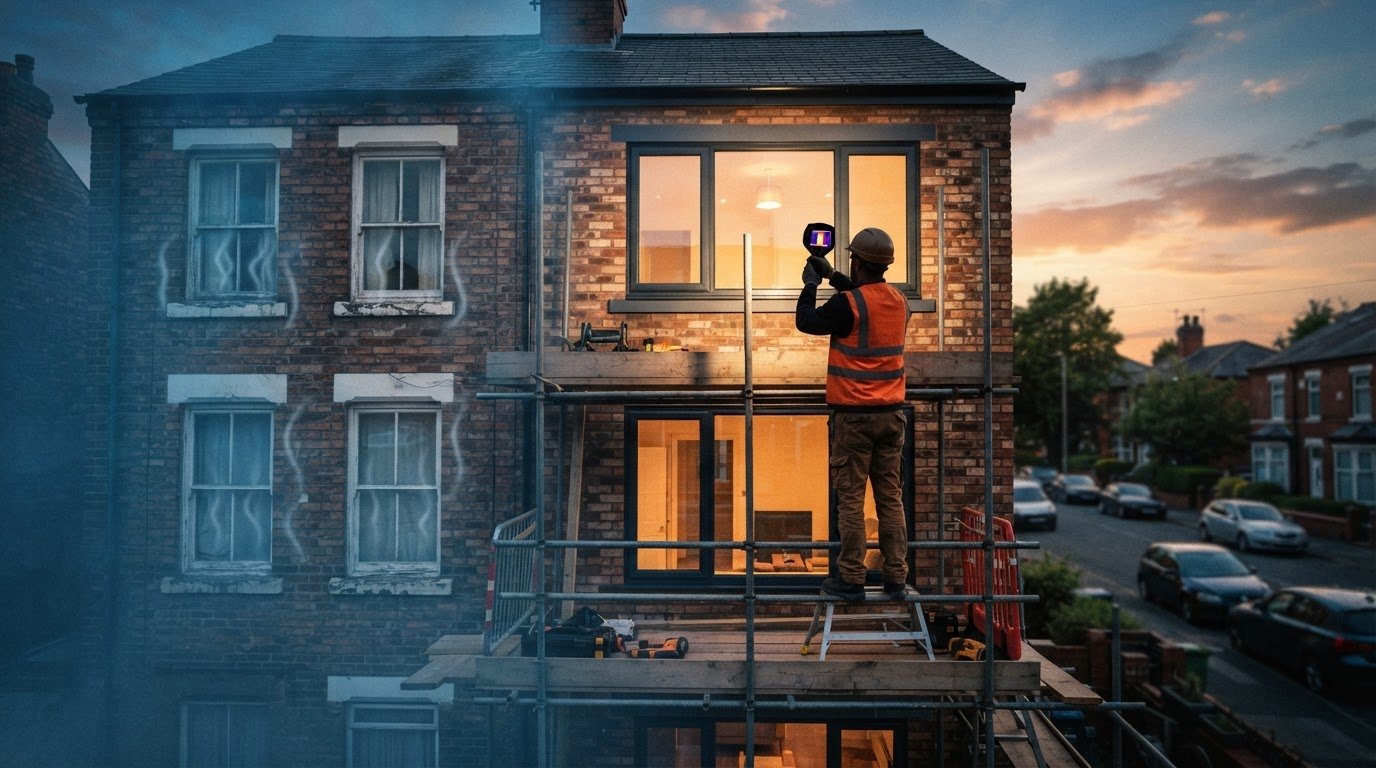
Investing in high-performance glazing often feels like the most intuitive remedy for a draughty interior, yet discerning homeowners frequently ask: do new windows save money on energy bills in a way that truly justifies the commitment? If you have spent quiet winter evenings beside cold frames feeling a persistent chill disrupt your living space, you are likely familiar with the frustration of watching warmth escape while heating systems work overtime. It is completely natural to seek a harmonious balance between tangible financial returns and the serene, dependable comfort a home should provide.
Discover how replacement glazing impacts your heating costs, thermal comfort, and long-term energy performance when treated as an essential part of your whole building envelope. In this guide, we demystify complex U-values and energy ratings, compare the true merits of double versus triple glazing, and demonstrate how to seal away uncomfortable draughts whilst safeguarding vital domestic ventilation.
Key Takeaways
- Discover how modern glazing curbs conductive heat loss, and learn how realistic assessments answer whether do new windows save money on energy bills in practice.
- Demystify thermal transmittance metrics by comparing U-values across double and triple glazing units to select the ideal specification for your architecture.
- Look beyond simple financial payback periods to evaluate the profound lifestyle value of eliminating draughts, cold spots, and external noise.
- Recognise why creating an airtight thermal envelope demands intentional background ventilation to safeguard indoor air quality and prevent persistent damp.
- Adopt a whole-dwelling, fabric-first approach aligned with PAS 2035 principles so your new windows work in natural harmony with surrounding walls and insulation.
Do New Windows Genuinely Reduce Household Energy Bills?
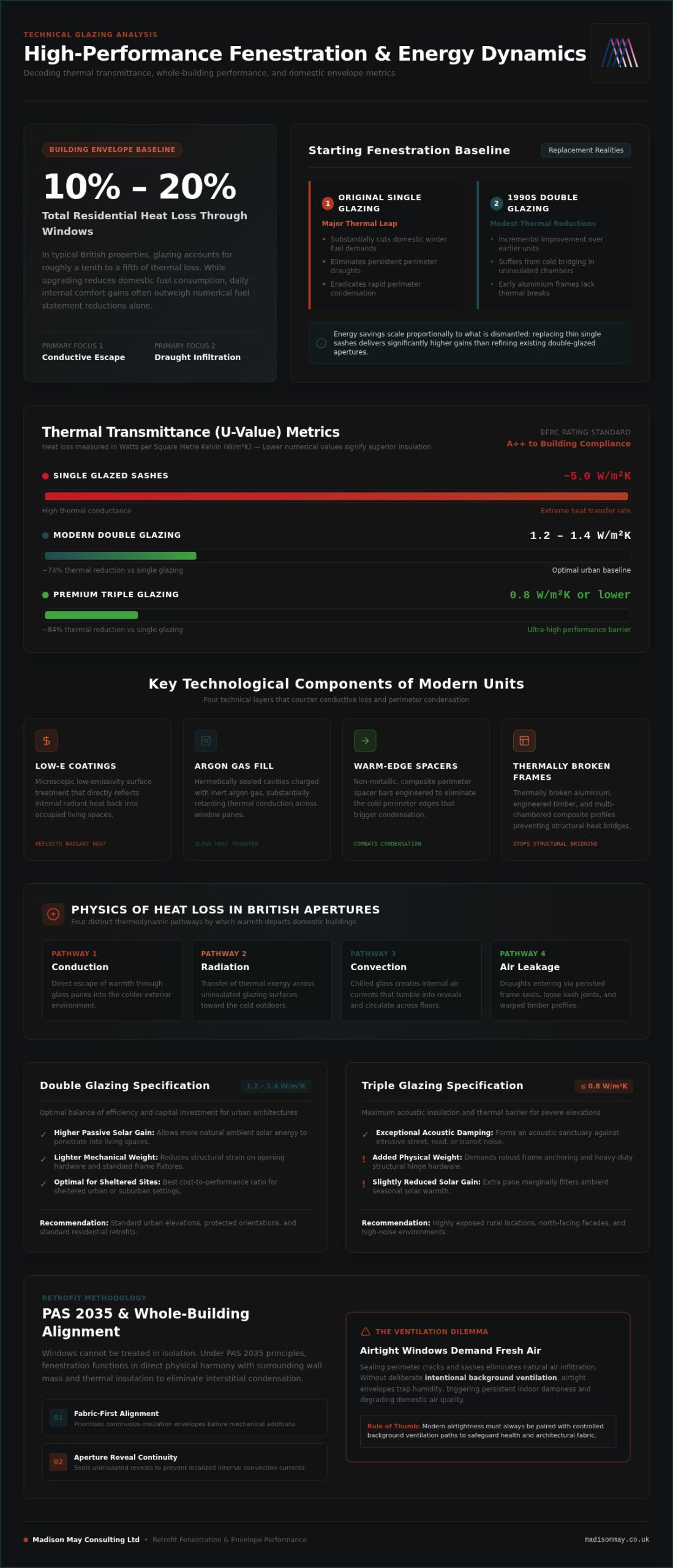
When homeowners ask, do new windows save money on energy bills, the realistic answer is yes, but the scale of those savings is rarely as dramatic as sales brochures suggest. In typical British properties, windows account for roughly ten to twenty per cent of overall residential heat loss. Modern replacement units counter this escape by tackling two primary issues: conductive loss through the glass and uncontrolled draught infiltration around the opening sashes. While thermal upgrades certainly lighten fuel consumption, the transformation in daily living comfort often outshines the financial savings visible on your fuel statements.
How Windows Lose Heat in British Homes
Heat departs through several distinct pathways across an aperture. Conduction pulls warmth directly through glass panes, whilst radiation transfers thermal energy across uninsulated surface areas toward the cold outdoors. Inside, chilled glass cools the surrounding air, prompting gentle convection currents that tumble into uninsulated window reveals and circulate cool air across the floor. Air leakage through perished frame seals, loose sash joints, and warped timber accelerates this loss. Introducing modern insulated glazing halts this cycle by establishing a hermetically sealed barrier that keeps internal warmth stable and intact.
Single vs Older Double Glazing: Where Real Savings Lie
The financial impact of modern fenestration depends heavily on what you are dismantling. Replacing original single-glazed timber sashes represents a significant thermal leap, noticeably reducing winter fuel demands and eliminating persistent perimeter draughts. Conversely, replacing nineteen-nineties double glazing yields comparatively modest reductions. While early double-glazed units were an improvement over single sheets, they frequently suffered from cold bridging across uninsulated uPVC chambers or early aluminium frames without thermal breaks. Ultimately, the degree to which do new windows save money on energy bills depends heavily on whether you are replacing thin single panes or simply refining earlier generations of double glazing.
Decoding Window Energy Ratings: U-Values and Glazing Types
Selecting appropriate fenestration requires looking past marketing claims to understand the physics of energy retention. When homeowners ask how do new windows save money on energy bills, the answer is governed primarily by thermal transmittance, universally measured as a U-value. The British Fenestration Rating Council (BFRC) translates this complex science into an intuitive rainbow scale running from A++ down to standard building compliance. Where single glazing allows heat to escape with an inefficient U-value around 5.0 W/m²K, modern double glazing achieves roughly 1.2 to 1.4 W/m²K, and premium triple glazing pushes performance down to 0.8 W/m²K or lower. The composition of the frame matters equally, with thermally broken aluminium, engineered timber, and multi-chambered composite profiles preventing structural heat bridges.
The Science of U-Values: Lower Numbers, Warmer Spaces
Thermal transmittance measures heat loss in watts per square metre kelvin (W/m²K). Lower numbers signify superior insulation. Modern units retain warmth using microscopic low-emissivity coatings that reflect internal radiant heat back into your living rooms. Filling the gap between panes with inert argon gas dramatically retards heat transfer, whilst non-metallic, warm-edge spacer bars eliminate chilled perimeter edges that traditionally triggered winter condensation. Beyond thermal coatings, modern glazing design continues to evolve into adaptable solutions, with companies like Magic Glass Singapore illustrating how advanced privacy and solar management treatments can elevate contemporary interior environments.
Double vs Triple Glazing: Balancing Performance and Investment
Triple glazing delivers exceptional insulation and acoustic damping, creating a tranquil acoustic sanctuary against street noise. Yet, the question remains: do new windows save money on energy bills in every context when specifying that third pane? The additional pane adds physical weight to openings and slightly reduces passive solar gain compared to double-glazed alternatives. While highly exposed rural sites or north-facing elevations benefit noticeably from triple glazing, well-crafted double glazing often delivers the optimal balance of efficiency and cost for sheltered urban properties. To identify which specification aligns best with your property’s orientation and wall construction, undertaking a comprehensive retrofit assessment ensures your investment delivers maximum thermal harmony.
The True Payback Period: Financial Returns Versus Living Comfort
A transparent evaluation of fenestration begins with quiet candour. If assessed strictly by seasonal utility reductions, modern glazing rarely yields an immediate financial windfall. Recouping the initial capital expenditure through heating savings alone often spans decades. When asking, do new windows save money on energy bills, the ledger reveals only part of the story. Viewing high-performance architectural joinery merely as an exercise in financial return overlooks its authentic purpose. A home is a personal refuge, an environment where physical ease, acoustic stillness, and visual harmony hold profound value. Incorporating beautifully crafted bespoke windows and doors elevates the architectural integrity of a dwelling whilst preserving enduring value across generations.
Calculating Realistic Payback on Replacement Windows
Financial returns invariably shift alongside unpredictable domestic fuel tariffs and evolving heating systems. While targeted fabric interventions such as loft insulation offer swift financial payback, window replacement represents an enduring structural commitment. Measuring this investment purely through kilowatt-hour reductions risks missing the larger narrative. Replacing compromised glazing shields the wider building fabric from weather ingress, restores long-term structural resilience, and forms an indispensable step in future-proofing an older home. For forward-thinking renovations and contemporary architecture, specialists like Pramie International demonstrate how advanced smart glass solutions can expand these benefits even further, pairing intelligent solar management with year-round thermal efficiency.
The Tangible Value of Eliminating Draughts and Cold Zones
The truest return on modern glazing is found in daily sensory comfort. Poorly insulated panes cause radiant asymmetry, a phenomenon where warm bodies steadily radiate heat toward freezing glass surfaces, producing an unmistakable internal chill even when radiators run hot. By eliminating cold spots and arresting perimeter draughts, you can comfortably lower baseline central heating thermostats by a degree or two without losing warmth. Discarded perimeter zones suddenly become tranquil reading nooks, harsh traffic noise softens into a gentle whisper, and living spaces regain an unbroken sense of calm.
The Ventilation Dilemma: Why Airtight Windows Demand Fresh Air
While evaluating whether do new windows save money on energy bills, one vital dimension is often overlooked: breathability. Historic British homes were designed to breathe through accidental avenues, with rattling sashes and loose perimeter margins constantly exchanging indoor air with the outside world. While these unintentional gaps chilled your living spaces, they quietly carried domestic moisture away. When you seal these openings with high-performance modern glazing, that passive escape route disappears. Trapping heated air without planning for regulated fresh airflow can turn a cosy sanctuary into a humid, moisture-laden terrarium.
Building Regulations Part F and the Role of Trickle Vents
Approved Document F of the Building Regulations mandates that replacement windows must not diminish existing ventilation provision. For most properties, this requires incorporating trickle vents into new window heads to deliver a slow, continuous stream of background fresh air. Discerning homeowners frequently recoil at the prospect of visible plastic grilles disturbing elegant sightlines. Fortunately, bespoke joinery now provides sophisticated alternatives, such as concealed frame vents and slimline acoustic baffles that satisfy compliance whilst honouring traditional aesthetic proportions. For listed buildings and sensitive conservation areas, alternative airflow routes through chimneys or high-level extract points can often be negotiated to protect historic facades.
Preventing Condensation, Damp, and Mould After Installation
Cooking, morning showers, and simple breathing generate surprising volumes of airborne moisture daily. In a sealed interior lacking background circulation, relative humidity quickly rises until it reaches its dew point, condensing against any remaining uninsulated surface. Because modern multi-pane units stay warm, moisture no longer settles on the glass; instead, it migrates to chilled masonry reveals, hidden ceiling junctions, and cold external wall corners, creating fertile ground for toxic black mould. Pairing airtight apertures with continuous mechanical extract ventilation (MEV) or demand-controlled background vents ensures moisture is extracted silently without sacrificing your energy savings. If you suspect your home lacks sufficient airflow after an upgrade, schedule a ventilation assessment and building survey to safeguard your indoor air quality and protect your living environment.
The Whole-House Approach: Incorporating Glazing into a Retrofit Plan
Architectural openings never exist in complete isolation. Treating fenestration as a detached, standalone upgrade often leads to subtle disappointment, simply because a window performs only as effectively as the structural perimeter that embraces it. When homeowners reflect on whether do new windows save money on energy bills, the real outcome hinges on how thoughtfully the surrounding walls and structural junctions are addressed. Installing advanced, high-performance frames into uninsulated solid masonry without detailing the reveals simply encourages escaping warmth to divert around the opening. Whole-dwelling thermal performance flourishes when you integrate replacement glazing into an orchestrated programme of energy efficient home improvements, uniting the building fabric into a continuous, draught-free enclosure.
Fabric-First Sequencing: Why Order of Work Matters
Adhering to the PAS 2035 framework establishes a disciplined, fabric-first sequencing model that protects your home from unintended consequences. Installing replacement units prior to planning external wall insulation risks positioning frames improperly within the structural reveal, creating stubborn thermal bridges where chilly external temperatures bypass the glass entirely. When detailed concurrently, joinery can be positioned to align harmoniously with new insulation layers. This unified approach drastically curtails domestic heat demand, allowing future low-carbon heating systems to be sized with meticulous accuracy rather than costly overcapacity.
The Independent Retrofit Assessment: Precision Planning
Understanding how every component of your property interacts requires objective diagnostic guidance rather than sales-driven pressure. An independent building survey evaluates the nuanced relationship between heat retention, moisture pathways, and natural ventilation. Developing a bespoke EPC improvement plan alongside a retrofit assessment establishes the exact structural hierarchy your property demands. This tailored roadmap removes uncertainty, steering your financial commitments toward measures that yield genuine longevity and comfort. Ultimately, discovering how do new windows save money on energy bills requires viewing your residence as an interconnected sanctuary, where thoughtful sequencing transforms energy efficiency into an effortless way of living.
Crafting a Truly Balanced, Energy-Efficient Sanctuary
Upgrading your glazing is fundamentally about transforming how your home feels to live in. While homeowners understandably ask do new windows save money on energy bills, the most rewarding outcome is rarely found on a utility statement alone. Real value emerges when draught-free perimeter comfort, restored acoustic calm, and intelligent background ventilation come together in effortless harmony.
Fenestration achieves its fullest potential when treated as one vital element within an interconnected thermal envelope. Before committing to major changes, it pays to ensure your investment aligns with the unique character and fabric of your property. By adopting PAS 2035 principles, you protect your living space from hidden condensation risks whilst preserving architectural heritage. To navigate your journey with unbiased expertise free from high-pressure sales, commission an independent retrofit assessment. With a thoughtful roadmap tailored to your residence, you can elevate your domestic sanctuary into a space that remains beautifully warm, healthy, and inviting for decades to come.
Frequently Asked Questions
How much money can new windows realistically save on annual energy bills?
Whether do new windows save money on energy bills in substantial amounts depends largely on what you replace. Swapping draughty single glazing for modern units yields noticeable reductions each winter, but replacing older double glazing delivers relatively subtle annual gains. Because glazing accounts for only ten to twenty per cent of domestic heat loss, fuel reductions alone will not swiftly recoup capital costs, though perimeter comfort improves immeasurably.
Is triple glazing worth the additional cost compared to modern double glazing?
Triple glazing proves worthwhile primarily on exposed, north-facing elevations or properties subjected to intrusive ambient noise. The third pane lowers thermal transmittance and enhances acoustic dampening, creating a deeply peaceful sanctuary. Sheltered urban homes with standard wall insulation often find high-specification double glazing provides comparable daily comfort and winter solar warmth without adding unnecessary structural weight or installation expense.
Will replacing old windows eliminate interior condensation entirely?
Replacing old units eliminates condensation on the glass itself, as warm internal panes prevent surface dew points. However, it doesn’t banish domestic moisture from your home. If a property lacks adequate air exchange, airborne humidity simply migrates to colder adjoining masonry reveals, uninsulated corners, or ceiling junctions. Without balanced ventilation pathways, trapped moisture can quietly foster persistent damp and mould on nearby surfaces.
Why do new replacement windows require trickle vents under current UK building regulations?
Approved Document F mandates trickle vents to prevent newly sealed homes from becoming unhealthily stagnant. Historic joinery allowed natural background air exchange through minor perimeter gaps. Because modern replacement frames seal these voids completely, trickle vents maintain an unobtrusive, continuous trickle of fresh air. This gentle circulation expels domestic humidity, protects internal finishes from moisture accumulation, and preserves healthy indoor air quality throughout colder months.
Can draught-proofing existing timber windows be more cost-effective than full replacement?
Draught-proofing historic timber sashes is often the most cost-effective first step for character properties where timber remains sound. Installing precision brush seals and discreet perimeter gaskets eliminates chilly air infiltration at a fraction of full replacement disruption. While draught-proofing doesn’t alter the glass pane’s thermal transmittance, stopping cold draughts transforms room comfort and immediately arrests escaping warmth.
How do replacement windows impact a property’s Energy Performance Certificate (EPC) rating?
While discerning owners ask do new windows save money on energy bills and improve home metrics, upgrading glazing typically lifts an Energy Performance Certificate by several SAP points rather than shifting entire bands in isolation. Standard calculation models credit lower U-values and improved draught seals, reflecting reduced heating demand. However, achieving dramatic grade improvements usually requires pairing new fenestration with comprehensive roof and wall insulation.
Should I replace my windows before installing external wall insulation or a heat pump?
Glazing upgrades should ideally precede heat pump installations and be carefully coordinated with external wall insulation. Sequencing fabric improvements first drastically reduces peak heat demand, ensuring low-carbon heat pumps operate efficiently without requiring oversized, expensive units. When fitting external wall insulation, installing or reframing windows simultaneously allows insulation to overlap the frames seamlessly, eliminating persistent cold bridges around perimeter reveals.