


Home energy grants may help with the cost of improvements, but schemes and eligibility rules differ across the UK.
It’s understandable to want a clearer picture before committing to work on your home. This guide explains what support may be available, what can affect eligibility and how heating, controls, insulation and other efficiency measures can address heat loss and improve comfort. It also explores why access to in-person advice varies by location, what a thorough assessment can cover and how a whole-home plan can help you consider improvements in a sensible order.
Key Takeaways
- Grant options and eligibility vary across the UK, so start by identifying which schemes apply where you live.
- A whole-home view can help you decide how heating, controls, insulation and ventilation work together.
- Small changes to heating controls can help you use warmth more thoughtfully, while larger upgrades address heat loss.
- Access to in-person energy advice is uneven, making it useful to understand what a tailored assessment can cover.
- Explore the available funding routes before planning improvements, as the right support depends on the scheme and your circumstances.
Energy-saving devices and home efficiency measures
A home energy check can identify practical ways to reduce energy use and potentially lower household bills. Before choosing equipment or building upgrades, consider how your home uses heat, hot water and electricity.
Simple checks can reveal avoidable energy use. A dripping hot-water tap can waste enough energy in a week to half-fill a bath. Repairing it tackles one source of waste, while draught-proofing can make rooms more comfortable by reducing unwanted air movement. For larger improvements, insulation, ventilation and heating upgrades need to work together rather than being treated as isolated purchases.
A smart meter’s in-home display shows household energy use, helping you see how everyday activities affect consumption. Compare the display before and after a change, such as adjusting heating schedules or switching off unused equipment. This gives you a clearer picture of your home’s energy use, rather than relying on general claims about a device’s potential savings.
Home energy checks
A home energy check reviews how a property uses energy and where avoidable demand may arise. Use the findings to prioritise practical actions, such as draught-proofing, improving insulation or adjusting how controls are used. A written list of measures makes it easier to compare quick changes with larger improvements.
Upgrade costs and savings
Upgrade costs depend on the measure, the property’s condition and the work needed to install it. Adjusting controls or adding draught-proofing differs in scope from replacing windows or upgrading heating. Compare the work required with the energy use it is intended to address. Home improvements may save households hundreds of pounds a year on energy bills, but results depend on the home and how it is used.
Access to advice varies across the UK. In-person support from third-sector organisations is unevenly available, so the help on offer can depend on location. The Home Energy Advice Team provides free, impartial advice on energy-related matters. In Scotland, Home Energy Scotland is funded by the Scottish Government and managed by the Energy Saving Trust. The Energy Saving Trust also advises on energy efficiency and clean-energy solutions.
For a useful first step, note which rooms feel cold, where draughts appear and when the heating is used. Then compare your observations with the energy use shown on your smart meter’s display. This can help you decide whether to focus first on daily habits, heating controls or the building fabric. Make sure any improvement suits both the property and the household’s needs.
Heating systems and controls
Heating choices affect comfort, energy use and household carbon emissions. Start by understanding how your current system works, then consider whether adjusting the controls or making a larger upgrade best suits your home.
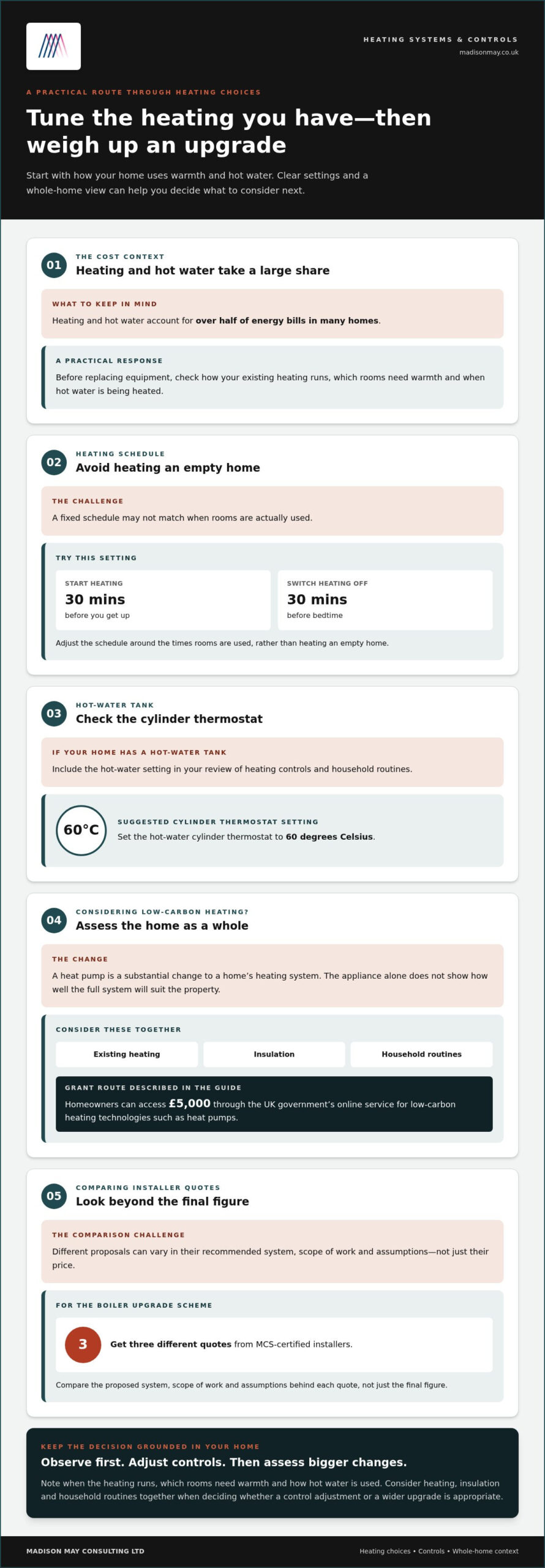
Heating and hot water account for over half of energy bills in many homes. That makes everyday settings a useful starting point before replacing equipment. Set central heating to start 30 minutes before you get up, then switch it off 30 minutes before bedtime. Adjust the schedule around the times rooms are actually used, rather than heating an empty home.
For homes with a hot-water tank, set the cylinder thermostat to 60 degrees Celsius. This gives you a clear setting to review alongside your heating schedule. Check which rooms need warmth at different times, whether the system responds to the timer and whether hot water is being heated when it is not needed. These practical observations can help identify whether better use of existing controls should come before new equipment.
Low-carbon heating is another option to explore. The UK government’s online service provides homeowners access to grants of £5,000 for installing low-carbon heating technologies such as heat pumps. A heat pump is a substantial change to the home’s heating system, so consider the property’s existing heating, insulation and household routines together. The right choice is about how the whole system will serve the home, not just the appliance itself.
How can I compare quotes and check an energy installer is trustworthy in the UK? For the Boiler Upgrade Scheme, applicants are advised to get three different quotes from MCS-certified installers. Compare the proposed system, scope of work and assumptions behind each quote, not just the final figure.
What are the risks of home energy scams or misleading retrofit advice? Advice that promises savings without explaining the proposed work can lead to unsuitable upgrades and avoidable expense. Before deciding, ask for a clear explanation of how a recommendation fits your home, heating needs and controls.
Impartial advice can help households use existing heating systems and controls efficiently, and consider whether an upgrade is appropriate. Note when the heating runs, which rooms need warmth and how you use hot water. These details make discussions with organisations and installers more specific and help clarify whether a control adjustment or a wider heating improvement is the relevant next step.
If you’re considering a heating change, explore heating upgrades as part of a considered home-efficiency plan, rather than treating the appliance in isolation.
Home energy efficiency and insulation
Improving a home’s energy efficiency means reducing wasted heat and choosing measures that suit its construction. Plan upgrades as connected steps, from finding heat loss to considering insulation and appliances.
Planning efficiency improvements
Start by listing cold rooms, draughts, heating habits and appliances you use regularly. Group possible work by purpose: reducing heat loss, improving comfort or using energy more efficiently. This helps you compare fabric improvements with equipment changes and consider how each measure affects the others. If you rent, describe the problem and proposed improvement to your landlord before changing the property.
Finding sources of energy loss
Look first at walls, the roof, windows, doors and gaps around openings. About a third of heat escapes through uninsulated walls, while up to 25% of heat in a home can be lost through an uninsulated roof. These figures show why identifying the relevant parts of the building fabric matters before deciding where work should begin.
For lofts, the recommended insulation thickness is 270mm. Check the existing depth and whether coverage is continuous, rather than assuming that insulation is absent or adequate. If the loft is already insulated, topping it up may be more relevant than focusing elsewhere. A room-by-room record of cold spots and draughts can help identify where further investigation is useful.
What steps should I take to make my home more energy efficient? Record where the home feels cold, check insulation and draught points, and review appliance use. Then prioritise measures that address the clearest sources of heat loss, considering ventilation alongside insulation so the improvements suit the whole home.
A home energy retrofit can include appliances, heating systems and the building fabric. Treating these as connected parts of one plan helps avoid choosing an efficient appliance while overlooking heat escaping through the roof or walls. A considered sequence also makes it easier to decide what to do first and how each change supports the next.
Energy-efficient appliances can form part of the plan, particularly when replacing equipment that no longer meets household needs. Compare the appliance’s energy information with its intended use, then consider how often it will run. The right choice depends on the task, household routines and the property’s wider energy use, not the label alone.
What should I do if I rent and need energy-efficiency improvements? Tell your landlord which rooms are difficult to heat and describe issues such as draughts or inadequate insulation. Explain the practical improvement you’re seeking and agree on the work before making changes yourself.
Renewable technologies may also form part of a wider efficiency plan, but first consider the home’s fabric and existing systems. A well-ordered plan connects insulation, ventilation, heating and appliances, helping households save energy without treating each purchase as a standalone solution.
Access to home energy advice across the UK
Access to in-person home energy advice is uneven across the UK, partly because services face funding and coordination challenges. This can make support harder to find, especially when you need to move from an immediate concern to longer-term improvements.
How do I find local home energy advice through my council or energy supplier? Enter your postcode on your council’s website and search for home energy advice, energy grants or housing support. Then contact your energy supplier and ask what advice it provides about bills, heating and efficiency improvements.
The kind of support you need can help narrow your search. Home energy advice in the UK can range from help with energy-bill debt to planning a deep retrofit. If affordability is the immediate issue, explain the bill problem. If rooms are difficult to heat, describe the comfort issue and the improvements you’re considering. This helps advisors understand whether you need practical guidance, funding information or support planning building work.
For impartial advice, check what a service covers and how its guidance relates to your home. The Home Energy Advice Team provides free, impartial advice on energy-related matters, including insulation, ventilation, heating systems and whole-home retrofit plans. Its advisors have been trained by National Energy Action. The team also works with Burnham and Weston Energy, Wales and West Utilities, and Centre of Sustainability.
Local access matters because recommendations need to suit the property and household. A visit can help an advisor assess details that are difficult to describe over the phone, such as draughts, ventilation concerns or how rooms are heated. Ask whether the advice can address both your immediate concern and the sequence of improvements needed for a broader retrofit. This helps connect an individual measure with the home’s wider needs.
Funding also affects what support can deliver. Short-term funding can make it harder for advice providers to build lasting relationships with households and suppliers, affecting support for home upgrades. A policy brief proposes sustained, multi-year government funding so providers can build capacity and continue home visits. It also proposes nationally coordinated advice delivered locally, with the aim of improving access across different areas.
That national approach is a proposal, not a description of one uniform service already available everywhere. While services remain unevenly coordinated, use your council and energy supplier as starting points, then describe the property, the problem and the improvements you’re considering. A clear request can focus the discussion on bills, comfort, funding or retrofit planning, rather than general energy tips alone.
Home energy advice can also help when starting a tenancy. The Home Energy Advice Team helps customers set up energy systems and billing correctly in a new tenancy. If you rent, include your tenancy start and any immediate heating or billing difficulties when describing the support you need.
What home energy grants and schemes are available in the UK in 2026?
Grant options depend on where you live, the property’s condition and the planned improvement. Start by matching your location and circumstances to schemes that support insulation, heating or wider energy-efficiency work.
The property must have an Energy Performance Certificate no more than 10 years old. Applicants are advised to get three different quotes from MCS-certified installers before choosing an installation route.
For some support, household income is also relevant. According to the Department for Energy Security and Net Zero, your household income must usually be £36,000 a year or less. Treat income, property rating and the proposed improvement as separate eligibility checks, since different schemes use different criteria.
The Warm Homes: Local Grant generally requires a home in England to have an energy-efficiency rating of D, E, F or G. A qualifying council will contact applicants within 10 working days to arrange a home survey. The survey helps assess the property and the improvements that may be suitable.
Scotland has separate support. Successful applicants have 9 months to complete funded improvements and claim funding. Warmer Homes Scotland may also help eligible people struggling to heat their homes. Its stated property-size condition is a home of 230 square metres or smaller.
In Wales, the Nest scheme may be available for homes rated E, F or G. A D-rated home may qualify if someone in the household has an eligible health condition. The Energy Company Obligation operates across Great Britain and requires energy suppliers to promote measures for low-income, fuel-poor and vulnerable households.
Before applying, note your nation, property tenure, EPC rating, household circumstances and the work needed. Compare those details with each scheme’s criteria. A heating grant may not address insulation needs, so consider whether the proposed measure fits the home’s wider energy-efficiency priorities.
For a property with heat loss or several potential improvements, a clear plan can help you understand which work to prioritise alongside available support. Plan energy-efficient home improvements around the property’s needs and the measures you’re considering.
Madison May Consulting: Energy efficient home improvements
Madison May Consulting Ltd helps homeowners considering energy-efficient improvements for a colder, draughtier or less comfortable property. Its services include windows and doors, conservatory upgrades, and ventilation assessments or damp remediation, addressing different aspects of a home’s performance.
Consider support when you’re weighing several changes or unsure what to address first. Persistent damp, for example, may call for a ventilation assessment, while an uncomfortable conservatory may benefit from an upgrade. The right improvement depends on the property and the issue you want to resolve.
To discuss energy-efficient improvements for your home, contact Madison May Consulting Ltd.
Make your next home-energy decision with care
Independent home energy advice in the UK can help you make more considered decisions that suit the way you live. Before taking the next step, decide what matters most: a warmer room, a more comfortable conservatory or a clearer plan to improve efficiency. That priority can guide a conversation about changes that could make a meaningful difference to everyday comfort.
Madison May Consulting Ltd offers energy efficient home improvements, including windows and doors and conservatory upgrades. If you’re ready to explore a considered approach for your property, contact Madison May Consulting Ltd. A more comfortable, efficient home can begin with one clear decision.
Frequently Asked Questions
Can I get help with costs?
Yes, grants and other support can help eligible households pay for certain energy improvements. Options depend on where you live, your circumstances and the work proposed. Some advice services also support people facing energy-bill debt, which is different from funding a retrofit. First identify whether you need help with bills, a specific upgrade or a whole-home improvement plan, then explore the relevant support route.
Not sure where to start?
Write down the main issue you want to address, such as a cold bedroom, damp or high energy use. Note whether you own or rent, and gather your latest Energy Performance Certificate if available. These details help focus the next conversation, whether you approach a council, an energy advice service or your landlord. A clear priority can also prevent unrelated upgrades from distracting from the problem that matters most.
What support can the energy advisor offer during the home visit?
A home visit can assess the property’s insulation, ventilation, heating and wider retrofit needs, then provide a written report with practical guidance. This gives you a property-specific basis for weighing improvements, rather than relying only on general advice. For example, an advisor can consider how ventilation relates to insulation or how a proposed heating change fits the existing home and how it is used.
Where can I get independent home energy advice in the UK?
Look for advice through your local council, energy supplier or a service operating in your nation. The Energy Saving Trust is an independent organisation that advises on energy efficiency and clean-energy solutions. Home Energy Scotland provides support in Scotland. Since in-person services are not evenly available across the UK, your postcode and the kind of help you need can guide you to the most relevant route.
Which UK home energy advice services are free and impartial?
The Home Energy Advice Team provides free, impartial advice on energy-related matters. Its guidance can help you understand your options before deciding whether to pursue improvements. Free advice is different from installation funding: advice can help you explore a course of action, while grant schemes have their own eligibility and application requirements. Keep these needs separate as you plan your next step.
How much do common home energy improvements cost in the UK, including insulation, heat pumps and solar panels?
Costs depend on the property and the work involved, so no single figure applies to every home. Insulation costs vary with the area and construction; heat-pump costs depend on the heating system and installation scope; solar costs depend on the roof and system design. For a quoted project, the price depends on the case and is provided after a quote request.