

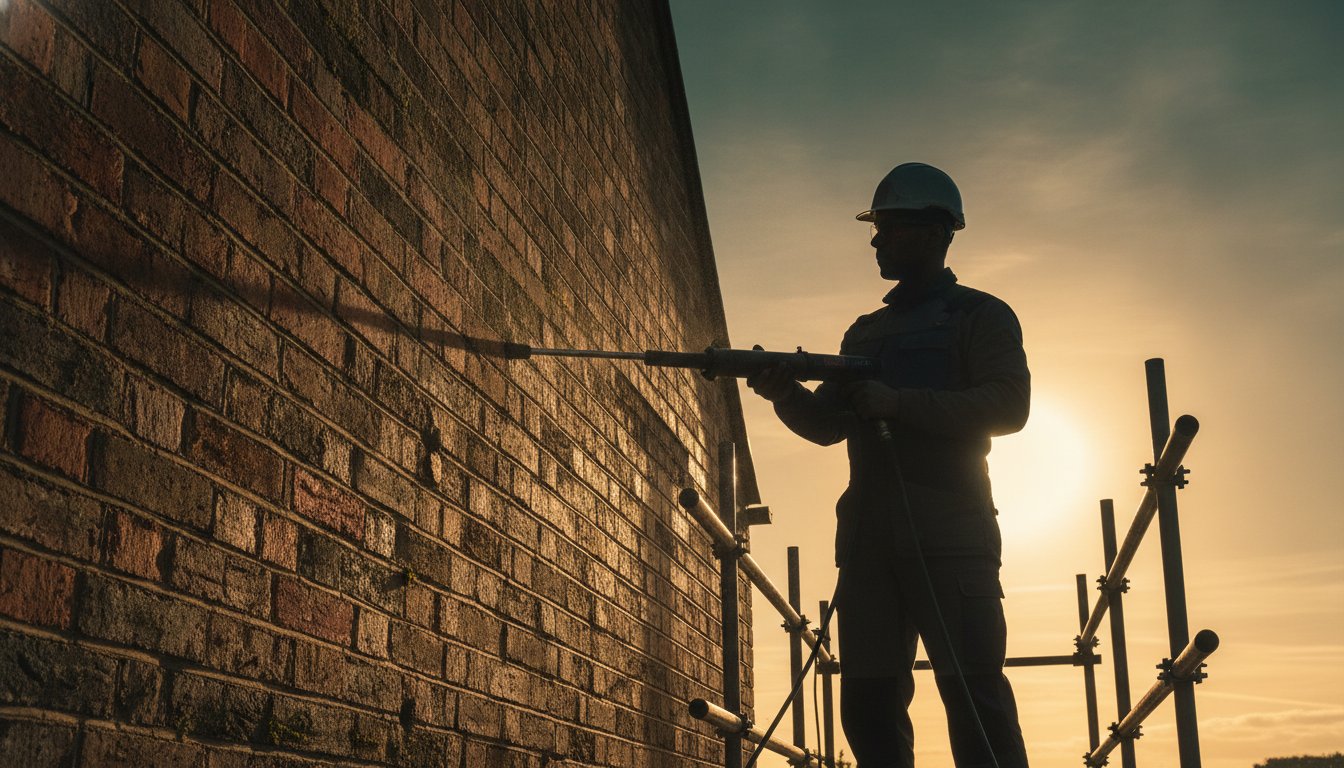
Could a measure designed to wrap your home in warmth actually be the very thing that invites moisture into your sanctuary? As energy costs continue to climb, the question “is cavity wall insulation a good idea for my house” has never felt more pressing, yet the answer isn’t always as simple as a salesman might suggest. You’ve likely encountered a chorus of conflicting advice, leaving you caught between the desire for a lower carbon footprint and the fear of devaluing your most precious asset through poor workmanship or unsuitable materials.
We understand that your home is more than just a building; it’s a carefully curated refuge that deserves meticulous care and a visionary approach to its preservation. This article provides the certainty you need by exploring how a professional retrofit perspective balances thermal efficiency with essential ventilation. You’ll learn how to identify if your property is amongst the five million UK homes that could benefit from this upgrade, ensuring any changes enhance both the enduring beauty and the structural integrity of your living space. We’ll guide you through the intersection of functionality and heritage, revealing how a tailored assessment creates a home that is as healthy as it is comfortable.
Key Takeaways
- Identify if your property possesses the specific architectural characteristics required for a successful installation, ensuring your home remains a protective and breathable envelope.
- Discover the essential criteria used to evaluate whether is cavity wall insulation a good idea for my house, moving beyond simple energy savings to consider the long-term resilience of your building fabric.
- Understand the intricate relationship between thermal resistance and moisture management to avoid common pitfalls such as condensation and the formation of cold spots.
- Explore the sophisticated “seal tight, ventilate right” philosophy, which balances airtightness with proactive humidity control to maintain a healthy and serene living environment.
- Recognise why a professional, PAS 2035 aligned retrofit assessment is the most reliable way to transform a standard improvement into a meticulously planned investment in your sanctuary.
Understanding Cavity Wall Insulation: Is Your House a Candidate?
The walls of your home do more than simply support a roof; they act as a protective envelope, shielding your private sanctuary from the elements. To understand if your property is suitable, we must first look at the anatomy of its structure. A cavity wall consists of two layers of masonry with a hollow space between them. By Understanding Cavity Walls, we can see that this design was originally intended to prevent moisture from bridging the gap to the interior. However, this void also allows heat to escape through a process of convection. Filling this space with insulation traps still air, creating a robust thermal barrier that preserves your home’s internal warmth whilst elegantly reducing energy expenditure.
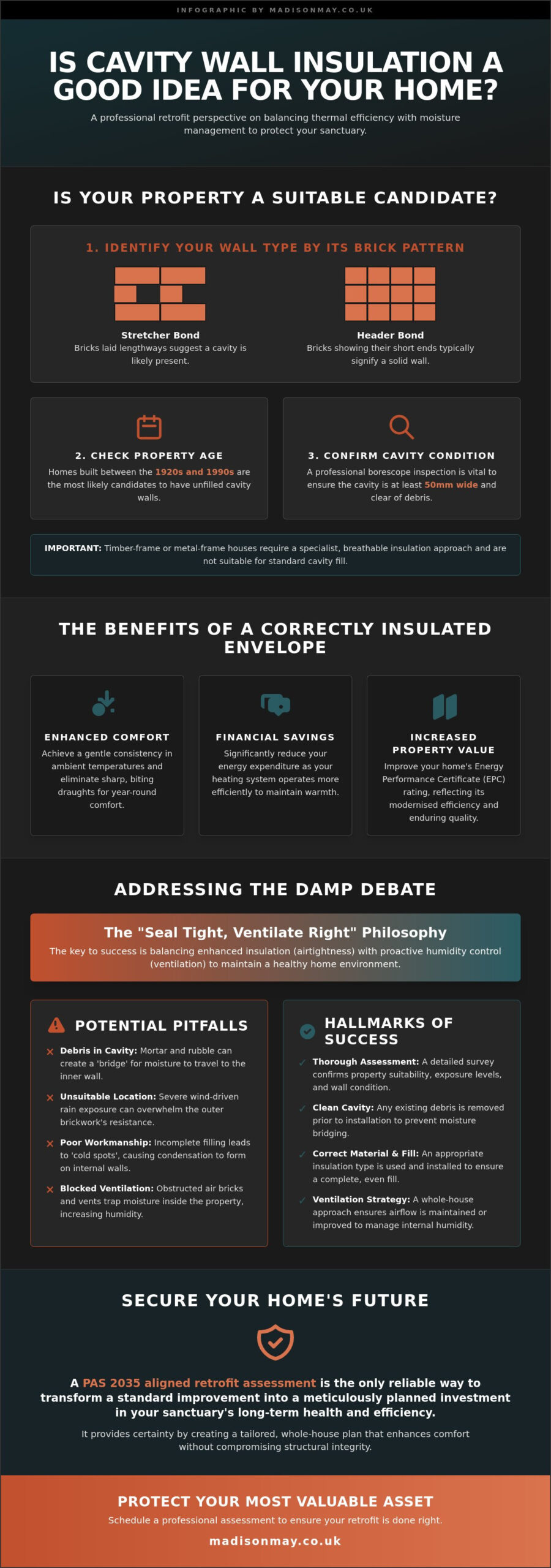
If your property was built between the 1920s and the 1990s, it’s highly likely to have unfilled cavities. For many homeowners in this position, the question “is cavity wall insulation a good idea for my house” becomes a pivotal part of their retrofit journey. The goal is to transform the building fabric into a high-performance shield that maintains a stable, comfortable climate year-round. When asking is cavity wall insulation a good idea for my house, the answer often lies in the balance between thermal performance and the long-term health of the building.
How to Identify Your Wall Type
A simple visual inspection of your brickwork often reveals the hidden nature of your walls. You can usually distinguish the construction by observing the pattern of the bricks:
- Stretcher Bond: Bricks laid lengthways, indicating a cavity is likely present.
- Header Bond: Bricks showing their short ends, typically signifying a solid wall.
Whilst these patterns offer a clue, a professional building survey remains essential. A specialist uses borescope cameras to inspect the cavity width and condition, ensuring there is no debris that could cause issues later. It’s also vital to recognise that timber-frame or metal-frame houses require a bespoke approach, as standard insulation materials can interfere with the necessary breathability of these specific structures.
The Benefits of a Well-Insulated Envelope
Investing in your home’s thermal envelope brings a profound sensory shift to your living environment. You’ll notice a gentle consistency in ambient temperatures and a welcome absence of those sharp, biting draughts that can disrupt a quiet evening. Beyond the immediate comfort, enhancing your property’s efficiency contributes to a more sustainable future by significantly lowering your carbon footprint. From a practical perspective, these improvements often lead to a superior EPC rating, reflecting the enduring quality and modernised value of your residence.
The Financial and Thermal Argument for Insulating Your Walls
The pursuit of a truly efficient home begins with understanding how heat moves through its very fabric. At the heart of this conversation is thermal resistance, often referred to as the R-value, which measures a material’s ability to resist the transfer of heat. When you find yourself wondering, “is cavity wall insulation a good idea for my house,” you are essentially evaluating the strength of your property’s thermal shield. By enhancing this resistance, you ensure that the warmth generated by your heating system remains within your living spaces for longer, creating a more resilient and sustainable environment.
This measure works in elegant synergy with modern heating upgrades. Without proper insulation, even the most sophisticated boiler or heat pump must work tirelessly to compensate for the constant loss of energy through the walls. By sealing the envelope first, you allow your technology to operate at its peak efficiency whilst ensuring your investment in comfort is never wasted. Interestingly, many homeowners experience what is known as the “rebound effect.” This is where the total energy spend might remain stable, but the internal temperature and overall quality of life within the home rise significantly, as the space finally reaches its true potential as a warm sanctuary.
Calculating the Real Return on Investment
From a purely financial perspective, this upgrade is widely regarded as one of the most effective measures a homeowner can undertake. According to the Energy Saving Trust guide, the payback period for a standard UK domestic property is remarkably swift, often making it the first logical step in any renovation project. To understand how these savings manifest over time, a bespoke EPC improvement plan can provide a clear, data-driven roadmap. With current government support schemes like the Great British Insulation Scheme set to conclude on March 31, 2026, the timing of your investment is a vital consideration for your long-term financial legacy.
Beyond the Bills: The Comfort Factor
The true value of a well-insulated home often reveals itself in the quiet moments of daily life. It’s found in the elimination of those stubborn “cold spots” that can make certain corners of a room feel uninviting, disrupting the aesthetic harmony of your interior design. Beyond the temperature, the added density within the walls acts as a buffer against the outside world, noticeably reducing external noise pollution. When asking is cavity wall insulation a good idea for my house, the answer is often found in the sensory delight of a home that retains its warmth effortlessly, allowing you to focus on the storytelling of your life within a serene refuge. If you’re ready to begin this transformative journey, exploring energy efficient home improvements is the first step towards a more comfortable future.
Addressing the Damp Debate: Why Some Installations Fail
For many homeowners, the question “is cavity wall insulation a good idea for my house” is often shadowed by cautionary tales of damp and mould. These concerns are not without merit, yet the fault rarely lies with the concept of insulation itself. Instead, issues typically arise from a failure to respect the unique architectural story of the building. When an installation is rushed or poorly managed, the delicate equilibrium of the home’s fabric is disrupted, turning a well-intentioned upgrade into a source of structural stress.
A primary culprit in these failures is the “thermal bridge.” This occurs when insulation is inconsistent, perhaps due to gaps or debris within the wall. These voids allow heat to escape more rapidly than in the insulated areas, creating isolated cold spots on the internal surface. When warm, humid air from daily life meets these cold patches, it condenses into moisture. This isn’t a failure of the material to “breathe,” but rather a failure of the installation to provide a continuous, harmonious thermal barrier across the entire envelope.
The Problem with “Cowboy” Installers
The integrity of your home relies on the precision of the initial assessment. Sales-led pitches often bypass the rigorous checks required to ensure a cavity is clean and suitable for filling. Mortar droppings, known as “snots,” can bridge the gap between the inner and outer leaves, providing a direct path for external moisture to travel inwards. To avoid these pitfalls, it is essential to prioritise independent building surveys over quick-fix solutions. A professional survey uses specialised equipment to verify the cavity’s condition, ensuring that your investment preserves rather than devalues your sanctuary.
Environmental Factors and Exposure Zones
The geography of your property plays a decisive role in determining if is cavity wall insulation a good idea for my house. The UK is divided into specific wind-driven rain zones, and properties in high-exposure areas, such as coastal regions, face a constant barrage of moisture. In these environments, standard fibre insulation can act like a sponge if the external masonry is compromised. Houses in these zones require specific materials, such as bonded bead insulation, which allows water to drain away naturally. Before proceeding, a meticulous check of the external pointing and masonry condition is vital; even the finest insulation cannot compensate for a porous or damaged outer shell.
The Whole-House Approach: Balancing Insulation with Ventilation
A home is a delicate ecosystem where every structural change ripples through the entire environment. When considering “is cavity wall insulation a good idea for my house,” one must look past the masonry to the very air that moves within your living spaces. Modern retrofit is defined by a sophisticated philosophy: “Seal Tight, Ventilate Right.” As we enhance the thermal envelope to retain warmth, we inevitably reduce the natural air changes that older, draughtier buildings rely on to expel moisture. Without a proactive strategy for ventilation, the humidity generated by everyday life can become trapped, potentially compromising the serene atmosphere of your refuge.
This holistic approach ensures that insulation and damp remediation are treated as two sides of the same coin. One provides the thermal resilience your property deserves, whilst the other ensures the air remains fresh and the structure remains dry. By positioning ventilation as a core component of the design rather than a mere afterthought, we transform a simple building upgrade into a visionary investment in your home’s longevity. It’s this balance that determines if is cavity wall insulation a good idea for my house, ensuring the measure works for the building rather than against it.
Meeting Building Regulations Part F
Adherence to Building Regulations Part F is a non-negotiable standard for any professional installation. This regulation mandates that energy efficiency measures must not compromise the air quality of the dwelling, often requiring the thoughtful integration of trickle vents, high-performance extract fans, or even Mechanical Ventilation with Heat Recovery (MVHR) systems. A meticulous ventilation assessment identifies the precise needs of your property, effectively preventing the buildup of stale air and allergens. Compliance with these standards ensures that your home sanctuary remains a healthy, restorative environment for all who dwell within.
The Role of the Retrofit Coordinator
The complexities of a whole-house upgrade require a steady, expert hand to guide the process. The Retrofit Coordinator acts as a project guardian, a visionary professional who ensures that all efficiency measures work in perfect harmony. They oversee the entire transition from the initial assessment to the successful installation, providing a layer of protection for both the homeowner and the building fabric. This oversight offers the peace of mind that comes from knowing your property’s integrity is the primary focus of every decision. To ensure your home improvement journey is handled with this level of poise and precision, engaging with professional Retrofit Coordination is the most assured path forward.
Securing Your Home’s Future with a Professional Retrofit Assessment
The transition from curiosity to certain action requires a shift from general advice to property-specific data. Whilst you may begin by asking “is cavity wall insulation a good idea for my house,” the definitive answer is only found through a technical evaluation that respects the unique history of your building. A luxury retrofit distinguishes itself from a standard installation by conducting a deep, forensic analysis of the structure, recording everything from floor plans to moisture levels. Madison May Consulting Ltd acts as your sophisticated guide through this transformative journey, ensuring that every intervention is tailored to the specific needs of your sanctuary rather than a one-size-fits-all solution.
By opting for professional oversight, you move beyond the limitations of sales-led pitches. We understand that your home is an outward expression of individual identity, and our role is to ensure its evolution is handled with the poise and visionary creativity it deserves. This methodical approach provides the peace of mind that your investment will enhance the enduring quality of your living environment whilst ensuring that is cavity wall insulation a good idea for my house becomes a resounding yes, backed by technical evidence.
The Gold Standard of PAS 2035
To achieve the highest level of structural security, we adhere to PAS 2035, which represents the gold standard for domestic retrofit in the United Kingdom. This framework was designed to protect homeowners from systemic failures by mandating a whole-house approach to energy efficiency. Central to this standard is the involvement of an independent Retrofit Assessor who has no vested interest in selling a specific insulation product. Their focus remains entirely on the performance and health of the building, ensuring that any recommendation for wall insulation is perfectly balanced with the ventilation strategies discussed earlier. A professional, PAS 2035 aligned plan is the ultimate insurance for your home’s fabric.
Your Next Steps Toward a Warmer Refuge
Taking the first step toward a more comfortable and resilient home is a decision that should be met with clarity. We recommend beginning with a professional, fixed-fee assessment rather than relying on an installer’s quote, which may lack the necessary depth for complex masonry. This assessment yields a personalised EPC Improvement Plan, allowing you to sequence your upgrades logically and effectively. By following this roadmap, you ensure that each measure works in perfect harmony with the next, from draught proofing to heating upgrades. If you’re ready to secure the future of your property, you can Arrange your professional retrofit assessment with Madison May Consulting Ltd to begin your journey toward a warmer, more serene refuge.
Crafting a Future of Enduring Comfort
Choosing to enhance your home’s thermal resilience is an act of stewardship that requires a balanced, visionary perspective. We’ve explored how the intersection of functionality and beauty depends on a whole-house approach, where insulation works in perfect harmony with proactive ventilation. By prioritising the health of your building fabric, you ensure that your property remains a dry, breathable, and serene refuge for years to come. The answer to the question, is cavity wall insulation a good idea for my house, ultimately rests on the precision of the initial evaluation and the expertise of those guiding the process.
To move forward with total transparency and quiet confidence, we invite you to Book a Professional Retrofit Assessment for Your Home. Madison May Consulting Ltd provides PAS 2035 Aligned Assessments and expert damp and ventilation remediation through a fixed-fee consultancy model that prioritises your home’s unique story. You deserve the certainty that every detail is intentional and every material is chosen with care. We look forward to helping you transform your living space into a high-performance sanctuary that reflects your values and preserves your heritage.
Frequently Asked Questions
Is cavity wall insulation suitable for all types of houses?
Suitability depends entirely on your property’s construction age and material. Houses built between the 1920s and 1990s typically possess the necessary voids, whereas older properties often feature solid walls that require alternative solutions. Modern timber or metal-framed buildings require specialist materials to ensure the structure remains breathable. A professional survey is the only way to confirm if the measure is safe for your specific building fabric.
Can cavity wall insulation be removed if it causes damp?
Yes, insulation can be professionally extracted if it’s been compromised or installed incorrectly. Specialist equipment is used to vacuum the material from the base of the wall, allowing the cavity to be cleared of damp-inducing debris. This process is complex and highlights why a meticulous initial assessment is vital to prevent the need for such remedial action in the future.
How much can I realistically save on my heating bills?
Savings vary based on your property’s size and current efficiency levels, though industry data suggests a noticeable reduction in annual heating costs. Beyond the immediate numbers, you’re investing in long-term property resilience against energy price volatility. When considering is cavity wall insulation a good idea for my house, the financial return is often realised within a few years through lowered expenditure and improved thermal performance.
What is the difference between a standard quote and a PAS 2035 assessment?
A standard quote is often a sales-led estimate for a single product, whereas a PAS 2035 assessment is a comprehensive, independent evaluation of your entire home. The latter considers how insulation interacts with ventilation and heating, providing a technical roadmap that prioritises the building’s health. This gold-standard approach protects you from the systemic failures often associated with isolated, unmanaged installations.
Will insulation make my house feel stuffy or humid?
Insulation itself doesn’t create humidity, but making a home more airtight without managing airflow can lead to a sense of stuffiness. This is why we follow the “seal tight, ventilate right” philosophy. By integrating appropriate ventilation measures, such as trickle vents or extract fans, your home remains a fresh and restorative sanctuary whilst retaining its essential warmth.
How long does the installation process typically take for a domestic property?
A typical installation for a standard semi-detached home is usually completed within a few hours, causing minimal disruption to your daily life. The process involves injecting the material through small, discreet holes in the external mortar, which are then carefully filled to match your existing masonry. This efficiency allows you to begin enjoying a warmer living environment almost immediately after the team departs.
Are there grants available for cavity wall insulation in 2026?
Yes, several government-supported schemes are currently active. The Great British Insulation Scheme and ECO4 are available until March 31, 2026, providing vital support for many households. Additionally, the new 15 billion pound Warm Homes Plan, launched in January 2026, offers further funding and low-interest loans aimed at upgrading five million homes by 2030, ensuring energy efficiency remains accessible.
What happens if my house has “debris” in the cavity already?
Debris, or mortar “snots,” must be identified and cleared before any insulation is added. If left unaddressed, these obstructions can create bridges for moisture to travel from the outer leaf to your internal walls, leading to damp patches. A professional borescope inspection during your assessment ensures the cavity is clean and suitable, preserving the structural integrity of your refuge.