


Could the very walls intended to shelter your family be whispering silent threats to their wellbeing? We often view our homes as impenetrable sanctuaries against the outside world, yet the air within our private retreats can be more heavily burdened with invisible pollutants than a busy city centre. It’s an unsettling thought for any parent, particularly when the health of young lungs is at stake and the technical language of home improvement feels increasingly opaque.
We understand that you desire a home that feels as fresh as it looks, free from the lingering worry of damp or the hidden presence of volatile organic compounds. You’ll likely find yourself asking, “How do I protect my family’s health – air quality?” whilst wondering if modern insulation might actually compromise the atmosphere you breathe. This guide promises to clarify those uncertainties, showing you how a meticulous whole-house approach to energy efficiency and ventilation creates a truly healthy environment. We will explore the vital intersection of building fabric and breathability, ensuring your home upgrades offer both refined comfort and lasting peace of mind.
Key Takeaways
- Understand why the purity of your indoor atmosphere is more critical than ever, particularly as we spend the vast majority of our time amongst modern materials.
- Discover the answer to the question, how do I protect my family’s health – air quality, by balancing energy efficiency with sophisticated, rhythmic ventilation strategies.
- Learn to identify and mitigate silent intruders like mould and invisible pollutants that can compromise the sanctuary of your living space.
- Explore how professional solutions such as mechanical ventilation can maintain thermal comfort whilst ensuring a continuous flow of fresh, filtered air.
- Recognise the value of a PAS 2035 Retrofit Assessment as a comprehensive health check for your property’s fabric and your family’s wellbeing.
Understanding the Hidden Impact of Indoor Air Quality on Family Health
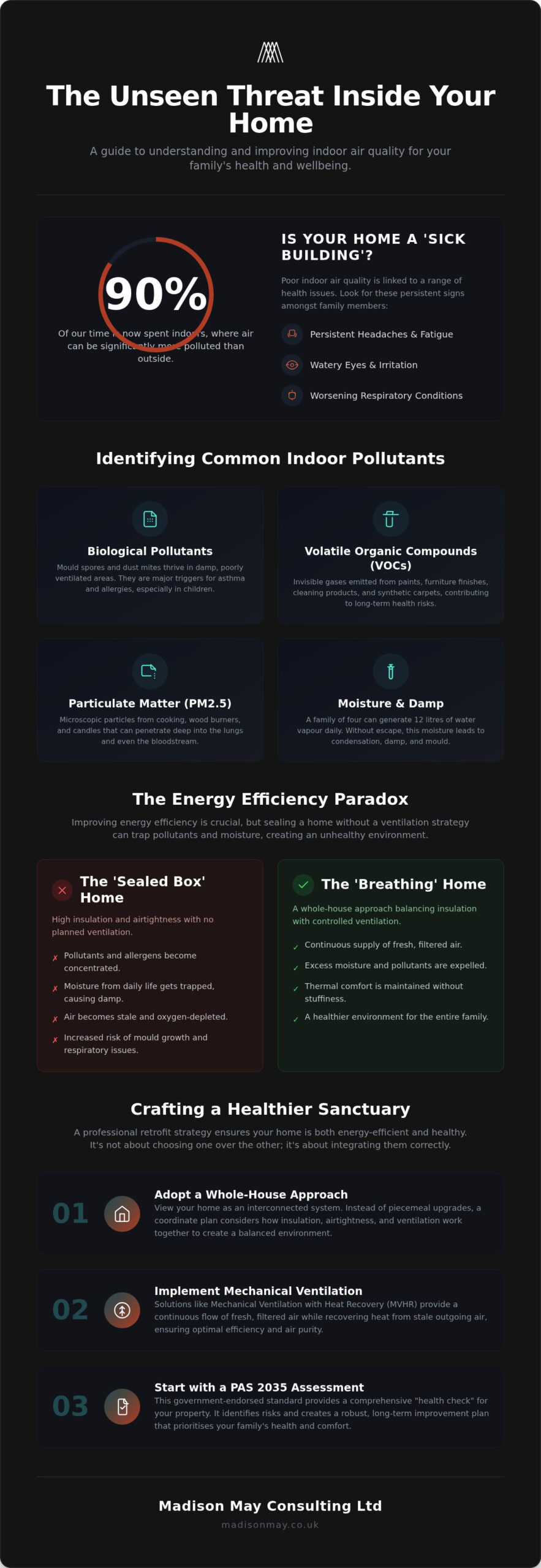
The air within our homes is the very essence of our sanctuary, yet its purity is often compromised by the very materials we choose to surround ourselves with. Indoor Air Quality, or IAQ, represents the atmospheric integrity of our private living spaces. It’s a factor that has become increasingly vital as modern lifestyles mean we now spend roughly 90% of our time indoors, often amongst synthetic finishes and airtight structures. When parents ask, “How do I protect my family’s health – air quality?” they are often seeking immediate remedies, yet the solution requires a deeper understanding of the home’s ecosystem. Poor air quality is subtly linked to diminished sleep patterns, reduced cognitive focus, and chronic respiratory conditions that can linger for years. Recognising the signs of a ‘sick building’, such as persistent headaches, watery eyes, or unexplained fatigue amongst residents, is the first step toward reclaiming a healthy environment. For a comprehensive overview of indoor air quality and its various impacts, one must look beyond surface-level cleanliness to the building’s underlying health.
The Vulnerability of a Growing Family
Children are particularly delicate within the domestic environment. Their faster breathing rates mean they inhale a higher volume of air relative to their body weight, making them far more susceptible to airborne toxins than the adults around them. Biological pollutants, including dust mites and mould spores, can settle easily in the lungs of developing toddlers, potentially leading to long-term sensitivities or chronic asthma. For families managing existing allergies, the home must be carefully curated into a protective refuge. This involves more than just cleaning; it requires a structural strategy to ensure that moisture doesn’t collect in hidden corners, feeding the biological hazards that threaten young respiratory systems.
Invisible Pollutants in the Modern Refuge
The contemporary home is often a silent repository for Volatile Organic Compounds (VOCs), which are chemical vapours emitted from favourite furniture finishes, synthetic carpets, and common household paints. Beyond these invisible gases, particulate matter known as PM2.5, often generated by the simple act of cooking or the comforting warmth of a wood burner, can penetrate deep into the bloodstream. Whilst it’s tempting to rely on scent, we must look past the sensory illusion of cleanliness. Many synthetic fragrances used in candles or cleaning products actually introduce new chemical burdens into the air, proving that a ‘fresh’ scent doesn’t always equate to a healthy atmosphere. A truly pure environment is one where the air is genuinely clean, not merely scented to appear so.
The Ventilation Gap: Why Energy Efficiency Needs Fresh Air
A common misconception suggests that an energy-efficient home must inherently be a stuffy one. In our pursuit of thermal comfort and lower bills, we often focus exclusively on sealing every gap and layering thick insulation. This approach, whilst well-intentioned, can inadvertently create a ‘sealed box’ effect. Without a deliberate strategy for air exchange, the very measures designed to protect us can trap stale air and pollutants. According to the Introduction to Indoor Air Quality, the primary cause of indoor air problems is the lack of adequate ventilation to dilute emissions from indoor sources. When you ask, “How do I protect my family’s health – air quality?” the answer lies in the delicate balance between keeping heat in and letting moisture out.
Consider the rhythm of daily life. A typical family of four generates approximately 12 litres of water vapour every day through simple activities like breathing, cooking, and bathing. In a traditional, draughty house, this moisture escapes through natural gaps. In a modernised, airtight home, that same moisture lingers, settling on cold surfaces to create the perfect conditions for damp and mould. By understanding the science of airflow, you can confidently address the question of how do I protect my family’s health – air quality whilst simultaneously reducing your energy consumption. This ‘Ventilation Gap’ is the primary culprit behind modern structural health issues, where the building fabric fails because it can no longer breathe.
The Whole-House Approach to Retrofit
Successful renovation requires moving beyond piecemeal upgrades toward a coordinated energy strategy. Implementing energy efficient home improvements must always involve a simultaneous plan for air exchange. This is where the expertise of a Retrofit Assessor becomes invaluable. They act as a sophisticated guide, ensuring that as we improve your home’s thermal performance, we also safeguard its atmospheric purity. By viewing the property as a single, interconnected system, we avoid the unintended consequences of isolated upgrades. If you are planning significant changes, a professional Ventilation Assessment can ensure your home remains a healthy sanctuary.
Building Regulations and Your Safety
Navigating the complexities of UK building standards is essential for long-term safety. Approved Document F outlines the mandatory requirements for domestic ventilation, yet satisfying these rules is only the beginning. Whilst simple trickle vents are a common sight on new windows, they may not provide sufficient airflow in a highly insulated, draught-proofed environment. Achieving regulatory compliance shouldn’t be a box-ticking exercise; it’s about ensuring your pursuit of a lower carbon footprint doesn’t come at the expense of your family’s respiratory health. A truly visionary design integrates these functional requirements seamlessly into the aesthetic of the home, proving that safety and elegance can coexist effortlessly.
Identifying Common Indoor Pollutants and Biological Hazards
Beyond the structural dynamics of airflow lies a more subtle challenge: the specific biological and chemical agents that reside within our living spaces. When homeowners ask, “How do I protect my family’s health – air quality”, they must first learn to identify the specific hazards hiding in plain sight. Mould is perhaps the most pervasive of these silent intruders. Thriving in the shaded, poorly ventilated corners of even the most elegantly appointed rooms, it feeds on the moisture trapped by modern insulation. For those navigating these complexities, A Guide to Indoor Air Quality provides an essential framework for identifying the various agents that can disrupt the peace of a home.
Whilst mould is often visible, other threats are entirely imperceptible to the senses. Radon and carbon monoxide represent lethal, invisible threats that require meticulous monitoring through dedicated detectors and professional oversight. Even our beloved pets contribute to the atmospheric load, bringing dander and seasonal allergens into the heart of the home, whilst nitrogen dioxide, often a byproduct of gas hobs, can impact cardiovascular health over time. Managing these natural and chemical elements requires a discerning eye and a commitment to maintaining the atmospheric purity of your sanctuary.
The Reality of Damp and Mould
Understanding the nature of moisture is crucial for effective remediation. It’s important to distinguish between rising damp, which climbs from the ground, penetrating damp, which enters through structural flaws, and condensation-led mould, which is the result of modern living in an airtight space. Damp remediation is not merely a structural necessity; it is a fundamental act of care for those who dwell within. Living in a space that feels ‘heavy’ or ‘damp’ carries a significant psychological burden, often eroding the sense of calm and security that a home should provide. By addressing these issues at their source, you restore both the building’s integrity and your family’s peace of mind.
Chemical Sensitivities in the Home
The modern interior is often subject to the cumulative effect of off-gassing, where new carpets, favourite furniture, and building materials release chemical vapours over time. These Volatile Organic Compounds can lead to heightened sensitivities and long-term health concerns if left unaddressed. Choosing low-VOC alternatives is a sophisticated way to preserve the purity of your indoor environment without compromising on aesthetic quality. For a truly comprehensive understanding of your property’s health, a professional building survey can identify hidden material risks, allowing you to curate a space that is as safe as it is beautiful.
Practical Steps to Purify and Organise Your Living Environment
Moving from the identification of hazards to the implementation of solutions requires a thoughtful, rhythmic approach to home management. When you consider the question, “How do I protect my family’s health – air quality”, the solution isn’t found in a single action, but in a series of intentional shifts. Establishing a ventilation routine that respects the seasons ensures that your home remains a sanctuary of fresh air without sacrificing thermal comfort. Whilst opening windows is a traditional method, it can lead to significant heat loss in colder months, making it an incomplete strategy for the modern energy-efficient home.
Sophisticated technology now allows us to make the invisible visible. Smart sensors can monitor carbon dioxide levels, humidity, and particulate matter in real-time, providing the data needed to adjust your ventilation habits. For a more permanent solution, the strategic use of extractor fans in high-moisture areas or the installation of Mechanical Ventilation with Heat Recovery (MVHR) systems can transform the atmosphere. These systems work quietly in the background, recovering heat from outgoing stale air to warm the incoming fresh supply, maintaining a constant, filtered flow that protects both the building fabric and its inhabitants.
Our daily habits also play a vital role in preserving atmospheric purity. Transitioning from favourite chemical-heavy cleaning products to natural, non-toxic alternatives reduces the VOC burden significantly. This behavioural shift, combined with professional guidance, ensures that your efforts are both effective and sustainable for the long term.
Optimising Air Exchange
Achieving an efficient air flush doesn’t require keeping windows open all day. The ‘cross-ventilation’ technique involves opening windows on opposite sides of the property for short, intense bursts to replace stale air rapidly. To ensure these systems function at their peak, regular maintenance is essential; cleaning filters in extractor fans and ensuring trickle vents remain unobstructed prevents the build-up of dust and grease. Whilst portable air purifiers can offer temporary relief in specific rooms, they should be viewed as a secondary support to a robust, structural ventilation strategy.
Creating a Low-Allergen Sanctuary
A healthy home is one that is organised to breathe. Minimising dust traps by choosing minimalist storage solutions and keeping surfaces clear allows air to circulate more freely. High-quality vacuuming with HEPA filtration and the regular laundering of soft furnishings are essential rituals in managing pet dander and seasonal allergens. The physical boundaries of your home also play a part; installing bespoke windows and doors can significantly improve both security and controlled airflow, ensuring your sanctuary remains protected from both intruders and pollutants. If you are ready to transform your living environment, a professional Ventilation Assessment is the most effective way to identify the specific needs of your property.
Crafting a Healthier Sanctuary with Professional Retrofit Coordination
The transition from understanding indoor pollutants to actively eliminating them requires more than just high-quality materials; it demands a visionary approach to home management. Professional expertise serves as the ultimate safeguard for your family’s wellbeing, ensuring that every structural refinement enhances rather than compromises the atmosphere you breathe. By following the rigorous PAS 2035 standard, a professional Retrofit Assessment acts as a comprehensive ‘health check’ for your property’s fabric. This process addresses the core question of how do I protect my family’s health – air quality by identifying the unique vulnerabilities of your home and proposing scientific, balanced solutions.
A central pillar of this coordinated effort is the development of a meticulous EPC improvement plan. This isn’t merely a document for compliance but a purposeful roadmap designed to elevate your living environment. It focuses on the delicate harmony between heat retention and breathability, ensuring that energy upgrades never lead to the unintended consequences of damp or stagnant air. The peace of mind that comes from such an expertly managed transformation is profound, allowing you to enjoy a home that is both high-performing and deeply restorative.
The Value of Expert Guidance
Attempting piecemeal energy ‘improvements’ through DIY methods often leads to costly structural errors, particularly when insulation is added without a corresponding ventilation strategy. A Retrofit Coordinator acts as a dedicated guardian for your project, upholding technical standards and protecting the long-term value of your sanctuary. This professional oversight ensures that every contractor follows a unified vision, preventing the common mistakes that result in condensation-led mould. Investing in a professional roadmap is the most reliable way to secure a future where your home remains a source of health and pride.
Your Journey to a Healthier Home
The path to a revitalised environment begins with a comprehensive ventilation and energy assessment. During this initial phase, a professional building survey collects detailed data on your home’s current performance, from moisture levels to airflow patterns. This evidence-based approach removes the guesswork, allowing for a tailored refurbishment plan that suits your family’s specific needs. By moving through these stages with a trusted expert, you transform your property from a drafty, unpredictable house into a high-performance refuge, where every room feels fresh, warm, and intentionally crafted for health.
Reclaiming Your Home as a Pure Sanctuary
Creating a home that truly breathes requires more than just high-quality materials; it demands a sophisticated understanding of how your living space functions as a whole. We’ve explored how the delicate balance between energy efficiency and ventilation is the foundation of a healthy atmosphere. By moving away from piecemeal upgrades, you ensure that your pursuit of a warmer home doesn’t compromise your respiratory wellbeing. When you find yourself asking, “How do I protect my family’s health – air quality”, remember that the answer lies in professional precision.
A sanctuary should be a place of restoration, not hidden worry. Our PAS 2035 Aligned Assessments and expert ventilation guidance provide the technical clarity needed to transform your property safely. With whole-house energy roadmaps, we help you curate an environment that is as pure as it is comfortable, ensuring every detail is intentional and every material is chosen with care.
Take the first step toward a revitalised living space and Book a Professional Retrofit Assessment to Protect Your Family’s Sanctuary. You deserve a home that supports your family’s vitality with every breath they take.
Frequently Asked Questions
Is indoor air really more polluted than the air outside?
Yes, indoor air can contain concentrations of pollutants that are significantly higher than those found outdoors. This occurs because modern homes are designed to be airtight, which traps gases from cleaning products, synthetic materials, and everyday activities like cooking. Without a professional ventilation strategy, these pollutants accumulate over time. Balancing energy efficiency with fresh air exchange is the most effective way to ensure your home remains a healthy sanctuary.
Will adding loft insulation cause mould growth in my bedrooms?
Adding insulation doesn’t directly cause mould, but it can create the conditions for it if ventilation isn’t managed correctly. By sealing a property to retain heat, you may inadvertently trap moisture that previously escaped through natural draughts. This is why we advocate for a whole-house approach. A Retrofit Assessment ensures that any insulation upgrades are paired with adequate air exchange measures to prevent moisture from settling on cold surfaces and forming mould.
How do I know if my home’s ventilation meets current building regulations?
The most reliable way to verify compliance is through a professional Ventilation Assessment that references Approved Document F. Whilst many properties have trickle vents or extractor fans, these may not provide the flow rates required for a highly insulated home. A specialist building survey will measure the actual performance of your existing systems. This data provides the clarity needed to ensure your home meets modern technical standards for safety and air purity.
Can house plants actually improve my indoor air quality significantly?
House plants offer aesthetic beauty and psychological benefits, but they cannot replace a robust ventilation system. Whilst certain species can absorb trace amounts of specific toxins, you would need an impractical number of plants to achieve a measurable impact on the atmosphere of a family home. When people ask, “How do I protect my family’s health – air quality”, they should focus on mechanical ventilation and source control rather than relying solely on greenery.
What is the difference between a standard EPC and a Retrofit Assessment?
A standard EPC provides a general energy rating, whereas a Retrofit Assessment is a much more detailed, PAS 2035 aligned ‘health check’ for the building. The assessment involves a comprehensive survey of the building fabric, services, and ventilation to create a bespoke roadmap for improvements. Unlike a basic certificate, this detailed plan identifies specific risks like moisture imbalance, ensuring that any energy-saving measures you choose to install are safe and effective.
How often should I have my home’s ventilation systems professionally checked?
We recommend a professional check of your ventilation systems every three to five years, or whenever you undertake significant home improvements. Over time, extractor fans can lose efficiency due to dust build-up and mechanical wear, whilst structural changes like new windows can alter the building’s airflow dynamics. Regular monitoring ensures that your home continues to provide a fresh, healthy environment for your family, maintaining the delicate balance between warmth and breathability.
Are smart air quality monitors worth the investment for a family home?
Smart monitors are valuable tools because they make invisible atmospheric changes visible to the naked eye. These devices track humidity, CO2, and particulate matter, allowing you to adjust your behaviour, such as opening a window during cooking or high-moisture activities. Whilst they don’t solve air quality issues themselves, the data they provide is essential for understanding how to protect my family’s health – air quality through informed, daily adjustments to your living habits.
What are the most dangerous invisible pollutants I should be worried about?
Carbon monoxide and radon are the most lethal invisible threats, as they are entirely imperceptible without dedicated sensors. Beyond these, Volatile Organic Compounds (VOCs) from furniture and finishes, along with nitrogen dioxide from gas appliances, pose significant long-term health risks. A coordinated Retrofit Assessment identifies these hazards by looking at the property’s services and materials, allowing for a strategic remediation plan that prioritises the safety and longevity of your domestic refuge.