

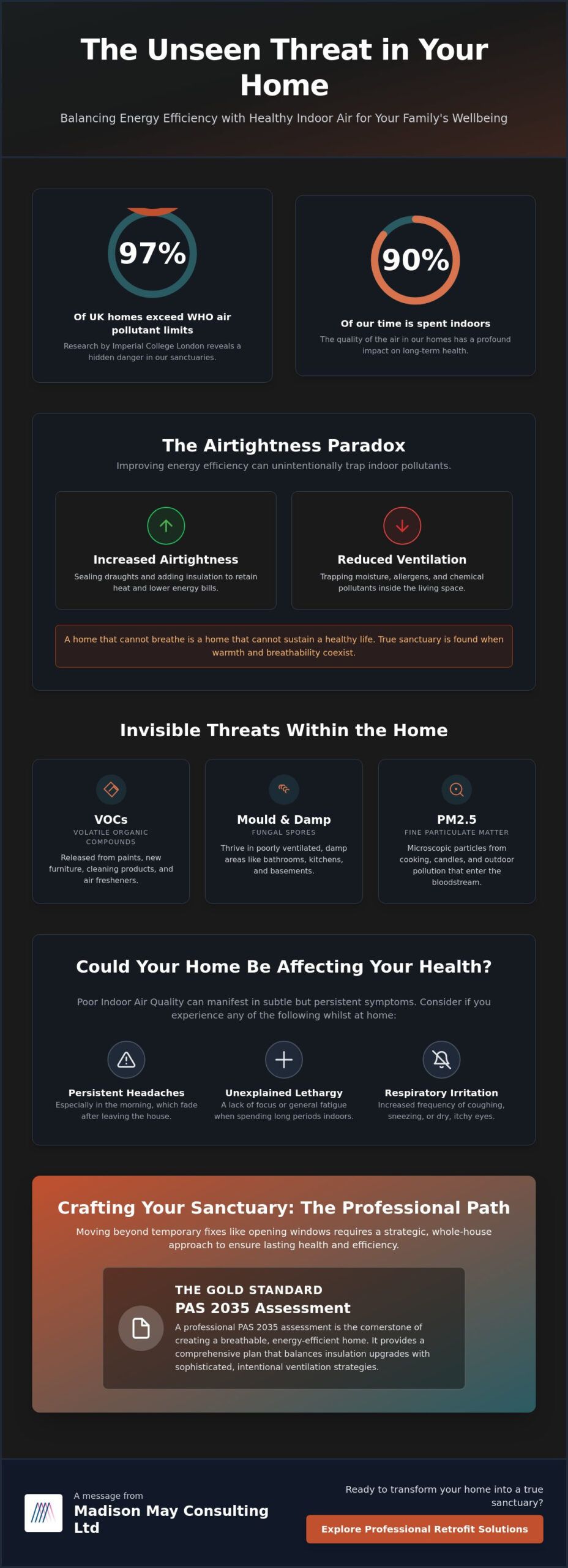
Research by Imperial College London reveals that 97% of UK homes exceed at least one of the World Health Organisation’s limits for air pollutants. This striking data challenges the very notion of the home as a safe haven, suggesting that the air we breathe indoors is often more complex and burdened than the air outside. It’s a sobering thought for any homeowner who views their property as a sanctuary for those they love most.
It’s natural to feel a sense of unease when considering invisible threats like radon, VOCs, or the asthma triggers that linger in the shadows. You might find yourself asking: how do I protect my family’s health – air quality and energy efficiency often feel like they are in direct competition. You shouldn’t have to choose between a warm, well-insulated house and one that breathes freely; the two should exist in a thoughtful, elegant harmony.
This guide will show you how to transform your living space into a true sanctuary by balancing meticulous building fabric upgrades with sophisticated ventilation strategies. We’ll explore a clear, professional plan for energy-efficient improvements that lower the risk of respiratory illness while maintaining the serene, healthy environment your family deserves.
Key Takeaways
- Understand how the delicate atmospheric conditions within your home influence long-term well-being, particularly as we spend the vast majority of our time within these internal environments.
- Resolve the airtightness paradox by discovering the answer to “How do I protect my family’s health – air quality” through a sophisticated balance of heat retention and meticulous ventilation.
- Identify the invisible pollutants hidden amongst common household finishes, such as VOCs and mould spores, that can compromise the serenity of your living space.
- Learn to conduct a sensory audit of your property to prioritise high-impact upgrades, from advanced kitchen extraction to elegant moisture control solutions.
- Discover why a professional PAS 2035 assessment is the gold standard for creating a breathable, energy-efficient sanctuary that protects both your family and your building’s heritage.
The Silent Influence of Indoor Air Quality on Family Health
The atmosphere within our homes is more than just air; it is the invisible foundation of our personal sanctuary. We often invest significant time in the aesthetic of a room, yet the atmospheric condition, or Indoor Air Quality (IAQ), dictates the true comfort and safety of the space. For many discerning homeowners, the query “How do I protect my family’s health – air quality and ventilation are the two pillars they must first understand” marks the beginning of a vital journey. Given that we spend approximately 90% of our lives indoors, the purity of this environment is paramount. This comprehensive guide to indoor air quality highlights how pollutants can accumulate in modern UK properties, potentially leading to ‘Sick Building Syndrome’. This condition involves a range of symptoms linked to time spent in a building, often exacerbated by poor ventilation or the off-gassing of synthetic materials.
It is vital to distinguish between transient pollutants and deeper structural issues. Whilst the steam from a shower or the scent of a candle is temporary, structural toxins like mould spores linger amongst the building fabric. These persistent threats require a more sophisticated approach than simply masking an odour; they demand a fundamental look at how the building functions as a living, breathing entity. The goal is to move beyond temporary fixes and address the root causes of stagnant air.
The Respiratory Connection: Why IAQ Matters Most for the Vulnerable
When considering the question, “how do I protect my family’s health – air quality must be viewed as a priority for the most vulnerable members of the household.” Children with developing lungs and elderly relatives are particularly sensitive to fine particulate matter, known as PM2.5. These microscopic particles can bypass the body’s natural filters, entering the bloodstream and potentially causing long-term inflammation. Creating an allergen-free environment carries a significant emotional weight. It is about providing a space where every breath is restorative rather than a burden. You might recognise the subtle signs of decline before a major issue manifests:
In addition to ensuring a healthy physical environment, providing dedicated support for those with specific needs can significantly improve their quality of life; Mighty Mentors WA provides personalised mentoring and in-home care services that help vulnerable individuals thrive within their sanctuary.
- Persistent morning headaches that fade once you leave the house.
- Unexplained lethargy or a lack of focus whilst working from home.
- Increased frequency of respiratory irritation or dry, itchy eyes.
Beyond the Window: Why ‘Airing Out’ Isn’t Always Enough
In our temperamental British climate, simply throwing open a window is rarely a complete solution for air management. Intermittent ventilation is often inefficient; it allows precious heat to escape whilst potentially inviting in outdoor pollutants from nearby traffic or industrial centres. A home that relies on ‘accidental’ ventilation, such as draughts through old floorboards or gaps in joinery, is essentially out of control. The transition to ‘intentional’ air management involves professional strategies that ensure a constant flow of fresh air without sacrificing the warmth of your sanctuary. It represents a move from a reactive habit to a curated, visionary approach that prioritises both energy efficiency and long-term respiratory safety. This philosophy of proactive care is equally vital for mobile sanctuaries, where LeisureVan Service Solutions provides the specialist maintenance required to keep motorhomes and caravans breathable.
The Airtightness Paradox: Balancing Warmth with Ventilation
The modern drive for energy efficiency is a noble pursuit, yet it introduces a delicate architectural tension. By sealing our homes to reduce heat loss, we often create a vessel that is too efficient for its own good. This lack of natural air exchange means we risk trapping moisture and toxins within the very walls intended to protect us. To understand the root causes of these issues, one might consult a guide to indoor air quality, which illustrates how pollutants accumulate when ventilation is neglected. A house that cannot breathe is a house that cannot sustain a healthy life.
The home should be viewed as a single, breathing organism. When we add insulation without a professional assessment, we risk disrupting the harmony between the building fabric and the internal atmosphere. It’s a common anxiety for many: how do I protect my family’s health – air quality can often suffer when we focus solely on the thermostat. True sanctuary is found when warmth and breathability coexist in a seamless, intentional union. This ‘whole-house’ philosophy ensures that every upgrade, from draught-proofing to heating, works in concert rather than in conflict.
The Risks of Uncoordinated Retrofit
Installing new windows or loft insulation without a holistic plan can shift the dew point within your walls. This is the specific temperature at which air can no longer hold its moisture, causing it to condense on cold surfaces. If left unaddressed, this invisible dampness soon manifests as mould growth amongst your building materials, compromising both the structure and your respiratory health. In such cases, professional damp remediation becomes essential to restore the property to its intended state. Whilst draught-proofing is vital for a cosy atmosphere, it must be paired with controlled ventilation to ensure the air remains vibrant and clean.
Building Regulations and the ‘Part F’ Standard
The regulatory landscape in England is shifting to meet these modern challenges. The new edition of Approved Document F, published in March 2026, reinforces the critical principle that home improvements must not worsen existing ventilation. These standards, which take full effect on March 24, 2027, guide homeowners toward high-end solutions where beauty and functionality intersect. Professional guidance ensures that your home remains a sanctuary that is as healthy as it is warm. Engaging a specialist for a Retrofit Assessment provides the clarity and data required to navigate these complexities with visionary confidence.
Identifying Invisible Threats within the Modern British Home
Within the walls of a refined home, the most significant threats are often those we cannot see. Whilst we curate our interiors with a focus on aesthetics and heritage, the chemical composition of the air remains a silent participant in our daily lives. Volatile Organic Compounds (VOCs) are perhaps the most pervasive of these invisible guests. They are frequently found in the very paints, finishes, and new furniture that define our personal style. These compounds can off-gas for years, creating a background level of pollution that subtly challenges our well-being. For those asking, “How do I protect my family’s health – air quality must be addressed by scrutinising the materials we bring into our sanctuaries.”
Beyond these synthetic additions, the British landscape presents natural challenges like radon gas. This radioactive gas occurs naturally in certain geographic regions and can seep into properties through the ground. Because it is odourless and colourless, professional testing is the only way to ensure your retreat remains truly safe. Similarly, nitrogen dioxide and particulate matter from gas cooking or wood-burning stoves can accumulate if extraction is insufficient. Learning how to improve your indoor air quality starts with identifying these disparate sources, from the culinary centre of your kitchen to the geology beneath your floorboards.
The Chemistry of the Interior: Choosing Healthier Materials
Creating a healthy environment is an exercise in intentionality. Selecting low-emission materials allows you to maintain a sophisticated aesthetic without compromising on respiratory safety. The choice of windows and doors plays a pivotal role here; they are the interface between your internal world and the external environment, regulating both thermal comfort and air exchange. Even flooring and textiles require care, as deep-pile carpets can harbour dust mites and allergens that disrupt the calm of a bedroom. A visionary approach to design considers the off-gassing potential of every fabric and finish.
Damp and Mould: The Most Visible Health Disruptors
Mould is more than a cosmetic blemish; it is a signal of a structural imbalance. Distinguishing between rising damp, penetrating damp, and simple condensation is the first step toward a permanent solution. When mould spores linger amongst damp building materials, they release toxins that can trigger allergies and asthma. The psychological impact of mould is profound, as it erodes the sense of ‘sanctuary’ that a home should provide. Surface-level cleaning is merely a temporary mask. True remediation requires a sophisticated approach to structural ventilation that addresses why the moisture is trapped in the first place.
Practical Strategies for a Healthier Breathing Environment
Transforming your home into a refined sanctuary requires moving beyond intuition and into the world of intentional action. When seeking the answer to “How do I protect my family’s health – air quality is often best managed through a combination of daily awareness and structural precision.” A sensory audit is a graceful place to start. It involves becoming an attentive listener to your property, identifying the subtle cues that signal an atmospheric imbalance. You might notice the faint scent of stagnant air in a rarely used guest room, or perhaps the lingering moisture on a bathroom mirror that refuses to clear. These are not merely inconveniences; they are the home’s way of communicating a need for better circulation.
Prioritising high-impact changes ensures that your efforts yield the most significant rewards for your family’s well-being. The kitchen and bathroom are the primary engines of moisture and pollutant production, making them the most critical areas for intervention. Whilst high-end air purification technology offers an elegant secondary layer of support, it should never be viewed as a primary solution. True atmospheric purity comes from the source, requiring a sophisticated approach to extraction and air exchange that removes toxins before they can settle amongst your furnishings. Moving from guesswork to data-driven improvement starts with a professional survey that maps the unique breathability of your property.
Immediate Lifestyle Refinements
Daily habits can significantly influence the atmospheric harmony of your interior. Ensuring that trickle vents remain open and extractor fans are used during and after cooking or bathing is a simple yet vital practice. These systems are designed to provide a gentle, constant stream of fresh air without disrupting the serenity of your space. Managing humidity levels is equally important; using lids on pans whilst cooking and keeping internal doors closed in moisture-rich areas prevents dampness from migrating. To complement these habits, consider introducing air-purifying plants like the Peace Lily or Snake Plant. These botanical additions offer a refined aesthetic whilst contributing to a more vibrant, oxygen-rich environment.
The Road to Retrofit: A Long-Term Vision
For those committed to a lasting legacy of health and efficiency, developing a bespoke EPC improvement plan is the gold standard. This roadmap ensures that every upgrade is sequenced with care, following the principle of ‘fabric first’ but always ‘ventilation always’. It’s a common mistake to seal a home for warmth whilst neglecting the need for air; a professional plan prevents this by integrating high-quality draught-proofing that respects the building’s character whilst ensuring it remains breathable. To begin your journey toward a perfectly balanced home, book a comprehensive ventilation assessment to identify the most effective path forward for your sanctuary.
Crafting Your Sanctuary: The Role of Professional Retrofit Assessments
The transition from a house that simply stands to a home that actively nurtures is a journey of precision. Whilst lifestyle changes and sensory audits provide a foundation, the true restoration of a property requires the clarity that only data can provide. A professional PAS 2035 assessment represents the pinnacle of residential care, moving beyond surface-level observations to a profound understanding of how your home performs as a single, breathing organism. This meticulous approach ensures that every intervention is intentional, protecting the heritage of the building whilst elevating the quality of the air within.
How do I protect my family’s health – air quality and structural integrity are often intertwined in ways that are invisible to the naked eye. Through the use of thermal imaging and air pressure testing, we can reveal the hidden pathways where heat escapes and pollutants linger. Madison May’s bespoke consultancy approach begins with an attentive ear; we listen to your family’s unique story and needs to ensure the resulting roadmap is as personal as it is technical. This is the moment a property begins its transformation from a mere building into a curated refuge, where health and efficiency exist in effortless union.
The Meticulous Assessment Process
A professional energy and ventilation survey is a calm, deliberative evaluation of your home’s current state. It is not a generic checklist but a deep dive into the specific physics of your property type. During this process, a Retrofit Coordinator acts as the guardian of your project’s technical integrity, ensuring that any proposed changes to insulation or heating are perfectly balanced with ventilation. This expert oversight prevents the uncoordinated retrofits that often lead to damp, providing you with a tailored roadmap that respects both the architecture and the inhabitants. It’s a sophisticated way to replace anxiety with a clear, visionary plan for the future.
Your Journey Towards a Healthier Home
The peace of mind that comes from a professionally aligned home is perhaps the greatest luxury of all. Knowing that your energy efficient home improvements are backed by data allows you to invest in your property with confidence. These upgrades do more than just increase the market value of your house; they fundamentally enhance your daily quality of life, ensuring that your sanctuary remains a place of restoration and vitality. Taking the first step involves inviting an expert to evaluate your home’s performance, allowing you to move forward with the quiet confidence that your family’s well-being is in capable, patient hands.
Restoring the Natural Breath of Your Home
Creating a true sanctuary requires a visionary perspective that looks beyond the surface of your interiors. By resolving the paradox between airtight insulation and essential ventilation, you ensure your property remains a place of restoration rather than a vessel for trapped toxins. You’ve discovered that identifying invisible threats, from lingering VOCs to structural damp, is the first step toward a vibrant living environment. When you ask, “how do I protect my family’s health – air quality must be viewed as both a technical and emotional priority,” the answer lies in the meticulous balance of building performance.
Our PAS 2035 aligned consultancy offers the specialist retrofit assessments needed to transform your vision into a data-driven reality. With expert damp and ventilation remediation guidance, we help you navigate the complexities of home improvement with quiet confidence and grace. Begin your journey to a healthier home with a professional Retrofit Assessment and rediscover the peace of mind that comes from a perfectly balanced environment. Your home is a story still being written; let every breath within it be one of pure, effortless vitality.
Frequently Asked Questions
How do I know if my indoor air quality is actually poor?
You can identify poor air quality through a combination of sensory cues and physical symptoms. Look for persistent condensation on windows, a lingering musty odour, or damp patches on walls. Physically, if family members experience unexplained morning headaches or increased respiratory irritation whilst at home, it often signals an atmospheric imbalance that requires professional investigation.
Can adding insulation to my home cause mould or health issues?
Adding insulation can indeed lead to mould if the property’s ventilation isn’t adjusted to compensate for increased airtightness. When you seal a home to retain heat, you risk trapping moisture that previously escaped through draughts. Without a professional plan, this moisture settles on cold surfaces, encouraging mould growth that can compromise both the building fabric and your family’s respiratory health.
What are the most common indoor air pollutants in UK homes?
The most pervasive pollutants in modern UK residences include Volatile Organic Compounds (VOCs) from paints and furniture, as well as fine particulate matter (PM2.5) from cooking or wood-burners. Mould spores amongst damp materials and naturally occurring radon gas are also significant concerns. Understanding these threats is vital when asking, “how do I protect my family’s health – air quality is influenced by everything from our choice of finishes to the geology beneath our floors.”
Are air purifiers effective at protecting my family from air pollution?
Air purifiers serve as a sophisticated secondary support, but they aren’t a primary solution for structural air quality issues. Whilst they can filter out certain particulates and allergens, they don’t address the root cause of poor ventilation or rising humidity. A truly healthy sanctuary requires a system that removes pollutants at the source rather than simply recirculating and filtering stagnant air within a sealed room.
What is a ventilation assessment and do I really need one?
A ventilation assessment is a specialist survey that maps exactly how air moves through your property. You absolutely need one if you’re planning energy efficiency upgrades like new windows or insulation. This assessment ensures your home remains breathable and safe, providing the data required to design a bespoke strategy that prevents damp whilst maintaining a warm, elegant interior.
How does the ‘Whole-House’ retrofit approach protect my family’s health?
The ‘Whole-House’ approach protects health by treating your property as a single, interconnected organism rather than a collection of separate rooms. By considering how insulation, heating, and ventilation work in concert, this method prevents the unintended consequences of uncoordinated work. It ensures that every improvement contributes to a curated environment where warmth and breathability are in perfect, healthy harmony.
Will improving my air quality also make my home more energy efficient?
Improving air quality often goes hand in hand with enhanced energy efficiency. By replacing accidental draughts with controlled, intentional ventilation, you can maintain a fresh atmosphere without the constant heat loss associated with old, leaky buildings. This sophisticated balance allows you to protect my family’s health – air quality and thermal comfort are both elevated through a professional, visionary retrofit plan.