

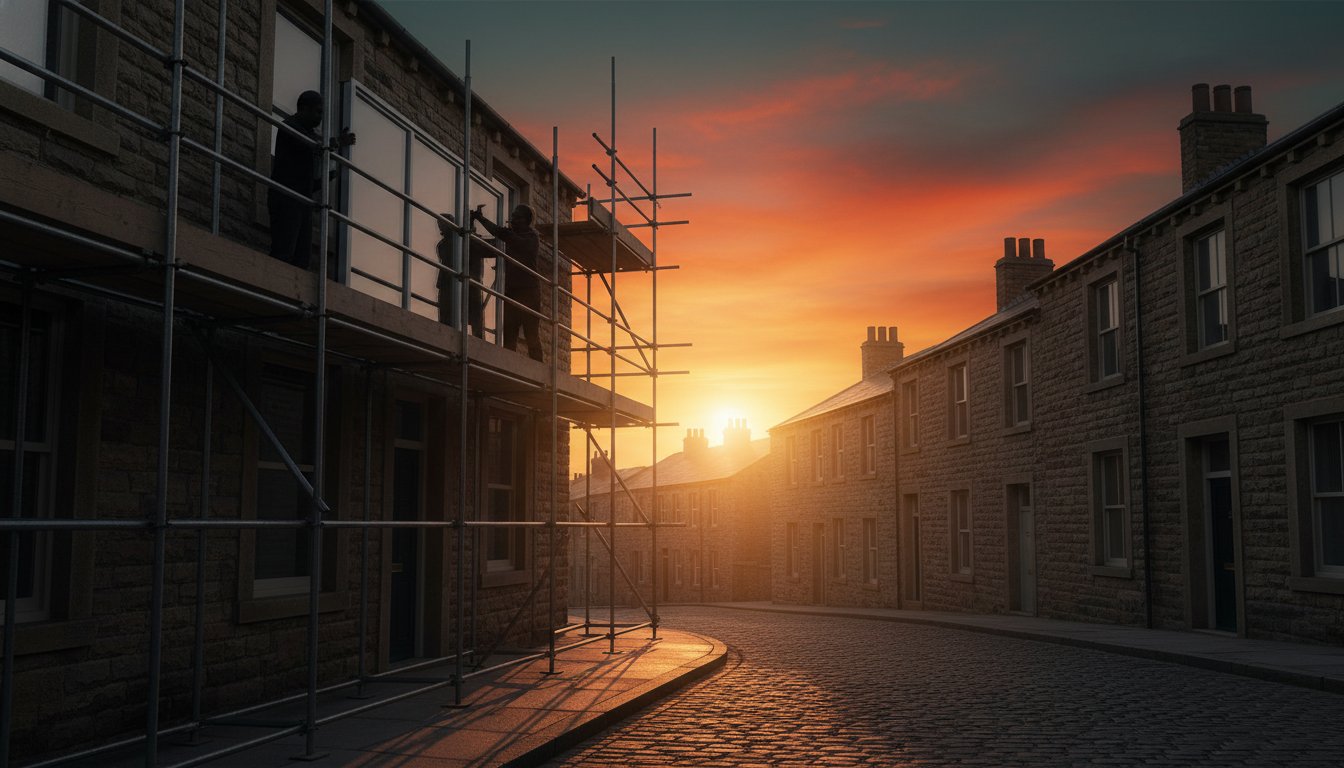
What if the storied gritstone walls that define your home’s character were no longer synonymous with the biting winter winds? Many homeowners across West Yorkshire find themselves caught between preserving the soul of a heritage property and the urgent need to reduce heating bills Bradford families face during increasingly unpredictable seasons. You likely understand the delicate frustration of a drafty living room or the lingering concern that modern insulation might trap moisture against traditional masonry, leading to the damp issues that plague 1 in 5 older UK homes according to recent heritage building studies.
This guide offers a more refined path forward, one where meticulous retrofit strategies and bespoke professional assessments converge to transform your residence into a warm, energy-efficient sanctuary. We will explore how a curated approach to heritage-safe materials and precision engineering can elevate your property’s EPC rating while ensuring your home remains a place of profound comfort and enduring value. By the end of this journey, you’ll possess a clear vision for integrating modern thermal performance with the timeless elegance of your Bradford home, creating a space that breathes as beautifully as it protects.
Key Takeaways
- Delve into the unique thermal narrative of Bradford’s heritage stone terraces and Victorian villas to uncover the specific challenges inherent in traditional solid-wall construction.
- Understand how a meticulous PAS 2035 assessment creates a bespoke roadmap for efficiency, moving beyond standard reports to identify the hidden thermal bridges that compromise your sanctuary.
- Evaluate the enduring value of timeless fabric upgrades, such as bespoke windows and doors, which offer a more profound impact on energy demand than simple behavioral changes.
- Discover a curated, step-by-step strategy to reduce heating bills Bradford homeowners can employ to transform historical properties into warm, energy-efficient retreats.
- Learn how professional coordination ensures your retrofit journey remains a seamless experience, maintaining rigorous technical standards while preserving the aesthetic soul of your home.
Understanding the Thermal Narrative of Bradford’s Heritage Properties
Bradford’s architectural identity is etched into the honey-hued sandstone of its industrial-era terraces and the commanding presence of its grand Victorian villas. These structures are more than mere dwellings; they represent a storied history of craftsmanship and local pride. For the modern homeowner seeking to reduce heating bills Bradford, these heritage properties present a unique set of thermal challenges that require more than a standard approach. Unlike modern cavity-wall builds, these homes rely on solid-wall construction, where the stone itself acts as a porous, living skin. Heat loss in this context isn’t just a technical failure; it’s a characteristic of how these historic materials interact with the damp West Yorkshire climate. Understanding energy efficiency in British housing requires a nuanced appreciation for how these traditional buildings breathe. Applying generic, synthetic insulation can stifle this natural respiration, trapping moisture within the fabric and compromising the very stone that gives the home its soul.
The Solid Wall Challenge
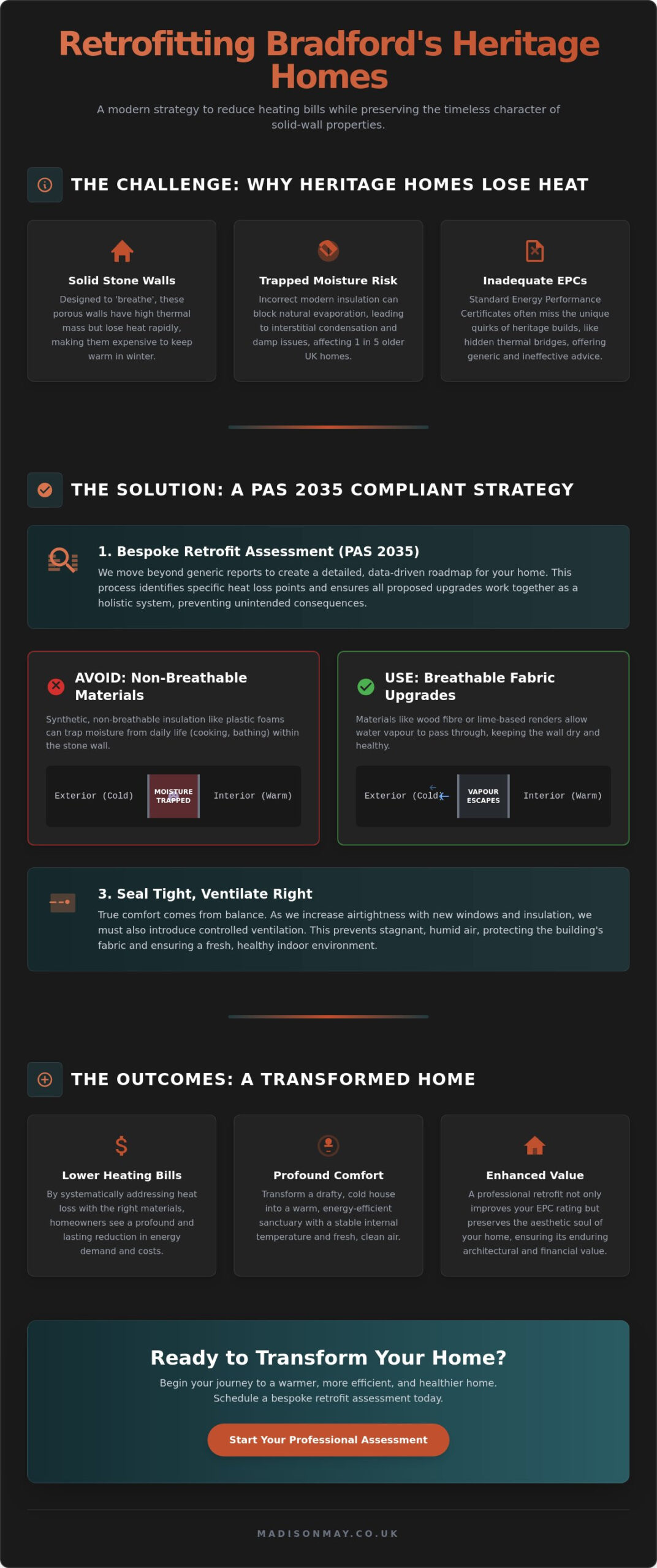
Properties built before 1900 in Bradford were designed to manage moisture through evaporation rather than exclusion. These solid walls possess a high thermal mass, meaning they absorb heat slowly and release it over time, creating a specific internal rhythm. When we look to upgrade these spaces, we must avoid the trap of interstitial condensation. This occurs when warm, moist air from inside the home meets a cold surface within the wall itself, often caused by inappropriate insulation materials that block vapor movement. A bespoke approach ensures that modern energy performance requirements coexist with heritage aesthetics, preserving the building’s integrity while making it a warm, efficient sanctuary. To truly reduce heating bills Bradford, the solution must respect the specific thickness and porosity of the local stone.
Ventilation: The Silent Partner of Insulation
True comfort is found in the delicate balance between warmth and freshness. Adding high-performance insulation without a professional ventilation assessment often results in stagnant air and localized damp. The guiding philosophy for West Yorkshire homes should always be “Seal Tight, Ventilate Right,” ensuring that as we make the building airtight, we also introduce controlled pathways for air to circulate. This prevents the buildup of humidity that stems from modern living, such as cooking or bathing, which can otherwise settle into the historic masonry.
Controlled ventilation acts as a vital guardian for the home’s structural integrity by continuously removing internal moisture before it can permeate and damage the historic stonework.
- Bespoke Materials: Use breathable wood fiber or lime-based renders instead of modern plastics.
- Thermal Mass Management: Align heating schedules with the slow-release properties of thick stone walls.
- Heritage Preservation: Ensure all retrofits maintain the visual character of Bradford’s conservation areas.
By treating the home as a holistic system, we can achieve a seamless integration of nineteenth-century charm and twenty-first-century efficiency. This meticulous attention to detail ensures that your home remains a sanctuary of warmth, reflecting both its historical essence and your personal commitment to quality.
The Retrofit Assessment: Crafting a Bespoke Roadmap for Efficiency
A standard Energy Performance Certificate offers a mere glimpse into a property’s efficiency, often failing to capture the unique architectural nuances of West Yorkshire’s heritage homes. To truly reduce heating bills Bradford homeowners must look beyond these surface-level ratings and embrace a PAS 2035 compliant retrofit assessment. This sophisticated process provides a narrative of the building’s entire thermal life, moving away from generic assumptions toward a data-driven understanding of the home’s soul. A professional Retrofit Assessor acts as a curator of comfort, identifying the silent thermal bridges where heat escapes through the junctions of stone and timber.
The collection of data on building services and fabric isn’t merely a technical requirement; it’s the foundation of a strategy that respects both your budget and the integrity of your property. By analyzing how air moves through the structure and where moisture might linger, we can design interventions that are as functional as they are beautiful. This meticulous approach ensures that every pound spent is an investment in the long-term sanctuary of your home, rather than a temporary fix for a cold winter. It’s the most reliable way to reduce heating bills Bradford residents can access, providing clarity before a single brick is moved.
The Meticulous Survey Process
Precision is the bedrock of elegance in home design. During the survey process, we delve into the specifics of occupancy patterns to ensure technical solutions reflect the way you live. In Bradford’s storied Victorian terraces and grand stone villas, thermal imaging becomes an essential tool for discovery. It uncovers the invisible currents of cold air lingering in ancient chimneys or hidden within the eaves of a complex roofline. These measured building surveys allow for a level of material specification that standard assessments simply cannot match. By understanding the moisture-closed or moisture-open nature of your walls, we specify materials that allow the building to breathe, preserving the heritage of the structure while elevating its thermal performance to modern standards.
Your EPC Improvement Plan
A curated roadmap is vital to prevent “locking in” poor energy performance through hasty, uncoordinated choices. We advocate for a rhythmic sequence of upgrades where high-performance insulation typically precedes the installation of a new heating system. This fabric-first philosophy ensures that your home is prepared for the Warm Homes Plan and the rigorous expectations of the 2025 Future Homes Standards. A well-designed plan aligns your aesthetic desires with local regulations, creating a sustainable sanctuary that remains timeless. If you’re ready to begin this transformative journey, you might explore our bespoke consultancy services to see how efficiency and refined design can exist in perfect harmony.
Comparing Immediate Savings with Timeless Fabric Upgrades
To truly reduce heating bills Bradford homeowners often find themselves at a crossroads between transient adjustments and enduring architectural refinements. While turning down the thermostat by a single degree can save approximately £145 annually, it does little to address the underlying soul of a cold, drafty room. A deep Retrofit explained as a holistic improvement of the building’s envelope, transforms a house from a mere shelter into a thermal sanctuary. This journey begins by evaluating the fabric of the building, ensuring that every meticulous detail contributes to a more efficient, elegant way of living.
Quick Fixes vs. Deep Retrofit
Draught-proofing a Victorian terrace in Saltaire might cost as little as £250, yet its impact is often localized and fleeting. In contrast, the heat retention offered by high-performance glazing represents a permanent shift in how a home breathes. There is a profound emotional difference between the layered-clothing approach of a poorly insulated house and the quiet confidence of a draught-free sanctuary where the air remains still and warm. For Bradford landlords, this transition is also a matter of necessity; meeting the Minimum Energy Efficiency Standards (MEES) requires a strategic approach to EPC ratings. Investing in fabric-first upgrades now prevents the recurring disruption of minor fixes and ensures compliance with the anticipated 2030 targets for EPC Grade C.
- Loft Insulation: With a typical installation cost of £1,100, it remains the most cost-effective starting point, potentially saving £445 per year in a detached property.
- External Wall Insulation: For the iconic stone properties of West Yorkshire, external insulation can reduce heat loss by 35%, though it requires a sensitive touch to preserve the building’s heritage.
- Behavioral ROI: While zero-cost habits are helpful, they cannot compete with the 20% reduction in total energy demand provided by structural integrity.
The Art of Glazing and Doors
The process of choosing bespoke windows and doors is an opportunity to marry thermal performance with refined aesthetics. Modern U-values, which measure the rate of heat transfer, have seen a dramatic evolution; moving from a standard 2.8 in older double glazing to a meticulous 1.2 or lower can slash monthly heating spend by nearly 15%. This isn’t just about the glass, but the curated frames and seals that complete the installation. High-performance perimeter seals are absolutely critical in exposed West Yorkshire locations where Pennine winds can otherwise bypass even the most expensive glass. By focusing on these timeless fabric upgrades, you create a home that doesn’t just reduce heating bills Bradford, but also offers a serene, beautifully tempered environment that stands the test of time.
A Step-by-Step Journey to a Lower-Carbon Sanctuary
The path toward a refined, energy-efficient home begins with a quiet observation of its current state. In the context of a classic stone terrace, this journey allows you to reduce heating bills Bradford homeowners find increasingly burdensome; it simultaneously elevates the tactile comfort of your living environment. Transforming a heritage property into a low-carbon sanctuary is a rhythmic process, moving from the invisible foundations of heat retention to the visible elegance of high-performance finishes.
Phase One: The Foundations of Warmth
A deep understanding of your property’s unique narrative is essential. We recommend beginning with a meticulous building survey to identify structural vulnerabilities, such as rising damp or masonry cracks, that must be addressed before any insulation is applied. Thermal imaging serves as a visionary tool during this phase. It reveals the invisible pathways where warmth escapes through heritage masonry, allowing you to prioritize the most aggressive heat loss areas in a Bradford terrace with surgical precision.
Phase Two: The Fabric-First Transformation
True sanctuary is found within a high-performance building envelope. This fabric-first philosophy prioritizes internal or external wall insulation, which acts as a protective layer for the home’s soul. When working with period properties in West Yorkshire, the challenge lies in balancing modern thermal performance with the preservation of original cornices and stone facades. Professional coordination is vital during the construction phase to ensure that these technical upgrades feel like a natural evolution of the architecture. This careful integration allows you to reduce heating bills Bradford winters often inflate, without sacrificing the historic character of your dwelling.
To navigate this transition with grace, we follow a curated five-step sequence:
- Step 1: Professional Assessment. Establish a baseline through an airtightness test and a thermal survey to map your home’s energy signature.
- Step 2: Address Low-Hanging Fruit. Implement draught-proofing and increase loft insulation to a depth of 270mm. According to 2023 Energy Saving Trust data, this simple upgrade can save a typical semi-detached home up to £285 annually.
- Step 3: High-Performance Fabric Upgrades. Invest in bespoke triple-glazed windows and insulated doors that mirror the proportions of your original joinery while offering modern U-values.
- Step 4: Optimize Heating Systems. Once demand is reduced, calibrate your heating controls. Smart thermostats and weather compensation sensors ensure the boiler only works as hard as the environment requires.
- Step 5: Implement a Ventilation Strategy. As the home becomes more airtight, a mechanical ventilation heat recovery (MVHR) system or passive stack ventilation is essential to maintain air purity and prevent moisture buildup.
Every choice in this journey is an investment in the longevity of your home. To begin your own transformation, explore how we curate bespoke living environments that marry heritage with modern efficiency.
Ensuring Lasting Comfort with Madison May’s Meticulous Coordination
True home transformation requires more than just isolated upgrades; it demands a symphony of technical precision and aesthetic vision. At Madison May, we position the Retrofit Coordinator as the guardian of your home’s evolution, ensuring every intervention is balanced, safe, and enduring. Under the PAS 2035 framework, which became the mandatory standard for all publicly funded energy efficiency projects in June 2021, our coordinators oversee the entire design and installation process. This meticulous oversight prevents the common pitfalls of poorly integrated systems, such as moisture build-up or inadequate ventilation, which often arise when separate contractors work without a unified, professional plan.
Beyond Advice: Project Guardianship
Our approach moves beyond simple consultancy to offer a curated project management experience that protects your investment. We provide fixed-fee assessments that deliver impartial, expert guidance, allowing you to understand the true potential of your property without the pressure of a sales-driven agenda. For those looking to reduce heating bills Bradford homeowners can rely on our expertise to navigate complex government-backed schemes, including the Home Upgrade Grant or the Energy Company Obligation (ECO4), which provided over £1 billion in funding across the UK in 2023. We manage the delicate interface between various installers, acting as a single point of professional authority to ensure your vision remains uncompromised from the initial survey to the final sign-off.
- Expert Oversight: Every detail is scrutinized to meet stringent PAS 2035 quality and safety standards.
- Impartial Guidance: Fixed-fee structures ensure our advice is always centered on your home’s best interests.
- Scheme Navigation: We simplify the process of accessing grants and local Bradford energy initiatives.
- Seamless Integration: We coordinate multiple trades to ensure your retrofit is a cohesive, high-performance success.
The End Result: A Warm Reflection of Self
The culmination of a professionally retrofitted home is a space that feels as good as it looks. It’s the quiet satisfaction of a draft-free evening and the visual harmony of a property that has been treated with respect and care. By choosing a bespoke path to reduce heating bills Bradford residents aren’t just investing in technical energy efficiency; they’re crafting a sanctuary that serves as a warm reflection of their own narrative. Every material we choose and every system we install is intended to enhance the soul of your home, creating a timeless environment that resonates on a personal level.
The journey toward a high-performance, elegant home is one of collaboration and visionary creativity. We invite you to begin this transformative experience with a consultation designed to reveal the essence of your property’s future potential. Contact Madison May for your Bradford Retrofit Assessment and discover the peace of mind that comes from our meticulous coordination and commitment to craftsmanship.
Your Path to a Refined and Resilient Sanctuary
Honouring the architectural narrative of a heritage property requires a delicate balance between preserving its historical soul and enhancing its modern performance. By prioritizing a fabric-first approach and adhering to the rigorous PAS 2035 standards, you create a home that remains both timeless and efficient. This meticulous coordination ensures that every structural upgrade works in harmony with the unique climatic conditions of the region, allowing you to effectively reduce heating bills Bradford while elevating your daily living experience. Our role as specialists in West Yorkshire heritage architecture is to act as your visionary guide, translating complex technical requirements into a seamless journey of transformation.
As you look toward the future of your residence, remember that true comfort is found in the intersection of beauty and functionality. We offer a fixed-fee professional consultancy designed to provide clarity and confidence at every stage of your project, ensuring your home remains a reflection of your discerning taste. You deserve a space that provides a quiet, warm refuge from the world outside. Begin your journey toward a warmer Bradford sanctuary with a bespoke Retrofit Assessment. It’s time to craft a sustainable legacy for your home that resonates for generations to come.
Frequently Asked Questions
How much can I realistically save on my Bradford heating bills with a retrofit?
A comprehensive whole-house retrofit can reduce heating bills in Bradford by up to 60% according to 2023 Energy Saving Trust data. This transformation creates a sanctuary that remains effortlessly warm while shielding you from volatile energy markets. By addressing the building fabric through a curated plan, you ensure your home’s soul is preserved while its efficiency is meticulously elevated to modern standards.
Is external wall insulation suitable for Bradford’s stone-built properties?
External wall insulation is rarely suitable for Bradford’s traditional stone properties because it masks the timeless character of the masonry. Instead, we recommend internal wall insulation or breathable lime renders to protect the building’s essence. These bespoke solutions ensure that the structural integrity and aesthetic heritage of your home remain untouched while significantly enhancing its thermal performance and internal comfort.
What is the difference between a standard EPC and a Retrofit Assessment?
A standard EPC provides a basic energy rating, but a Retrofit Assessment is a meticulous, deep dive into your home’s specific architectural narrative. Conducted under the PAS 2035 framework, this detailed evaluation considers moisture risks and ventilation needs. It offers a sophisticated roadmap for your journey, ensuring every material choice integrates seamlessly with the existing structure rather than offering a generic, superficial estimate.
Can I get a grant to help reduce my heating bills in Bradford?
You can access several government schemes to help reduce heating bills in Bradford, including the ECO4 initiative and the Great British Insulation Scheme. The Boiler Upgrade Scheme currently provides a £7,500 grant for air source heat pumps. These financial pathways allow you to invest in high-quality craftsmanship and sustainable technology; they make the transition to a more refined and efficient home both accessible and rewarding.
How long does a whole-house retrofit usually take for a terraced home?
A whole-house retrofit for a typical Bradford terraced home usually spans between 4 and 12 weeks. This timeframe allows for the careful, rhythmic progression of work, from the initial installation of high-performance materials to the final, polished finishes. We prioritize a steady pace to ensure that every detail is executed with the grace and precision your sanctuary deserves, minimizing disruption to your daily life.
What happens if I insulate my home but don’t improve the ventilation?
Insulating a home without improving ventilation often leads to trapped moisture, which can cause condensation and mould within your living spaces. A 15% increase in humidity levels can occur if the building’s breathability isn’t managed. We believe in a harmonious approach where fresh air and warmth coexist, utilizing sophisticated heat recovery systems to maintain a healthy, serene environment that protects both the fabric of the building and your well-being.
Do I need planning permission for energy-efficient windows in Bradford conservation areas?
Planning permission is typically required for energy-efficient windows if your property sits within one of Bradford’s 59 conservation areas. Local regulations often mandate that replacements mirror the original aesthetic to maintain the historic narrative of the streetscape. We navigate these complexities with a visionary eye, sourcing bespoke, slim-profile double glazing that meets rigorous thermal standards while honoring the timeless elegance of your home’s architectural heritage.
Is it worth upgrading my boiler before I improve my loft insulation?
It’s always advisable to improve your loft insulation before upgrading your boiler to prevent the heat from escaping through the roof. Since 25% of a home’s warmth is lost through an uninsulated attic, a fabric-first approach ensures your new heating system doesn’t have to work unnecessarily hard. This logical sequence creates a balanced foundation, allowing you to enjoy a more consistent, quiet warmth throughout your carefully curated home.