

What if the true essence of a perfect home extension isn’t found in the sweep of a new staircase or the light from a skylight, but in the invisible layers that allow a space to breathe? For many, the journey toward expanding their living space is clouded by the technical complexities of loft conversion insulation regulations uk, leading to a lingering worry about poor installations or the silent threat of damp and mould. It’s natural to feel overwhelmed by the shifting landscape of retrofit roles and the meticulous requirements needed to secure funding or ensure long-term property health.
This guide promises to illuminate the path forward, showing how the PAS 2035 standard serves as a sophisticated framework for quality rather than just a regulatory hurdle. We’ll explore how this whole-house philosophy ensures your project is delivered with professional oversight, transforming a mere attic into a warm, energy-efficient sanctuary that stands the test of time. By understanding the intersection of heritage craftsmanship and modern performance, you can move with confidence from initial assessment to a beautifully finished, compliant reality.
Key Takeaways
- Learn how the PAS 2035 framework emerged from the 2016 Each Home Counts review to eliminate systemic industry failures and safeguard your home’s long-term health.
- Understand how a fabric-first approach simplifies compliance with loft conversion insulation regulations uk by prioritising the building’s thermal envelope before considering complex heating upgrades.
- Discover the essential roles of the Retrofit Assessor and Coordinator in providing the meticulous professional oversight and accountability required for a seamless refurbishment.
- Follow a logical roadmap from initial assessment to final evaluation, ensuring that vital repairs and damp remediation are addressed before any energy-saving measures are introduced.
- See how adhering to these high standards transforms a standard renovation into a bespoke sanctuary, reflecting your personal identity through enduring quality and thermal comfort.
Understanding PAS 2035: The Foundation of Quality Retrofit
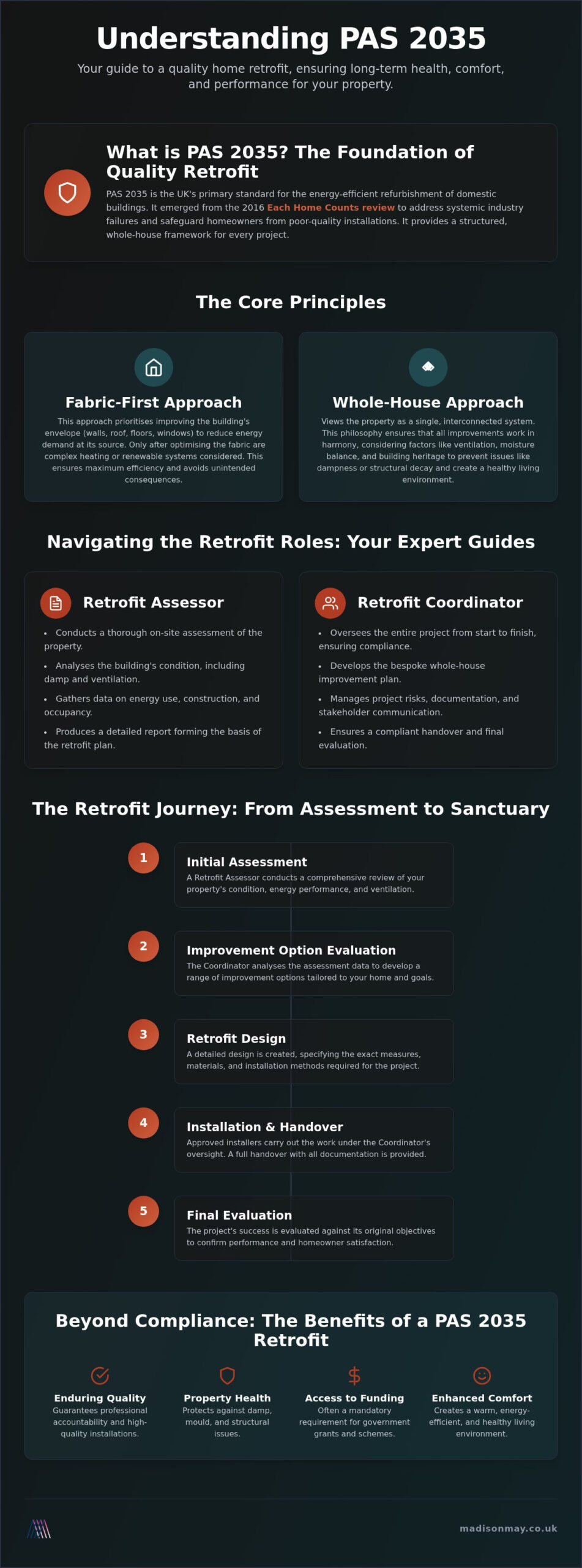
PAS 2035 stands as the UK’s primary specification for the energy-efficient refurbishment of domestic buildings, representing a significant evolution in how we care for our homes. This framework isn’t merely a set of rules; it’s a commitment to a whole-house philosophy that views every property as a living, breathing system. Established following the 2016 Each Home Counts review, the standard was a direct response to systemic industry failures that had previously left homeowners vulnerable to poor-quality installations. It replaces fragmented, piecemeal home improvements with a meticulously designed process that ensures every measure is appropriate for the specific character of your property.
By shifting the focus from isolated tasks to a cohesive strategy, PAS 2035 acts as a guardian of your home’s integrity. It provides a structured roadmap that prioritises the health of the building alongside its thermal performance. This approach ensures that when you explore loft conversion insulation regulations uk, you aren’t just meeting a minimum legal threshold, but are instead investing in a standard that guarantees enduring quality and professional accountability.
The Shift from Compliance to Craftsmanship
In the past, many home improvements focused solely on the immediate goal, often ignoring the delicate balance of ventilation and moisture. A professional standard like PAS 2035 is vital because it addresses the root causes of issues like dampness and condensation before they can take hold. Within the broader context of UK Building Regulations, this specification elevates the technical aspects of retrofit into a visionary journey of property care. It transforms a standard renovation into an artistic endeavour where craftsmanship and science meet. There’s a quiet confidence that comes from knowing your project follows a nationally recognised code of practice; it ensures your living space remains a healthy, serene refuge for decades to come.
Why Homeowners Should Insist on PAS 2035
Insisting on this standard is a prudent choice for the discerning homeowner. It’s often a mandatory requirement for accessing government-backed funding and energy-efficiency grant schemes, making high-quality upgrades more accessible. Beyond financial incentives, PAS 2035 adds significant long-term value to your property. Every improvement is documented, compliant, and part of a clear EPC improvement plan, which is increasingly attractive in a conscious property market. This framework supports the national journey towards net-zero whilst fundamentally enhancing your personal comfort. It helps ensure your loft conversion insulation regulations uk requirements are integrated seamlessly into the wider architectural story of your home, turning it into a high-performance sanctuary that reflects your values and identity.
The Core Principles: Fabric First and the Whole-House Approach
At the heart of a sophisticated retrofit lies a commitment to two guiding philosophies: the Fabric First principle and the Whole-House approach. Rather than rushing toward complex technological solutions, this method prioritises the building’s envelope. By refining the walls, floors, and roof first, we reduce the energy demand of the property at its source. This is particularly vital when navigating loft conversion insulation regulations uk, where the goal isn’t merely to add a room, but to ensure that new space contributes to the thermal harmony of the entire dwelling. It’s a process that respects the building’s heritage, acknowledging that original materials and traditional construction require a sympathetic touch to avoid the unintended consequences of poorly planned measures.
Adhering to these principles ensures that every intervention is intentional. When we view a property as an interconnected system, we prevent the moisture imbalances that often lead to dampness or structural decay. This level of professional accountability is anchored in the TrustMark Framework, which provides the quality assurance necessary for such a transformative journey. For those seeking a truly tailored experience, engaging a specialist retrofit consultancy can help bridge the gap between technical requirement and personal vision.
Prioritising the Building Envelope
True comfort begins with a seamless thermal barrier. Loft, wall, and floor insulation must work in exquisite harmony to retain warmth whilst allowing the building to breathe. This envelope is only as strong as its weakest point, which is why the integration of high-quality windows and doors is essential for creating a draught-free environment. Beyond the technical data, the sensory impact of a well-insulated home is profound. It offers a sense of quietude and stable temperatures that transform a house into a serene refuge, far removed from the unpredictable chill of the outdoors.
Treating the Home as a Living System
A meticulous EPC improvement plan serves as the essential roadmap for this holistic strategy. It ensures that any subsequent heating upgrades are perfectly matched to the newly reduced heat load of the insulated home, avoiding the inefficiency of oversized systems. This strategy balances modern energy performance with the architectural integrity of the property, ensuring that your home’s unique story remains intact. By treating the home as a living system, we create environments that aren’t just efficient, but are deeply resonant with the identities of those who dwell within them.
Navigating the Retrofit Roles: Your Expert Guides
To achieve a home that is both technically sound and emotionally resonant, PAS 2035 introduces a suite of specialist roles designed to ensure professional accountability at every turn. No longer is home improvement a solitary or fragmented task; instead, it becomes a collaborative journey guided by experts who understand the delicate nuances of loft conversion insulation regulations uk. These professionals work in concert to protect your investment, moving with a calm deliberation that prioritises the long-term health of your property over quick, temporary fixes. By defining clear responsibilities, the framework eliminates the confusion that often haunts large-scale renovations.
The Retrofit Designer takes the findings from the initial stages to craft bespoke technical solutions, ensuring that every material choice and architectural detail aligns with the property’s unique identity. This isn’t a one-size-fits-all approach but a tailored design process that respects the past whilst embracing a sustainable future. At the centre of this expert circle is the Retrofit Coordinator, the visionary project guardian who oversees the entire lifecycle of the project, ensuring the final result is a high-performance sanctuary.
The Retrofit Assessor: Uncovering the Story of Your Home
The journey begins with the Retrofit Assessor, a meticulous data collector whose task is to listen to the house itself. This role involves a comprehensive building survey that goes far beyond a standard valuation. By capturing the intricate details of the building’s fabric, existing ventilation, and current services, the assessor builds a complete narrative of the home’s performance. This deep dive is essential for identifying underlying issues such as hidden damp or structural repair needs that must be addressed before any insulation is added. It’s this level of detail that ensures the proposed upgrades are safe, effective, and perfectly suited to the dwelling’s specific needs.
The Retrofit Coordinator: Ensuring Seamless Delivery
If the assessor is the historian, the Retrofit Coordinator is the visionary guide. They manage risk with a poise that reassures you that your project is in capable, patient hands. As the client’s advocate, the Coordinator maintains the clarity of the original vision throughout the installation process, ensuring that installers meet all technical standards. Their involvement doesn’t end when the last piece of insulation is fitted. They oversee the vital final handover and monitoring phase, verifying that the home performs exactly as intended. This oversight provides the peace of mind that your home has been transformed into a warm, energy-efficient refuge through a process that is as seamless as it is sophisticated.
The Retrofit Journey: From Assessment to Sanctuary
The transformation of an underutilised attic into a refined living space follows a deliberate, rhythmic sequence that ensures every detail is intentional. This journey isn’t a chaotic rush of construction, but a measured progression from the initial spark of inspiration to a finished sanctuary. By following the logical stages of Assessment, Design, Installation, and Evaluation, the process maintains a sense of grace and poise. It’s a structured roadmap that ensures your project doesn’t just meet loft conversion insulation regulations uk, but exceeds them in terms of comfort and quality.
A fundamental rule of this journey is that the property’s health must be secured before its performance is enhanced. Repairs and damp remediation are the essential precursors to any energy-saving measures. Attempting to install high-performance insulation over underlying structural issues or moisture is a compromise that PAS 2035 strictly forbids. This meticulous approach protects your investment, ensuring that the new layers of warmth are applied to a sound, dry foundation. For those ready to begin this transformative process, engaging a specialist retrofit consultancy ensures every stage is managed with professional precision.
Addressing the Ventilation Gap
One of the most critical, yet often overlooked, aspects of a loft conversion is the relationship between insulation and air quality. Adding thick layers of insulation without a professional ventilation assessment can inadvertently lead to dampness and stagnant air. When we seal a home to retain heat, we must also ensure it can breathe. PAS 2035 mandates adequate air exchange to protect the building’s fabric and the well-being of its occupants. A true sanctuary is defined by this balance; it’s a space that’s not only warm and quiet but also possesses a fresh, healthy atmosphere that enhances your daily life.
Installation and Quality Assurance
The transition from design to reality is where craftsmanship truly shines. PAS 2035 links directly with PAS 2030, the standard governing the installation itself, to ensure that every measure is executed with care. This isn’t about rapid completion but about the seamless integration of materials into your home’s unique structure. Regular site inspections provide an extra layer of oversight, verifying that the technical designs are being brought to life exactly as intended. The journey concludes with a final evaluation, a moment of quiet verification where performance is monitored to confirm your home has successfully become the energy-efficient refuge promised at the start.
Beyond Compliance: Creating Your Refined Living Environment
When the dust settles and the technical assessments are complete, the true value of adhering to loft conversion insulation regulations uk reveals itself in the quiet moments of daily life. It’s found in the steady warmth of a winter evening and the serene silence of a room that feels detached from the world’s clamour. By viewing energy efficient home improvements through the lens of PAS 2035, you’re choosing a lifestyle investment that prioritises your well-being. This framework ensures that your home isn’t just a structure, but a beautifully curated refuge that resonates with your personal story and identity.
Madison May acts as your sophisticated guide, navigating the intricate intersection of regulatory demand and visionary design. We believe that a home should be an outward expression of who you are, crafted with a level of care that borders on the artistic. Every detail, from the breathability of the materials to the precision of the installation, is chosen to enhance the sanctuary you call home. This isn’t just about refurbishment; it’s about storytelling through physical spaces, where every choice reflects a commitment to quality and a respect for the building’s heritage.
The Long-Term Rewards of Meticulous Planning
Investing in quality today creates a legacy that endures. Beyond the immediate comfort of a draught-free loft, meticulous planning leads to reduced energy costs and a significant increase in property value. These benefits aren’t accidental; they’re the natural result of a process that refuses to cut corners. A well-retrofit home becomes a gift to future generations, offering a sustainable and efficient environment that stands as a testament to thoughtful stewardship. Taking this first step toward property transformation is an invitation to elevate your living standards and secure your home’s future in an ever-changing world.
Your Personal Journey with Madison May
Every project we undertake is a high-end, individualised service tailored to your specific needs and architectural heritage. Our expertise in coordination brings a sense of ease and luxury to what can often feel like a complex renovation process. We listen to your story, understand your vision, and then apply the technical rigour required to bring it to life without stress. By positioning ourselves as the attentive listener and thoughtful expert, we ensure the journey is as refined as the finished result. You’re invited to book a consultation with us to begin your own roadmap to a better home, ensuring your loft conversion insulation regulations uk journey is handled with the poise and expertise it deserves.
Embarking on Your Visionary Home Transformation
The journey toward a more efficient home is an invitation to refine your living environment with intention and care. By embracing the PAS 2035 framework, you move beyond simple compliance into a world of meticulous craftsmanship and enduring quality. This whole-house philosophy ensures that every measure, from insulation to ventilation, works in exquisite harmony to protect both the building’s heritage and your personal comfort. You’ve learnt how a fabric-first approach and professional oversight eliminate the risks of poor installation, replacing anxiety with the quiet confidence of a project well-managed.
Navigating loft conversion insulation regulations uk doesn’t have to be a technical burden when you have a sophisticated guide by your side. At Madison May, we provide a PAS 2035 aligned consultancy that transforms complex requirements into a seamless, artistic journey. Through expert Retrofit Coordination and bespoke EPC Improvement Plans, we help you craft a space that is as sustainable as it is beautiful. Begin your journey to a more refined, efficient home with Madison May and discover the peace of mind that comes from a sanctuary designed to last for generations. Your home’s next chapter is waiting to be written with poise and expertise.
Frequently Asked Questions
What is the difference between PAS 2035 and PAS 2030?
PAS 2035 acts as the overarching framework for the design and coordination of domestic retrofits, while PAS 2030 focuses specifically on the technical standards for installation. You can think of PAS 2035 as the architectural blueprint and project management layer, ensuring that every measure is appropriate for the building. PAS 2030 is the standard your installers must follow to ensure their craftsmanship meets the rigorous quality requirements of the industry.
Is a PAS 2035 assessment mandatory for all UK homeowners?
A PAS 2035 assessment is mandatory for any energy efficiency project supported by government-backed funding, such as the ECO4 scheme. For private homeowners, while not a legal requirement for every renovation, it’s a vital safeguard for ensuring your project meets loft conversion insulation regulations uk. Adhering to this standard provides the professional oversight needed to protect your property’s long-term health and ensures that all improvements are documented and compliant.
What does a Retrofit Coordinator actually do during the project?
The Retrofit Coordinator serves as the visionary guardian of your project, overseeing the entire process from the initial assessment to final evaluation. They manage technical risks, ensure that the Retrofit Designer’s vision is executed correctly by installers, and act as your dedicated advocate. Their role is to provide a seamless experience, verifying that the finished result is a high-performance sanctuary that functions exactly as intended by the original design.
Why is ventilation so important in a PAS 2035 retrofit?
Ventilation is essential because a well-insulated home becomes significantly more airtight, which can trap moisture and lead to poor air quality. PAS 2035 mandates a professional ventilation assessment to ensure your home can breathe correctly after energy-saving measures are installed. Without this balance, you risk the unintended consequences of dampness and mould. A truly refined living environment must be both warm and healthy, providing a fresh atmosphere for its occupants.
How long does a typical PAS 2035 retrofit assessment take?
A comprehensive on-site assessment typically takes between two and four hours, depending on the complexity and size of your property. During this time, the assessor meticulously gathers data on the building’s fabric, existing services, and ventilation systems. This thorough on-site survey is then followed by a period of detailed analysis to produce a compliant report. This measured approach ensures that every recommendation is grounded in the reality of your home’s unique structure.
Can I use my own builder for a PAS 2035 compliant project?
You can use your own builder, but they must be PAS 2030 certified if your project requires PAS 2035 compliance for funding or insurance purposes. It’s vital that your chosen tradespeople understand the technical rigour required by these standards to avoid compromising the whole-house strategy. Many homeowners prefer to work with specialists who are already familiar with the rhythmic flow of a professional retrofit, ensuring a harmonious and high-quality finish across all stages.
Will a PAS 2035 assessment help me improve my EPC rating?
Yes, a core component of the process is the creation of a meticulous EPC improvement plan designed to boost your property’s rating in a logical sequence. By identifying the most effective path for loft conversion insulation regulations uk and other upgrades, the assessment provides a clear roadmap for increasing energy performance. This documented improvement not only enhances your personal comfort but also adds enduring value to your home in a conscious property market.
What happens if my home is found to have damp during the assessment?
If damp is identified during the initial survey, PAS 2035 requires that the root cause be remediated before any new insulation is installed. Your Retrofit Assessor will highlight these areas, and the remediation becomes a priority in your property’s improvement plan. This approach ensures that you don’t trap moisture within the building’s fabric, protecting the architectural integrity of your home and ensuring that your new sanctuary remains dry, healthy, and resilient.